Best Gravity Replacement Filters 2026: Expert Picks
The gravity replacement filter market is in turmoil. Berkey lost its EPA registration in 2023 and stopped selling systems in the US. ProOne is discontinuing its G-Series filters as the brand transitions to Culligan. Third-party alternatives are multiplying. We compared 6 replacement filter elements — ceramic, carbon, and hybrid — to find the best options for every gravity system owner, whether you are replacing worn-out Berkey elements, stocking up on ProOne filters before they disappear, or choosing your first set of replacement candles for a new system.
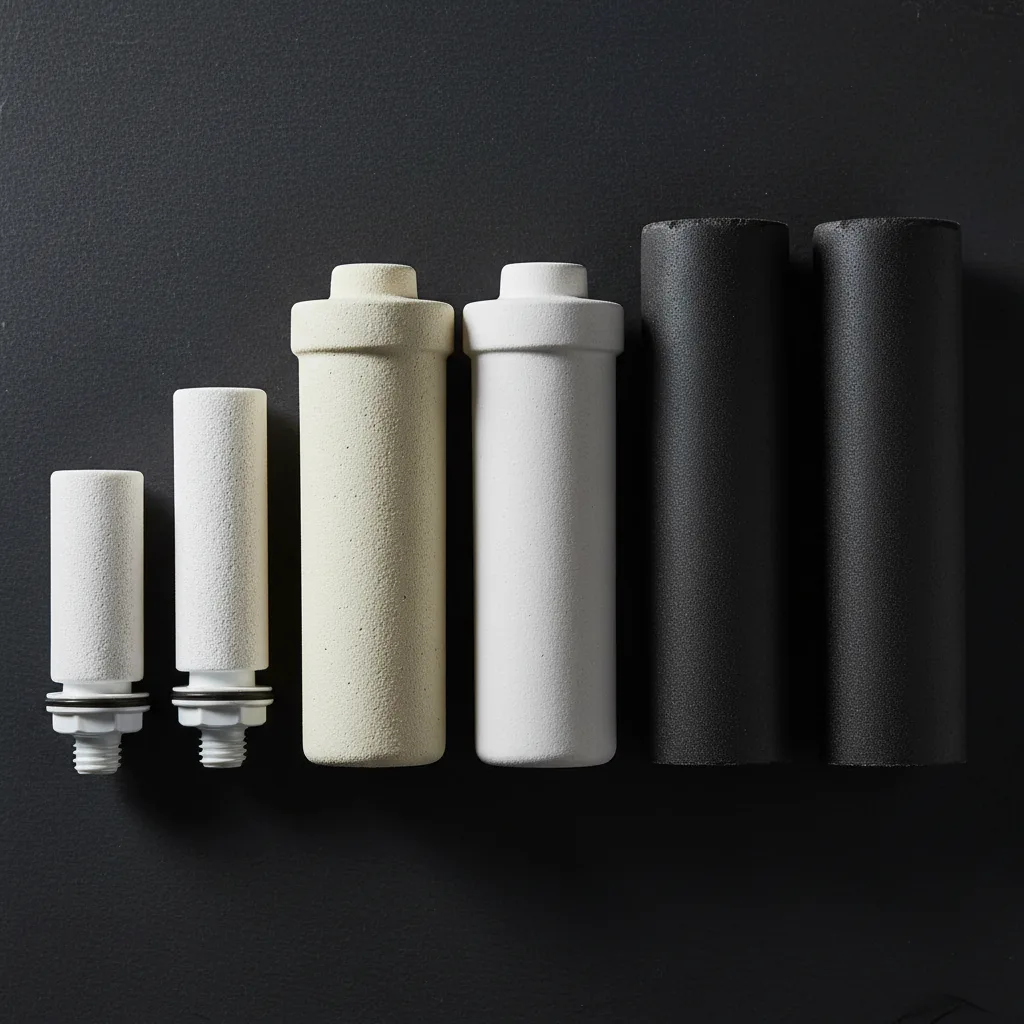
Quick Picks: Our Top Recommendations
| Feature | Editor's Pick Doulton Super Sterasyl 2-Pack | ProOne 9" G-Series 2-Pack | ProOne 7" G-Series 2-Pack | Berkefeld BB9-2 Candle 2-Pack | Waterdrop BB9-2 Replacement | Culligan MaxClear 7" 2-Pack |
|---|---|---|---|---|---|---|
| Price Range | $50–$100 | $100–$250 | $100–$250 | $50–$100 | $50–$100 | $100–$250 |
| Technology | Silver-impregnated ceramic + GAC + heavy metal media | 3-stage G3.0 (ceramic shell + carbon granular + carbon block core) | 3-stage G3.0 (ceramic shell + carbon granular + carbon block core) | Ceramic microfilter + GAC + heavy metal media (Ultra Sterasyl) | Natural coconut shell activated carbon | Ceramic outer shell + high-flow carbon block + GAC (coconut shell) |
| Pack Size | 2-pack | 2-pack | 2-pack | 2-pack | 2-pack | 2-pack |
| Filter Life | 400 gallons per filter (6 months) | 1,200 gallons per filter | 1,000 gallons per filter | 800 gallons per filter (6 months) | 6,000 gallons per pair (3,000 per filter) | 50 gallons per filter (6 months) |
| Fits | Doulton, British Berkefeld, Berkey, Phoenix, Purewell, ProOne, Alexapure | ProOne Big+, Propur King, Berkey, AlexaPure, British Berkefeld, Doulton, Purewell | ProOne Traveler+/Big II/Big+, Berkey, AlexaPure, British Berkefeld, Doulton, Purewell | Berkey, British Berkefeld, Phoenix, Purewell, ProOne, Alexapure | Berkey (Travel/Big/Royal/Imperial/Crown), ProOne, Alexapure, Waterdrop King Tank, Doulton | Universal: Berkey, ProOne, AlexaPure, British Berkefeld, Doulton, Purewell |
| Certified | NSF 42/53/372/401 | IAPMO — NSF 42/53/401/372/P231 | IAPMO — NSF 42/53/401/372/P231 | — | NSF 42/372 | IAPMO — NSF 42/53/401 |
| Key Contaminants | Bacteria 99.99%, cysts, chlorine, lead, microplastics, PFAS, pharmaceuticals | 200+ including lead, fluoride, PFAS, microplastics, bacteria, chlorine, pharmaceuticals | 200+ including lead, fluoride, PFAS, microplastics, bacteria, chlorine, pharmaceuticals | Bacteria 99.99%, cysts, chlorine, lead, pesticides, pharmaceuticals | Chlorine (99%), heavy metals (99.9%), sediment, odor | Lead 99%, PFAS 99%, microplastics 96%, fluoride 100%, chlorine, pharmaceuticals |
| Check Price | Check Price | Check Price | Check Price | Check Price | Check Price |
Before comparing specific products, decide which filtration technology fits your situation. Ceramic filters (Doulton, Berkefeld, ProOne) provide a physical barrier that blocks bacteria and protozoa — essential for well water, rainwater collection, or any untreated source. Carbon-only filters (Waterdrop) excel at chlorine, taste, and chemical removal but lack the mechanical pathogen barrier. Hybrid filters (ProOne G-Series, Culligan MaxClear) combine both in a single element. If your water comes from a treated municipal supply, carbon-only is often sufficient and dramatically cheaper per gallon. If you are filtering untreated water, ceramic or hybrid is non-negotiable.
1. Doulton ATC Super Sterasyl Ceramic Water Filter for Gravity Systems (2-Pack) — Best NSF-Certified Ceramic Replacement
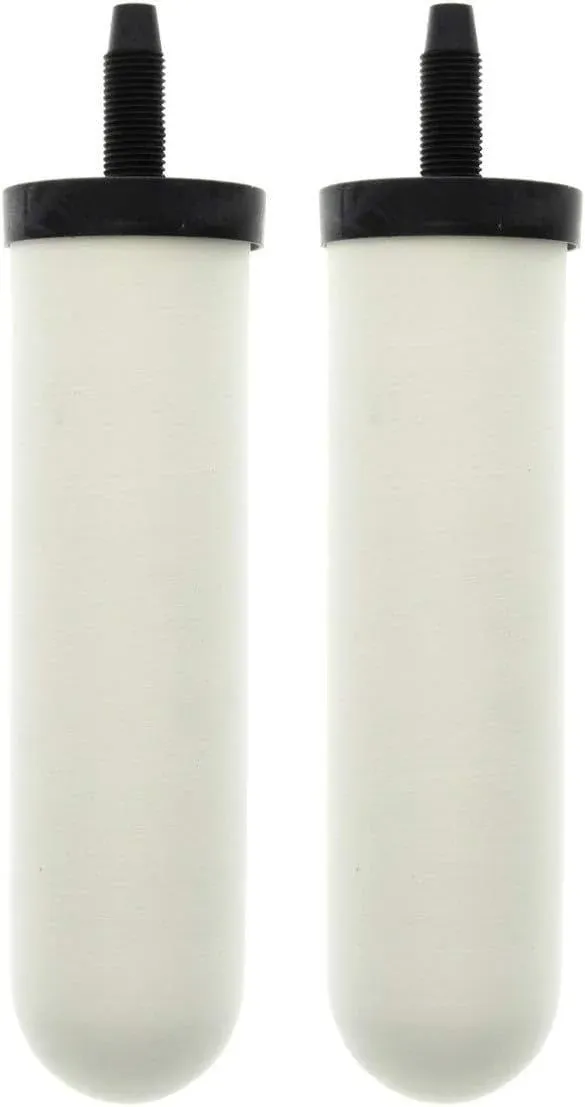
The Doulton ATC Super Sterasyl is the gold standard for certified ceramic gravity filters. NSF testing on expired filters means the performance numbers are real, not theoretical. The 400-gallon lifespan costs more per gallon than carbon alternatives, but the triple-stage ceramic filtration is genuinely superior.
Key specs: Silver-impregnated ceramic + GAC + heavy metal media, 400 gallons per filter (6 months), NSF 42/53/372/401, fits Doulton, British Berkefeld, Berkey, Phoenix, Purewell, ProOne, Alexapure. Price range: $$50–$100.
- Broadest NSF certification of any gravity replacement filter — 42/53/372/401
- True 3-stage filtration in one candle: ceramic + activated carbon + heavy metal media
- Made in UK with 200 years of Doulton manufacturing heritage
- Relatively short lifespan at 400 gallons per filter compared to carbon-only alternatives
- Slow gravity-fed flow rate at approximately 0.3 GPH per candle
2. British Berkefeld Doulton Water Filter Candle BB9-2 Compatible (2-Pack) — Best Berkey BB9-2 Ceramic Replacement
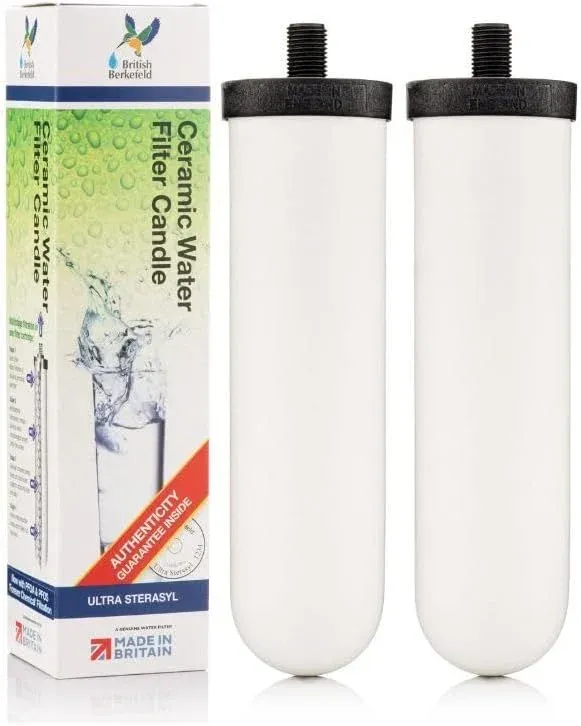
The Berkefeld BB9-2 Compatible Candle offers Berkey owners a UK-made ceramic alternative with 800-gallon lifespan. The Ultra Sterasyl technology is proven across Doulton's product line, even though this specific listing is newer.
Key specs: Ceramic microfilter + GAC + heavy metal media (Ultra Sterasyl), 800 gallons per filter (6 months), fits Berkey, British Berkefeld, Phoenix, Purewell, ProOne, Alexapure. Price range: $$50–$100.
- Direct Berkey BB9-2 replacement with proven Doulton Ultra Sterasyl ceramic technology
- Higher gallon rating at 800 gallons per filter vs standard Doulton's 400
- Made in UK by a company with 200 years of ceramic filtration heritage
- Newer ASIN with only 25 reviews — limited long-term community feedback
- Slower flow rate than Berkey black carbon filters due to ceramic filtration
3. ProOne 9-Inch Gravity Water Filter Replacement G-Series (2-Pack) — Best High-Capacity Gravity Replacement
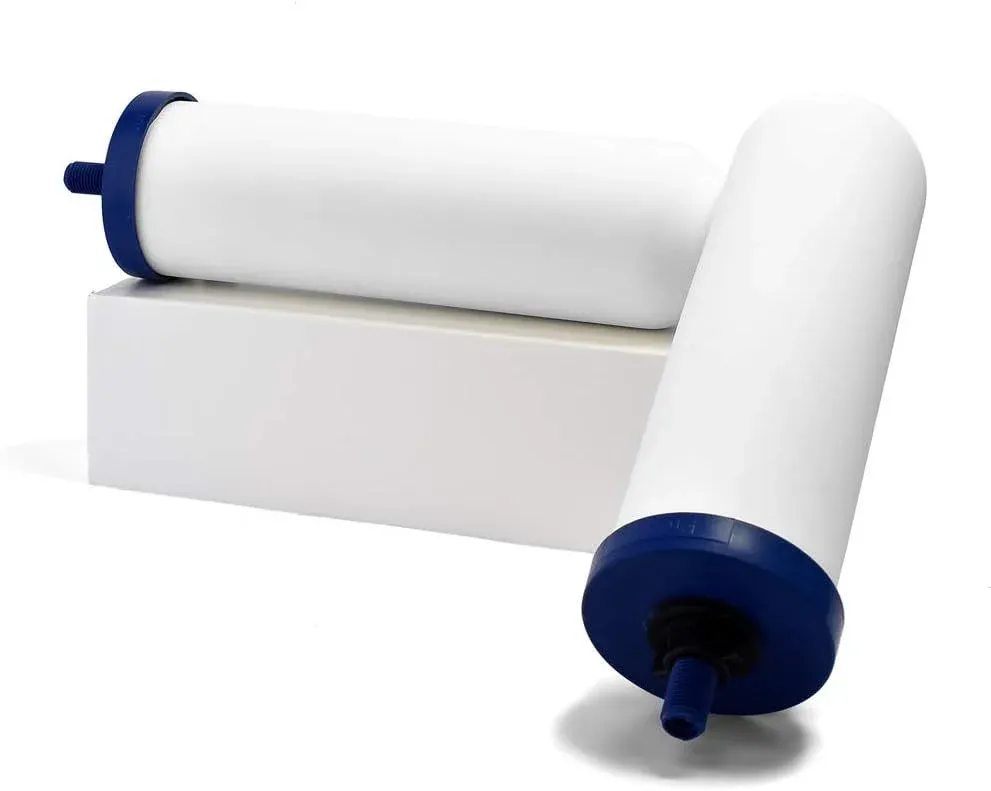
The ProOne 9-inch G-Series is the highest-capacity gravity replacement filter available with built-in fluoride removal and the broadest certification stack. The discontinuation makes this a buy-now-while-available recommendation for ProOne Big+ owners.
Key specs: 3-stage G3.0 (ceramic shell + carbon granular + carbon block core), 1,200 gallons per filter, IAPMO — NSF 42/53/401/372/P231, fits ProOne Big+, Propur King, Berkey, AlexaPure, British Berkefeld, Doulton, Purewell. Price range: $$100–$250.
- Highest capacity per filter at 1,200 gallons — outlasts most competitors by 3-10x
- Built-in fluoride removal without separate add-on filters
- IAPMO certified to NSF 42/53/401/372 plus Protocol P231 for microbiological purification
- Being discontinued as ProOne transitions to Culligan MaxClear — buy while available
- Slow initial flow rate during 3-4 cycle break-in period
4. ProOne G-Series 7-Inch Gravity Filter Replacement (2-Pack) — Best Universal-Fit Gravity Replacement
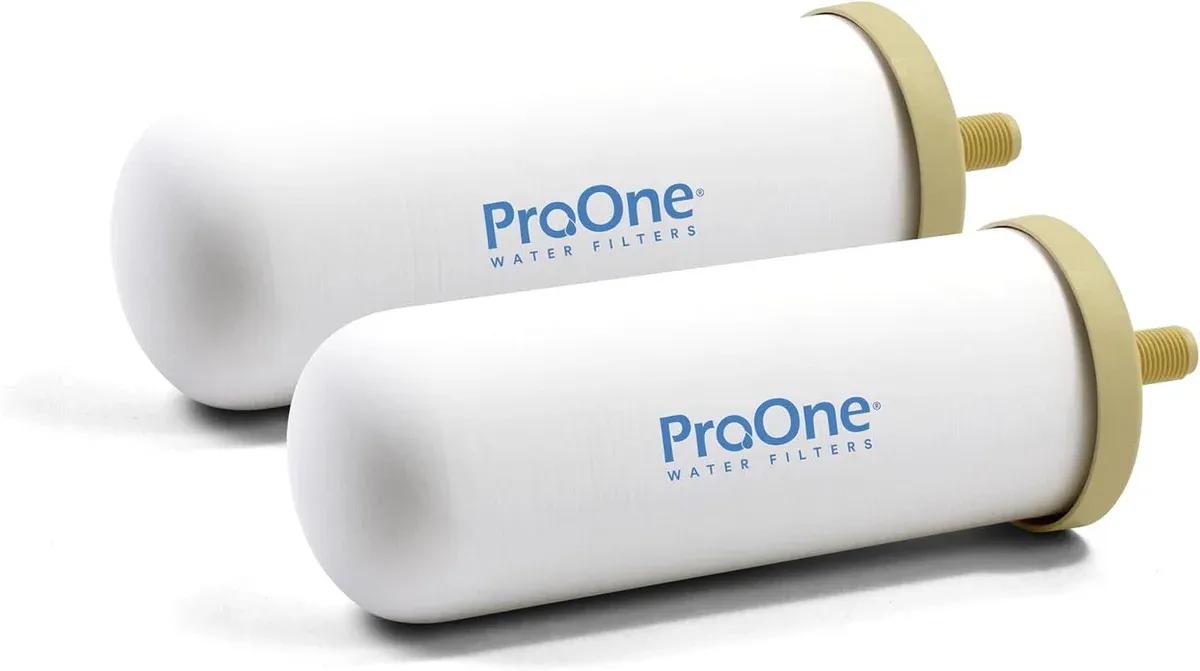
The ProOne 7-inch G-Series is the standard-size version of their best gravity filter — same certifications and fluoride removal as the 9-inch, with broader compatibility across gravity systems. Being discontinued makes this a time-sensitive recommendation.
Key specs: 3-stage G3.0 (ceramic shell + carbon granular + carbon block core), 1,000 gallons per filter, IAPMO — NSF 42/53/401/372/P231, fits ProOne Traveler+/Big II/Big+, Berkey, AlexaPure, British Berkefeld, Doulton, Purewell. Price range: $$100–$250.
- Same all-in-one G3.0 technology as the 9-inch in the more standard 7-inch form factor
- Built-in fluoride removal without add-on filters
- IAPMO certified to NSF 42/53/401/372 plus Protocol P231
- Being discontinued — ProOne transitioning to Culligan MaxClear
- Slow initial flow rate and potential chemical smell during break-in
5. Waterdrop NSF/ANSI 42/372 Gravity Filter Replacement for Berkey BB9-2 (2-Pack) — Best Budget Gravity Replacement Filter
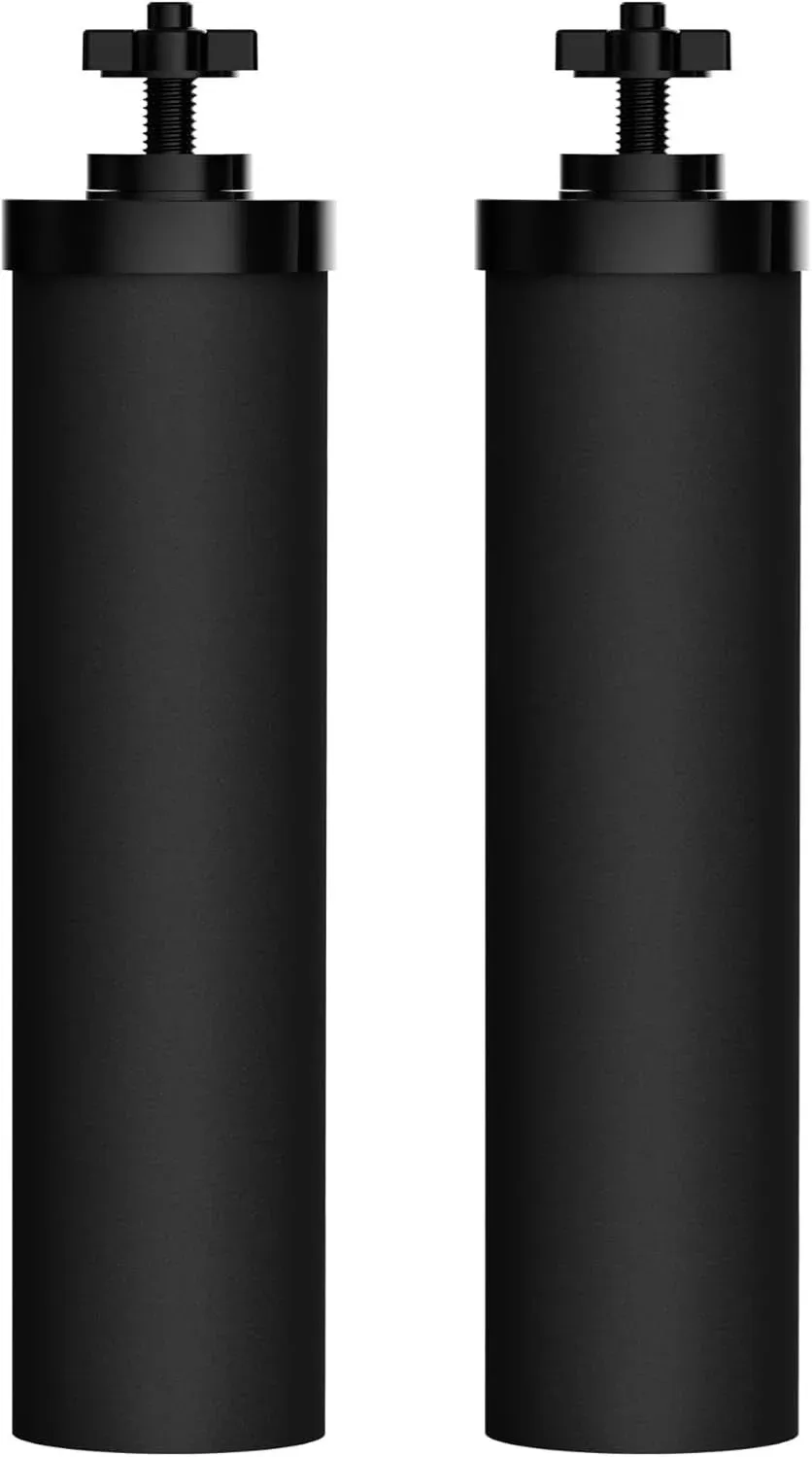
The Waterdrop BB9-2 Replacement is the clear winner on cost-per-gallon and filter lifespan, but it's a fundamentally different product from ceramic filters. Carbon-only filtration is great for chlorine and taste, but lacks the pathogen barrier that ceramic provides. Best for municipal water users who want affordability over maximum filtration.
Key specs: Natural coconut shell activated carbon, 6,000 gallons per pair (3,000 per filter), NSF 42/372, fits Berkey (Travel/Big/Royal/Imperial/Crown), ProOne, Alexapure, Waterdrop King Tank, Doulton. Price range: $$50–$100.
- Longest lifespan by far at 6,000 gallons per pair — 10-15x the capacity of ceramic filters
- Lowest price for a 2-pack and lowest cost-per-gallon — roughly a penny per gallon
- Natural coconut shell activated carbon is sustainable and effective for chlorine removal
- No ceramic outer shell — carbon-only filter lacks physical barrier for bacteria/pathogen removal
- Limited certifications: only NSF 42 and 372 — no NSF 53, 401, or P231
6. Culligan MaxClear 7-Inch Gravity Water Filter Replacement (2-Pack) — Best Next-Gen Gravity Filter Technology
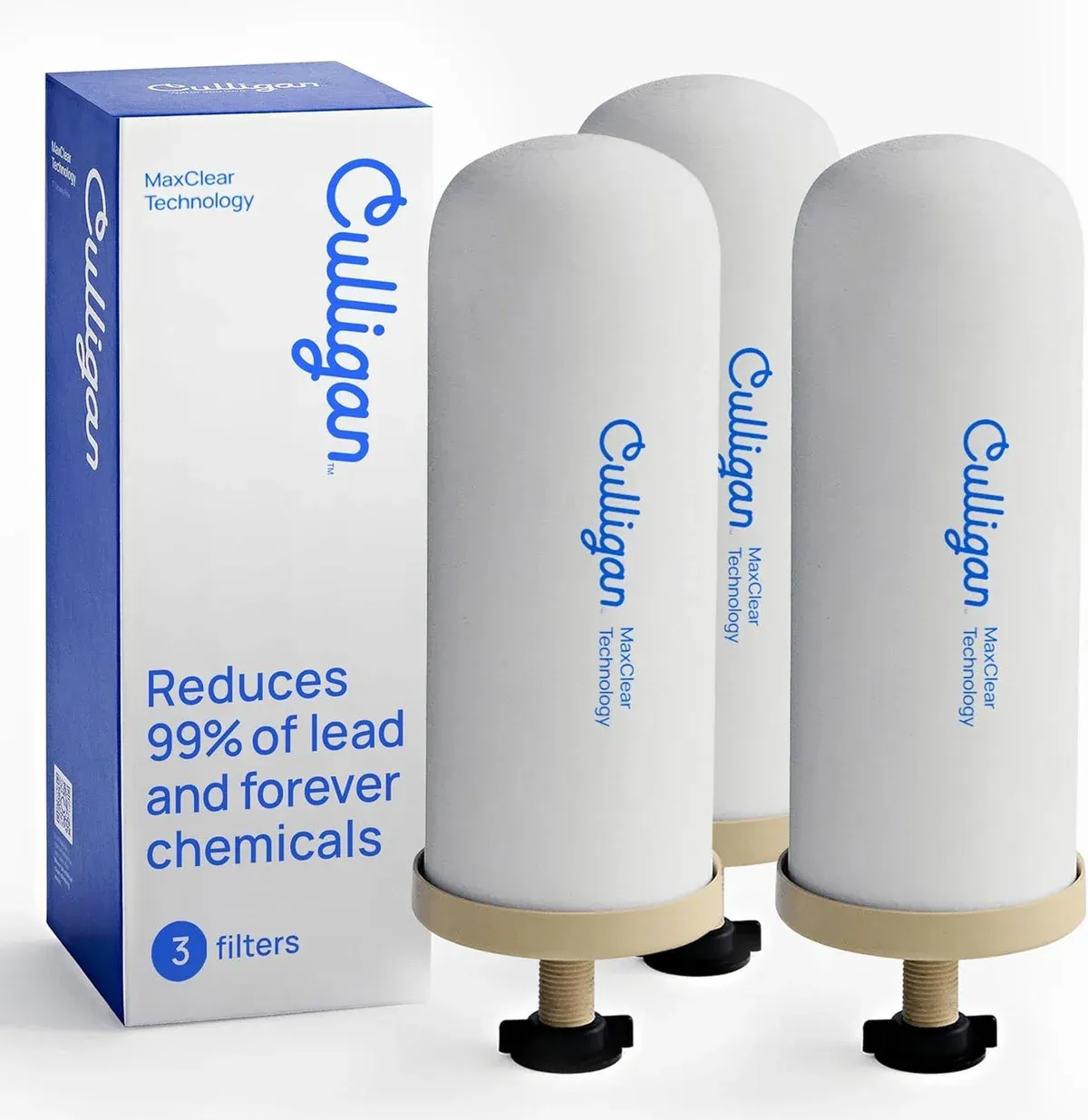
The Culligan MaxClear inherits ProOne's technology and certifications with Culligan's brand backing. However, the drastically shorter 50-gallon lifespan makes ongoing costs prohibitive. Best for users who prioritize certified PFAS and fluoride removal above all else and accept the higher operating cost.
Key specs: Ceramic outer shell + high-flow carbon block + GAC (coconut shell), 50 gallons per filter (6 months), IAPMO — NSF 42/53/401, fits Universal: Berkey, ProOne, AlexaPure, British Berkefeld, Doulton, Purewell. Price range: $$100–$250.
- Direct successor to ProOne G3.0 backed by Culligan's 75+ year brand reputation
- Triple-media hybrid design: ceramic + carbon block + granular activated carbon
- IAPMO certified to NSF 42/53/401 for lead, PFAS, and microplastics reduction
- Extremely short lifespan at only 50 gallons per filter — highest cost-per-gallon of any gravity replacement
- Very slow flow rate at 0.3 GPH — takes 8 hours to filter a full chamber with 3 filters
How We Chose Our Picks
Gravity replacement filters demand a different evaluation framework than complete gravity systems or portable filters. We prioritized certification breadth (how many NSF standards the filter meets and whether testing was conducted by an accredited lab like IAPMO), cost per gallon (the true ongoing expense that purchase price alone obscures), filter lifespan (rated gallons per element under the manufacturer's test conditions), compatibility (how many housing brands the filter physically fits), contaminant removal spectrum (what the filter is independently verified to remove), and filtration technology (ceramic barrier, carbon adsorption, or hybrid).
We weighted certification and independent testing most heavily. The gravity filter market has been flooded with unverified claims since Berkey's EPA issues, and several products rely on self-reported lab data or outdated test results. Products with current NSF certifications through accredited bodies like IAPMO received higher marks than those relying solely on manufacturer-funded testing. We also contacted each manufacturer directly to confirm discontinuation timelines, compatibility claims, and certification status.
Cost-per-gallon analysis revealed dramatic differences that purchase price alone obscures. A filter pair in the budget-friendly tier lasting 6,000 gallons costs roughly one cent per gallon. A mid-range filter pair lasting 100 gallons costs well over a dollar per gallon — more than a hundred times more per unit of filtered water. Both numbers are accurate. Both products serve different users. Our recommendations account for this reality rather than defaulting to the cheapest upfront option.
Ceramic vs Carbon: The Fundamental Decision
The choice between ceramic and carbon filtration is the most consequential decision you will make when selecting a gravity replacement filter. These are fundamentally different technologies with different strengths, and understanding the distinction saves you from buying the wrong filter for your water source.
Ceramic Filtration: The Physical Barrier
Ceramic filters work by forcing water through a microporous ceramic shell — typically rated at 0.5 to 0.9 microns absolute. The pores are physically too small for bacteria (1-10 microns) and protozoan cysts (4-15 microns) to pass through. This is mechanical filtration: the ceramic wall acts as a physical barrier regardless of flow rate, contact time, or how depleted the filter is. A ceramic filter at 90% of its rated lifespan blocks bacteria just as effectively as one straight out of the box, because the pore size does not change.
The ceramic shell also provides a secondary benefit: it is cleanable. When flow rate drops due to sediment buildup on the outer surface, you can scrub the ceramic with an abrasive pad to remove the accumulated layer and restore flow. Most ceramic filters tolerate 50-100 cleaning cycles before the shell becomes too thin. This makes ceramic filters more practical for turbid or sediment-heavy water sources, where carbon-only filters would clog and require full replacement.
The trade-off is that ceramic alone does not remove dissolved chemicals, chlorine, or volatile organic compounds. That is why the best ceramic filters — the Doulton Super Sterasyl, ProOne G-Series, and Culligan MaxClear — include activated carbon and heavy metal media inside the ceramic shell. The ceramic handles biological threats; the carbon handles chemical threats. Together, they cover the full contaminant spectrum.
Carbon Filtration: The Chemical Sponge
Carbon filters work through adsorption — dissolved contaminants chemically bond to the enormous surface area of activated carbon granules. One gram of activated carbon has a surface area of roughly 3,000 square meters. This makes carbon exceptionally effective at removing chlorine, volatile organic compounds, herbicides, pesticides, and taste/odor compounds. High-quality carbon filters like the Waterdrop BB9-2 can reduce chlorine by 99% and heavy metals by 99.9%.
The limitation is that carbon provides no physical barrier against biological contaminants. Bacteria and protozoa can pass through the carbon bed, especially as the filter ages and channels form in the carbon granules. Carbon filters do reduce bacterial counts through adsorption contact, but they cannot achieve the 99.99% bacterial reduction (log-4) that ceramic filters provide through mechanical exclusion. For treated municipal water where pathogens are already neutralized by the utility, this distinction is largely academic. For well water, rainwater, or any source where biological contamination is possible, it is the difference between safe water and a gastrointestinal illness.
When Each Technology Matters
Choose ceramic or hybrid if: You filter well water, rainwater, creek water, or any untreated source. You want a physical pathogen barrier as a safety backstop. You are preparing for emergencies where municipal treatment may fail. You have sediment-heavy water and want a scrubbable, restorable filter.
Choose carbon-only if: You filter treated municipal water and want improved taste and chlorine removal at the lowest possible cost per gallon. Your primary concerns are chemical contaminants rather than biological ones. You prioritize filter longevity and low operating cost above maximum filtration breadth.
Cost of Ownership: What You Actually Spend Per Gallon
Purchase price per 2-pack tells you almost nothing about what a gravity replacement filter actually costs to operate. The meaningful metric is cost per gallon of filtered water, which accounts for both the purchase price and the rated lifespan. The differences are staggering.
The Waterdrop BB9-2 sits in the budget-friendly tier and carries a 6,000-gallon rated lifespan, making it the most economical gravity replacement filter by an enormous margin. Over a year of typical household use (500-700 gallons), you spend once and do not think about it again for two to three years.
The Doulton Super Sterasyl and British Berkefeld BB9-2 Compatible are both mid-range in purchase price, but their lifespans differ meaningfully. The Doulton is rated at 400 gallons per filter while the Berkefeld is rated at 800 gallons per filter, making the Berkefeld notably more economical per gallon filtered despite a similar shelf price. Both are reasonable for the level of ceramic protection provided.
The ProOne G-Series filters offer the best value among ceramic-hybrid options. Both the 9-inch and 7-inch variants carry high per-filter gallon ratings, and both include fluoride removal at no additional cost — an add-on that would require a separate filter from other brands, adding to their effective cost per gallon.
The Culligan MaxClear is the outlier. Priced in the mid-range tier but rated at only 50 gallons per filter, the true cost per gallon makes it genuinely prohibitive for primary daily-use filtration. A household relying solely on the MaxClear for all drinking and cooking water would spend considerably more annually than any other option in this roundup. The Culligan provides superior contaminant removal including certified fluoride and PFAS reduction, but it makes more economic sense as a secondary system dedicated to drinking water only, with a longer-life filter handling cooking and general use.
Most gravity system owners dramatically underestimate their water consumption because they think in terms of fills-per-day rather than gallons-per-month. A standard 2.25-gallon Berkey filled twice daily consumes 4.5 gallons per day — roughly 135 gallons per month. At that rate, a Culligan MaxClear filter pair lasts less than one month, while a Waterdrop pair lasts over three years. Count your fills for one week, multiply by chamber capacity, and annualize. That number determines which filter is actually affordable for your household.
Compatibility Guide: Which Filters Fit Which Housings
Gravity filter housings use a standardized mounting system — a threaded stem that passes through a hole in the upper chamber with a wingnut or washer securing it from below. Most replacement filters with a 7-inch height and standard stem diameter are physically interchangeable across brands. However, "physically fits" and "performs optimally" are not the same thing. Diameter, flow rate, and chamber clearance all affect real-world performance.
Berkey Systems (Travel, Big, Royal, Imperial, Crown)
All six filters in this roundup are compatible with Berkey housings. The original Black Berkey Elements are no longer available since New Millennium ceased US operations. The direct replacement options are the British Berkefeld BB9-2 Compatible (closest to a drop-in swap with ceramic technology), the Waterdrop BB9-2 (the most affordable and popular third-party option), and the Doulton Super Sterasyl (strongest NSF certification). The ProOne G-Series and Culligan MaxClear also fit but have a larger 2.75-inch diameter that may reduce clearance in smaller Berkey models like the Travel Berkey.
ProOne Systems (Traveler+, Big II, Big+)
ProOne systems were designed for the G-Series filters and accommodate the wider 2.75-inch diameter. All six filters in this roundup fit ProOne housings. If you own a ProOne system and want to continue with the same technology after the G-Series discontinuation, the Culligan MaxClear is the official successor — but note the dramatically shorter 50-gallon lifespan versus ProOne's 1,000-1,200 gallon rating. The Doulton Super Sterasyl is a strong alternative with broader NSF certification and a longer lifespan than the MaxClear.
British Berkefeld and Doulton Systems
These UK-made systems accept standard 7-inch candles natively. The Doulton Super Sterasyl and British Berkefeld BB9-2 Compatible are purpose-built for these housings. The Waterdrop BB9-2 and ProOne G-Series also fit with the standard mounting hardware. The 9-inch ProOne filter requires a housing with sufficient upper chamber height — verify your model's internal clearance before ordering.
Other Compatible Systems
Alexapure Pro, Purewell gravity systems, Waterdrop King Tank, and Phoenix gravity filters all use the standard gravity filter mounting system. All six replacement filters in this roundup should physically fit these housings. However, we recommend confirming the stem diameter and length with the housing manufacturer before purchasing, as some budget gravity systems use non-standard mounting dimensions.
Who Should Buy Which
Municipal Water Users (City/Town Supply)
If your water comes from a treated municipal supply, the primary filtration goals are chlorine removal, taste improvement, and reduction of chemical contaminants like lead and PFAS that may leach from aging infrastructure. Biological pathogens are already addressed by the municipal treatment plant. For this use case, the Waterdrop BB9-2 is the clear winner — it removes chlorine at 99%, lasts 6,000 gallons, and costs roughly one cent per gallon. The ceramic pathogen barrier of more expensive filters is unnecessary when your water utility already provides log-4 or higher bacterial treatment.
The exception is if you specifically want fluoride or PFAS removal from municipal water. In that case, the ProOne 9-Inch G-Series (while still available) or the Culligan MaxClear provide certified fluoride removal. The Culligan's 50-gallon lifespan makes it expensive for primary use, so consider dedicating it to a secondary system used only for drinking water.
Well Water and Off-Grid Users
Untreated well water, spring water, and rainwater collection require a physical pathogen barrier. Carbon-only filters are not sufficient for these sources. The Doulton Super Sterasyl offers the most trustworthy ceramic filtration with quad NSF certification — the testing was conducted on expired filters at full rated capacity, meaning the performance numbers reflect worst-case conditions rather than fresh-out-of-box ideals. For well water with known sediment issues, the scrubbable ceramic shell provides a practical maintenance advantage over carbon-only options.
If your well water has fluoride concerns (common in certain geological regions), the ProOne 9-Inch G-Series combines ceramic-hybrid filtration with built-in fluoride removal — the most comprehensive single-filter solution for untreated water. Stock up before the discontinuation if this fits your needs.
Berkey Owners Replacing Black Elements
If you owned a Berkey system and need to replace the original Black Berkey Elements, your decision depends on your priorities. For the closest physical replacement, choose the British Berkefeld BB9-2 Compatible — it is a 7-inch ceramic candle designed specifically as a Berkey drop-in. For the lowest ongoing cost, choose the Waterdrop BB9-2 — it physically fits Berkey housings and costs a fraction per gallon. For the strongest certification, choose the Doulton Super Sterasyl — quad NSF certification from one of the oldest names in water filtration.
Be aware that ceramic filters will not pass the Berkey community's popular red dye test. This does not indicate a defective filter — it reflects a fundamental difference in how ceramic and carbon filtration work. Ceramic blocks particles by pore size, and red dye molecules are far smaller than the bacteria and cysts the filter is designed to remove.
Emergency Preparedness Stockpilers
For emergency kits, prioritize ceramic or ceramic-hybrid filters that provide biological protection from potentially contaminated water sources. The Doulton Super Sterasyl and ProOne G-Series are the strongest choices. Stock replacement filters in their original sealed packaging — ceramic filters stored dry have an indefinite shelf life. Carbon-only filters like the Waterdrop are adequate for emergency use with pre-treated or municipal water (such as during a boil-water advisory where you want extra protection), but they should not be the sole filtration barrier for untreated floodwater or surface water sources.
Renters and Small Households
Renters who cannot install under-sink or whole-home filtration are one of the most common gravity filter user groups, and their needs differ from off-grid homesteaders. The primary concerns are typically chlorine taste, lead from older plumbing, and general water quality improvement — not biological threats from untreated sources. For this profile, the Waterdrop BB9-2 is almost always the right choice: low purchase cost, minimal maintenance, and a multi-year lifespan that suits renters who may move before the filter expires. A single set of filters can travel with the gravity housing from apartment to apartment, making the total cost of ownership genuinely competitive with pitcher filters over a two-to-three-year horizon. If the rental has older galvanized or lead-solder plumbing and lead is a concern, the Doulton Super Sterasyl's NSF 372 lead-free certification and verified lead reduction provide an extra layer of confidence worth the higher per-gallon cost.
Frequently Asked Questions
Why do ceramic filters fail the Berkey red dye test?
Is ceramic filtration safer than carbon filtration for gravity systems?
Why is ProOne discontinuing the G-Series filters?
What are the best alternatives to Berkey Black Berkey filters?
Do any gravity replacement filters remove fluoride?
How long do gravity replacement filters actually last?
Can I mix different brands of replacement filters in the same gravity housing?
How do I know when it is time to replace my gravity filter elements?
Our Recommendation
For the best overall gravity replacement filter, the Doulton ATC Super Sterasyl 2-Pack earns our Editor's Pick with quad NSF certification (42/53/372/401) tested on expired filters — the gold standard for verified performance. For maximum capacity with fluoride removal, the ProOne 9-Inch G-Series delivers 1,200 gallons per filter with built-in fluoride media — buy now while stock lasts before the discontinuation. Berkey owners looking for a direct ceramic replacement should choose the British Berkefeld BB9-2 Compatible — same UK ceramic heritage, 800-gallon lifespan, no priming required. Budget-conscious municipal water users cannot beat the Waterdrop BB9-2 at a budget-friendly price per pair and 6,000-gallon capacity — one cent per gallon of clean, great-tasting water. And for those who need certified PFAS and fluoride removal above all else, the Culligan MaxClear inherits ProOne's technology with Culligan's brand backing — just factor in the 50-gallon lifespan and significantly higher cost-per-gallon before committing.
Check Top Pick on AmazonTrack These Picks
We'll let you know when our picks for this category change.
Only when something changes. Unsubscribe anytime.