Waterdrop BB9-2 vs Doulton Super Sterasyl: Carbon vs Ceramic in 2026
Quick Verdict: The Waterdrop BB9-2 ($50–$100) is the budget champion — $66 for 6,000 gallons delivers the lowest cost-per-gallon in gravity filtration at roughly one penny per gallon. The Doulton Super Sterasyl ($50–$100) is the comprehensive protection champion — NSF 42/53/372/401 certified with a 0.9-micron ceramic pathogen barrier that carbon cannot match. Choose Waterdrop for municipal water value. Choose Doulton for well water, untreated sources, or any scenario where biological protection matters.
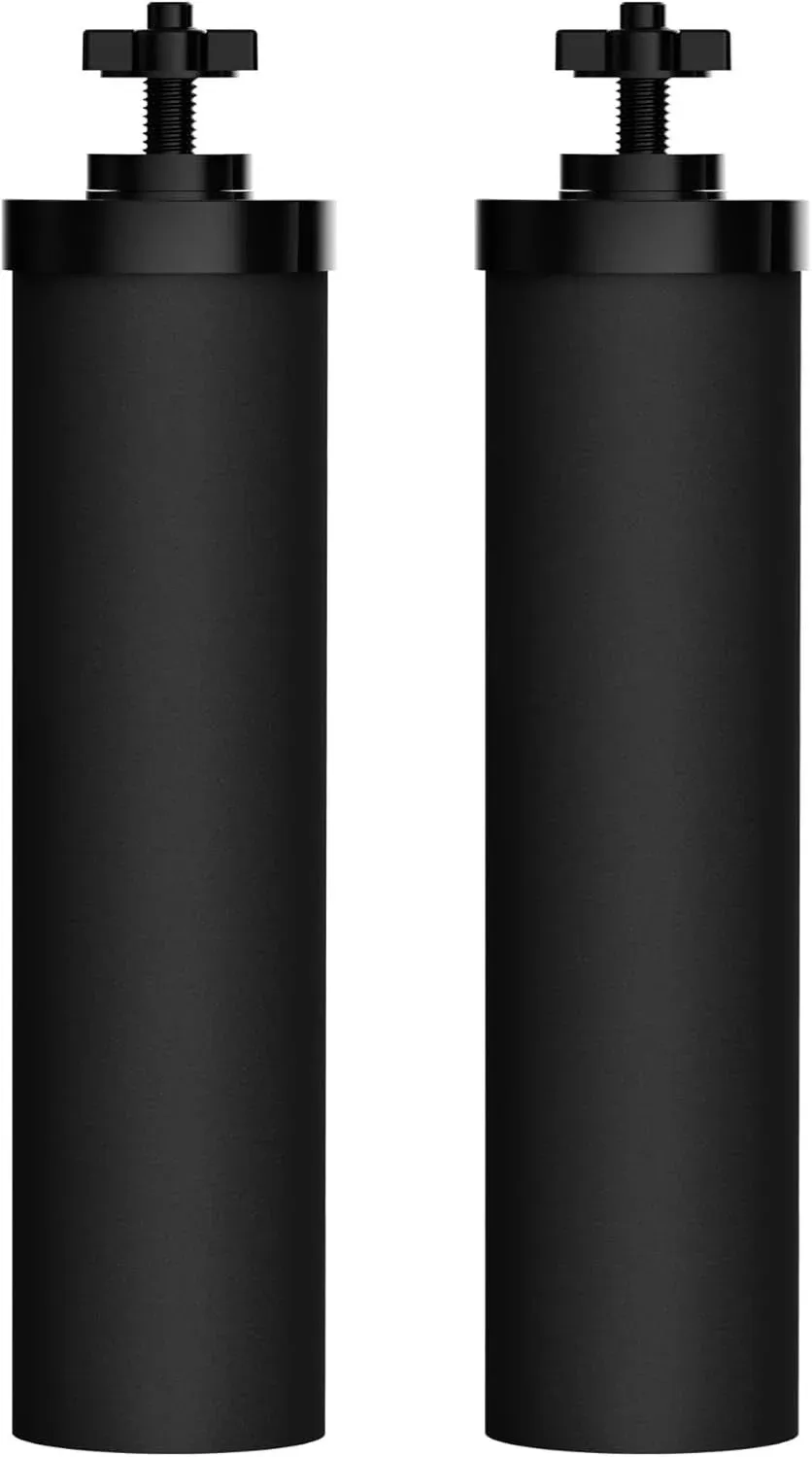
Waterdrop NSF/ANSI 42/372 Gravity Filter Replacement for Berkey BB9-2 (2-Pack)
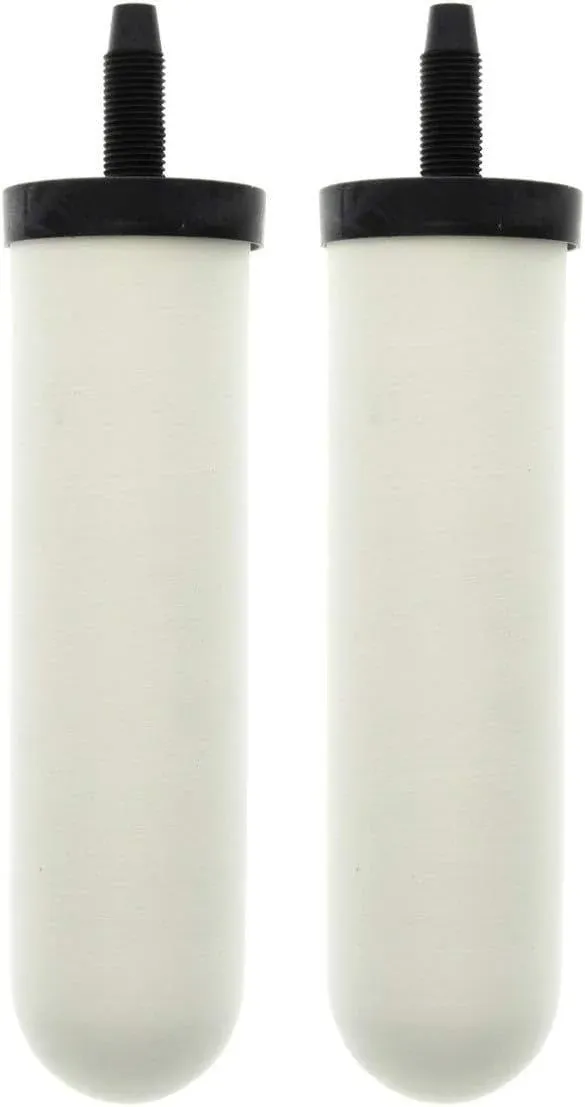
Doulton ATC Super Sterasyl Ceramic Water Filter for Gravity Systems (2-Pack)
At a Glance
| Feature | Editor's Pick Waterdrop NSF/ANSI 42/372 Gravity Filter Replacement for Berkey BB9-2 (2-Pack) | Doulton ATC Super Sterasyl Ceramic Water Filter for Gravity Systems (2-Pack) |
|---|---|---|
| Price | $50–$100 | $50–$100 |
| Filtration | Natural coconut shell activated carbon | Silver-impregnated ceramic + GAC + heavy metal media |
| Filter Life | 6,000 gallons per pair (3,000 per filter) | 400 gallons per filter (6 months) |
| Certifications | NSF 42/372 | NSF 42/53/372/401 |
| Contaminants | Chlorine (99%), heavy metals (99.9%), sediment, odor | Bacteria 99.99%, cysts, chlorine, lead, microplastics, PFAS, pharmaceuticals |
| Pack Size | — | — |
| Check Price | Check Price |
The Waterdrop BB9-2 and Doulton Super Sterasyl sit at opposite ends of the gravity replacement filter spectrum. One is the cheapest way to filter water through a gravity system — a penny per gallon, no frills, carbon simplicity. The other is the most thoroughly certified ceramic candle available — four NSF certifications, a physical pathogen barrier, and 200 years of British manufacturing heritage. They are not competing for the same buyer. Understanding which buyer you are is the entire decision.
Category-by-Category Breakdown
Cost Per Gallon and Total Economics
The Waterdrop BB9-2 2-pack costs $66 and delivers 6,000 gallons — approximately $0.011 per gallon. The Doulton Super Sterasyl 2-pack costs $84 and delivers 800 gallons — approximately $0.105 per gallon. The Doulton costs nearly 10 times more per gallon of filtered water. For a household filtering 3 gallons per day (1,095 gallons annually), the Waterdrop costs about $12 per year in filters while the Doulton costs about $115 per year. Over five years, the difference is approximately $515 — a meaningful sum for any household budget.
The Waterdrop's cost efficiency comes from two structural advantages: a lower upfront price ($66 vs $84) and a dramatically longer rated lifespan (6,000 gallons vs 800 gallons per pair). Both advantages stem from the simpler single-media carbon construction. There are no ceramic micropores to clog, no heavy metal media to exhaust — just coconut shell carbon with an enormous adsorption capacity that processes water efficiently for thousands of gallons.
However, raw cost-per-gallon does not capture the full value equation. The Doulton's $0.105/gallon buys four independent NSF certifications, a physical ceramic pathogen barrier, heavy metal reduction media, and manufacturing traceability to a UK facility with two centuries of expertise. If you need any of those capabilities — and many water sources demand them — the Waterdrop's lower price is irrelevant because it simply cannot deliver what the Doulton provides. You cannot save money by buying the wrong filter for your water.
Certifications and Verified Performance
The Doulton Super Sterasyl holds the most comprehensive certification portfolio of any gravity replacement filter: NSF 42 (chlorine, taste, odor), NSF 53 (lead, cysts, VOCs — health-critical contaminants), NSF 372 (lead-free material compliance), and NSF 401 (pharmaceuticals, herbicides, emerging contaminants). These four certifications mean every performance claim has been independently verified by NSF International under controlled laboratory conditions with challenge water spiked to known contaminant concentrations.
The Waterdrop BB9-2 holds NSF 42 and NSF 372 — certifications that cover chlorine taste/odor reduction and lead-free material compliance. Notably absent are NSF 53 (health contaminants) and NSF 401 (emerging contaminants). The Waterdrop claims 99.9% heavy metal removal and other contaminant reduction on its product listing, but these claims are not backed by NSF 53 or any health-related certification. The difference between "NSF 42 certified" and "NSF 42/53/401 certified" is substantial: it is the difference between verified taste improvement and verified health protection.
For buyers who switched to gravity filters specifically because they wanted independently verified water purification — many of whom left Berkey over certification concerns — the Doulton's NSF 53/401 certifications provide the accountability they were seeking. The Waterdrop's NSF 42 certification is legitimate but covers only aesthetic concerns. If your decision to use a gravity filter was motivated by health protection rather than taste preference, the certification gap between these two products is decisive.
Pathogen and Biological Protection
The Doulton Super Sterasyl uses a 0.9-micron absolute silver-impregnated ceramic outer shell. This is a physical barrier — a wall of ceramic with pores smaller than bacteria, cysts, and most particulates. Water must pass through this micropore structure to reach the internal carbon and heavy metal media. Bacteria (0.2-5 microns) and cysts like Giardia (8-15 microns) and Cryptosporidium (4-6 microns) physically cannot fit through the 0.9-micron pores. The silver impregnation inhibits bacterial colonization of the ceramic surface during storage.
The Waterdrop BB9-2 has no ceramic component and no physical pathogen barrier. Its coconut shell activated carbon adsorbs dissolved chemicals through surface binding — a completely different mechanism that does not block, trap, or remove living organisms. Bacteria and cysts can pass through carbon media unimpeded because the media lacks the micropore structure needed to physically exclude them. The Waterdrop makes no pathogen removal claims and holds no biological removal certifications.
This distinction cannot be overstated. A ceramic filter and a carbon filter are as different in their biological protection as a screen door and an open doorway. Both allow air through; only one keeps mosquitoes out. If your water source has any realistic possibility of containing biological contaminants — and this includes well water, rainwater, spring water, surface water, or even municipal water during boil advisories — the Waterdrop provides zero protection against the most dangerous category of waterborne threats. The Doulton's ceramic shell is specifically engineered for this purpose and verified through manufacturer testing showing 99.99% bacterial removal.
Chemical Contaminant Removal
Both filters contain activated carbon and both effectively remove chlorine, which is the primary taste and odor concern for municipal water users. The Waterdrop uses natural coconut shell activated carbon — one of the most effective carbon sources for chlorine adsorption, with high surface area per gram and strong chemical affinity. The Doulton also contains granular activated carbon (GAC) inside the ceramic shell, plus a dedicated heavy metal reduction media for lead and dissolved metals.
The Doulton's NSF 53 certification verifies lead removal to specific thresholds under controlled testing conditions. Its NSF 401 certification verifies pharmaceutical and emerging contaminant removal. The Waterdrop claims heavy metal reduction on its listing but lacks the NSF 53 certification to independently verify the claim. For chlorine and basic taste improvement, both filters perform comparably. For verified lead, VOC, and pharmaceutical removal, the Doulton is the only independently substantiated option.
It is worth noting that neither filter is certified for PFAS removal. If PFAS are a specific concern in your water — check the EWG Tap Water Database for your zip code — neither the Waterdrop nor the Doulton addresses this contaminant class. The ProOne G-Series and Culligan MaxClear both claim PFAS reduction, though with their own respective trade-offs in cost and availability.
Filter Lifespan and Maintenance
The Waterdrop BB9-2 is rated at 6,000 gallons per pair — 3,000 gallons per individual filter. This is by far the longest lifespan of any gravity replacement filter on the market. At typical household consumption rates, a Waterdrop pair could theoretically last 3-5 years before the carbon media is fully saturated. In practice, Waterdrop recommends annual replacement regardless of gallons as a hygiene precaution. Even on an annual schedule, the Waterdrop requires only one purchase per year — minimal disruption to your routine.
The Doulton Super Sterasyl is rated at 400 gallons per filter — 800 gallons per pair. At 3 gallons per day, a pair lasts about 267 days before the ceramic micropores become too clogged to maintain useful flow. However, ceramic candles are cleanable — scrubbing the outer shell with a Scotch-Brite pad removes accumulated sediment and restores flow rate. Each candle can be scrubbed 100+ times before the ceramic shell thins enough to require replacement. This scrubbing extends the practical lifespan well beyond the rated gallon count, though the internal carbon and heavy metal media continue to deplete regardless of external cleaning.
Maintenance requirements differ significantly. The Waterdrop is essentially zero-maintenance — install it, forget it, replace it once a year. The Doulton requires periodic scrubbing every 4-8 weeks (depending on sediment load) to maintain flow rate. Some owners appreciate the hands-on maintenance as a tangible connection to their water system; others prefer the Waterdrop's set-and-forget simplicity. The Waterdrop does require initial priming that can take 24-48 hours of soaking to fully purge trapped air from the carbon media — a first-day inconvenience that the Doulton (which requires minimal priming) does not share.
Community Trust and Track Record
The Waterdrop BB9-2 has over 2,036 Amazon reviews with a 4.3-star rating — the largest review base of any gravity replacement filter. This extensive community feedback provides strong confidence in the product's consistency: thousands of Berkey owners have successfully used the Waterdrop as a replacement filter and reported positive results for taste improvement and chlorine reduction. The high review volume also means common issues (like difficult priming) are well-documented with community-sourced solutions.
The Doulton Super Sterasyl has 85 Amazon reviews with a 4.3-star rating. The lower review count reflects a smaller market presence on Amazon rather than any product deficiency — Doulton has been manufacturing ceramic water filters since 1826 and supplies ceramic candles worldwide for humanitarian, military, and residential applications. The 200-year track record is unmatched in the industry, but it does not translate directly into Amazon review volume. For buyers who research primarily through Amazon reviews, the Waterdrop's community is vastly larger and more informative.
Both products have responsive customer service. Waterdrop is frequently praised for warranty replacements and responsive support. Doulton, as a UK-based manufacturer, has a more traditional customer service model — effective but less consumer-facing than the direct-to-consumer Waterdrop brand. Neither product has significant quality control complaints in proportion to their sales volume.
Matching the Filter to Your Water Source
The single most important factor in this decision is your water source — not your budget, not your brand preference, not the reviews. Different water sources present different threats, and these two filters address fundamentally different threat categories. Choosing the wrong filter for your water source is not just suboptimal; it can be unsafe.
Treated municipal water (city water): Your water has already been chlorinated, UV-treated, and/or ozonated to eliminate biological threats. What remains are residual chlorine (taste), dissolved chemicals, and trace contaminants. The Waterdrop's carbon filtration addresses these effectively at an unbeatable price. The Doulton provides redundant biological protection you likely do not need, plus verified chemical contaminant removal you may or may not need depending on your specific utility's water quality. For most municipal water users, the Waterdrop is the better value.
Private well water: Your water has not been treated for biological contaminants unless you have installed a treatment system (UV, chlorination, etc.). Bacteria, protozoa, and parasites may be present. The Doulton's ceramic barrier is essential — the Waterdrop provides no biological protection. Additionally, well water often contains elevated levels of lead, arsenic, and other naturally occurring contaminants that the Doulton's NSF 53 certification addresses. Well water users should always choose a ceramic filter unless they have a verified upstream treatment system.
Emergency preparedness: In an emergency, your water source is uncertain. Municipal treatment may be compromised, you may be collecting rainwater or surface water, and biological contamination is a realistic threat. The Doulton Super Sterasyl is the minimum appropriate filter for emergency scenarios — its ceramic shell provides a physical barrier against pathogens regardless of water source quality. The Waterdrop is not suitable for emergency water filtration.
Who Should Get Which?
Get the Waterdrop NSF/ANSI 42/372 Gravity Filter Replacement for Berkey BB9-2 (2-Pack) if...
- You are on treated municipal water and want the lowest filter cost
- Your primary goals are chlorine removal and taste improvement
- Budget is a significant factor — $66 for 6,000 gallons is unmatched
- You prefer zero-maintenance filters with no periodic scrubbing
- You want the largest Amazon community for support and troubleshooting
Get the Doulton ATC Super Sterasyl Ceramic Water Filter for Gravity Systems (2-Pack) if...
- Your water source could contain bacteria or biological contaminants
- You use well water, rainwater, or need emergency preparedness capability
- NSF 42/53/372/401 certification — the broadest available — is a priority
- You want verified lead and pharmaceutical removal, not just claimed
- You value UK manufacturing heritage and 200 years of ceramic expertise
Pro Tip: Not sure which filter your water needs? Look up your address at the EWG Tap Water Database (free at ewg.org/tapwater). If your water comes from a municipal source and the report shows no biological violations, the Waterdrop is a safe and economical choice. If your water comes from a well, a private source, or the EWG report shows biological concerns, the Doulton ceramic is the responsible choice. Five minutes of research can save you from buying the wrong filter.
The Case for Owning Both
Here is an unconventional recommendation that makes practical sense for a subset of gravity filter owners: buy both. Keep the Waterdrop BB9-2 installed as your everyday filter for municipal water — it costs a penny per gallon and handles chlorine and taste beautifully. Store a sealed Doulton Super Sterasyl 2-pack as your emergency backup. Ceramic candles store indefinitely when kept dry. If your municipal water ever faces a boil advisory, a contamination event, or you need to filter questionable water for any reason, swap in the Doulton candles within minutes.
The total cost of this two-tier strategy is $150 ($66 Waterdrop + $84 Doulton) — roughly the same as a single 2-pack of ProOne G-Series filters. You get the everyday value of the cheapest gravity filter on the market plus the emergency protection of the most certified ceramic candle available. The Waterdrop handles 99% of your normal use at minimal cost, and the Doulton sits ready for the 1% of scenarios where biological protection is critical.
This approach is particularly relevant for homeowners in areas with aging municipal infrastructure, where boil water notices occur annually. Rather than paying the Doulton premium every day for a threat that materializes once a year, you pay the Waterdrop rate for daily use and have the Doulton ready when you actually need it. It is a layered strategy that respects both your budget and your safety.
Frequently Asked Questions
Can the Waterdrop BB9-2 remove bacteria like the Doulton Super Sterasyl?
Why is the Waterdrop so much cheaper per gallon than the Doulton?
Is the Doulton Super Sterasyl worth 10x more per gallon than the Waterdrop?
Do both filters fit my Berkey system?
Which filter is better for emergency preparedness?
Can I use the Waterdrop for well water if I also have a UV sterilizer?
Our Final Recommendation
For most households — the majority who drink treated municipal water — the Waterdrop BB9-2 is the right filter. At $66 for 6,000 gallons, it delivers effective chlorine reduction and taste improvement at the lowest per-gallon cost in gravity filtration. The 2,036 Amazon reviews and 4.3-star rating confirm that this is a reliable, well-understood product that consistently meets expectations. If your water is biologically safe and you want to improve its taste without spending more than necessary, the Waterdrop is the clear choice.
For households with biological risk in their water — well water users, off-grid properties, rainwater harvesters, and emergency preparedness planners — the Doulton Super Sterasyl is the right filter, and it is not close. The 0.9-micron ceramic pathogen barrier combined with NSF 42/53/372/401 certification provides independently verified protection against the full spectrum of waterborne threats. The higher cost per gallon ($0.105 vs $0.011) is the price of comprehensive, certified protection — and for the water sources that need it, there is no cheaper substitute that actually works.
Know your water. Match your filter to your threat. The cheapest filter that covers your actual risks is always the best value — whether that is the Waterdrop at a penny per gallon or the Doulton at a dime.