Best Water Filters for Off-Grid Living
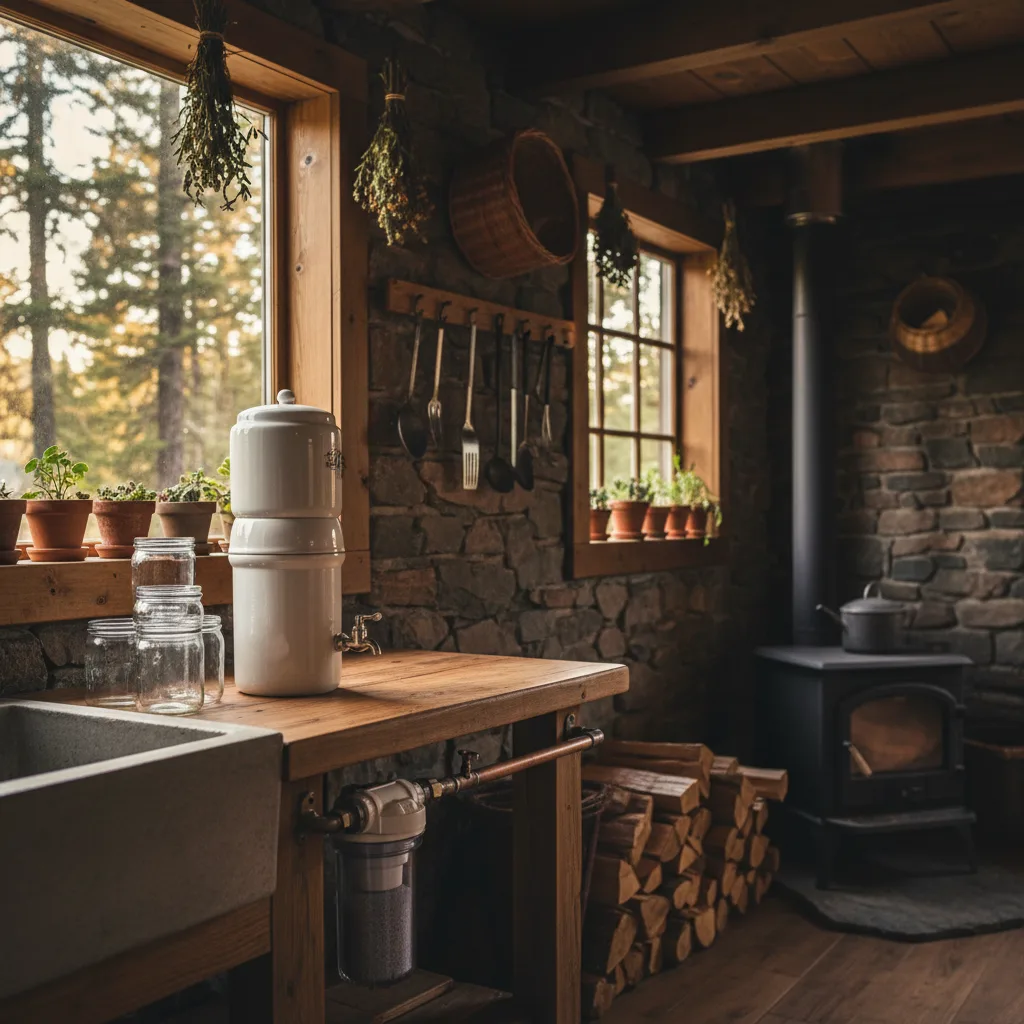
Off-grid living means being your own water utility. Whether you source water from a well, spring, rainwater collection, or surface water, you need a multi-layer filtration strategy that works without municipal infrastructure. We design a complete system using products we have tested and trust.
Why Off-Grid Water Filtration Requires a System Approach
In a grid-connected home, your municipality handles water treatment before it reaches your pipes. Off-grid, you are the water treatment plant. This means dealing with challenges that city dwellers never face: sediment from well water or surface sources, bacteria and parasites in untreated water, dissolved minerals and metals from geological sources, and seasonal variation in water quality.
No single filter handles all of these challenges. The solution is a layered system where each stage addresses specific contaminants, protecting both your plumbing infrastructure and your family's health. A well-designed off-grid water system has three layers:
- Whole-house sediment filtration: Catches physical particles before they reach your plumbing, water heater, and appliances. Essential for any non-municipal water source.
- Point-of-use purification: An under-sink RO system or countertop purifier that produces drinking-quality water at the kitchen tap. This is where the serious contaminant removal happens.
- Portable backup: Filter straws and purification tablets for emergencies, outdoor use, and redundancy if your primary system goes down.
This three-layer approach provides the reliability that off-grid living demands. If any single layer fails, the other two maintain your water safety while you troubleshoot or wait for replacement parts.
What to Consider for Off-Grid Water Filtration
Off-grid filtration has unique requirements compared to suburban home filtration:
- Power requirements: Under-sink RO systems like the iSpring operate on water pressure alone — no electricity needed. Countertop units like the Bluevua need an outlet. Plan your filtration around your power budget.
- Water source variability: Well water quality stays relatively consistent. Spring water varies seasonally. Rainwater quality depends on collection surface cleanliness. Surface water is the most variable and requires the most treatment.
- Resupply logistics: Replacement filters may take days or weeks to arrive at a remote address. Stock at least 12 months of replacement cartridges at all times.
- Temperature extremes: Unheated structures can expose filters to freezing temperatures, which permanently damages hollow fiber membranes and RO membranes. Insulate or heat your filtration area in cold climates.
- Multiple use points: You may need filtered water at the kitchen, bathroom, and outdoor work areas. Design your system with enough capacity and distribution points for your lifestyle.
Top Picks for Off-Grid Living
1. iSpring RCC7AK 6-Stage Reverse Osmosis System — Best Under-Sink RO for Off-Grid
The iSpring RCC7AK is the cornerstone of an off-grid drinking water system. Its 6-stage reverse osmosis removes 93-98% of TDS, over 98.9% of lead, and 96-99% of PFAS — addressing the dissolved contaminants that are common in well water and that sediment filters cannot touch. The alkaline remineralization stage adds back beneficial minerals, improving both taste and pH balance.
Critically for off-grid use, this system operates entirely on water pressure — no electricity required. If your well system produces at least 40 PSI (standard for most submersible well pumps), the iSpring works exactly as it would in a grid-connected home. The 75 GPD production rate is more than sufficient for a household's drinking and cooking needs.
At $100–$250, it is the most cost-effective RO system on the market with this level of filtration. Annual replacement filter costs are modest. Over a 5-year span, the total cost of ownership amounts to less than a dollar a day for laboratory-grade drinking water from your well.
Price Range: $100–$250 | Full Review | Check Price on Amazon
2. Membrane Solutions 5-Micron String Wound Sediment Filter (6-Pack) — Whole-House Pre-Filtration
Every off-grid water system starts with sediment filtration. The Membrane Solutions 5-micron cartridges fit standard 10x2.5-inch housings and capture 99% of the sand, silt, rust, and debris that well water and surface water carry. Without this first line of defense, sediment clogs and damages everything downstream — your RO membrane, water heater, faucet aerators, and appliances.
For off-grid properties, install the sediment filter housing as close to the water entry point as possible, before the pressure tank if your system has one. The 6-pack at $25–$50 provides a full year of filters, and having a year's supply on hand means you are never caught without a replacement on your remote property.
Change cartridges every 1-3 months depending on sediment load. In spring when runoff increases sediment in well water, you may need monthly changes. In winter with stable groundwater, cartridges last longer. The visual inspection tells the story — when the white cartridge turns brown, it is time.
Price Range: $25–$50 | Full Review | Check Price on Amazon
3. Bluevua RO100ROPOT-UV Countertop Reverse Osmosis System — Best for Properties Without Plumbing
For off-grid cabins, tiny homes, or properties without under-sink plumbing, the Bluevua countertop RO provides full reverse osmosis with UV sterilization from any surface and electrical outlet. Fill the reservoir manually from your water supply, plug it in, and the 6-stage system produces purified water into the glass carafe. No plumbing connections needed.
The UV sterilization is particularly valuable for off-grid properties that rely on rainwater or surface water. These sources can harbor bacteria and viruses that even RO membranes may not fully address at their seals. The UV light kills 99.99% of biological threats as a final safety stage. The glass carafe prevents plastic leaching that becomes a concern in off-grid environments where containers may sit in warm conditions.
The Bluevua draws approximately 100-150 watts during operation — easily supplied by a modest solar panel and battery system. A single filtering cycle runs about 15-20 minutes, consuming less energy than a light bulb running for an hour.
Price Range: $250–$500 | Full Review | Check Price on Amazon
4. Timain 4-Stage Water Filter Straw (2-Pack) + MSR Aquatabs Water Purification Tablets (30-Pack) — Portable Backup System
No off-grid water plan is complete without a portable backup. If your primary well pump fails, your power system goes down during bad weather, or you need water while working away from the cabin, a filter straw and purification tablets provide immediate water access from any natural source.
The Timain 2-pack provides two straws: one for your person and one stashed at a water source access point. Aquatabs add virus protection that the straw alone cannot provide. Together at Under $25 + Under $25, this backup kit is remarkably affordable and could sustain your drinking water needs for weeks if your primary system goes offline.
For off-grid living, consider keeping backup filter straws at multiple locations: your cabin, your workshop or outbuilding, and in your vehicle. The cost of redundancy is trivial compared to the risk of being without safe water when your well pump needs repair.
Timain Price Range: Under $25 | Review | Check Price
Aquatabs Price Range: Under $25 | Review | Check Price
Off-Grid Water System Design Tips
- Size your storage for worst-case scenarios: Calculate your daily water use and multiply by the longest period you might be without water production (pump failure, extended cloudy days for solar-powered systems). Size your storage tank for at least 3-7 days of autonomy.
- Protect filtration from freezing: RO membranes and hollow fiber filters are permanently destroyed by freezing. Install your filtration system in an insulated, heated space. If your cabin is unheated during winter absences, drain your RO system completely before leaving.
- Install a pressure gauge after your well pump: Most RO systems need at least 40 PSI to operate effectively. If your well system produces inconsistent pressure, add a booster pump before the RO system.
- Stock 12+ months of replacement filters: Order replacement cartridges before you need them. Remote delivery delays and seasonal road access limitations can leave you waiting weeks for a filter that is available overnight in the city.
- Maintain a water log: Track TDS readings, filter change dates, and water source observations in a simple notebook. This data helps you spot trends (declining well output, seasonal quality changes) before they become problems.
Who Should Build This System — And Who Should Adapt It
The three-layer system described in this guide is designed for the most common off-grid scenario: a permanent or semi-permanent residence drawing water from a drilled well with a submersible pump. If that describes your situation, the iSpring RCC7AK plus Membrane Solutions sediment pre-filters plus portable backup is the complete answer. You will have cleaner drinking water than most municipal supplies, and your plumbing infrastructure will be protected from the abrasive sediment that shortens the lifespan of pumps, valves, and water heaters.
If your situation differs, here is how to adapt the system. Seasonal cabin users who visit only in warm months and drain the plumbing before winter should prioritize the Bluevua countertop RO rather than installing a permanent under-sink unit — it travels with you and requires no winterization procedure. Properties relying primarily on rainwater should add UV sterilization at the point of use regardless of which RO system they choose, since rainwater collected from roof surfaces carries a higher biological load than groundwater. Tiny homes and converted vans with limited under-sink space will find the Bluevua's countertop footprint a practical fit, while still gaining the same RO and UV protection as a full fixed installation.
Users who should skip the iSpring and opt for a simpler setup are those drawing water from a proven, tested municipal source even at an off-grid location (some rural properties still connect to a water co-op). In that case, a quality under-sink carbon block filter may be sufficient, and a full six-stage RO adds more complexity than the water quality requires.
Seasonal Maintenance Calendar for Off-Grid Water Systems
Staying ahead of maintenance is far easier than reacting to a failed filter or a contaminated water supply. The following schedule applies to the three-layer system described in this guide and assumes a year-round occupied property drawing from a well.
- Monthly: Visually inspect sediment filter cartridge. Replace immediately if the cartridge is heavily discolored or if water pressure at the tap has dropped noticeably. Log a TDS reading from your RO output and compare it to your baseline — a rising TDS reading is the first sign that your RO membrane is beginning to degrade.
- Every 3 months: Replace sediment cartridge on a fixed schedule regardless of appearance if your water has high sediment load. Inspect all filter housing O-rings for cracking or debris. Check the RO storage tank pressure with a tire gauge — it should read in the range specified by the manufacturer when empty.
- Every 6 months: Replace the RO pre-filters (stages 1-3 in most 6-stage systems). Flush the RO membrane with a full tank cycle. Test water with a TDS meter and compare to your baseline. Inspect all supply line connections under the sink for moisture or mineral deposits.
- Annually: Replace the RO membrane and post-filters. Conduct a full certified lab test of your water source — do not rely on TDS readings alone to certify biological and chemical safety. Replenish your backup filter straw and Aquatabs supply. Inspect and clean storage tank access points if your system uses above-ground holding tanks.
- Before extended absence: If your property will be unoccupied and unheated for more than a week in freezing temperatures, drain the RO system completely, remove filter cartridges, and store them in a temperature-stable location. A frozen RO membrane is not repairable.
Frequently Asked Questions
Can I run a reverse osmosis system on solar power?
What is the best water source for an off-grid property?
How much water storage do I need for off-grid living?
Do I need to filter rainwater for drinking?
How do I maintain a water filtration system off-grid?
What is the cheapest way to set up off-grid water filtration?
How do I know if my well water needs additional treatment beyond sediment filtration?
Can I use a gravity filter instead of an RO system for off-grid drinking water?
Our Top Pick for Off-Grid Living
The iSpring RCC7AK 6-Stage Reverse Osmosis System combined with Membrane Solutions sediment pre-filters is the foundation of any serious off-grid water system. The sediment filter protects your plumbing infrastructure, and the RO system produces drinking water that is cleaner than most municipal supplies. Add a Timain filter straw and Aquatabs as portable backup, and you have complete water independence at a surprisingly low total first-year cost.
Get Filter Picks Delivered
One email per week. Honest reviews, no spam.
No spam. Unsubscribe anytime.