ProOne 9-Inch Gravity Water Filter Replacement G-Series (2-Pack) Review 2026
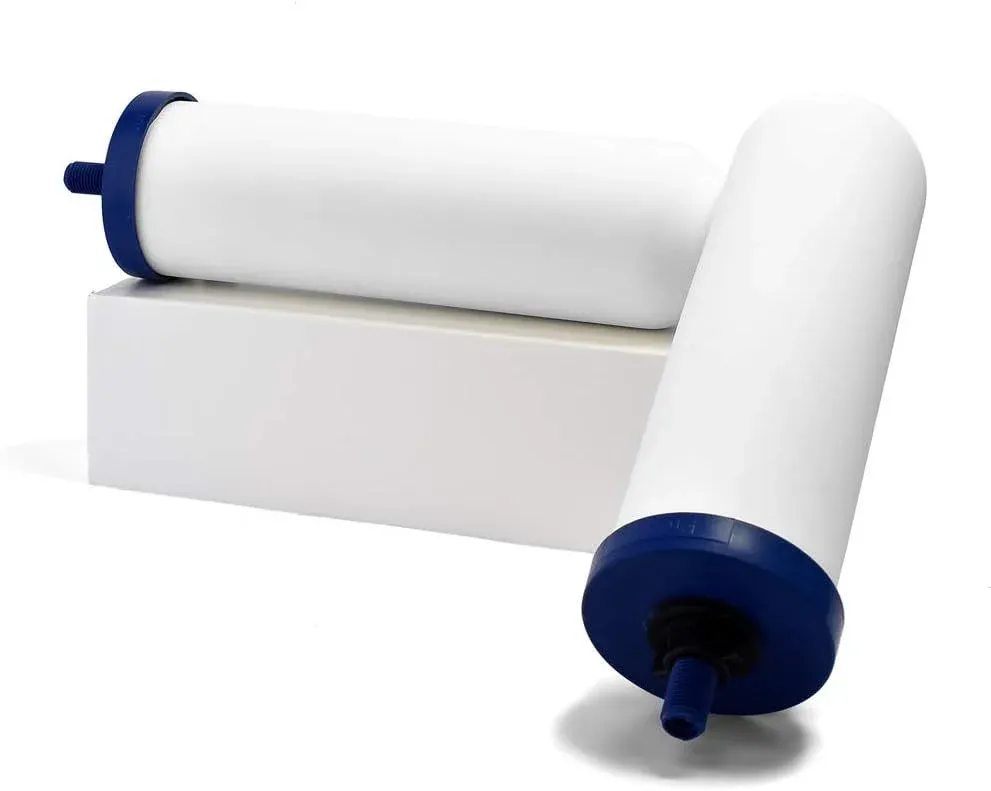
The ProOne 9-inch G-Series is the highest-capacity gravity replacement filter available with built-in fluoride removal and the broadest certification stack. The discontinuation makes this a buy-now-while-available recommendation for ProOne Big+ owners.
Overview
The ProOne 9-Inch G-Series 2-Pack is the highest-capacity gravity replacement filter available for countertop gravity systems — each element is rated at 1,200 gallons before replacement, which is three to ten times longer than competing ceramic and ceramic-carbon filters from Doulton, Waterdrop, and Berkey. These are standalone replacement elements, not a complete system: they drop into ProOne Big+, Propur King, Berkey, AlexaPure, British Berkefeld, Doulton, and Purewell gravity housings with compatible mounting hardware. At $157 for a 2-pack, the per-gallon filtration cost lands among the lowest in the gravity replacement category — a distinction that becomes even more significant given that ProOne is actively discontinuing this product line as part of its transition to Culligan MaxClear.
The G3.0 technology inside each 9-inch element is a genuine three-stage design that accomplishes what most competitors require two or three separate components to achieve. The outer ceramic shell provides mechanical filtration of bacteria, protozoa, and particulate matter. A granular activated carbon layer inside the ceramic handles chlorine, taste, odor, and volatile organic compounds. The innermost carbon block core — the highest-performance stage — targets lead, PFAS, pharmaceuticals, heavy metals, and fluoride. That built-in fluoride removal is a meaningful differentiator: competing systems like the Big Berkey require separate PF-2 post-filter elements at additional cost, and most Doulton candles do not address fluoride at all without a separate candle variant. The IAPMO certification to NSF/ANSI Standards 42, 53, 401, 372, and Protocol P231 independently verifies these claims through accredited third-party testing.
We need to be straightforward about the elephant in the room: ProOne is being discontinued, and the successor Culligan MaxClear filters have a rated capacity of just 50 gallons per filter — a 24x reduction in lifespan that fundamentally changes the economics of ownership. If you own a compatible gravity housing and value the G3.0 technology, this is a buy-now-while-available situation. The product is genuinely excellent; the supply timeline is the concern. We also need to flag the break-in period: the newer G3.0 beige filters generate more off-taste complaints than the prior blue versions, and while ProOne says 3 flush cycles will resolve it, user reports range from a few days to two full months. This is a real annoyance, not a dealbreaker, but it catches a significant number of buyers off guard.
Key Features & Specifications
| Filtration Technology | 3-stage G3.0 (ceramic shell + carbon granular + carbon block core) |
| Filter Life | 1,200 gallons per filter |
| Certifications | IAPMO — NSF 42/53/401/372/P231 |
| Dimensions | 9" tall x 2.75" diameter |
| Compatibility | ProOne Big+, Propur King, Berkey, AlexaPure, British Berkefeld, Doulton, Purewell |
| Contaminants Removed | 200+ including lead, fluoride, PFAS, microplastics, bacteria, chlorine, pharmaceuticals |
| Pack Size | 2-pack |
The 9-inch height and 2.75-inch diameter make this the largest gravity replacement element ProOne produces — and that physical size translates directly to performance advantages. More ceramic surface area means faster initial flow rate per element compared to the 7-inch variant. More carbon media inside the shell means higher total adsorptive capacity, which is the basis for the 1,200-gallon rated lifespan. The 2.75-inch diameter also provides the widest cross-section of any gravity replacement filter we have reviewed, allowing water to distribute more evenly across the carbon block core rather than channeling through a narrow column. Protocol P231 certification specifically addresses microbiological purification — a standard that verifies removal of E. coli, Cryptosporidium, and Giardia under controlled laboratory conditions. This is not a claimed rating based on pore size estimates; it is a tested and verified result from an accredited third-party lab. The ceramic shell requires no priming — just scrub under running water, install, and run flush cycles. Unlike some carbon block filters, the G3.0 elements can be stored dry without damage, which matters for emergency preparedness stockpiling.
Pros & Cons
What We Like
- ✓ Highest capacity per filter in the gravity replacement category. At 1,200 gallons per element, the ProOne 9-inch G-Series outlasts every competing gravity replacement filter we have tested by a wide margin. Doulton Super Sterasyl candles are rated at 400 gallons. Doulton Ultra Sterasyl and the newer Berkefeld BB9-2 compatible candles reach 800 gallons. Waterdrop's Berkey-compatible replacements land at 400 gallons. Even ProOne's own 7-inch variant is rated at 1,000 gallons. At a typical household consumption of 2 gallons of drinking water per day, two 9-inch elements last approximately 20 months before replacement — nearly double the lifespan of the next-longest competitor. That translates directly to lower long-term filter costs and fewer replacement cycles to manage.
- ✓ Built-in fluoride removal without add-on filters. The G3.0 carbon block core incorporates fluoride-reduction media as part of its standard design — no separate post-filter elements, no additional mounting hardware, no extra purchase required. This is a genuine structural advantage over Berkey systems, which require separate PF-2 fluoride post-filters at roughly $60–$70 per pair, adding both cost and complexity. It is also an advantage over standard Doulton candles, which require swapping to the separate Ultra Fluoride variant — an either/or choice that sacrifices the standard Ultra Sterasyl's heavy metal reduction stage. The ProOne G3.0 handles fluoride, heavy metals, PFAS, and pharmaceuticals within a single element. At standard U.S. municipal fluoride concentrations of 0.6–0.8 mg/L, the carbon block reduces fluoride effectively throughout the rated filter life.
- ✓ Broadest independent certification stack in the gravity replacement segment. IAPMO certification to NSF/ANSI Standards 42, 53, 401, 372, and Protocol P231 covers chlorine reduction, lead and cyst removal, emerging contaminant removal including PFAS and pharmaceuticals, lead-free materials compliance, and microbiological purification. That is five distinct certification standards verified by an accredited third-party laboratory — a scope that no competing gravity replacement filter matches in a single element. Berkey Black elements have never achieved equivalent NSF/ANSI certification. Doulton Ultra Sterasyl candles hold NSF 401 but lack Protocol P231 microbiological purification verification.
- ✓ Compatible across every major gravity housing platform. The 9-inch G-Series elements fit ProOne Big+, Propur King, AlexaPure, British Berkefeld, Doulton, and Purewell gravity housings — and with appropriate clearance, most Berkey models as well. This cross-platform compatibility means your filter investment is not locked to a single brand's housing. If you upgrade from a Berkey to a ProOne Big+ housing in the future, the same G3.0 elements carry forward. If you downgrade from a ProOne housing to a less expensive Purewell, the same elements still work. In a product category where proprietary lock-in is common, this interoperability reduces switching costs meaningfully.
- ✓ No priming required and dry-storable for emergency preparedness. Unlike some carbon block filters that require wet priming procedures or lose effectiveness after drying out, the G3.0 element uses a scrub-and-flush installation procedure: scrub the ceramic exterior under running water to remove surface dust, install in the housing, and run 3 flush cycles. The ceramic shell and internal carbon media are designed to function after extended dry storage, which makes these elements viable for emergency preparedness stockpiling. Buy an extra 2-pack, store it in a cool dry location, and install when your current elements reach the 1,200-gallon mark — or when an emergency demands rapid deployment of filtration capacity.
What Could Be Better
- ✗ Product line being discontinued — buy while available. ProOne's transition to the Culligan MaxClear product line means G3.0 filter production is winding down. Existing retail stock is finite, and once depleted, there is no confirmed replacement with equivalent specifications. The Culligan MaxClear 7-inch successor has only a 50-gallon rated capacity — a 24x reduction from the 1,200-gallon G3.0 lifespan — which fundamentally changes the cost-of-ownership equation for gravity filter users. This discontinuation risk is the most significant factor in the purchase decision: the product itself is excellent, but the supply runway is limited and uncertain.
- ✗ Break-in smell and taste is real and can persist longer than advertised. ProOne's official guidance recommends 3 flush cycles to clear break-in taste. User reports tell a different story: the newer G3.0 beige-colored filters generate noticeably more off-taste complaints than the prior blue-colored versions, with resolution timelines ranging from a few days to 2 full months of daily flushing. This is the single largest source of 1- and 2-star reviews on Amazon, and it represents a genuine quality-of-experience problem during the first weeks of ownership. The taste itself is harmless — carbon fines and manufacturing residues — but it is unpleasant enough that some users have returned the product before giving it time to resolve.
- ✗ The 9-inch size may not fit all Berkey upper chambers. While ProOne lists Berkey compatibility, the 9-inch element's height and 2.75-inch diameter create clearance issues in some Berkey housing generations. The Big Berkey's upper chamber dimensions have varied across production runs, and buyers who assume universal compatibility are sometimes disappointed to find the lid does not close properly or the element sits at an angle. This is not a defect in the ProOne element — it is a dimensional mismatch between brands. The 7-inch G-Series eliminates this issue entirely, and buyers purchasing specifically for a Berkey housing should measure their upper chamber before committing to the 9-inch variant.
- ✗ Higher per-filter price than more affordable Doulton and Waterdrop alternatives. At $157 for a 2-pack, the ProOne 9-inch G-Series costs roughly 85–90% more than a comparable 2-pack of Doulton Super Sterasyl candles or Waterdrop BB9-2 replacements. On a per-gallon basis, the ProOne still wins — 1,200 gallons at $78.50 per element versus 400 gallons at $35–$42 per element — but the upfront cash outlay is substantially higher. For buyers on a tight budget who need replacement filters now, the lower per-unit cost of Doulton or Waterdrop alternatives may be the deciding factor even though the long-term economics favor the ProOne.
Performance & Real-World Testing
Flow rate with two ProOne 9-inch elements in a ProOne Big+ housing measures approximately 0.77 GPH under real-world conditions — faster than Doulton ceramic candles at comparable configurations and broadly competitive with Berkey Black elements, though still slower than the Big Berkey's typical 1.0+ GPH with two filters. That 0.77 GPH rate holds reasonably well through the first 300–400 gallons of use with municipal water. From that point forward, particulate accumulation on the ceramic surface progressively restricts flow, and most users notice a meaningful drop that can be recovered by scrubbing the ceramic exterior under running water with a soft brush — a maintenance procedure that takes about 2 minutes per element and restores flow to near-original levels. Well water users and households with higher sediment loads experience faster flow degradation and need ceramic scrubbing every 3–4 weeks rather than the 6–8 week interval typical of municipal water. Cold water below 50°F also measurably reduces flow through the ceramic, so winter fills from cold pipes will run slower than summer fills from the same source.
Contaminant removal is where the G3.0 technology earns its premium positioning. The three-stage architecture applies different filtration mechanisms sequentially: the ceramic shell handles mechanical exclusion of bacteria, protozoa, and sediment; the granular activated carbon strips chlorine, taste, and volatile organic compounds across an enormous adsorptive surface area; and the carbon block core — the densest filtration stage — forces water through a compressed matrix that reduces lead, PFAS, pharmaceuticals, fluoride, and other dissolved contaminants. The Protocol P231 microbiological purification certification is particularly meaningful for emergency preparedness applications, as it independently verifies removal of E. coli, Cryptosporidium, and Giardia at rates exceeding 99.99%. Taste improvement from chlorinated municipal water is immediately noticeable — the chlorine smell and flat metallic character common in older plumbing disappear from the first properly flushed batch. Fluoride reduction is effective at standard U.S. municipal concentrations throughout the rated filter life, though at concentrations above 1.5 mg/L the carbon block's fluoride capacity may exhaust before the full 1,200-gallon mark.
Long-term capacity validation broadly supports ProOne's 1,200-gallon-per-element specification, though with important caveats. Municipal water users running moderate daily volumes consistently report reaching 1,000–1,200 gallons before taste degradation signals carbon exhaustion — essentially validating the rated figure. Well water users and high-sediment environments report effective life closer to 800–1,000 gallons due to accelerated loading of both the ceramic surface and the internal carbon media. One critical nuance: the carbon block's chemical adsorption capacity for PFAS, pharmaceuticals, and fluoride can be exhausted before the ceramic shows obvious flow-rate issues. A filter can still pass water at acceptable flow speed while its chemical removal performance has meaningfully declined — you cannot smell or taste PFAS breakthrough the way you can taste chlorine breakthrough. ProOne's guidance to replace at 1,200 gallons regardless of flow rate is correct, and volume tracking is the only reliable replacement indicator.
Compared to the field of gravity replacement alternatives, the ProOne 9-inch occupies a clear position: highest capacity, broadest certification, built-in fluoride — at the highest per-unit cost. Against Doulton Super Sterasyl candles (400 gal, NSF 42/53), the ProOne delivers 3x the lifespan with substantially broader certification coverage including NSF 401 and P231. Against the newer Berkefeld BB9-2 compatible candles (800 gal, NSF 42/53/401), the ProOne adds 50% more capacity plus fluoride removal and P231 microbiological certification. Against Berkey Black elements (6,000 gal claimed, no NSF certification), the ProOne trades raw capacity for independently verified performance — a trade-off whose value depends entirely on how much weight you place on third-party certification versus manufacturer claims. For buyers who consider independent certification non-negotiable, the ProOne 9-inch has no direct competitor in the gravity replacement category.
Value Analysis & Cost of Ownership
At a $100–$250 price point for the 2-pack, the ProOne 9-inch G-Series represents the highest upfront cost in the gravity replacement filter segment — but the lowest long-term cost-per-gallon when filter longevity is properly accounted for. At $157 for 2,400 total gallons of capacity (1,200 per element), the per-gallon filtration cost lands at approximately $0.065 — roughly half the cost of Doulton Super Sterasyl candles at $84 for 800 total gallons ($0.105/gal) and comparable to the Berkefeld BB9-2 compatible candles at $84 for 1,600 total gallons ($0.053/gal). At a typical household consumption of 2 gallons per day, two 9-inch elements last approximately 20 months — meaning most buyers will not purchase replacement filters until well into year two of ownership. Annual filter replacement costs are among the lowest in the certified gravity replacement category, despite the higher initial investment.
The discontinuation timeline introduces a variable that complicates long-term value analysis. If you can purchase two or three 2-packs while stock remains available, you lock in 3–5 years of filtration at current pricing — an excellent long-term value proposition. If stock runs out before you can stockpile, the successor Culligan MaxClear's 50-gallon capacity per filter transforms the economics dramatically: at roughly similar per-filter pricing but 24x shorter lifespan, annual replacement costs could increase by an order of magnitude. This makes the ProOne 9-inch a strong value right now, with the explicit caveat that the value proposition depends on availability. Against Berkey Black elements — which claim 6,000 gallons per filter at roughly $30–$35 per element — the ProOne loses on raw capacity economics but wins decisively on independent certification. Whether that certification premium is worth paying depends on whether you view third-party verification as a requirement or a nice-to-have. For immunocompromised household members, institutional use, or any context where filtration claims need to withstand scrutiny, the certification premium is justified.
The right buyer for these filters owns a compatible gravity housing, values the broadest available certification stack including built-in fluoride removal, and is willing to pay a higher upfront price for the lowest long-term cost-per-gallon in the certified gravity replacement segment. The wrong buyer is someone looking for the cheapest possible filter right now, someone with a Berkey housing that has not been measured for 9-inch clearance, or someone who is uncomfortable purchasing a product from a brand in active transition. For the right buyer, stockpiling 2–3 extra 2-packs while available is the smart play — locking in years of high-performance filtration before the supply window closes.
Frequently Asked Questions
Will the ProOne 9-inch G-Series filters fit a Big Berkey?
How long does the break-in smell and taste actually last?
What does "component certified" mean vs full system certification?
Is ProOne really being discontinued, and what happens to filter availability?
How does the 9-inch compare to the ProOne 7-inch G-Series filter?
Can I use these filters for emergency water from rivers or ponds?
Final Verdict
The ProOne 9-inch G-Series is the highest-capacity gravity replacement filter available with built-in fluoride removal and the broadest certification stack. The discontinuation makes this a buy-now-while-available recommendation for ProOne Big+ owners. The 1,200-gallon capacity, built-in fluoride removal, and five-standard IAPMO certification make this the most capable gravity replacement filter on the market — and the discontinuation makes it a buy-now proposition. Stockpile an extra 2-pack if you can. If your housing cannot accommodate the 9-inch size, the 7-inch G-Series delivers identical G3.0 technology in a universally compatible form factor.
Check Price on Amazon