British Berkefeld BB9-2 vs Waterdrop BB9-2: Ceramic vs Carbon in 2026
Quick Verdict: These are fundamentally different filter technologies sharing the same form factor. The Waterdrop BB9-2 ($50–$100) wins on budget and longevity — $66 for 6,000 gallons versus $84 for 1,600 gallons. The British Berkefeld BB9-2 ($50–$100) wins on filtration depth — its ceramic shell provides a physical pathogen barrier that carbon simply cannot match. Choose Waterdrop for municipal water on a budget. Choose Berkefeld if your water has any biological contamination risk.
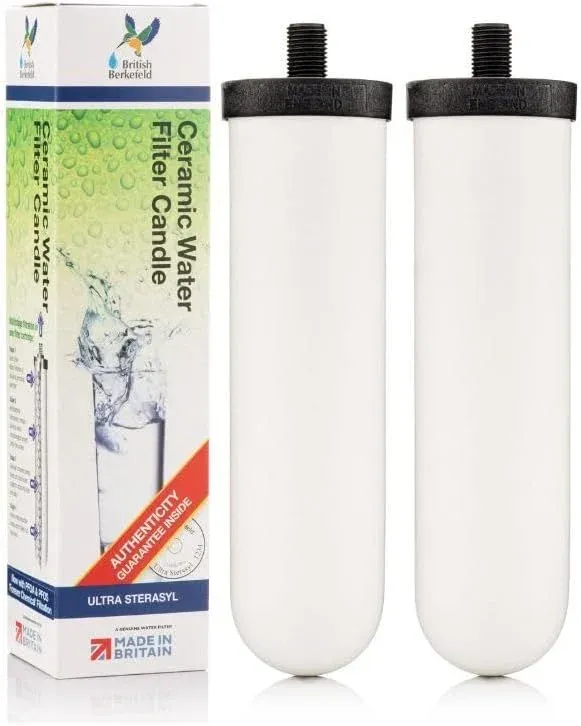
British Berkefeld Doulton Water Filter Candle BB9-2 Compatible (2-Pack)
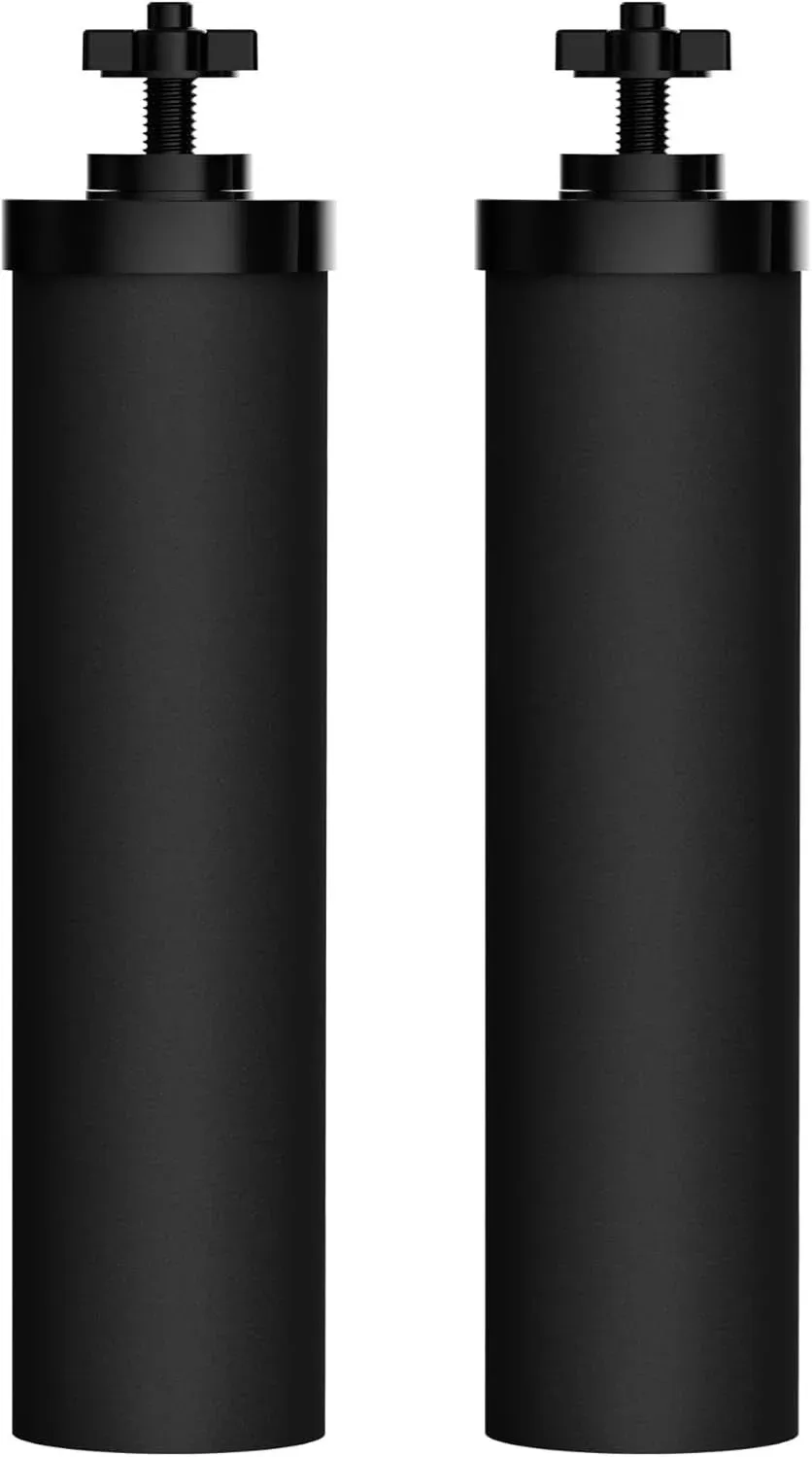
Waterdrop NSF/ANSI 42/372 Gravity Filter Replacement for Berkey BB9-2 (2-Pack)
At a Glance
| Feature | British Berkefeld Doulton Water Filter Candle BB9-2 Compatible (2-Pack) | Editor's Pick Waterdrop NSF/ANSI 42/372 Gravity Filter Replacement for Berkey BB9-2 (2-Pack) |
|---|---|---|
| Price | $50–$100 | $50–$100 |
| Filtration | Ceramic microfilter + GAC + heavy metal media (Ultra Sterasyl) | Natural coconut shell activated carbon |
| Filter Life | 800 gallons per filter (6 months) | 6,000 gallons per pair (3,000 per filter) |
| Certifications | — | NSF 42/372 |
| Contaminants | Bacteria 99.99%, cysts, chlorine, lead, pesticides, pharmaceuticals | Chlorine (99%), heavy metals (99.9%), sediment, odor |
| Pack Size | — | — |
| Check Price | Check Price |
This is not a typical head-to-head comparison. The Berkefeld BB9-2 and Waterdrop BB9-2 share a form factor and both fit Berkey systems, but they use entirely different filtration technologies. One is a ceramic microfilter that physically blocks pathogens. The other is an activated carbon adsorber that chemically captures dissolved contaminants. Understanding this fundamental difference is the key to choosing correctly — because choosing wrong could mean inadequate protection for your specific water source.
Category-by-Category Breakdown
Pathogen and Biological Protection
The British Berkefeld BB9-2 candle uses a 0.9-micron absolute ceramic outer shell that physically blocks bacteria (99.99% removal), protozoan cysts like Giardia and Cryptosporidium, and sediment particles. This is a mechanical barrier — contaminants larger than the ceramic pore size physically cannot pass through. It works regardless of flow rate, water chemistry, or temperature. The ceramic is also impregnated with silver to prevent bacterial colonization of the filter surface during storage.
The Waterdrop BB9-2 uses coconut shell activated carbon with no ceramic component. Carbon filters work through chemical adsorption — dissolved chemicals bind to the carbon surface as water passes through. But carbon has no physical pore structure fine enough to block bacteria or cysts. A bacterium at 0.5-5 microns can pass directly through the carbon media. The Waterdrop makes no claims about bacterial or pathogen removal, and it holds no certifications related to biological contaminants.
This is not a marginal difference — it is a categorical one. If your water source could contain bacteria, viruses, protozoa, or any living biological contaminant (untreated well water, rainwater collection, surface water in emergencies, or questionable municipal treatment during boil advisories), the Waterdrop carbon filter provides zero biological protection. The Berkefeld ceramic candle is specifically designed for these scenarios. Choosing Waterdrop for biologically compromised water is not just suboptimal — it is potentially dangerous.
Filter Lifespan and Replacement Cost
The Waterdrop BB9-2 2-pack is rated at 6,000 gallons — 3,000 gallons per filter. The Berkefeld BB9-2 2-pack is rated at 1,600 gallons — 800 gallons per filter. The Waterdrop lasts 3.75 times longer per replacement cycle. For a household filtering 3 gallons per day, the Waterdrop pair would last approximately 2,000 days (nearly 5.5 years) while the Berkefeld pair would last approximately 533 days (about 18 months).
In practice, both manufacturers recommend time-based replacement regardless of gallons. The Waterdrop suggests annual replacement; the Berkefeld suggests 6-month replacement. Even on these time schedules, the Waterdrop's annual cost is dramatically lower: $66 per year versus approximately $168 per year for the Berkefeld (two 2-packs at $84 each). Over three years of continuous use, the Berkefeld costs roughly $504 in replacement filters while the Waterdrop costs $198. That is a $306 difference — enough to buy a different gravity system entirely.
The longevity difference stems from the fundamentally different filtration mechanisms. Ceramic filters gradually clog with physical particulates that accumulate in and on the micropore structure. Even with periodic scrubbing (which extends ceramic life significantly), the pores eventually become too blocked to maintain useful flow. Carbon filters saturate chemically — the binding sites fill up with adsorbed molecules. Coconut shell carbon has an exceptionally high surface-area-to-mass ratio, giving each gram of carbon an enormous number of binding sites. This is why carbon filters can process so many more gallons before exhaustion.
Cost Per Gallon
The Waterdrop BB9-2 costs approximately $0.011 per gallon ($66 for 6,000 gallons). The British Berkefeld BB9-2 costs approximately $0.053 per gallon ($84 for 1,600 gallons). The Waterdrop is nearly 5 times cheaper per gallon of filtered water. At roughly one penny per gallon, the Waterdrop offers filtration costs comparable to the cheapest pitcher filters on the market — an impressive achievement for a gravity system filter.
To put this in household terms: a family of four filtering 4 gallons per day would spend about $16 per year with Waterdrop versus approximately $77 per year with Berkefeld (assuming gallon-based replacement). Even on a time-based annual schedule for both, the Waterdrop's $66/year is less than half the Berkefeld's $168/year. For budget-conscious households using treated municipal water where biological protection is not a concern, the Waterdrop's cost efficiency is overwhelming.
However, the cheapest filter is not always the best value. Cost-per-gallon only measures economics — it does not account for what each gallon of filtered water is actually protected against. The Berkefeld's higher cost per gallon buys a physical pathogen barrier, broader contaminant coverage, and the confidence that comes from 200 years of UK ceramic manufacturing expertise. If biological protection matters for your use case, the Berkefeld's cost premium is not an expense — it is insurance.
Certifications and Verified Performance
The Waterdrop BB9-2 holds NSF 42 (chlorine taste and odor reduction) and NSF 372 (lead-free material compliance) certifications. These are legitimate independent certifications, but they cover only aesthetic contaminants and material safety — not health-related contaminant removal. Notably, the Waterdrop lacks NSF 53 (health contaminants like lead and cysts), NSF 401 (emerging contaminants), and any biological removal certification.
The British Berkefeld BB9-2 candle does not carry listed NSF certifications for this specific ASIN. However, it is manufactured using Doulton's Ultra Sterasyl technology — the same ceramic platform used in Doulton products that do hold NSF certifications. The Berkefeld's pathogen removal claims (99.99% bacteria, cysts, lead, pesticides) are based on manufacturer testing and the established performance record of the Ultra Sterasyl ceramic formulation, rather than independent certification of this particular product listing.
This creates an unusual situation where the cheaper filter actually has more independent certifications, but those certifications cover less. The Waterdrop's NSF 42 is verified — chlorine and taste improvement is proven. The Berkefeld's broader claims — bacteria removal, cyst removal, lead removal — are unverified for this ASIN but are consistent with the extensively tested Doulton ceramic technology platform. Neither product is a certification leader in the gravity replacement category; for the highest certification standards, look to the Doulton Super Sterasyl (NSF 42/53/372/401) or ProOne G-Series (NSF 42/53/401/372/P231).
Chemical Contaminant Removal
Both filters contain activated carbon and both remove chlorine effectively. The Waterdrop uses natural coconut shell activated carbon — an excellent carbon source with high surface area and strong affinity for chlorine, taste compounds, and some organic chemicals. The Berkefeld uses granular activated carbon inside the ceramic shell, also effective for chlorine and taste. For basic municipal water taste improvement, both filters perform comparably well.
Where the Berkefeld pulls ahead is in its heavy metal reduction media, which targets lead and other dissolved metals beyond what activated carbon alone can adsorb. The Waterdrop claims 99.9% heavy metal reduction on its product listing, but this claim is not backed by NSF 53 certification. The Berkefeld also claims lead and pesticide removal, but again without independent certification for this ASIN. In the chemical contaminant category, both filters make broad claims with limited independent verification.
Neither filter is certified for PFAS removal, pharmaceutical reduction, or microplastic removal. If these emerging contaminants are your primary concern, both the Berkefeld and Waterdrop are outclassed by the Doulton Super Sterasyl (NSF 401 for pharmaceuticals) or ProOne G-Series (200+ contaminant claims). For basic chlorine and taste improvement on municipal water, both are adequate. For comprehensive chemical protection, neither is the best option in the gravity replacement filter category.
Ease of Use and Maintenance
The Waterdrop BB9-2 is a lower-maintenance filter overall. Once installed and primed (which can require patience — air trapped in the carbon media sometimes needs multiple soaking cycles to fully purge), it runs for months or years without intervention. There is no cleaning step. When the filter reaches end-of-life, you simply replace it. The 6,000-gallon lifespan means most households will interact with this filter once or twice per year at most.
The British Berkefeld ceramic candle requires periodic scrubbing to maintain flow rate — typically every 4-8 weeks depending on your water's sediment load. The scrubbing process is simple (a Scotch-Brite pad under running water for 30 seconds) but it is an additional maintenance task that the Waterdrop does not require. On the positive side, scrubbing effectively extends the ceramic filter's life — each scrub removes the sediment layer and exposes fresh ceramic, which is why ceramic candles can be cleaned 100+ times before replacement.
The Berkefeld requires no priming out of the box, which is a slight advantage during initial installation. The Waterdrop's priming process can frustrate first-time gravity filter users — trapped air bubbles in the carbon media can cause filters to flow slowly or not at all until fully saturated. Once through the initial priming (which may take 24-48 hours of soaking), the Waterdrop flows reliably. For pure set-and-forget convenience, the Waterdrop wins despite the priming inconvenience — less total touch-points over the filter's lifespan.
Who Should Get Which?
Get the British Berkefeld Doulton Water Filter Candle BB9-2 Compatible (2-Pack) if...
- Your water source could contain bacteria or biological contaminants
- You use well water, rainwater collection, or have emergency prep needs
- Physical pathogen barrier is non-negotiable for your peace of mind
- You want a UK-manufactured filter with 200 years of ceramic heritage
- You are willing to pay more for broader contaminant coverage
Get the Waterdrop NSF/ANSI 42/372 Gravity Filter Replacement for Berkey BB9-2 (2-Pack) if...
- You are on treated municipal water and want taste and chlorine improvement
- Budget is your primary concern — $66 for 6,000 gallons is unbeatable
- You prefer minimal maintenance with no periodic scrubbing
- Longevity matters — replace once per year instead of every 6 months
- You prioritize value and do not need biological pathogen protection
Pro Tip: Not sure about your water source? Here is a simple decision rule: if your water comes from a municipal treatment plant and has never been under a boil advisory, the Waterdrop carbon filter is safe and cost-effective. If your water comes from a private well, a spring, rainwater catchment, or if your municipality has ever issued a boil water notice, choose the Berkefeld ceramic candle — the pathogen barrier is not optional for those water sources.
Understanding the Technology Divide
The fundamental mistake buyers make when comparing these two filters is treating them as interchangeable because they share the BB9-2 form factor and both fit Berkey systems. The shared form factor is a coincidence of market positioning — both manufacturers designed their filters to replace the discontinued Berkey Black elements. But what happens inside each filter could not be more different.
Imagine two security checkpoints at an airport. One has a physical barrier — a metal detector and X-ray machine that physically blocks prohibited items. The other has a chemical sensor that detects explosive compounds as you walk past. Both make the airport safer, but they protect against different threats. The ceramic Berkefeld is the physical barrier; the Waterdrop carbon is the chemical sensor. Neither one covers the other's blind spots. This is why mixing and matching makes no sense — you need the right type of protection for the specific threats in your water.
For the estimated 85% of US households that drink treated municipal water, the Waterdrop's chemical adsorption is genuinely sufficient. Municipal treatment plants use chlorination, UV treatment, and sediment filtration to eliminate biological threats before the water reaches your tap. What remains are taste compounds, residual chlorine, and trace chemicals that carbon handles well. Paying the premium for ceramic pathogen protection on water that has already been biologically treated is unnecessary — though some households appreciate the redundancy as an extra safety layer.
For the remaining 15% — well water users, rural properties, off-grid homes, rainwater harvesters, and emergency preparedness planners — the ceramic barrier is not optional. These water sources may contain live bacteria, protozoan cysts, or other biological contaminants that carbon filters simply cannot address. In these scenarios, choosing the Waterdrop over the Berkefeld based on cost savings would be a false economy with real health consequences.
Pro Tip: One practical way to validate your choice before committing to either filter long-term is to request a free water quality report from your municipality (required annually under the Safe Drinking Water Act) or purchase an inexpensive home water test kit. If your report shows no biological concerns and your contaminant levels are limited to chlorine, taste, and minor heavy metals, the Waterdrop is a well-justified choice. If your report flags any bacterial presence, high turbidity, or you are on a private well with no recent testing, treat that as a clear signal to invest in the Berkefeld's ceramic barrier.
Frequently Asked Questions
Can I use Waterdrop carbon filters and Berkefeld ceramic candles interchangeably in my Berkey?
Does the Waterdrop filter remove bacteria like the Berkefeld ceramic candle does?
Why does the Waterdrop filter last so much longer than the Berkefeld?
Is the Waterdrop BB9-2 safe for well water?
Which filter is better for emergency preparedness?
Can I scrub the Waterdrop carbon filter to extend its life like I can with ceramic?
How do I know when either filter needs to be replaced?
Our Final Recommendation
The Waterdrop BB9-2 is the right choice for most households. At $66 for 6,000 gallons — roughly one penny per gallon — it delivers exceptional value for treated municipal water users who want to improve taste, remove chlorine, and reduce heavy metals. The 2,036 Amazon reviews and 4.3-star rating reflect a product that consistently meets expectations. If your water is already biologically safe and you want a low-cost, long-lasting gravity filter, the Waterdrop is the best value in the category.
The British Berkefeld BB9-2 is the right choice for households that need biological protection. Its 0.9-micron ceramic shell provides a physical pathogen barrier that no carbon filter can replicate. For well water users, off-grid homes, emergency preparedness kits, and anyone whose water source is not guaranteed to be biologically safe, the Berkefeld's higher cost is not a premium — it is the minimum investment in safe drinking water. The 200-year Doulton manufacturing heritage and UK production provide additional confidence in a product category where trust matters enormously.
If you are genuinely unsure whether your water needs biological protection, err on the side of the Berkefeld. The extra $18 upfront and higher per-gallon cost buy peace of mind that no amount of carbon filtration can provide. But if you know your municipal water is treated and safe, the Waterdrop saves you real money without sacrificing the chemical filtration that treated water actually needs.
Track Both Products
We'll email you if either price drops or availability changes.
Only when something changes. Unsubscribe anytime.