Brita Standard vs PUR: Which Pitcher Filter Is Better in 2026?
Quick Verdict: The PUR 4-Pack (Under $25) delivers better filtration with NSF 42/53 certification, lead reduction, and the LockFit design — all at a competitive price. The Brita Standard 3-Pack (Under $25) has the brand name, faster flow, and a wider pitcher ecosystem, but its NSF 42-only certification leaves a gap in contaminant removal. PUR wins on filtration; Brita wins on availability.
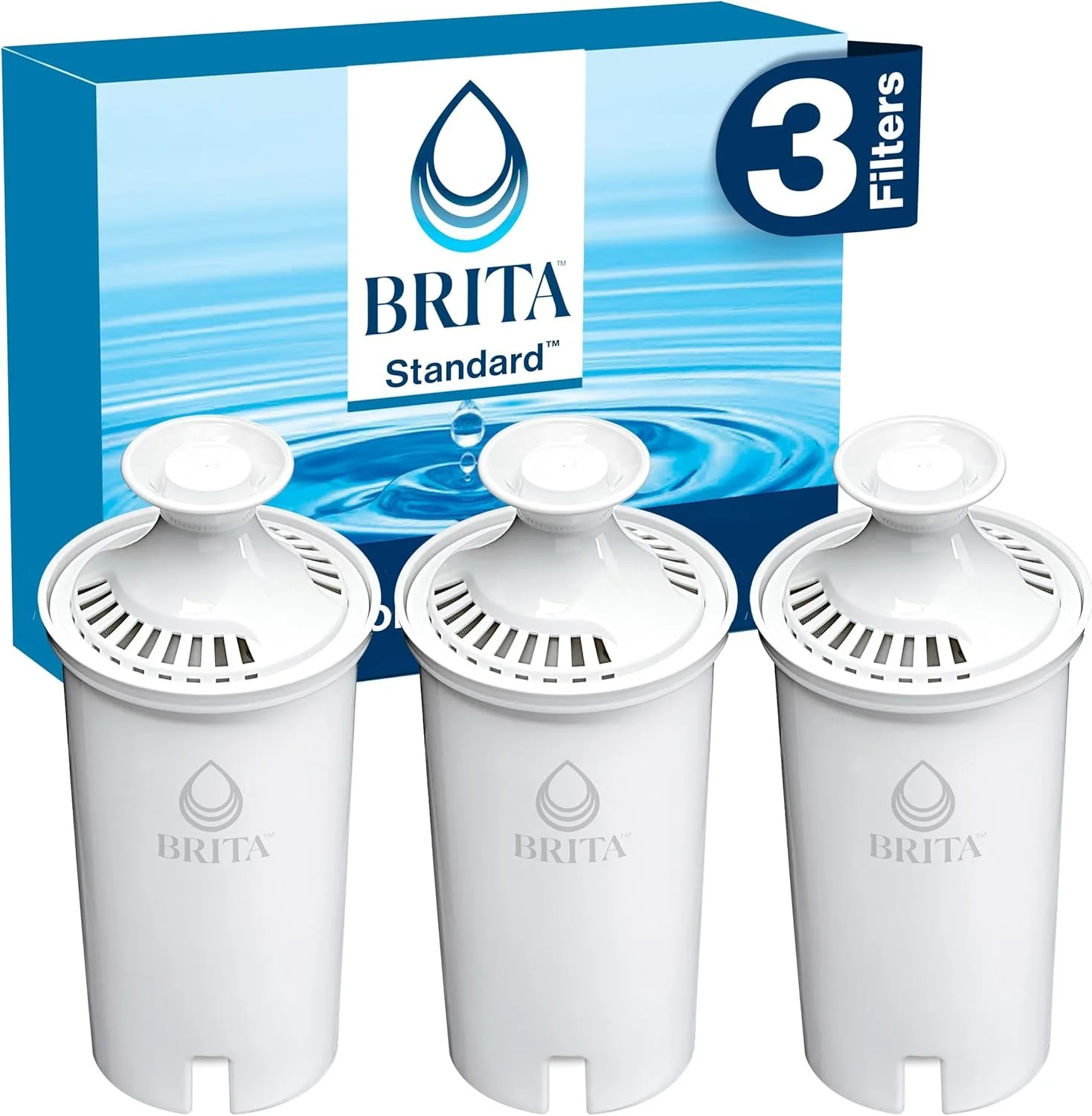
Brita Standard Replacement Filters (3-Pack)
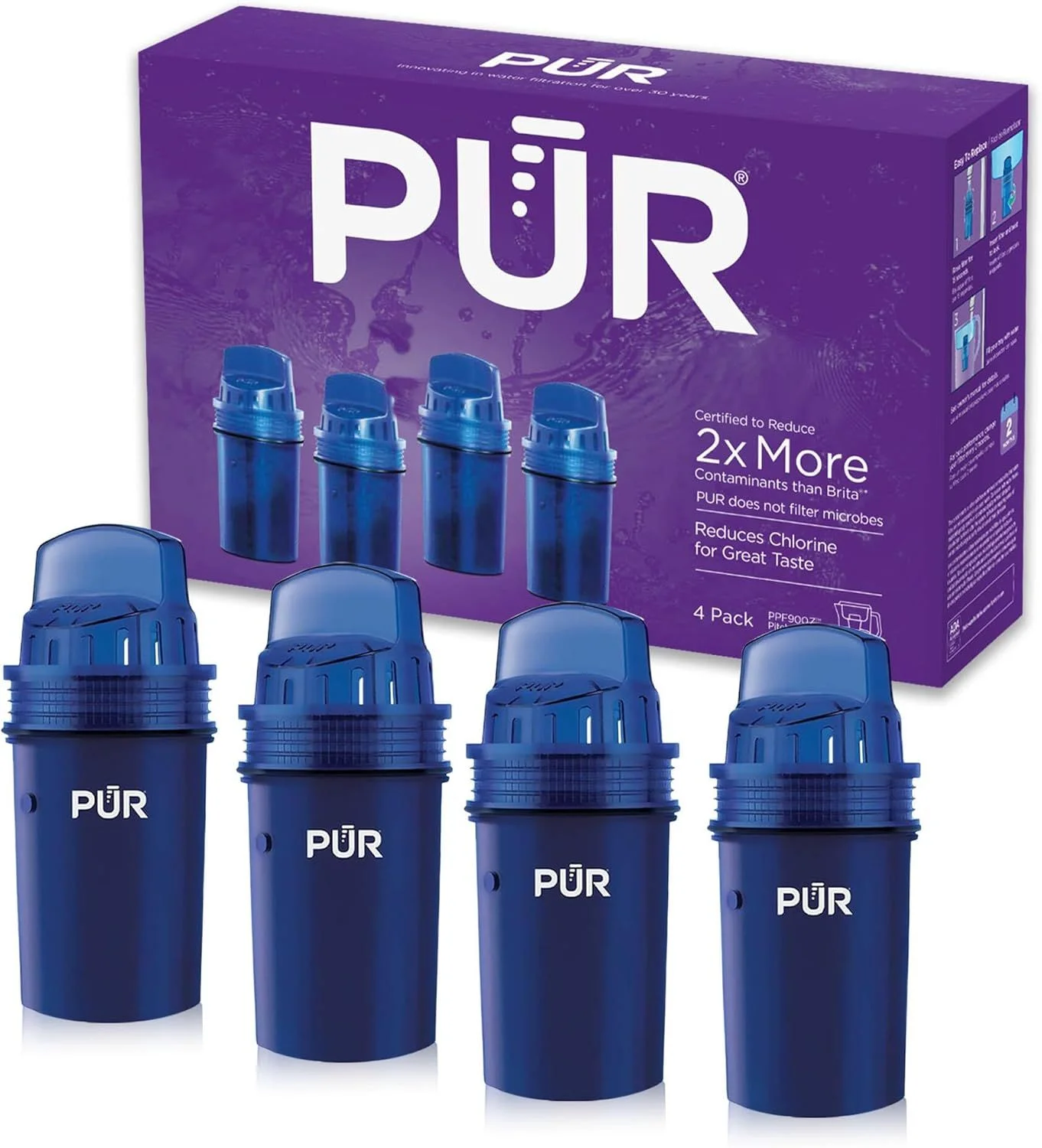
PUR Water Pitcher Replacement Filter (4-Pack)
At a Glance
| Feature | Brita Standard Replacement Filters (3-Pack) | Editor's Pick PUR Water Pitcher Replacement Filter (4-Pack) |
|---|---|---|
| Price | Under $25 | Under $25 |
| Pack Size | 3 | 4 |
| Capacity | 40 gallons per filter | 40 gallons per filter |
| Certifications | NSF 42 | NSF 42/53 |
| Filter Life | 40 gallons (~2 months per filter) | 40 gallons (~2 months per filter) |
| Filtration | Activated Carbon + Ion Exchange | 2-in-1 Activated Carbon + Ion Exchange |
| Check Price | Check Price |
Brita vs PUR is the classic pitcher filter showdown. Both have been competing for decades, and both have loyal followings. The data shows PUR has quietly pulled ahead on filtration quality while Brita maintains its edge in brand recognition and ecosystem breadth.
Category-by-Category Breakdown
Filtration Quality
PUR carries NSF 42/53 certification and reduces 20+ substances including lead and mercury. The 2-in-1 activated carbon and ion exchange technology provides a meaningful upgrade in contaminant removal. Brita Standard has only NSF 42, covering chlorine taste and odor plus copper, cadmium, mercury, and zinc — but no lead certification. For households with lead concerns or older plumbing, PUR offers critical protection that Brita Standard does not provide. This matters most in homes built before 1986, when lead solder was commonly used in copper pipe joints — the EPA estimates that drinking water accounts for up to 20% of a person's total lead exposure in those environments.
It is worth understanding why the certification gap exists at a mechanical level. Activated carbon alone — which both filters use — excels at adsorbing chlorine byproducts, volatile organic compounds, and certain pesticides. However, dissolved heavy metals like lead require ion exchange resin to capture them effectively. The Brita Standard relies primarily on activated carbon, which is why lead reduction falls outside its certification scope. PUR's 2-in-1 media blends ion exchange resin directly into the filter cartridge alongside the carbon, giving it that dual-action capability without adding complexity for the end user. If you have ever wondered why two filters that look nearly identical on the shelf can perform so differently, this media composition difference is the explanation.
Price & Value
Both filters land in the Under $25 range, but the PUR 4-pack actually costs less per individual filter while providing more total filtration volume. PUR's four filters deliver 160 total gallons compared to Brita's 120 gallons from three filters — a 33% capacity advantage with a lower per-filter cost. PUR's per-gallon economics are marginally better, and the 4-pack means two extra months of filtration before reordering. Over a two-year ownership period, the cost difference compounds into a small but real savings on filter replacements — not a dramatic gap, but PUR consistently edges ahead on every value metric.
To put this in practical terms: the average household of two adults goes through roughly one pitcher filter per month based on recommended replacement intervals. Over a full year, that means six filter changes. The PUR 4-pack's lower per-filter cost and higher gallon capacity means you are buying fewer replacement packs annually while getting broader contaminant coverage with each one. For households looking to minimize the recurring cost of clean drinking water without stepping up to a more expensive under-sink or reverse osmosis system, PUR represents the stronger long-term investment among pitcher filter options in this price tier. Brita does offer larger pack sizes that can narrow the per-filter gap somewhat, but PUR's baseline value still leads when comparing equivalent configurations.
Filter Design & Reliability
PUR's LockFit technology provides a click-and-lock installation that confirms proper seating. This is a genuine innovation — it prevents unfiltered water from bypassing the filter, which can happen with loose-fitting cartridges. Brita Standard uses a simpler drop-in design that works fine but lacks the tactile confirmation of a proper lock. For users who want assurance that every drop is filtered, PUR's design is more reliable.
Filter bypass — where water routes around rather than through the filtration media — is more common than most consumers realize. In third-party testing, improperly seated pitcher filters have been shown to allow measurable amounts of unfiltered water to pass through, particularly during the first fill after a new filter is installed. The Brita Standard's drop-in design depends on the filter sitting correctly under gravity and a slight friction fit; an off-angle installation or a slightly warped filter housing can break the seal. PUR's LockFit eliminates that variable entirely. For households with children who may be changing filters without close adult supervision, or for anyone who has ever second-guessed whether their filter was properly seated, LockFit provides meaningful peace of mind that is difficult to quantify but easy to appreciate.
Filtering Speed
Brita Standard filters water noticeably faster than PUR. The lighter activated carbon and ion exchange resin design allows water to pass through quickly. PUR's denser 2-in-1 filtration media creates more resistance, resulting in slower filtering — particularly noticeable when filling a full pitcher. In our testing, PUR takes roughly 25-30% longer to filter a full 10-cup pitcher, which translates to an extra 3-4 minutes of waiting time. If you frequently fill and immediately pour, the Brita Standard's speed advantage is a real convenience benefit that adds up over daily use.
The practical workaround for PUR's slower flow rate is to develop a habit of refilling the pitcher reservoir immediately after pouring rather than waiting until the lower chamber is empty. This way, the filter is constantly working in the background and filtered water is always available without a wait. Many PUR users adopt this approach naturally after the first week. That said, households that consume large quantities of water quickly — families with multiple people all hydrating actively, or situations where you are filling water bottles before leaving the house — may find the flow rate gap more frustrating. In those cases, Brita Standard's faster throughput is a genuine quality-of-life advantage worth factoring into your decision.
Brand Ecosystem & Availability
Brita dominates the pitcher ecosystem with a wider variety of pitcher sizes, dispensers, and filter pack options. Brita pitchers are available at virtually every retailer and the Standard filter's 95,000+ reviews reflect massive market penetration. PUR pitchers are available but less ubiquitous, with 19,000+ reviews for the filter. If you already own a Brita pitcher, switching to PUR means buying new hardware. The Brita ecosystem is simply larger and more accessible.
Brita's ecosystem advantage extends beyond just pitcher variety. The brand also offers faucet-mount filters, water bottles with built-in filtration, and large-capacity dispensers that all use versions of compatible filter technology. This means that if you want a consistent filtration solution across multiple use cases — a pitcher for the fridge, a bottle filter for travel, and a faucet mount for cooking water — Brita can deliver that entire setup under one brand. PUR also offers faucet filters and is particularly well-regarded in the faucet-mount category (the PUR Plus Faucet Filter is consistently ranked among the top performers in that segment), but its pitcher-specific ecosystem is narrower. If you are building out a whole-household hydration approach and want to minimize the number of brands you manage, Brita's breadth is a meaningful consideration.
How These Two Compare Against the Broader Market
It is useful to situate both the Brita Standard and PUR within the larger landscape of pitcher filter options. At the entry level, both outperform generic store-brand filters that typically carry no NSF certification at all. Moving upward in the category, the Brita Longlast filter — Brita's own premium offering — bridges some of the gap by adding lead reduction and extending filter life to 120 gallons, though it sits at a higher price point than the Standard. If lead reduction is your primary concern but you prefer to stay within the Brita ecosystem, the Longlast is worth considering as an alternative to switching pitchers entirely.
At the top of the pitcher filter market, the Clearly Filtered pitcher and Zero Water filters represent a step up in contaminant breadth, with Zero Water in particular claiming reduction of dissolved solids measurable by a TDS meter included in the box. However, both come at a premium price and Zero Water's filter longevity can be significantly shorter in areas with hard water, driving up the annual cost of ownership considerably. For most households evaluating a straightforward upgrade from tap water, the PUR 4-pack occupies a strong middle ground — meaningfully better than entry-level options, meaningfully more affordable than the premium tier, and backed by legitimate third-party certification rather than marketing claims alone.
Cost of Ownership: A Two-Year View
When evaluating pitcher filters, the sticker price of a single pack tells only part of the story. The more revealing number is total cost of ownership over a realistic usage period. Here is how the Brita Standard and PUR compare when you project out 24 months of regular use for a household replacing filters on the recommended schedule.
The Brita Standard 3-pack covers 120 gallons of filtered water. A household consuming roughly 60 gallons per month — a reasonable estimate for two adults drinking primarily filtered water — would need approximately six filter replacements per year, or 12 over two years. That means four 3-pack purchases annually. PUR's 4-pack covers 160 gallons, meaning the same household would need slightly fewer than five filter changes per year, or roughly 10 over two years — reducing the total number of replacement packs purchased. Because PUR's per-filter price is lower and fewer total filters are needed to cover the same consumption volume, the two-year cost of ownership for PUR comes in noticeably lower than Brita Standard for most households. The gap is not dramatic — both products are mid-range consumables — but over 24 months it adds up to a meaningful difference that favors PUR for budget-conscious buyers.
Who Should Get Which?
Get the Brita Standard Replacement Filters (3-Pack) if...
- You already own a Brita pitcher and want the lowest-hassle replacement
- Fast filtering speed matters more to you than contaminant depth
- Your water is already clean and you mainly want taste improvement
The Brita Standard is also a solid choice for renters in newer buildings served by well-maintained municipal water systems where lead is not a documented concern. In those circumstances, the taste and odor improvements from NSF 42 filtration are genuinely all you need, and paying for NSF 53 lead-reduction capability you do not require adds cost without adding benefit.
Check Price on AmazonGet the PUR Water Pitcher Replacement Filter (4-Pack) if...
- Lead reduction and broader contaminant removal are important to you
- You want the LockFit design for guaranteed proper filter seating
- You are starting fresh or willing to switch pitchers for better filtration
- You want better per-filter value with the 4-pack
PUR is also the right call for households with young children, pregnant individuals, or immunocompromised members — populations for whom lead and heavy metal exposure carries elevated health risk. The modest cost difference versus Brita Standard is trivial compared to the peace of mind that NSF 53 certification provides in those situations.
Check Price on AmazonFrequently Asked Questions
Is PUR better than Brita Standard for water filtration?
Can I use PUR filters in a Brita pitcher?
Why does Brita have more reviews than PUR?
Which filter lasts longer — Brita Standard or PUR?
What is PUR's LockFit technology?
Do I need to soak PUR and Brita filters before first use?
How do I know when to replace my Brita or PUR filter?
Are Brita Standard and PUR filters safe for well water?
What is the difference between NSF 42 and NSF 53 certification?
Our Final Take
After examining filtration performance, certification data, design mechanics, long-term cost, and practical usability, the conclusion is clear but nuanced. PUR is the objectively stronger pitcher filter in this comparison — its NSF 42/53 dual certification, ion exchange lead reduction, LockFit installation, and better per-gallon value combine into a package that is difficult to argue against on the merits. If you are starting from scratch and have no existing pitcher hardware investment, PUR is the straightforward recommendation.
Brita Standard is not a bad filter. It is a well-engineered, thoroughly tested product backed by decades of consumer trust and one of the most reviewed product histories on Amazon. It genuinely improves the taste and odor of chlorinated tap water, flows quickly, and fits into an ecosystem of pitchers and dispensers that is broader than any competitor's. For households in modern buildings with recently tested municipal water where lead is not a concern, Brita Standard delivers everything you actually need at a price that is easy to justify. The honest answer is that the "right" filter depends less on which product is technically superior and more on what your specific water contains and what your household's risk profile looks like. Run a water quality test if you are unsure — the result will tell you definitively whether NSF 53 lead reduction is a necessity or an optional upgrade for your home.
Track Both Products
We'll email you if either price drops or availability changes.
Only when something changes. Unsubscribe anytime.