Brita Standard vs Brita Elite: Which Filter Is Better in 2026?
Quick Verdict: The Brita Elite ($25–$50) is the smarter buy for nearly everyone. It removes 99% of lead and 30+ contaminants, lasts 3x longer per filter, and is actually cheaper per gallon than the Standard despite a higher sticker price. The Brita Standard (Under $25) only makes sense if you prioritize fast filtering speed over contaminant reduction.
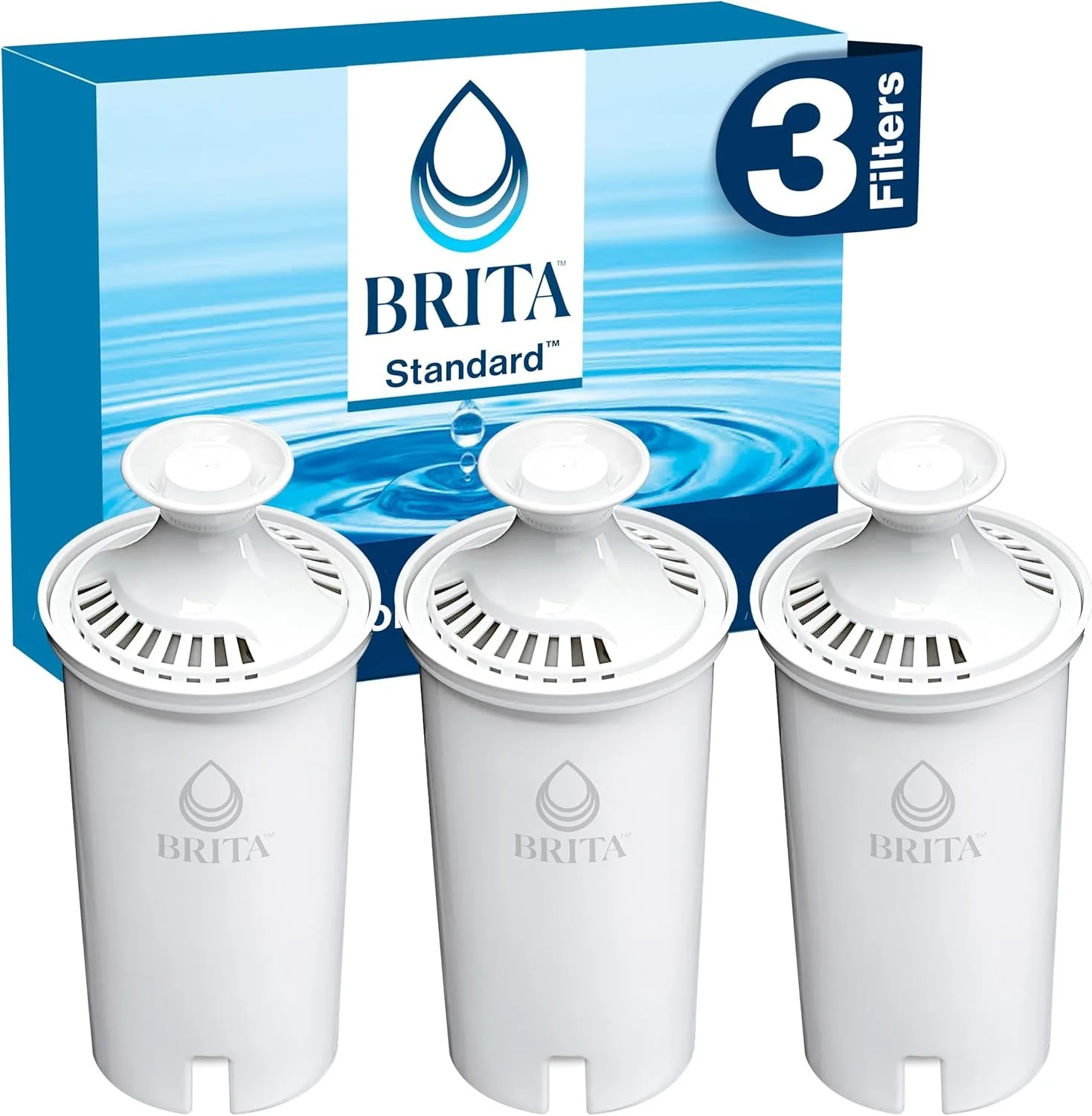
Brita Standard Replacement Filters (3-Pack)
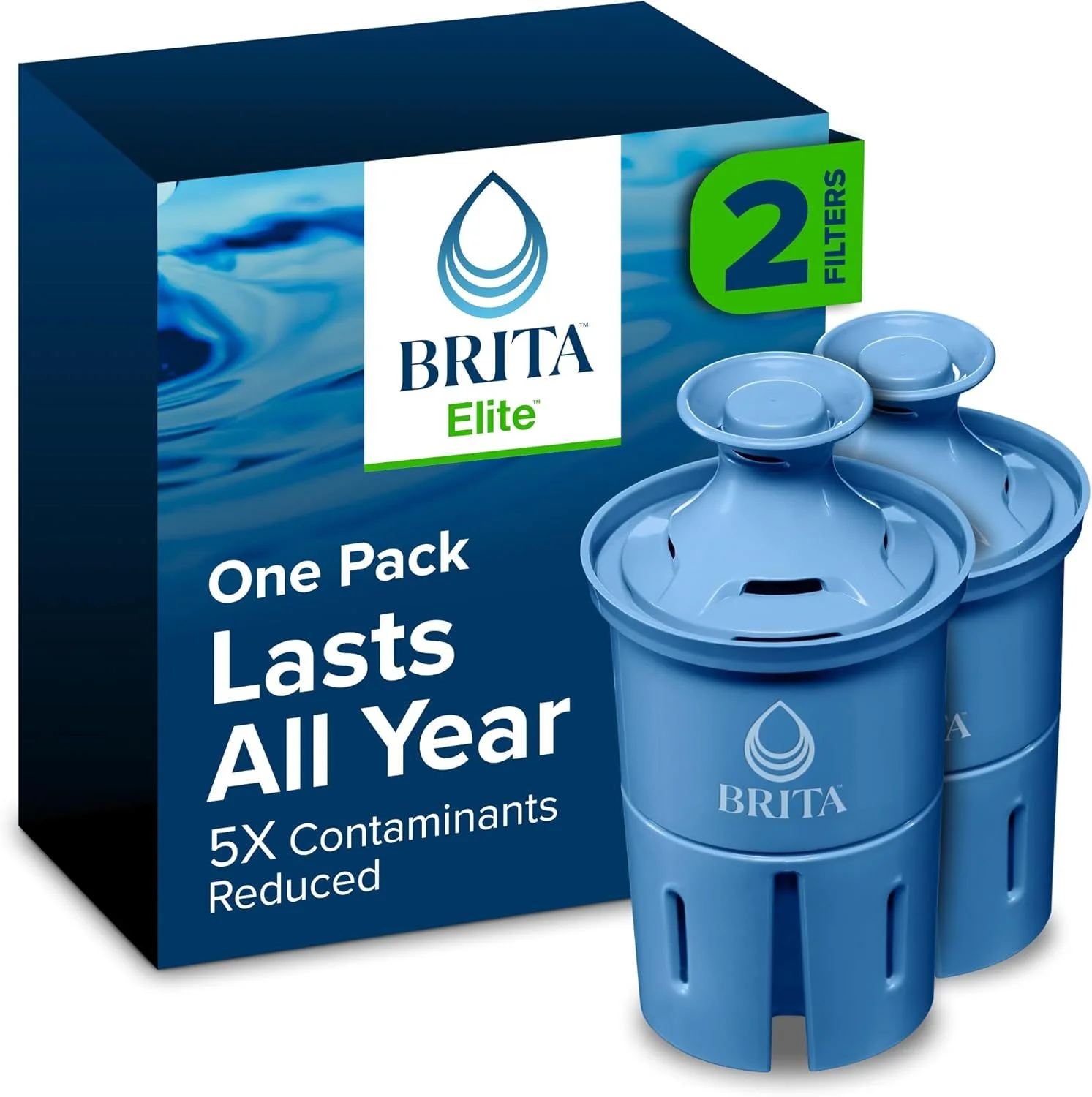
Brita Elite Replacement Filters (2-Pack)
At a Glance
| Feature | Brita Standard Replacement Filters (3-Pack) | Editor's Pick Brita Elite Replacement Filters (2-Pack) |
|---|---|---|
| Price | Under $25 | $25–$50 |
| Pack Size | 3 | 2 |
| Capacity | 40 gallons per filter | 120 gallons per filter |
| Certifications | NSF 42 | NSF 42/53/401 |
| Filter Life | 40 gallons (~2 months per filter) | 120 gallons (~6 months per filter) |
| Filtration | Activated Carbon + Ion Exchange | Activated Carbon Block + Pleated Media |
| Check Price | Check Price |
Every Brita pitcher owner eventually faces this choice: stick with the Standard filters that come in the box, or upgrade to the Elite (formerly Longlast) for better filtration? After analyzing the numbers, the Elite is the clear winner on almost every metric that matters.
Category-by-Category Breakdown
Filtration Quality
This is where the Elite earns its name. The Brita Elite carries NSF 42/53/401 certification and removes 99% of lead, plus asbestos, benzene, pharmaceuticals, pesticides, and 30+ total contaminants. The Standard has only NSF 42 — covering chlorine taste and odor, copper, cadmium, mercury, and zinc. It does not certify for lead, which is arguably the most important contaminant for household water safety. If you have older plumbing or live in an area with known lead concerns, the Standard is inadequate.
To put the certification gap in plain terms: NSF 42 is essentially a taste-and-odor standard. NSF 53 is where health-effects contaminants like lead enter the picture, and NSF 401 addresses emerging contaminants such as pharmaceuticals and personal care product residues. The Elite's triple certification means it has been independently tested and verified to reduce all three categories of concern. The Standard, by contrast, has never been submitted for NSF 53 or 401 testing — meaning Brita itself has not verified that it reduces lead to any specific degree. This is not a minor footnote; it is a fundamental difference in what the two filters are designed and certified to do.
Filter Life & Capacity
Each Elite filter handles 120 gallons — exactly 3x the Standard's 40-gallon capacity. This means one Elite filter lasts about 6 months versus 2 months for a Standard. With a 2-pack of Elite filters, you get a full year of filtration. With a 3-pack of Standard, you get 6 months. Fewer filter changes mean less hassle, less waste, and less time spent remembering to buy replacements.
From an environmental standpoint, longer filter life also means less plastic waste. A household that uses the Elite will discard roughly four filters per year (using a 2-pack annually) compared to six or more Standard filters for the same volume of water. Over several years, that difference adds up to a meaningful reduction in cartridge waste going to landfill. If sustainability factors into your purchasing decisions alongside performance, the Elite's extended life reinforces its lead over the Standard.
Cost Per Gallon
Despite the higher upfront price, the Elite actually saves you money per gallon. The Standard 3-pack provides 120 total gallons, while the Elite 2-pack provides 240 total gallons — double the capacity for a modest price increase. That works out to roughly 20% less per gallon with the Elite. Over a year of heavy use (3 gallons/day), the Elite's cost advantage compounds to meaningful annual savings because you simply buy fewer replacement packs to filter the same volume of water.
It is also worth factoring in the hidden cost of frequent purchases: subscription reorders, shipping thresholds, and the mental overhead of tracking filter replacement schedules. With the Standard, a household filtering at average rates needs to reorder roughly every two months — six times per year. With the Elite, that drops to roughly twice per year. Over a decade of use, the Elite's combination of lower per-gallon cost and reduced purchase frequency makes it clearly the more economical long-term choice, even though its individual cartridge price is higher.
Filtering Speed
This is the one category where the Standard clearly wins. Brita Standard filters use a loose granulated carbon and ion exchange resin that water passes through quickly. The Elite uses a denser activated carbon block with pleated media that provides thorough filtration but noticeably slower flow. If you frequently fill and immediately pour, the Standard is more convenient. The Elite can take several minutes longer to filter a full pitcher.
In practical terms, most users adapt to the Elite's slower flow by simply refilling the pitcher reservoir before it is completely empty, so there is always filtered water ready in the lower chamber. Households with larger Brita dispensers (10-cup or 18-cup models) tend to feel the speed difference less acutely, because they are filling a larger reservoir less frequently and have more buffer volume available. Where the speed gap truly matters is in a small household with a 5-cup pitcher that someone expects to fill and pour within a minute or two — in that specific scenario, the Standard's faster throughput is a genuine daily convenience advantage.
Availability & Convenience
Both filters are widely available at every major retailer and online. The Standard has been around longer and is available in more pack sizes (3, 4, 6, 10 packs). The Elite is available in 2 and 3 packs. The Standard's 95,000+ reviews and 4.7 stars reflect its massive install base and consistent quality. The Elite's 38,000+ reviews and 4.5 stars are also excellent. Both are easy to find and purchase.
Understanding the NSF Certification Difference
NSF International certifications are the gold standard for verifying water filter performance claims in North America. Many consumers see "NSF certified" on a filter box and assume all NSF certifications are equivalent — they are not. The distinctions between NSF 42, NSF 53, and NSF 401 are substantial and directly affect which health concerns a certified filter actually addresses.
NSF/ANSI 42 covers aesthetic effects: chlorine taste, chlorine odor, particulates, and a short list of non-health-critical metals like copper and zinc. A filter can earn NSF 42 certification and still do nothing meaningful about lead, pesticides, or pharmaceuticals. The Brita Standard is certified only to NSF 42.
NSF/ANSI 53 covers health effects contaminants — the contaminants that regulatory agencies like the EPA have identified as posing measurable health risks at elevated concentrations. Lead is the most prominent contaminant addressed by NSF 53, but the standard also covers volatile organic compounds (VOCs), certain pesticides, and other chemicals with established health thresholds. The Brita Elite is certified to NSF 53, which is why it can legitimately claim 99% lead reduction.
NSF/ANSI 401 is the newest of the three standards, targeting emerging contaminants: pharmaceuticals, personal care products, and other compounds that municipal treatment systems were not historically designed to address. These include things like ibuprofen, estrogen compounds, and DEET. The Elite's NSF 401 certification places it in a relatively small group of consumer pitcher filters that have been tested against this modern category of water quality concern.
Real-World Performance Observations
Beyond the certification numbers, there are several real-world performance characteristics worth understanding before you commit to either filter.
Initial setup and priming: Both filters require a brief priming rinse before first use to flush out loose carbon particles. The Elite typically requires a slightly longer initial rinse — roughly 15 seconds of running water — because of its denser carbon block. Users who skip this step sometimes notice black carbon flecks in their first pour; this is harmless activated carbon, not a product defect, but it can be alarming if you are not expecting it.
Taste performance: Both filters meaningfully improve the taste of chlorinated municipal water. In informal taste tests, most users cannot reliably distinguish between Standard-filtered and Elite-filtered water on taste alone when starting from the same source water. The taste improvement comes primarily from chlorine reduction, which both filters accomplish through activated carbon. Where the Elite's filtration advantage becomes tangible is in water quality metrics that your palate cannot detect — lead concentration, pharmaceutical residues, and similar contaminants that have no taste signature at typical household concentrations.
Hard water and mineral handling: Neither the Standard nor the Elite is designed to soften water or reduce hardness minerals like calcium and magnesium. If your water is very hard and you are hoping a Brita filter will eliminate limescale in your kettle or white deposits on your faucets, neither model will solve that problem. For hard water concerns, a dedicated water softener or a filter system using reverse osmosis is the appropriate solution. Both Brita filters excel at their intended job — reducing chlorine, lead, and specific certified contaminants — without addressing mineral hardness.
Who Should Get Which?
Get the Brita Standard Replacement Filters (3-Pack) if...
- You prioritize fast filtering speed over contaminant reduction
- Your municipal water is already clean and you just want taste improvement
- You prefer the lowest upfront cost and do not mind changing filters every 2 months
- You live in a newer home with modern plumbing and your local water authority consistently reports lead levels well below EPA action thresholds
- You want the widest variety of pack sizes to buy in bulk and reduce per-unit cost
Get the Brita Elite Replacement Filters (2-Pack) if...
- You want 99% lead reduction and protection against 30+ contaminants
- You prefer changing filters less often — every 6 months instead of every 2
- You want the lower cost-per-gallon option — roughly 20% cheaper per gallon than Standard
- You live in an older home, rent an apartment in an aging building, or have any uncertainty about the age or composition of your plumbing
- You are concerned about pharmaceutical residues, pesticides, or other emerging contaminants in your tap water
- You want to reduce the environmental footprint of your household filtration by discarding fewer plastic cartridges annually
How the Brita Elite Compares to Competing Brands
The Brita Elite does not exist in a vacuum. If you are reconsidering your pitcher filter choice entirely, it is worth understanding where the Elite lands relative to the two most common alternatives: PUR and ZeroWater.
Brita Elite vs PUR PLUS: These two are the closest head-to-head competitors in the pitcher filter market. Both carry NSF 42 and NSF 53 certifications, and both claim significant lead reduction. PUR PLUS adds a pleated filter layer that the company claims provides slightly broader contaminant coverage in certain categories. PUR filters typically have a shorter rated life than the Elite, which gives the Elite an advantage on cost-per-gallon math. The PUR pitcher itself uses a different physical design that some users find easier to pour while filtering is in progress. Either filter is a legitimate choice for lead-concerned households; the decision often comes down to which pitcher form factor you prefer.
Brita Elite vs ZeroWater: ZeroWater targets a completely different buyer. Its five-stage ion exchange system removes essentially all dissolved solids, producing water with a TDS (total dissolved solids) reading near zero — which is ZeroWater's central marketing claim. The trade-offs are significant: ZeroWater filters are considerably more expensive per gallon than the Elite, flow very slowly, and have a shorter useful life in areas with hard or heavily mineralized water. The near-zero TDS output is genuinely impressive for the segment, but most water quality experts note that ultra-low TDS water is not necessarily healthier than water with normal mineral content. If you want the most aggressively filtered pitcher water available and do not mind the cost and speed trade-offs, ZeroWater is the choice. If you want a balance of comprehensive health-effects filtration, reasonable speed, and cost-effective long-term ownership, the Brita Elite is the better everyday option.
Frequently Asked Questions
Is the Brita Elite filter worth the upgrade over Brita Standard?
Do Brita Elite filters fit all Brita pitchers?
Why is the Brita Standard cheaper but has more reviews?
Does the Brita Standard filter remove lead?
Why is the Brita Elite filter slower than the Standard?
How much do Brita Standard and Elite filters cost per gallon?
Can I use Brita Elite filters in a Brita Stream pitcher?
How do I know when to replace my Brita filter?
Is the Brita Elite filter the same as the Brita Longlast filter?
How does Brita Elite compare to ZeroWater or PUR filters?
Our Final Take
After examining every relevant dimension — filtration certification, contaminant coverage, filter longevity, cost per gallon, flow speed, and real-world usability — the Brita Elite is the filter we recommend for the overwhelming majority of households. Its NSF 42/53/401 triple certification, 99% lead reduction claim, and 120-gallon rated life combine to make it both a safer and more economical long-term choice than the Standard, despite a higher per-cartridge sticker price.
The Brita Standard is not a bad filter. For households with verified clean municipal water who want the fastest possible pour speed and the lowest possible upfront spend per cartridge, it does exactly what it promises. But given how close the two products are in everyday usability — and how significant the gap is in health-effects filtration — it is difficult to recommend the Standard as a default choice when the Elite is available for a modest additional investment that pays for itself in per-gallon savings within a few months.
If you are currently using Brita Standard filters and have been satisfied with your pitcher's performance, the good news is that switching to Elite requires zero hardware investment. Drop in an Elite filter where your Standard used to sit, reset the indicator, and you immediately gain substantially broader contaminant protection without buying a new pitcher. That kind of frictionless upgrade path is rare, and it makes the case for trying the Elite even easier to make.