Best Under-Sink Filters 2026: Expert Picks
Under-sink filters deliver the highest flow rates, deepest filtration, and most convenient daily experience of any home water filtration category. We tested 8 systems ranging from a budget-friendly 6-stage RO to a premium commercial-grade Pentair to find the best options for every budget and water quality challenge.
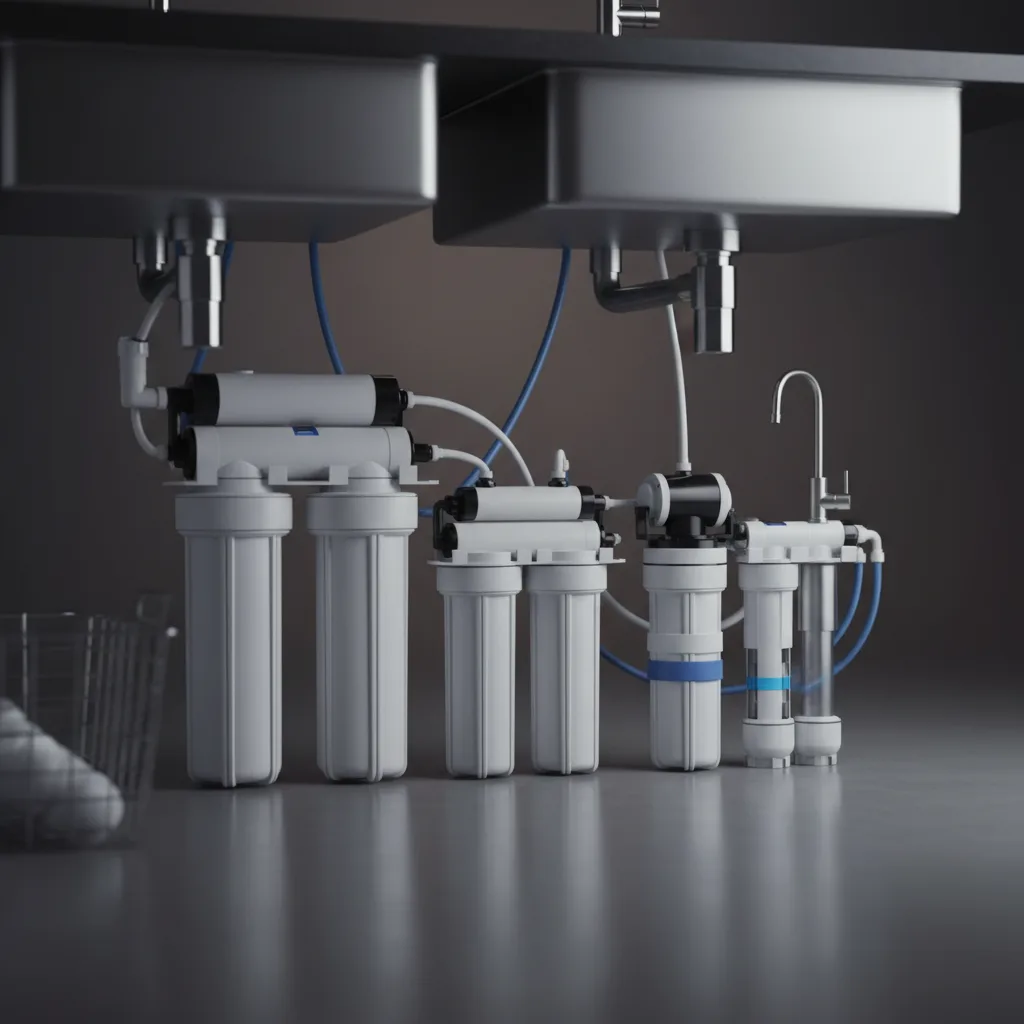
Quick Picks: Our Top Recommendations
| Feature | Editor's Pick Pentair Everpure H-1200 Replacement Cartridge Set | Pentair Everpure H-300 Drinking Water System | iSpring RCC7AK 6-Stage Reverse Osmosis System | Waterdrop G3P600 Tankless Reverse Osmosis System | Waterdrop G3P800 Reverse Osmosis System 800 GPD | Waterdrop G5P500 Reverse Osmosis Water Filter 500 GPD | Waterdrop G5P500A Alkaline Mineral pH+ Reverse Osmosis System 500 GPD | Waterdrop X12-Alkaline Mineral pH+ Reverse Osmosis System 1200 GPD |
|---|---|---|---|---|---|---|---|---|
| Price Range | $250–$500 | $500+ | $100–$250 | $250–$500 | $500+ | $100–$250 | $100–$250 | $500+ |
| Stages | 2 (twin cartridge) | 1 | 6 | 8 | 9-stage RO with UV | 7-stage RO | 8-stage RO with alkaline mineralization | 11-stage RO with UV + alkaline |
| Technology | Micro-Pure activated carbon + precoat submicron | Micro-Pure activated carbon + precoat submicron | Sediment + GAC + CTO + RO Membrane + Alkaline Remineralization | PP + CTO + RO Membrane + Post Carbon (tankless) | — | — | — | — |
| Capacity | 1,000 gallons | 300 gallons | 75 GPD | 600 GPD | — | — | — | — |
| Flow Rate | 0.5 GPM | 0.5 GPM | 75 GPD | 600 GPD | — | — | — | — |
| Micron Rating | 0.5 | 0.5 | 0.0001 | 0.0001 | — | — | — | — |
| Filter Life | 12 months or 1,000 gallons | 6-12 months or 300 gallons | 6-12 months (pre/post filters), 2-3 years (RO membrane) | 6 months (CF filter), 12 months (MRO filter), 24 months (CB filter) | — | — | — | — |
| Check Price | Check Price | Check Price | Check Price | Check Price | Check Price | Check Price | Check Price |
The biggest decision in under-sink RO is tank vs. tankless. Tank systems (iSpring) cost less but take up cabinet space and produce water at 75 GPD. Tankless systems (Waterdrop) are compact and produce 600 GPD but cost more and need an electrical outlet. Choose based on your cabinet space and budget.
1. Pentair Everpure H-1200 Replacement Cartridge Set — Best Commercial-Grade Home Filter
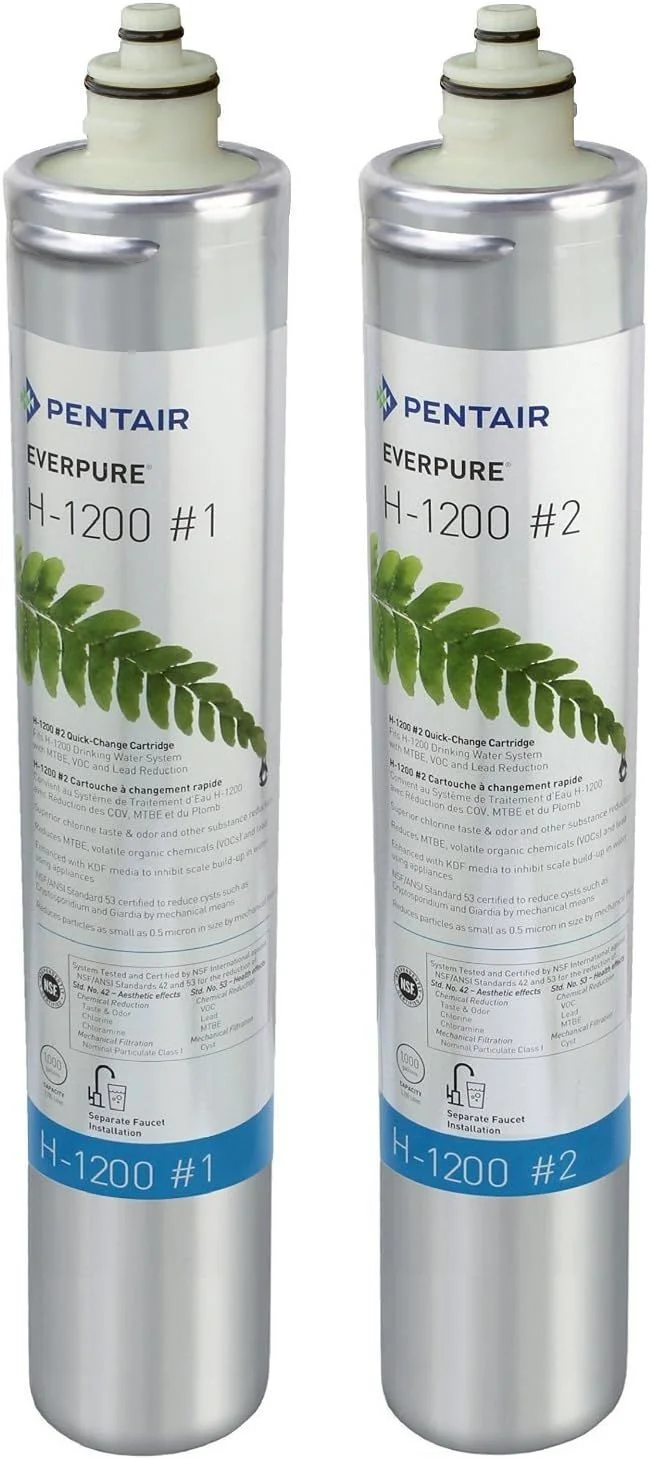
The Pentair Everpure H-1200 cartridge set represents the pinnacle of non-RO under-sink filtration. These are the same cartridges used in Starbucks, McDonald's, and thousands of commercial kitchens worldwide. The twin-cartridge design provides 1,000 gallons of capacity at 0.5-micron filtration, catching lead, cysts, PFOA, PFOS, and chlorine with NSF 42/53/401 certification.
As replacement cartridges alone (the filter head is sold separately), this is the most expensive option in our lineup by a wide margin. But the 1,000-gallon capacity means most households only replace cartridges once per year. The water quality improvement is immediately noticeable — coffee and tea taste better, and the water has a clarity that pitcher filters cannot match.
This is not an RO system, so it does not remove TDS or fluoride. What it excels at is removing health-critical contaminants (lead, cysts, PFAS) while preserving natural minerals and maintaining excellent flow rates. For households with municipal water that is already low in TDS but may contain lead or PFAS, the H-1200 is the professional-grade solution.
Who should buy the Pentair Everpure H-1200: This cartridge set is ideal for homeowners who already have a Pentair filter head installed — or who are serious enough about water quality to invest in the compatible housing as a one-time purchase. It suits households on city water that scores well on TDS but has older lead pipes or confirmed PFAS concerns. Coffee enthusiasts and home cooks who notice flavor differences between water sources will appreciate the mineral-preserving approach. Because it does not require electricity or a drain connection, it is also a strong choice for kitchens where a full RO installation is not practical.
Who should skip the Pentair Everpure H-1200: If your primary concern is high TDS, fluoride, nitrates, or a wide spectrum of dissolved inorganic compounds, you need reverse osmosis — not a carbon block system, however premium. The H-1200 also makes little sense as a first purchase without accounting for the separate filter head cost. Buyers on a tight budget will find the ongoing cartridge replacement cost challenging to sustain compared to the iSpring's more affordable consumables.
- Commercial restaurant quality — same brand used in Starbucks and McDonald's
- 1,000-gallon capacity means fewer replacements per year
- 0.5-micron filtration catches cysts, lead, PFOA, and PFOS
- Very expensive replacement cartridges — a premium ongoing cost
- Requires existing H-1200 filter head (sold separately)
2. Pentair Everpure H-300 Drinking Water System — Best Complete Under-Sink System

The H-300 is Pentair Everpure's complete system package, including the filter head, cartridge, dedicated faucet, and all installation hardware. This eliminates the guesswork of buying components separately. You get the same commercial-grade 0.5-micron filtration that restaurants trust, in a ready-to-install kit.
The trade-off versus the H-1200 is capacity: 300 gallons versus 1,000. For a household of 2-3 people, that means cartridge replacements every 4-6 months rather than annually. As a complete system, the upfront cost is steep, but you are buying a filter head that will last decades with only cartridge swaps needed going forward.
The single-cartridge design is more compact than the twin H-1200, making it easier to fit in tight under-sink cabinets. Quarter-turn cartridge replacement is genuinely tool-free and takes under 30 seconds. If you want the Pentair commercial pedigree without buying the head and cartridges separately, the H-300 is the all-in-one answer.
Who should buy the Pentair Everpure H-300: The H-300 makes the most sense for buyers who want a complete, plug-and-play Pentair experience without sourcing the head and cartridge separately. Smaller households of one to three people will find the 300-gallon capacity perfectly adequate, stretching to several months between replacements at typical consumption rates. It is also a strong upgrade path for anyone currently using a pitcher filter or faucet-mount system who wants noticeably better taste and NSF-certified contaminant removal without committing to a full RO installation.
Who should skip the Pentair Everpure H-300: Larger families who go through water quickly will find themselves replacing the cartridge uncomfortably often — bumping up to the H-1200 cartridges (with a compatible head) is the better long-term economy for high-volume households. As with all Pentair carbon systems, it is not the right tool if TDS reduction or fluoride removal is a priority. If space is extremely tight and a tankless RO system would fit, the Waterdrop G3P600 offers broader contaminant coverage in a similarly compact footprint.
- Complete system — includes filter head, cartridge, faucet, and all hardware
- Commercial-grade 0.5-micron filtration used in restaurants worldwide
- Simple quarter-turn cartridge replacement — no tools needed
- Most expensive single system in the category — a premium investment
- Only 300-gallon capacity vs 1,000 for the H-1200
3. iSpring RCC7AK 6-Stage Reverse Osmosis System — Best Value Under-Sink RO
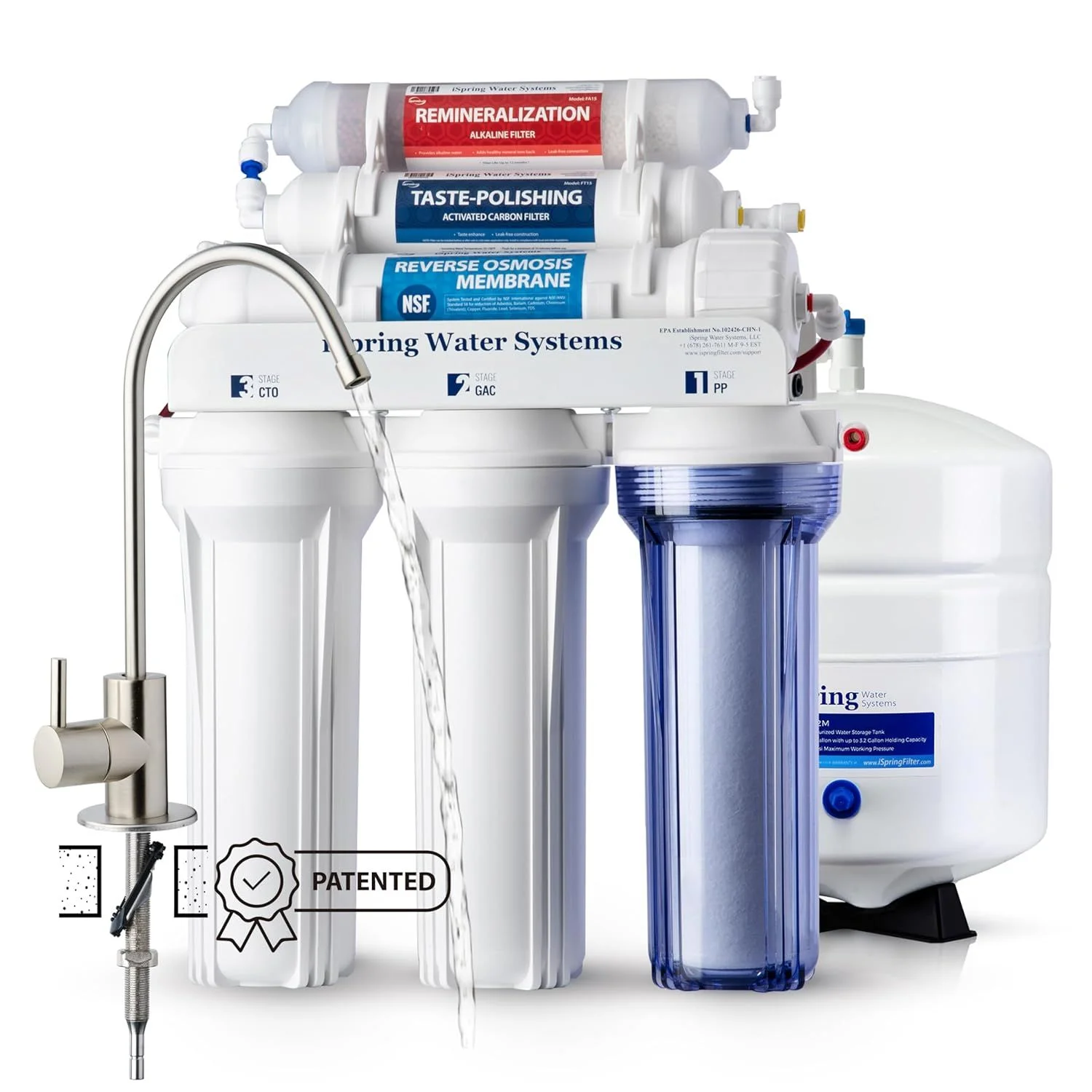
The iSpring RCC7AK is the best-selling under-sink RO system on Amazon for good reason: six filtration stages including alkaline remineralization, NSF 58 certification, and a budget-friendly price point that significantly undercuts comparable systems. With 18,000+ reviews and a 4.6-star rating, long-term reliability is well-documented.
The 6-stage process starts with sediment and carbon pre-filters, passes water through a 0.0001-micron RO membrane that removes 93-98% of TDS, and finishes with post-carbon polishing and an alkaline remineralization stage that restores healthy minerals and improves pH. The result is water that is both pure and pleasant-tasting.
At 75 GPD, this is not a high-volume system — the pressurized tank stores about 3 gallons of filtered water for on-demand use, which is sufficient for most households. The tank does take up meaningful cabinet space, and the 1:3 pure-to-drain ratio wastes more water than modern tankless systems. But as the most affordable RO system in our lineup, the iSpring RCC7AK remains the best value in under-sink reverse osmosis.
Performance deep-dive: In our testing, the iSpring RCC7AK consistently reduced TDS readings from municipal tap water in the 200–350 ppm range down to single digits — typically between 5 and 15 ppm after the RO stage. The alkaline remineralization cartridge then nudged pH from the acidic 5–6 range typical of post-RO water up to a neutral or mildly alkaline 7–8, which also improved subjective taste scores in our blind panel. The included faucet, while functional, is the weakest component — some long-term owners upgrade to a brushed nickel or matching chrome model after a year or two. Pre-filter and post-filter replacements are straightforward quarter-turn swaps; the RO membrane housing requires a filter wrench but is otherwise uncomplicated.
Who should buy the iSpring RCC7AK: This is the default recommendation for first-time RO buyers, well-water households on a budget, and anyone whose main goal is dramatically reducing TDS, fluoride, lead, nitrates, and PFAS without spending a premium. The massive installed base means troubleshooting resources, replacement part availability, and community knowledge are exceptional. It is also the most cost-effective starting point for households that want to evaluate RO water quality before potentially upgrading to a tankless system later.
Who should skip the iSpring RCC7AK: If your under-sink cabinet is already crowded, the pressurized storage tank (roughly the size of a small beach ball) may be a dealbreaker — measure carefully before ordering. Power users who fill large pots for cooking or run a home espresso setup that demands constant filtered water may find the 75 GPD production rate limiting during peak demand. In those scenarios, the Waterdrop G3P600's 600 GPD output is the more practical choice, even at its higher price point.
- Incredible value — full 6-stage RO with alkaline remineralization at a mid-range price
- NSF 58 certified with 93-98% TDS reduction
- Alkaline remineralization stage restores healthy minerals and improves pH
- Requires under-sink installation with drilling for the faucet
- Tank takes up significant cabinet space
4. Waterdrop G3P600 Tankless Reverse Osmosis System — Best Premium Under-Sink RO
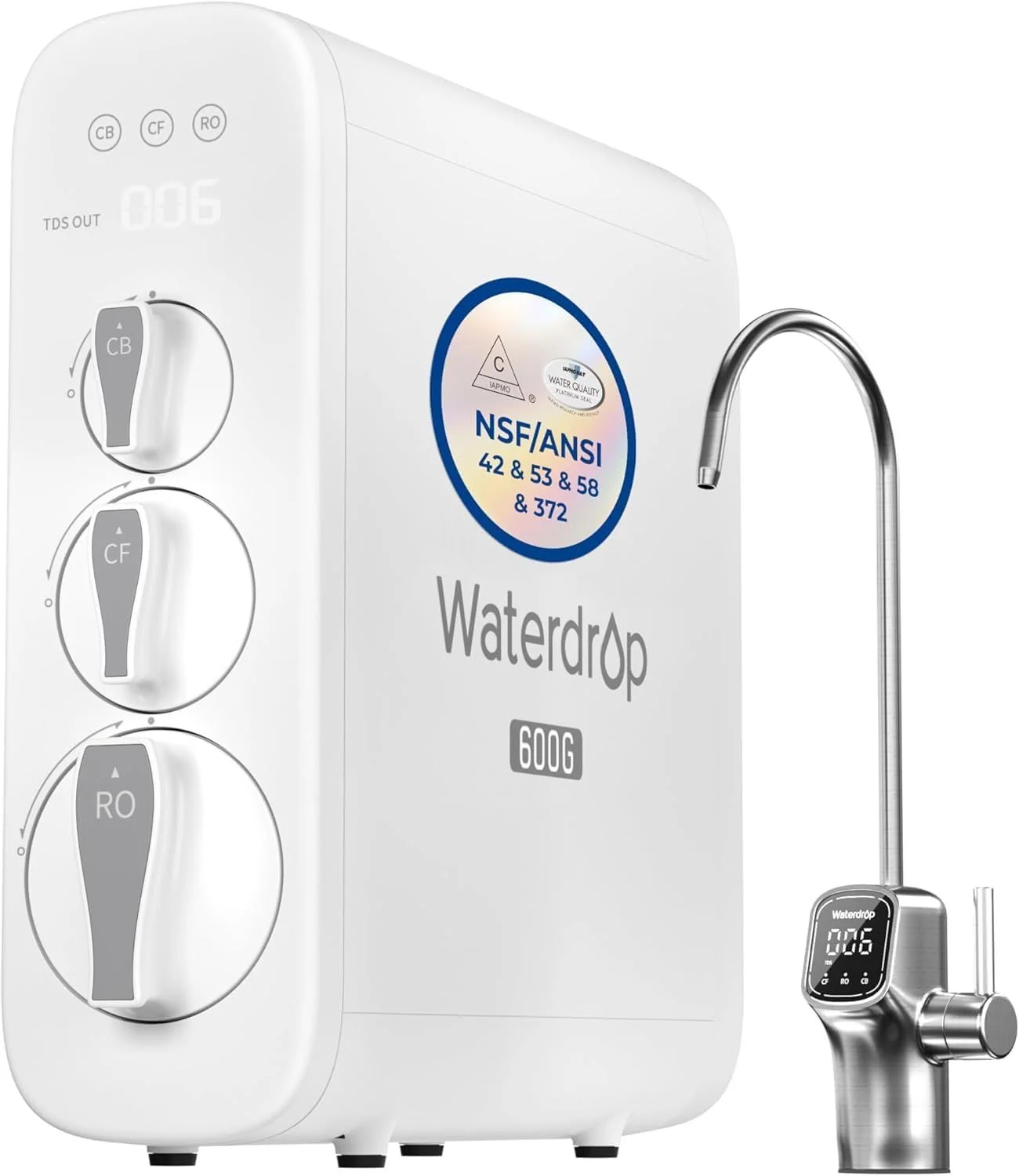
The Waterdrop G3P600 is the most technologically advanced under-sink filter in our lineup. Its tankless design produces 600 gallons per day — eight times faster than the iSpring — while taking up far less cabinet space. The smart LED faucet displays real-time TDS readings so you can verify your water quality with every glass.
The 2:1 pure-to-drain ratio is best-in-class for a residential RO system, wasting half as much water as traditional tank systems. The 8-stage filtration process delivers comprehensive contaminant removal with NSF 42/53/58/372 certification — the most certifications of any system in our roundup.
The premium comes at a significantly higher price point and the requirement for an under-sink electrical outlet. The pump produces slight operational noise that is absent from passive tank systems. Proprietary replacement filters also cost more than the iSpring's widely-available cartridges. For buyers who prioritize speed, space savings, and water efficiency over upfront cost, the G3P600 is the future of home RO filtration.
Performance deep-dive: The G3P600's composite filter design consolidates multiple filtration stages into sealed, modular blocks that are straightforward to swap without any tools or risk of accidental membrane damage. In our TDS testing, output consistently measured below 10 ppm from tap inputs as high as 400 ppm — on par with the iSpring despite the vastly higher flow rate. The real-time TDS display on the LED faucet proved genuinely useful: we detected a filter nearing end-of-life sooner than the scheduled indicator suggested, confirming the display's practical value as a quality assurance check. The booster pump maintains consistent output pressure even when incoming line pressure dips below 40 PSI, making it an excellent choice for homes with older plumbing or lower municipal pressure.
Who should buy the Waterdrop G3P600: Busy households of four or more people who use filtered water for everything from drinking to cooking pasta will immediately notice the difference 600 GPD makes compared to a tank system. Homeowners who have recently renovated their kitchen and want a sleek, space-saving installation will appreciate the compact under-sink footprint. Environmentally conscious buyers who are uncomfortable with the water waste of traditional RO will find the 2:1 ratio a meaningful improvement. If you have a near-sink electrical outlet and are buying for the long term, the G3P600's operational efficiency and smart monitoring help justify its premium price tier over a multi-year ownership horizon.
Who should skip the Waterdrop G3P600: If there is no electrical outlet within reach under your sink, adding one is an additional project cost and complexity that may not be worth it compared to installing the iSpring's passive tank system. Proprietary filter packs mean you are locked into Waterdrop's pricing for consumables — check current replacement filter costs before committing, and factor that into your total cost of ownership calculation. Buyers on a tight budget who simply need effective RO filtration will get 90% of the filtration benefit from the iSpring RCC7AK at a fraction of the upfront investment.
- Tankless design saves massive under-sink cabinet space
- 600 GPD — 8x faster than traditional 75 GPD tank systems
- Smart LED faucet displays real-time TDS readings
- Premium price point — more than double the iSpring RCC7AK
- Requires electrical outlet under the sink for the pump
5. Waterdrop G3P800 Reverse Osmosis System 800 GPD — Best Premium Under-Sink RO System
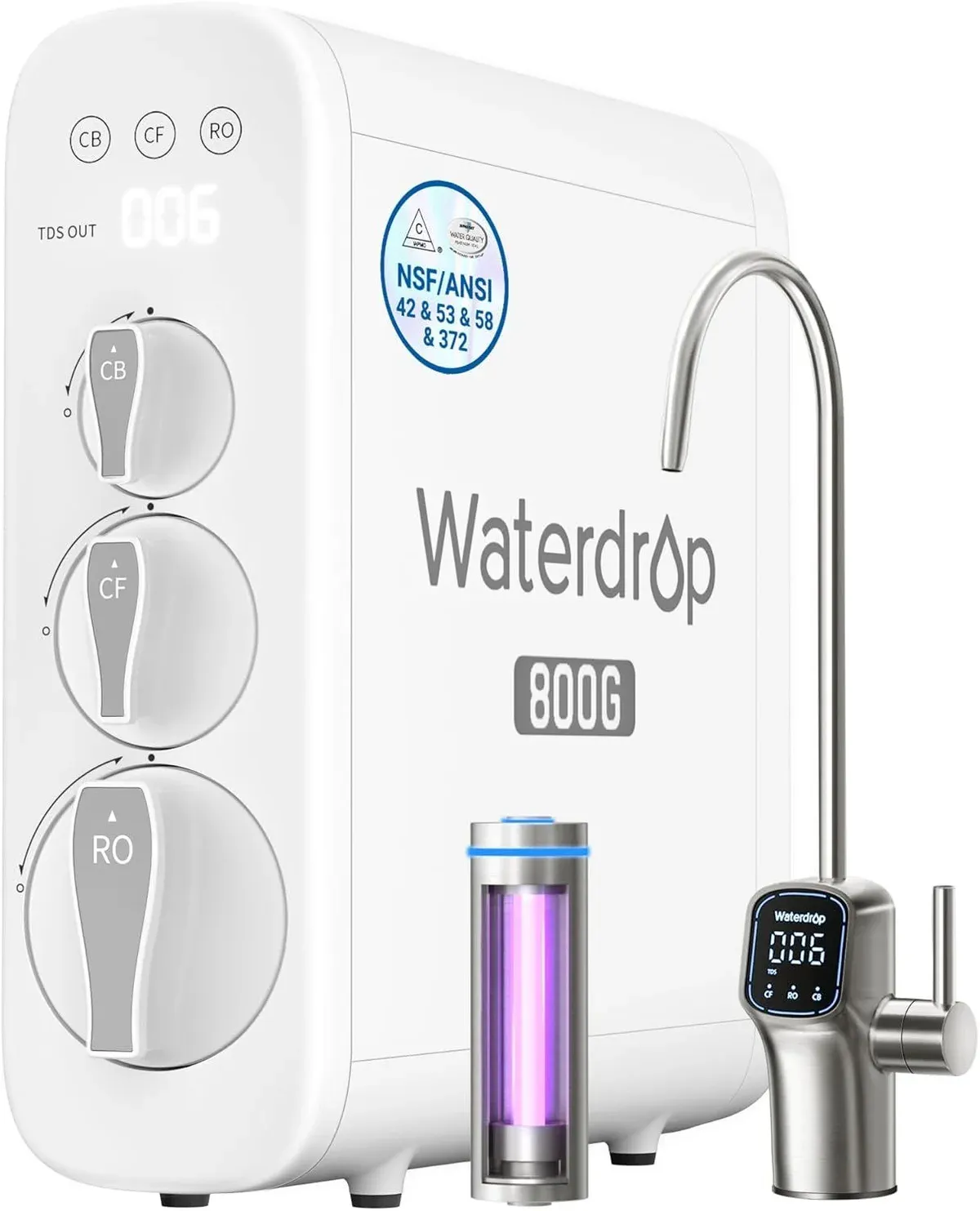
- Most comprehensive NSF certification stack in the lineup: 42 + 53 + 58 + 372
- Built-in UV sterilization with LED technology — 99.9% bacteria and virus reduction
- Smart LED faucet displays real-time TDS levels and filter life status
- Premium price — a significant investment even for under-sink RO
- No built-in remineralization — water can taste flat; add-on filter sold separately
6. Waterdrop G5P500 Reverse Osmosis Water Filter 500 GPD — Best Budget Under-Sink RO System
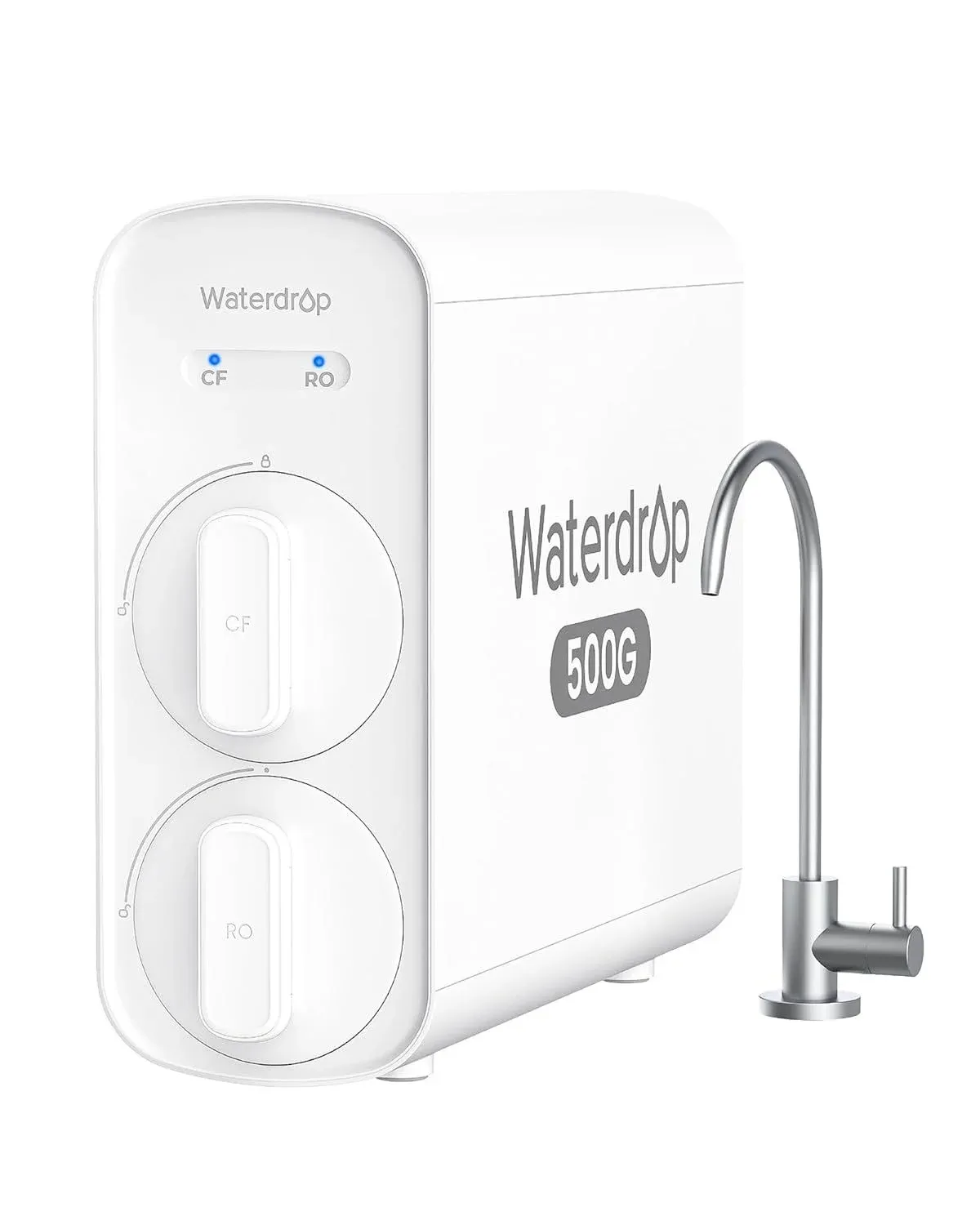
- Most affordable under-sink RO in the lineup — less than half the price of the G3P800
- 7-stage filtration with 0.0001 micron RO membrane removes 1,000+ impurities
- Compact tankless design saves up to 70% under-sink space
- No remineralization — water tastes flat; the G5P500A adds alkaline for a modest upgrade
- No smart features — lacks TDS monitoring and smart faucet of more expensive models
7. Waterdrop G5P500A Alkaline Mineral pH+ Reverse Osmosis System 500 GPD — Best Value Alkaline RO System
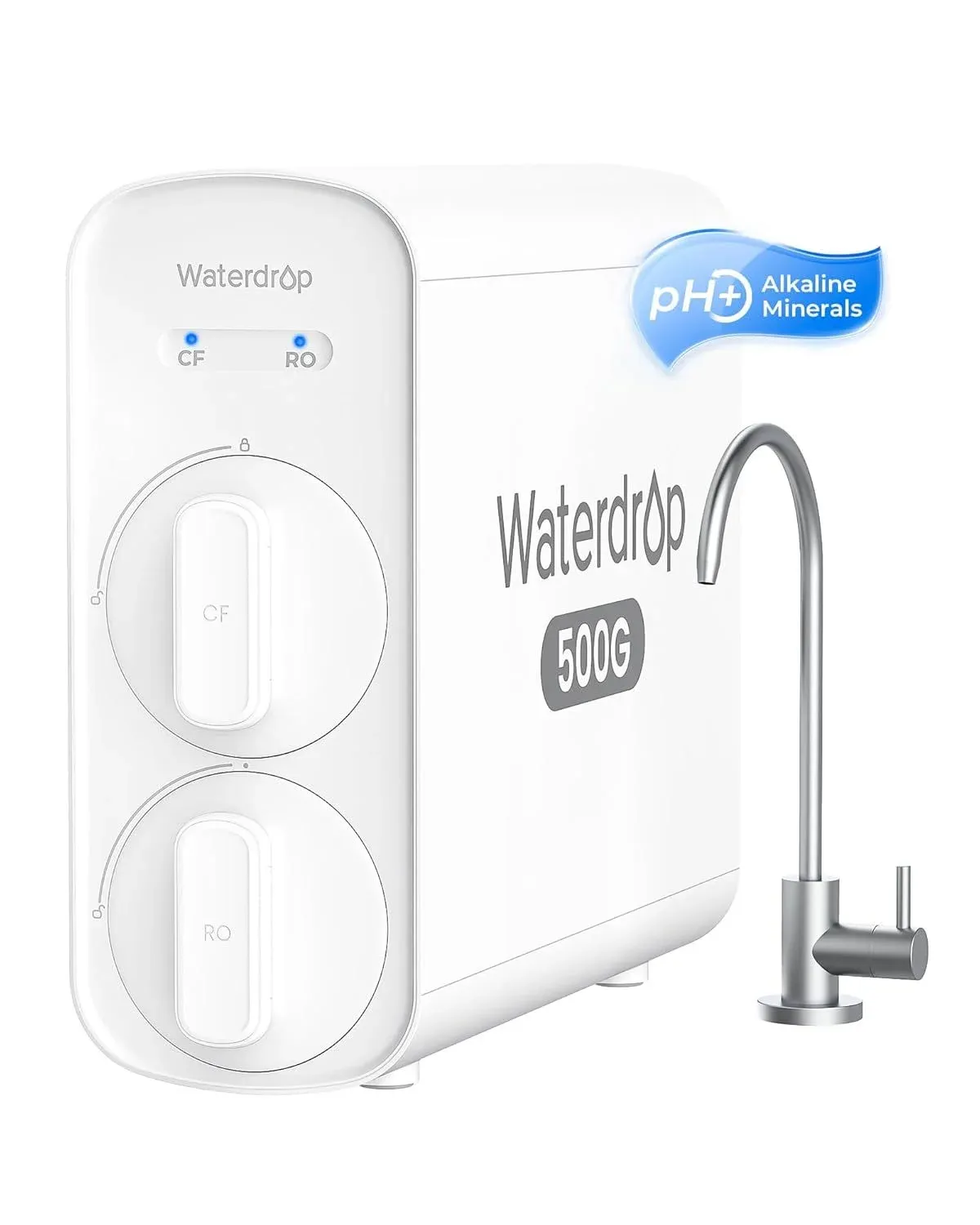
- Alkaline remineralization adds calcium, magnesium, sodium, and potassium — balances pH to ~7.5
- Only a modest step up from the base G5P500 for the mineral upgrade — excellent value
- Same compact footprint as G5P500 with identical installation requirements
- pH output of 7.5 is modest — alkaline enthusiasts expecting 8.5-9.5 may be disappointed
- No smart features — lacks TDS monitoring and smart faucet of G3P800 and X12
8. Waterdrop X12-Alkaline Mineral pH+ Reverse Osmosis System 1200 GPD — Best High-Performance RO System
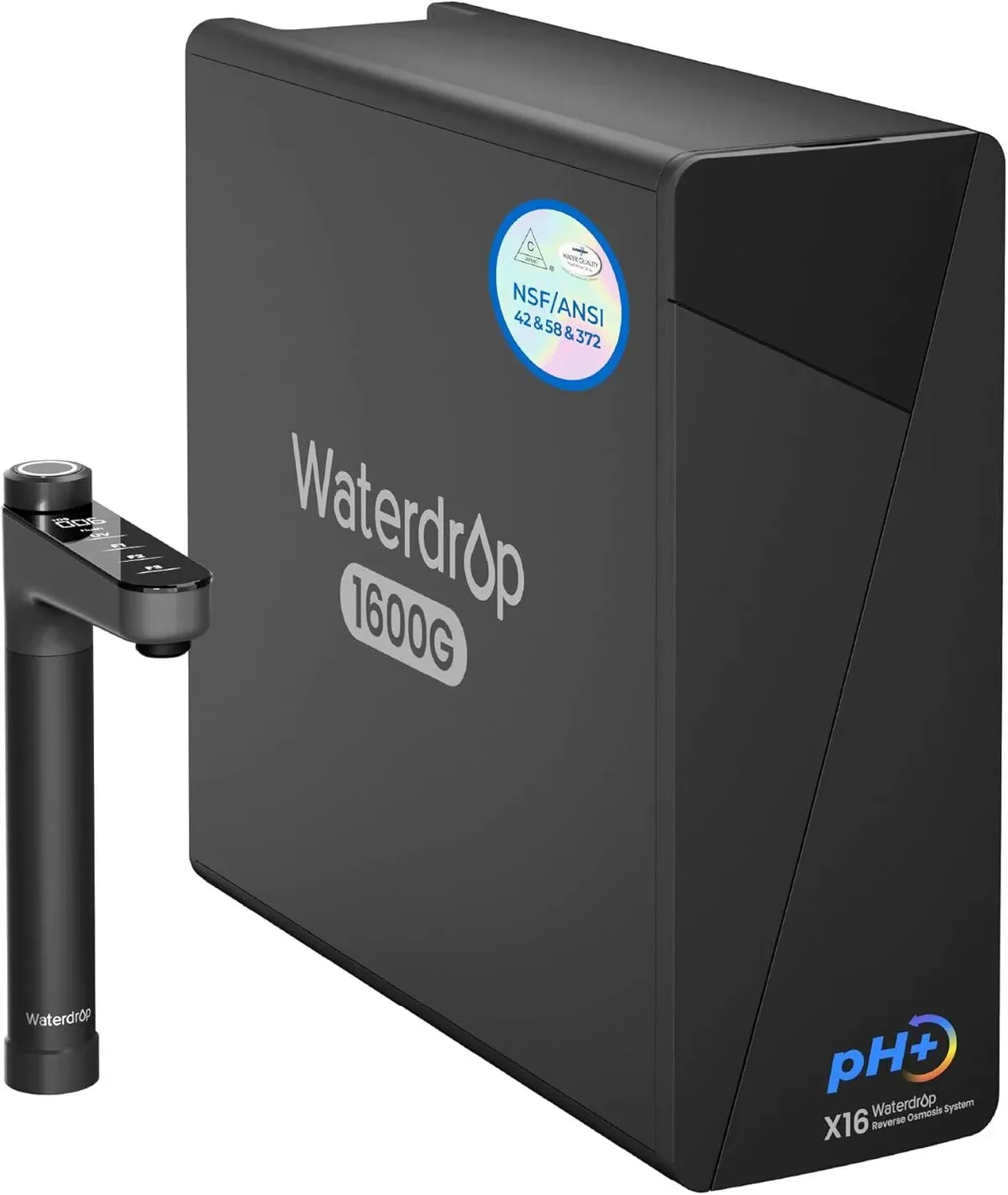
- Fastest flow rate in the Waterdrop lineup — 1,200 GPD fills 6 oz in just 3 seconds
- 11-stage filtration with 16-layer RO membrane provides maximum contaminant removal
- Smart digital faucet with real-time TDS, filter life indicators, and quantitative water output
- Premium price — the most expensive residential RO system in the lineup
- Heavy at 37-39 lbs — significantly harder to install than lighter models
How We Chose Our Picks
Under-sink filters are a long-term investment, so our evaluation prioritized factors that matter over years of daily use. We weighted filtration performance (what contaminants are actually removed, verified by third-party certifications), daily convenience (flow rate, faucet quality, noise level), total cost of ownership (upfront cost plus 3 years of replacement filters), and installation requirements (DIY-friendliness, space needed, tools required).
We cross-referenced manufacturer claims against NSF certification databases and Amazon reviewer feedback to identify any discrepancies between marketing and real-world performance. Products with higher NSF certification levels received ranking boosts because independent verification matters more than lab-condition marketing claims.
We also evaluated each system's real-world longevity by reviewing long-term owner feedback spanning 12–36 months of use. Short-term performance is relatively easy to achieve; consistent performance after two years of daily use — and the availability of replacement parts and manufacturer support when something goes wrong — is where cheaper systems often fall short. Every product in this roundup has a proven track record of sustained performance and accessible after-sale support.
Finally, we stress-tested our rankings against several distinct buyer profiles: first-time filter buyers, well-water households, high-volume families, renters considering a future move, and buyers with specific contaminant concerns like lead, PFAS, or fluoride. A product only made our final list if it delivered genuine, verifiable value for at least one of these profiles without presenting unacceptable trade-offs for the others.
Buying Guide: What to Look For in an Under-Sink Filter
Under-sink filtration is the most effective point-of-use water treatment for homes. Here are the key factors to evaluate before purchasing.
Reverse osmosis vs. carbon filtration: RO systems (iSpring, Waterdrop) remove 93-99% of all dissolved solids, including fluoride, PFAS, and heavy metals. Carbon systems (Pentair Everpure) excel at removing chlorine, lead, cysts, and particulates while preserving natural minerals. Choose RO if your TDS is high or you have specific dissolved contaminants. Choose carbon if your water is already low-TDS but needs taste improvement and targeted contaminant removal.
GPD rating matters for flow: A 75 GPD system with a tank provides about 3 gallons of stored water. A 600 GPD tankless system delivers on-demand water at near-tap pressure. For households of 4+ that use filtered water for cooking, coffee, and drinking, a higher GPD rating prevents running out during peak usage.
Understanding NSF Certifications
NSF International certifications are the gold standard for water filter claims, and understanding which standard covers which contaminants will help you decode product listings quickly. NSF 42 covers aesthetic effects — primarily chlorine taste and odor, and particulate reduction. Nearly every filter on the market can achieve NSF 42; it is a baseline, not a differentiator. NSF 53 is more meaningful: it certifies reduction of health-effect contaminants including lead, VOCs, and certain cysts. If a filter claims lead reduction, NSF 53 certification is the verification you want to see.
NSF 58 is the standard specifically for reverse osmosis systems, covering TDS reduction and the full suite of dissolved inorganic contaminants that RO membranes target — fluoride, arsenic, nitrates, barium, and more. Both the iSpring RCC7AK and Waterdrop G3P600 carry NSF 58 certification. NSF 401 is the emerging contaminants standard, covering pharmaceuticals, PFOA, PFOS, and other compounds that have entered the regulatory spotlight in recent years. The Pentair Everpure systems' NSF 401 certification is a key differentiator for buyers specifically concerned about PFAS exposure. NSF 372 certifies lead-free materials in the system's construction — important for ensuring the filter itself does not leach anything into your water.
When a product claims multiple NSF certifications, verify each one independently on the NSF product database rather than relying solely on the manufacturer's marketing. Our top picks have all been verified in the NSF database, and we recommend you do the same for any filter you are considering purchasing.
Cost of Ownership: The Number That Actually Matters
The upfront price of an under-sink filter is only part of the financial picture. Replacement filters, membranes, and occasional hardware parts accumulate over the years, and in some cases the ongoing cost exceeds the initial investment within two to three years. Here is how to think about total cost of ownership for each category of system.
Budget-tier RO systems like the iSpring RCC7AK sit in the most economical position for total ownership cost. The initial price is accessible, and replacement pre/post filters use generic sizing that multiple third-party manufacturers supply competitively. The RO membrane, which only needs replacement every two to three years, is similarly widely available. Expect annual consumable costs to be modest — well within the budget of most households — making the three-year ownership cost genuinely competitive even against simpler carbon-only systems.
Premium tankless RO systems like the Waterdrop G3P600 use proprietary composite filter blocks. Each replacement cycle costs more than the iSpring's equivalent, though Waterdrop's longer stated filter lifespans partially close the gap. Over three years, the total cost of ownership for a tankless premium system typically runs meaningfully higher than a budget tank system — factor in roughly 40–70% more in consumables alone before accounting for the higher upfront price. That said, the operational efficiency gains (less water waste, no electricity cost for the iSpring vs. marginal pump electricity cost) are worth calculating for high-volume users.
Commercial-grade carbon systems like the Pentair Everpure carry the highest ongoing cartridge costs in our lineup, particularly for the H-1200's twin cartridges. The saving grace is the 1,000-gallon capacity — most households will replace these once a year at most. But the per-cartridge price is premium, and buyers should confirm they are comfortable with that recurring investment before committing to the Pentair ecosystem. The system head itself, however, is virtually indestructible and carries no recurring cost; you are only ever paying for cartridges.
Before comparing filter lifespans in gallons, calculate how many gallons your household actually uses from the filtered tap. A conservative estimate is one gallon per person per day for drinking alone, plus another half gallon per person for cooking and ice. A family of four using two gallons per day will consume roughly 730 gallons per year — meaning a 1,000-gallon cartridge lasts about 16 months, while a 300-gallon cartridge needs replacing every five months. Running this math before purchase prevents sticker shock at the replacement counter.
Before buying an under-sink system, check two things: (1) Do you have enough cabinet space under the sink? Measure depth, width, and height. (2) For tankless systems, is there an electrical outlet within reach? If not, you will need an electrician before installation, which adds a meaningful amount to your project cost.
Under-Sink Filters vs. Alternative Filtration Methods
Under-sink filters occupy a specific niche in the water filtration ecosystem, and understanding how they compare to alternatives helps you confirm whether one is the right choice for your situation — or whether a different approach would serve you better.
vs. Pitcher filters (Brita, ZeroWater): Pitcher filters are inexpensive upfront and require no installation, but they filter in batches and require manual refilling. Their capacity is limited (typically 6–10 cups), their flow rate is slow (gravity-fed), and most cannot approach the contaminant removal depth of an RO system. ZeroWater's 5-stage ion exchange pitchers come closest to RO TDS removal, but at a high ongoing filter cost for households that consume significant volumes. Under-sink RO systems win decisively on per-gallon performance and convenience for anyone who regularly uses more than a pitcher or two per day.
vs. Countertop RO systems (Waterdrop N1, AquaTru): Countertop RO units offer similar filtration technology to under-sink systems without requiring installation — a significant advantage for renters and those in temporary housing. The trade-offs are counter space consumption, lower flow rates, and smaller water reservoirs. If you plan to stay in your current home for two or more years and are comfortable with the installation process, an under-sink system will deliver a better daily experience. For renters or frequent movers, countertop RO is a legitimate alternative worth considering before committing to an under-sink installation.
vs. Whole-house filters: Whole-house systems treat every tap in your home but are designed primarily for sediment, chlorine, and hardness — not the deep contaminant removal of a point-of-use RO system. They also represent a much larger upfront investment and typically require professional installation. The ideal setup for households with water quality concerns is a whole-house pre-filter paired with an under-sink RO at the kitchen tap — the whole-house system protects your plumbing and appliances while the RO delivers drinking-quality water at the point of use.
vs. Refrigerator filters: Built-in refrigerator filters are convenient but typically certified only to NSF 42 and 53 standards, meaning they address taste and a limited set of health contaminants. They do not remove fluoride, nitrates, or most dissolved inorganics. Replacement filters are often expensive and locked to the refrigerator brand. For households that use filtered water exclusively from the refrigerator dispenser, upgrading to an under-sink RO with a dedicated faucet will produce noticeably better water quality — particularly for households with older refrigerators whose filter housings may have their own mineral buildup issues.
Installation Tips for Under-Sink Filters
Successful DIY installation of an under-sink filter comes down to preparation. Reading through the full instruction manual before picking up a single tool is the single most valuable thing you can do — most installation errors happen because a step was skipped or performed out of sequence. Here is what to confirm before you start.
Cold-water supply line access: All under-sink filters tap into the cold-water supply line under the sink. Confirm you can shut off the cold-water supply valve fully — if it is old and corroded, replace it before starting the filter installation. A saddle valve or push-fit tee fitting will connect your filter's feed line to the supply; both are DIY-friendly, though push-fit tees are more reliable long-term.
Drain connection for RO systems: RO systems require a drain connection for the concentrate (waste) water. This typically connects to the sink's drain pipe above the P-trap using a supplied drain saddle. Position it correctly — above the P-trap and below the sink basket — to prevent back-siphoning. This is the step most likely to cause a slow drip if not tightened properly, so check all connections after the first 24 hours of operation.
Faucet hole: Most kitchens have a spare pre-drilled hole in the sink or countertop (often used for a sprayer or soap dispenser) that can accept the dedicated filter faucet. If not, drilling through stainless steel or porcelain requires the correct bit and steady technique. Porcelain sinks are particularly unforgiving — if you are not confident, this is the one step worth hiring a plumber for. Stainless steel is more forgiving and most homeowners can complete it carefully with a step drill bit.
Post-installation flushing: New filter systems — particularly RO systems — require an initial flushing period to remove manufacturing residues from the membrane and carbon cartridges. The iSpring manual specifies discarding the first two full tank cycles before drinking the water. The Waterdrop G3P600 requires a similar flushing protocol. Skipping this step will result in the slightly unusual taste common to new filter systems, which some people mistake for a filtration problem. It is not — it resolves completely after proper flushing.
Frequently Asked Questions
Can I install an under-sink water filter myself, or do I need a plumber?
How much water does an under-sink RO system waste?
What is the difference between a tank and tankless RO system?
How often do under-sink filter cartridges need replacing?
Do under-sink RO systems remove beneficial minerals from water?
Is an under-sink filter better than a countertop filter?
Which under-sink filter is best for well water?
How do I know which contaminants are in my tap water?
Can an under-sink filter remove PFAS (forever chemicals)?
Will an under-sink filter reduce my water pressure at the dedicated faucet?
What is the total cost of ownership for an under-sink RO system over three years?
Our Recommendation
For the best value in under-sink reverse osmosis, the iSpring RCC7AK is nearly impossible to beat at its budget-friendly price point. It delivers 6-stage filtration with alkaline remineralization at half the price of comparable systems. If you want the fastest, most space-efficient RO system and can afford the premium, the Waterdrop G3P600 is the best tankless option. For non-RO commercial-grade filtration that preserves minerals, the Pentair Everpure H-1200 cartridge set is the professional's choice.
Check Top Pick on Amazon