Best Water Filters for Emergency Preparedness
When municipal water systems fail after hurricanes, earthquakes, winter storms, or infrastructure breakdowns, access to clean drinking water becomes the most urgent survival need. We break down exactly how to build a water purification kit that keeps your family safe when the taps stop flowing.
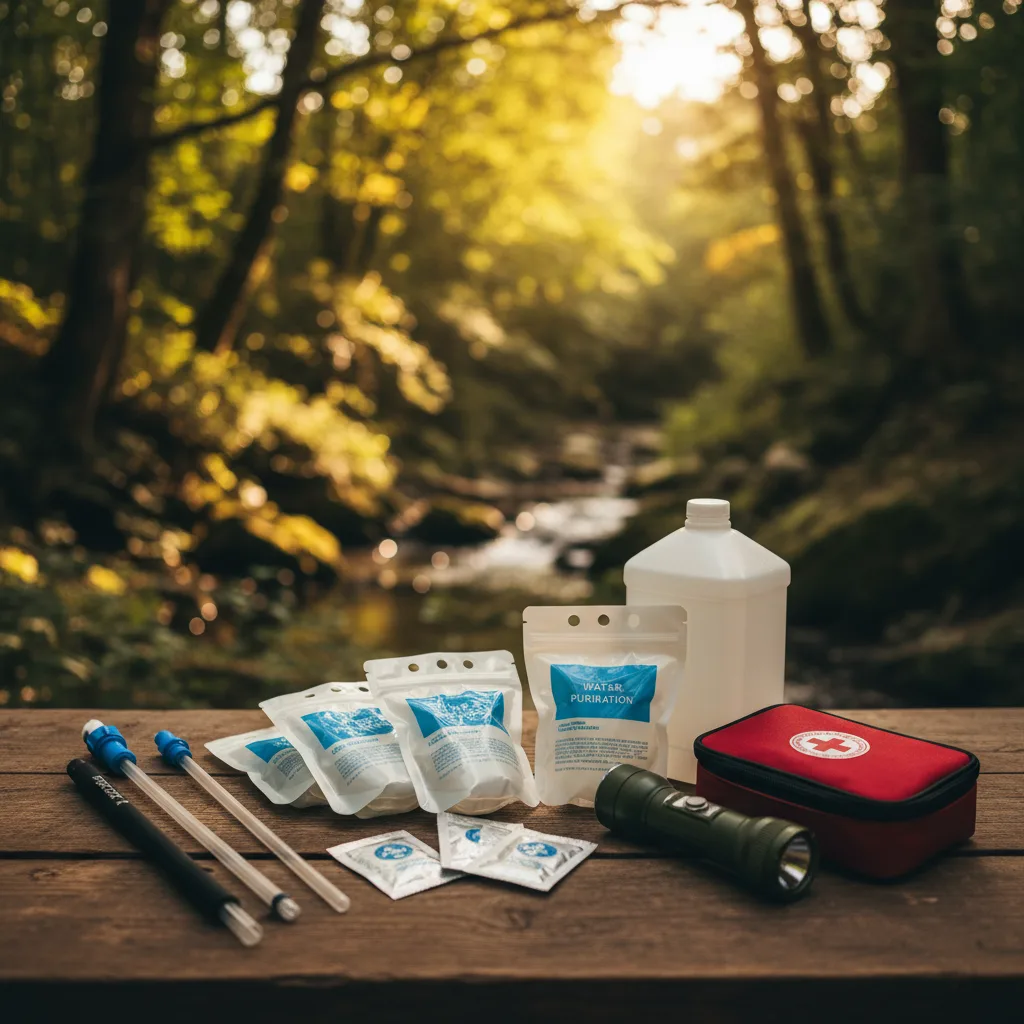
Why Emergency Water Preparedness Matters
FEMA reports that the average American household has less than three days of water stored at any given time. Yet major natural disasters routinely knock out municipal water treatment for a week or longer. Hurricane Maria left parts of Puerto Rico without clean water for months. The 2021 Texas winter storm disrupted water service for over 13 million people. Flint, Michigan's water crisis lasted years.
The human body can survive only about three days without water. Dehydration symptoms begin within hours in hot conditions. Children, the elderly, and people with medical conditions are especially vulnerable. Having a reliable water purification system is not prepper paranoia — it is basic household preparedness that every family should invest in.
The good news is that building a comprehensive emergency water kit is inexpensive. For the cost of a single restaurant meal, you can equip your family with filter straws for every member plus chemical purification tablets for backup — a system capable of producing safe drinking water from virtually any freshwater source for months.
What to Look For in Emergency Water Purification
Emergency water filtration has different priorities than everyday home filtration. Here is what matters when disaster strikes:
- No power or plumbing required: Forget electric-powered RO systems and plumbed-in filters. Your emergency kit must work when the grid is down and pipes are dry. Filter straws and chemical tablets need nothing but a water source.
- Long shelf life: Emergency supplies must be ready years after you buy them. Filter straws in sealed packaging last 5-10 years. Aquatabs last 5 years sealed. Both are reliable set-and-forget supplies.
- Multi-person capacity: You need filtration for every family member. Individual filter straws mean no one has to share or wait. Affordable straws like the Membrane Solutions make it easy to stock one per person.
- Complete biological coverage: Emergency water sources may contain bacteria, protozoa, and viruses. Filters alone miss viruses. Chemical tablets alone do not remove sediment or cysts. You need both for comprehensive protection.
- Portability: You may need to evacuate. Your water purification kit should fit in a go-bag alongside other emergency supplies. Compact, lightweight filter straws are perfect for this.
Top Picks for Emergency Preparedness
1. Membrane Solutions Portable Water Filter Straw — Best for Family Emergency Kits
The Membrane Solutions straw is purpose-built for emergency preparedness. At its price point, stocking one straw per family member is a no-brainer — everyone gets their own dedicated water filtration device with no sharing, no waiting, and no single point of failure. If one straw gets lost or damaged, the rest of your family still has safe water access.
The 0.1-micron hollow fiber membrane removes 99.999999% of bacteria and 99.99% of protozoa, which covers the primary biological threats in emergency freshwater sources. Each straw is rated for 1,500+ liters, giving a family of four roughly 375 liters per person — more than 90 days of drinking water at the recommended minimum intake.
At Under $25 per straw, equipping your entire family for water safety costs less than a single restaurant meal. These belong in every household emergency kit.
Price Range: Under $25 | Full Review | Check Price on Amazon
2. MSR Aquatabs Water Purification Tablets (30-Pack) — Essential Virus Protection
Filter straws remove bacteria and protozoa but physically cannot capture viruses, which are as small as 0.02 microns. In emergency situations where water sources may be contaminated with sewage (common during flooding), viral threats like norovirus, hepatitis A, and rotavirus are real concerns. MSR Aquatabs kill all three.
Each tablet treats 2 quarts in 30 minutes using NaDCC chlorine-based chemistry. The 30-pack provides 60 quarts (15 gallons) of virus-free water — enough for one person for over two weeks. The tablets weigh practically nothing, have a 5-year shelf life sealed, and cost just Under $25. Buy multiple packs to cover your entire family.
The recommended emergency protocol: filter water through a straw first to remove bacteria, protozoa, and sediment. Then treat the filtered water with an Aquatab to neutralize any viruses. This two-step process provides the most comprehensive water purification possible without electricity.
Price Range: Under $25 | Full Review | Check Price on Amazon
3. Timain 4-Stage Water Filter Straw (2-Pack) — Best for Go-Bags and Vehicle Kits
The Timain 2-pack is ideal for splitting between emergency stashes. Put one straw in your home emergency kit and one in your car's glove compartment or go-bag. At just 2.1 ounces per straw, it adds virtually no weight to an evacuation bag while providing the ability to drink safely from any freshwater source.
The 4-stage filtration with activated carbon provides an advantage over membrane-only straws in emergency scenarios: the carbon stage reduces chlorine taste and odor, which matters if you are treating partially chlorinated municipal water that may have been compromised. At Under $25 for two straws, the cost is trivial for such critical insurance.
Price Range: Under $25 | Full Review | Check Price on Amazon
4. NatureNova Personal Water Filter Straw — Best for Base Camp Emergencies
When sheltering in place during an extended emergency, the NatureNova kit's included foldable water bag enables gravity filtration — a hands-free method that can produce larger quantities of filtered water for cooking, cleaning, and drinking. Fill the bag from any source, hang it from a hook or door frame, and let gravity pull water through the filter.
The backwash syringe is particularly valuable in extended emergencies where sediment-heavy water is the norm. Being able to maintain and restore your filter's flow rate can extend its life far beyond the rated 1,500 liters. At Under $25 for the complete kit, it provides functionality that simpler straws lack — and at this price point, stocking extras for redundancy is an easy call.
Price Range: Under $25 | Full Review | Check Price on Amazon
Who Should Build an Emergency Water Kit — and Who Needs to Go Further
A filter straw and tablet combination is the right solution for the vast majority of households. But understanding exactly where you fall on the preparedness spectrum helps you decide how much to invest and which products to prioritize.
This Kit Is Right For You If...
- You live in a natural disaster zone. Residents of hurricane-prone coastal areas, earthquake corridors like the Pacific Northwest, or regions with severe winter storms should treat emergency water preparedness as non-negotiable. A disruption lasting 7–14 days is a realistic worst-case scenario for these locations, and filter straws plus tablets cover that window comfortably.
- You have a family with children. Children are among the most vulnerable to waterborne illness and dehydration. Equipping each family member with their own dedicated straw ensures that even in a chaotic situation, everyone has independent access to safe water — no waiting, no rationing a single shared device.
- You want affordable, set-and-forget preparedness. If you are not a dedicated prepper but want basic household insurance, the Membrane Solutions 4-pack plus two boxes of Aquatabs is an entirely budget-friendly setup that requires almost no maintenance beyond an annual expiration date check.
- You are building a go-bag or 72-hour kit. Compact, lightweight, and requiring zero infrastructure, filter straws are purpose-designed for evacuation scenarios. They fit inside a standard backpack alongside food, first aid, and documents without adding meaningful weight or bulk.
You Should Consider Additional Measures If...
- You live in an area with known chemical contamination risks. Hollow fiber filter straws do not remove heavy metals, volatile organic compounds (VOCs), or agricultural runoff chemicals. If your region has industrial facilities, legacy lead pipe infrastructure, or agricultural runoff concerns, add a countertop gravity filter with activated carbon and ion-exchange media — such as those from Clearly Filtered or Berkey — to your home kit as a backup purification stage.
- You are preparing for extended off-grid scenarios lasting months. For homesteaders, rural property owners, or those preparing for long-term grid-down situations, a gravity-fed ceramic filter system or a hand-pump filter like the Katadyn Pocket offers higher daily output and longer service intervals than personal filter straws. Pair these with straws as individual backup devices.
- You have household members with compromised immune systems. Immunocompromised individuals require the most complete purification possible. The two-step filter-then-tablet method described in this guide provides strong protection, but you may also want to add a UV purification step — devices like the SteriPen are compact and battery-powered — for an additional layer of pathogen destruction beyond chemical treatment.
Building Your Emergency Water Kit
Here is a step-by-step checklist for a complete family emergency water purification setup:
- Store baseline water: At minimum, 1 gallon per person per day for 14 days. Use commercially sealed water or fill food-grade containers and rotate every 6 months.
- One filter straw per family member: Order one Membrane Solutions straw per person in your household. Store in sealed packaging in your emergency supply bin.
- Chemical purification tablets: At least 30 Aquatabs per person. Buy 2-3 packs per family member and store in a cool, dry place.
- Collection containers: Store at least two collapsible water containers (5-gallon size) for transporting water from sources back to your shelter.
- Pre-filtration material: Include a few coffee filters or clean bandanas for straining sediment from turbid water before filtering.
- Separate vehicle kits: Put one filter straw and one pack of Aquatabs in each family vehicle.
Frequently Asked Questions
How much water should I store for emergencies?
How long do water filter straws last in storage?
Can I filter floodwater in an emergency?
Do water purification tablets expire?
What is the best water purification method after a hurricane?
Should I build separate emergency water kits for home and car?
Can children use filter straws safely?
Is a filter straw enough on its own, or do I always need tablets too?
Our Top Pick for Emergency Preparedness
For comprehensive family emergency water preparedness, we recommend the Membrane Solutions Portable Water Filter Straw combined with multiple packs of MSR Aquatabs Water Purification Tablets (30-Pack). The filter straws handle bacteria and protozoa while the tablets kill viruses — together, they cover every biological threat. Total cost for a family of four is remarkably low. That is an investment in peace of mind that could quite literally save lives.
Get Filter Picks Delivered
One email per week. Honest reviews, no spam.
No spam. Unsubscribe anytime.