Best Water Filters for Camping: 2026 Guide
Whether you are car camping at an established site or setting up a remote backcountry base camp, access to clean water is the single most important element of any camping trip. We tested the top portable water filters to find the best options for every camping style and group size.
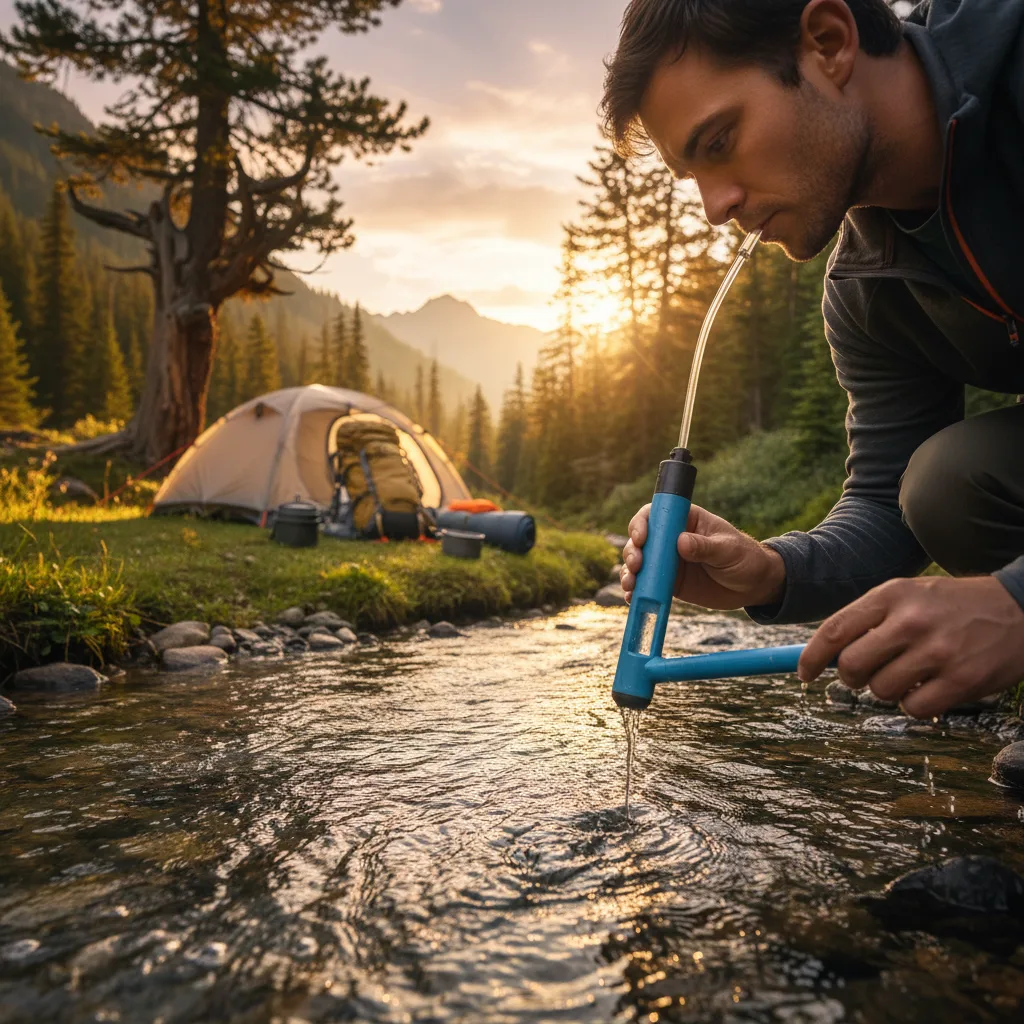
Why Camping Demands Proper Water Filtration
Natural water sources at campgrounds and in the backcountry carry risks that are invisible to the naked eye. Bacteria like E. coli and Campylobacter, protozoan parasites like Giardia and Cryptosporidium, and sediment from erosion all contaminate lakes, rivers, and streams. Even designated campgrounds with access to well water or spring water cannot guarantee the absence of pathogens.
The consequences of drinking untreated water range from mild stomach upset to weeks of debilitating gastrointestinal illness. Giardiasis alone affects an estimated 1 million Americans annually, with many cases traced to recreational water exposure. A compact, reliable water filter weighing just a few ounces eliminates this risk entirely.
Beyond health concerns, carrying enough bottled water for a multi-day camping trip is impractical. A single person needs a minimum of 2 liters per day for drinking alone, and more in hot weather. A lightweight filter straw rated for 1,500 liters replaces hundreds of plastic bottles and pays for itself after a single trip.
What to Look For in a Camping Water Filter
Choosing the right filter depends on your camping style. Here are the key criteria we evaluate:
- Portability and weight: For backpacking and remote camping, every ounce counts. Filter straws weigh 2-3 ounces and fit in a pocket. Gravity systems are heavier but better for base camps.
- Filtration level: Look for 0.1-micron or finer filtration. This removes 99.9999% of bacteria and 99.99% of protozoa. For virus protection, add chemical purification tablets.
- Flow rate and convenience: Suction-based straws require you to drink directly. Squeeze-compatible straws can fill containers. Gravity filters are hands-free but slower.
- Capacity: Most filter straws handle 1,000-1,500 liters before replacement. For a weekend trip, any straw will last. For extended trips, capacity matters more.
- Group size: Solo campers need one straw. Families and groups benefit from multi-packs or gravity-feed setups that can fill communal water containers.
Top Picks for Camping
1. Timain 4-Stage Water Filter Straw (2-Pack) — Best Budget Option
At just Under $25 for two straws, the Timain is the most affordable way to guarantee safe drinking water on any camping trip. Each straw weighs only 2.1 ounces and features 4-stage filtration with a 0.1-micron ultrafiltration membrane. You can drink directly from a stream by suction or use it as a squeeze filter with a compatible water bottle.
The dual-use design is a real advantage at camp. When you want a quick drink at the creek, use it as a straw. When you need to fill a pot for cooking, attach it to a squeeze bag and filter into your container. The 1,500-liter capacity per straw means a pair will last an entire camping season for most people.
Price Range: Under $25 | Full Review | Check Price on Amazon
2. Membrane Solutions Portable Water Filter Straw — Best for Groups and Families
When you are camping with family or a group of friends, the Membrane Solutions straw is affordable enough that everyone can have their own dedicated filter. At Under $25 per straw, equipping a group of four costs very little — a small price for guaranteed water safety. The 0.1-micron hollow fiber membrane technology is the same proven filtration used in premium backpacking filters costing three times as much.
Each straw fits standard 28mm water bottles, which means you can thread it onto a disposable plastic bottle and use it as an on-the-go filtration system. This is especially convenient for kids who might struggle with direct suction from a creek. The 4.5-star rating across 8,500+ reviews gives us confidence in the quality consistency.
Price Range: Under $25 | Full Review | Check Price on Amazon
3. NatureNova Personal Water Filter Straw — Best Complete Camping Kit
The NatureNova stands out as the only filter straw kit that comes ready to use in the field without any additional purchases. The kit includes a foldable water bag and a backwash syringe alongside the straw itself. The water bag enables gravity filtering — fill it at the river, hang it from a tree branch, and let filtered water drip into your camp container while you set up the tent.
The backwash syringe is a genuinely useful accessory that extends filter life. When flow rate drops after heavy use, a quick reverse flush clears accumulated sediment and restores performance. At Under $25 for the complete kit, it is slightly more per straw than the Timain, but the included accessories make it a better out-of-the-box value for camping-specific use.
Price Range: Under $25 | Full Review | Check Price on Amazon
4. MSR Aquatabs Water Purification Tablets (30-Pack) — Essential Chemical Backup
No camping water purification kit is complete without chemical tablets as a backup. MSR Aquatabs use NaDCC (sodium dichloroisocyanurate), an EPA-registered chlorine-based purifier that kills viruses, bacteria, and Giardia cysts in 30 minutes. Unlike iodine tablets, Aquatabs leave minimal taste and are safe for most users.
The critical advantage of tablets over filters is virus removal. Filter straws with 0.1-micron membranes physically cannot capture viruses, which are as small as 0.02 microns. In contaminated waters where viral threats exist, Aquatabs provide the protection that filters miss. At just Under $25 for 30 tablets and weighing under an ounce, there is no good reason to leave camp without them.
Price Range: Under $25 | Full Review | Check Price on Amazon
Camping Water Filtration Tips
Choosing the right filter is only half the equation. How you use it matters just as much:
- Collect water from flowing sources: Moving water in streams and rivers is generally cleaner than stagnant ponds. Look for sources above campsites, not below them where contamination collects.
- Pre-filter turbid water: If water is visibly murky, strain it through a bandana or coffee filter before running it through your filter straw. This prevents premature clogging and extends filter life significantly.
- Keep your filter from freezing: In cold weather, sleep with your filter straw in your sleeping bag. Ice crystals can damage hollow fiber membranes, causing invisible cracks that let pathogens through. A compromised filter looks normal but offers no protection.
- Backwash regularly: If your filter supports backwashing (like the NatureNova kit), do it after every heavy-use day. Reversing the flow clears trapped sediment and restores flow rate.
- Dry filters before long-term storage: After your trip, remove the caps and let the filter air dry completely before storing. Damp filters stored in sealed bags can grow mold internally.
Who Should Buy a Camping Water Filter (and Who Should Skip It)
A portable water filter is a near-universal recommendation for anyone spending time outdoors, but the right type varies considerably depending on your situation. Understanding where you fall helps you avoid overspending on features you do not need — or underspending and leaving yourself unprotected.
Buy a filter straw if you are: A solo or duo camper who moves between sites and values packability above all else. Filter straws slip into a hip-belt pocket and add essentially no pack weight. They are also ideal for day hikers who want an emergency water source without committing to a full hydration system. Parents camping with older children who can drink independently will find that budget-friendly multi-packs give each family member their own dedicated straw, eliminating the sharing problem entirely.
Buy a gravity or kit system if you are: Running a base camp for several days with a larger group where filling pots, hydration reservoirs, and water bottles individually would be tedious. The NatureNova's foldable bag lets you treat a liter or more at once, hands-free. This approach is especially valuable for meal prep, where you need filtered water in volume rather than sip by sip.
Consider skipping a standalone filter if you are: Camping exclusively at developed sites with potable water hookups, or if your only excursions into the backcountry involve day trips where you can carry sufficient water from home. In those cases, a small packet of Aquatabs tucked in your first-aid kit makes more sense than maintaining a filter straw you will rarely use. That said, the budget-friendly price point of options like the Timain makes it hard to justify leaving any filter at home — the cost of one bout of Giardia in lost workdays and medical expenses far exceeds the price of the straw.
Cost of Ownership: What Camping Filtration Really Costs Over Time
The upfront price of a filter straw tells only part of the story. Understanding the true cost of ownership helps you pick the solution that fits both your budget and your camping frequency.
Budget-tier filter straws — the Timain and Membrane Solutions both fall into this category — are priced low enough that replacing them annually costs less than a single dinner out. For casual campers who head out two or three weekends per year, a single budget straw will likely never reach its rated capacity in its lifetime. The practical cost per use is negligible.
Mid-range kits like the NatureNova carry a slightly higher upfront investment, but when you factor in the included accessories — the foldable water bag alone would cost several dollars purchased separately — the effective per-component price is competitive. For campers who go out monthly or take extended trips, the durability-extending backwash syringe pays for itself by delaying straw replacement.
Chemical tablets like MSR Aquatabs represent an ongoing consumable cost, but the per-treatment price is very low. Treating a liter of water with a single tablet costs only a few cents at retail pack pricing. Carrying a 30-pack covers a full week of solo camping with tablets to spare. For most campers, the annual spend on Aquatabs as a virus-protection backup is a rounding error in the overall trip budget.
The real financial case for any filtration system, however, is the cost it avoids: a single urgent-care visit for gastrointestinal illness, prescription medication for a Giardia infection, or lost vacation days recovering at home all cost orders of magnitude more than even a premium filter setup. Viewed through that lens, a complete filter-plus-tablet kit in the budget-to-mid-range tier is one of the highest-ROI gear purchases any camper can make.
Frequently Asked Questions
Can I drink directly from a lake using a filter straw?
Do camping water filters remove viruses?
How long do camping water filters last?
Is it safe to drink from mountain streams without filtering?
What is the best water filter for a group camping trip?
Should I bring water purification tablets as a backup?
Can I use a camping filter straw for cooking water?
How do I know when my filter straw needs to be replaced?
Are filter straws safe for children to use?
Our Top Pick for Camping
For most campers, the NatureNova Personal Water Filter Straw offers the best combination of value, convenience, and field-readiness. The included water bag and backwash syringe mean you can set up a complete gravity-feed filtration system at camp without purchasing anything extra. For budget-conscious campers or those who just need a simple straw to toss in their pack, the Timain 2-pack at Under $25 is an unbeatable deal. And regardless of which filter you choose, always carry a pack of MSR Aquatabs for virus protection and backup.
Get Filter Picks Delivered
One email per week. Honest reviews, no spam.
No spam. Unsubscribe anytime.