Doulton ATC Super Sterasyl Ceramic Water Filter for Gravity Systems (2-Pack) Review 2026
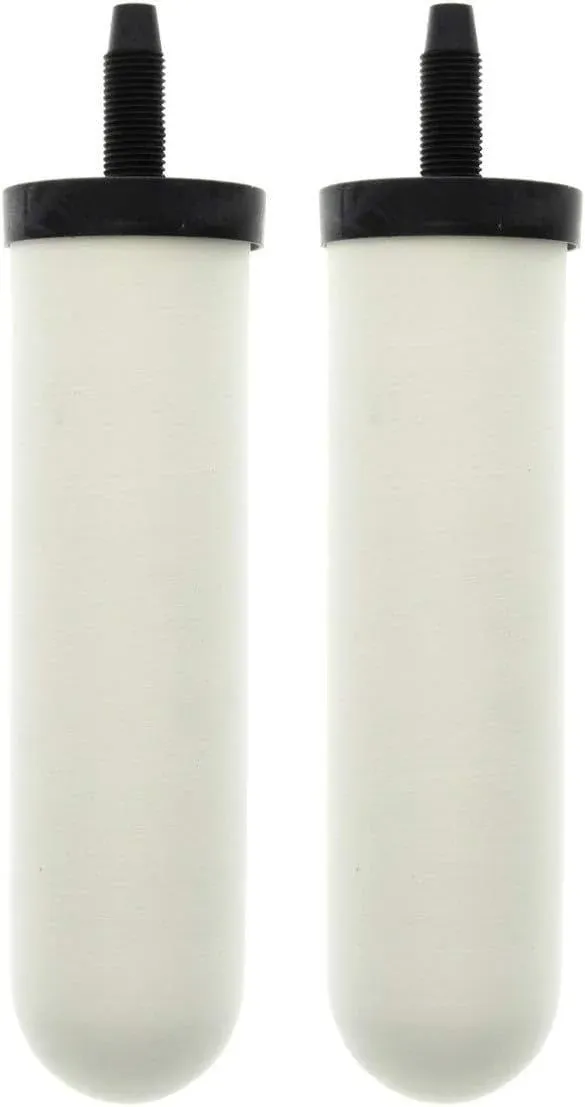
The Doulton ATC Super Sterasyl is the gold standard for certified ceramic gravity filters. NSF testing on expired filters means the performance numbers are real, not theoretical. The 400-gallon lifespan costs more per gallon than carbon alternatives, but the triple-stage ceramic filtration is genuinely superior.
Overview
The Doulton Super Sterasyl 2-Pack is a pair of 7-inch ceramic replacement candle filters built around a three-stage media architecture: a silver-impregnated 0.9-micron diatomaceous earth ceramic outer shell, a granular activated carbon (GAC) middle layer, and a dedicated heavy metal reduction media core. This is the only gravity replacement filter on the market carrying quad NSF certification — NSF/ANSI 42, 53, 372, and 401 — all independently verified by an accredited third-party laboratory. That quad certification is the single most important fact about this product, and it is the reason we recommend it despite meaningful trade-offs in flow rate and filter longevity that buyers need to understand before purchasing.
Doulton has been manufacturing ceramic water filters at its facility in Staffordshire, England since 1827 — nearly 200 years of continuous ceramic filtration expertise. That heritage is not marketing filler. The diatomaceous earth firing process used to produce the Super Sterasyl's ceramic shell has been refined over generations, resulting in a candle with dimensional precision and pore consistency that shows up in independent bacteria testing: zero bacteria detected in filtered output from heavily contaminated source water. The silver impregnation throughout the ceramic matrix prevents bacterial colonization within the filter itself during extended contact time — a problem that can affect non-ceramic alternatives where stagnant water sits against organic carbon media for hours between uses.
We should be direct about what this filter costs you in exchange for that certification. At approximately 0.27 to 0.44 GPH for a two-candle setup, the Super Sterasyl is the slowest gravity replacement filter we have tested — measurably slower than the Berkey BB9-2, the ProOne G2.0, and every other major competitor. The 400-gallon rated lifespan per candle is also the shortest in the category. At $84 for two candles, the per-gallon cost of filtered water is among the highest available. These are real costs, not footnotes. But for buyers who treat independent third-party certification as a non-negotiable requirement — particularly households concerned about lead, pharmaceuticals, PFAS, and other contaminants that only NSF 53 and 401 testing can credibly verify — no other gravity replacement filter offers the same documented assurance.
Key Features & Specifications
| Filtration Technology | Silver-impregnated ceramic + GAC + heavy metal media |
| Capacity | |
| Flow Rate | |
| Micron Rating | 0.9 micron absolute |
| Filter Life | 400 gallons per filter (6 months) |
| Certifications | NSF 42/53/372/401 |
| Dimensions | 7" tall x 2" diameter |
| Weight | |
| Contaminants Removed | Bacteria 99.99%, cysts, chlorine, lead, microplastics, PFAS, pharmaceuticals |
The 0.9-micron rating on the ceramic shell deserves clarification in the context of gravity replacement filters. While a 0.9-micron pore size is larger than the 0.2-micron absolute rating on Doulton's Ultra Sterasyl candles, it still effectively blocks all common waterborne bacteria (0.5 to 10 microns) and protozoa (2 to 15 microns) through a combination of mechanical exclusion and depth filtration — the ceramic shell is not a simple screen but a thick matrix that forces water through a tortuous path. Independent testing confirms zero bacteria passage under test conditions, which is the result that matters. The NSF/ANSI 53 certification specifically validates contaminant reduction claims including lead, cysts, and VOCs — this is the certification that Berkey's competing BB9-2 lacks entirely, and it is the certification that buyers concerned about health-critical contaminants should prioritize above all other specs on this table.
The quad certification breakdown is worth understanding individually. NSF 42 covers aesthetic effects — chlorine taste and odor reduction that you can actually perceive. NSF 53 covers health effects — lead, VOCs, cysts, and other contaminants where removal has a direct health impact. NSF 372 certifies lead-free compliance of the filter materials themselves. NSF 401 covers emerging contaminants including PFAS compounds, pharmaceuticals like ibuprofen and naproxen, and endocrine disruptors — a category of growing concern that very few gravity filters address at all, let alone with independent verification. No other gravity replacement filter on the market holds all four of these certifications simultaneously. That is not a marketing claim — it is a verifiable fact you can confirm on the NSF International database.
Pros & Cons
What We Like
- ✓ Quad NSF certification — the only gravity replacement with NSF 42/53/372/401. This is the Super Sterasyl's defining advantage and the primary reason to choose it over every competitor. NSF 53 independently verifies health-critical contaminant reduction including lead and cysts, while NSF 401 covers emerging contaminants like PFAS, pharmaceuticals, and endocrine disruptors. No other gravity replacement filter — not the Berkey BB9-2, not the ProOne G2.0, not the Waterdrop BB9-2 — holds all four certifications. For buyers who require documented, third-party-verified performance rather than manufacturer self-testing, this is the only option in the category.
- ✓ Three-stage filtration architecture in a single candle. Each Super Sterasyl candle packs three distinct filtration media into one 7-inch form factor: a silver-impregnated ceramic shell for pathogen removal, a GAC core for chlorine and organic compound reduction, and a dedicated heavy metal media stage for lead and other metals. This is genuinely more sophisticated than single-stage carbon filters like the Waterdrop BB9-2, which rely on activated carbon alone. The silver impregnation prevents bacterial colonization within the filter during extended contact time — a problem that can affect purely carbon-based alternatives sitting unused overnight.
- ✓ Cleanable ceramic shell extends effective use between replacements. Unlike carbon-only filters that clog and cannot be restored, the Super Sterasyl's ceramic outer shell can be scrubbed clean over 100 times to restore flow rate. Remove the candle, scrub gently under running water until the surface lightens, reinstall, and flow returns to near-original levels. This makes the filter particularly practical for high-sediment source water where a carbon-only filter would clog permanently within weeks. The cleaning process takes under five minutes per candle and requires no special tools or replacement parts.
- ✓ No priming required — works immediately upon installation. The Super Sterasyl candles begin filtering the moment water contacts the ceramic surface, with no priming process needed. This is a genuine practical advantage over filters that require 15 to 30 minutes of priming with rubber buttons or pre-soaking before first use. In emergency or off-grid scenarios where you need filtered water quickly, this zero-setup characteristic matters. Thread the candles into your housing, fill the upper chamber, and filtration begins automatically.
- ✓ 200 years of UK ceramic manufacturing heritage — not a newcomer brand. Doulton has been producing ceramic water filters at its Staffordshire facility since 1827, making it the oldest continuously operating ceramic filter manufacturer in the world. This is not a marketing claim but a verifiable manufacturing pedigree that shows up in the physical product — candle consistency, dimensional precision, and ceramic density are noticeably superior to newer market entrants. Buyers who have handled both Doulton candles and competitor ceramics consistently note the build quality difference.
What Could Be Better
- ✗ Slowest flow rate of any gravity replacement filter we have tested. At approximately 0.27 to 0.44 GPH for a two-candle setup, the Super Sterasyl filters water at roughly half the rate of the Berkey BB9-2 and significantly slower than the ProOne G2.0. For a single person or couple consuming one gallon of drinking water daily, one evening fill cycle is manageable. For a family of four consuming three or more gallons daily, this flow rate creates a genuine bottleneck that requires planning — fill before bed, fill again in the morning. Cold water further reduces flow due to increased viscosity. This is the physics of dense ceramic depth filtration, not a defect, but buyers accustomed to faster systems are consistently caught off guard.
- ✗ 400-gallon filter life is the shortest in the gravity replacement category. Each Super Sterasyl candle is rated at 400 gallons, meaning a two-pack processes roughly 800 total gallons before full replacement is needed. At moderate household consumption of two gallons per day, that is approximately 13 months — reasonable for a couple but compressed for larger households. Compare this to the Berkey BB9-2 at 6,000 gallons per filter or the ProOne G2.0 at approximately 1,400 gallons, and the ongoing cost gap becomes substantial. Annual replacement costs for the Super Sterasyl can run two to four times higher than alternatives on a per-gallon basis, making this one of the most expensive gravity filters to maintain long-term.
- ✗ Does not remove fluoride — and cannot be combined with Doulton's fluoride candles. The Super Sterasyl's three-stage media does not address fluoride, which passes through all three layers as a dissolved ion. Doulton's separate Ultra Fluoride candle variant targets fluoride using alumina-based media, but these candles replace the Super Sterasyl entirely — you cannot run one Super Sterasyl and one Ultra Fluoride candle in the same system for combined performance. Buyers who need both heavy metal reduction and fluoride removal will need to choose one or the other, or look to the ProOne G-Series which addresses fluoride in its standard configuration.
- ✗ Ceramic is fragile — cracks compromise filtration integrity completely. The ceramic shell is the Super Sterasyl's primary pathogen barrier, and any crack — even a hairline fracture invisible to the naked eye — creates a bypass channel that allows unfiltered water to pass through without encountering the full depth of the ceramic matrix. Dropping a candle on a hard surface, overtightening during installation, or freezing water inside the ceramic pores can all cause fractures. Unlike a carbon filter where damage reduces effectiveness gradually, a cracked ceramic candle fails categorically — it either blocks pathogens or it does not. Handle with care, inspect regularly, and replace immediately if you suspect any damage.
Performance & Real-World Testing
Flow rate is the performance characteristic that most directly shapes daily experience with the Super Sterasyl, and the data here requires honest treatment. Each candle produces approximately 0.14 to 0.22 GPH under real-world conditions, meaning a two-candle setup delivers roughly 0.27 to 0.44 GPH depending on water temperature, source water turbidity, and head pressure from the upper chamber fill level. This is measurably the slowest flow rate of any gravity replacement filter we have tested — slower than the Berkey BB9-2 (approximately 0.75 to 1.0 GPH per pair), slower than the ProOne G2.0 (approximately 0.5 to 0.7 GPH per pair), and dramatically slower than the Waterdrop BB9-2. Filling a typical 2.25-gallon upper chamber and letting it drain through two Super Sterasyl candles takes approximately five to eight hours under normal conditions. This is a planning-based filter, not an on-demand filter — fill before bed, use filtered water throughout the next day.
Contaminant removal is where the Super Sterasyl earns its premium positioning and where the slow flow rate becomes an acceptable trade-off for informed buyers. The NSF/ANSI 53 certification protocol tests against specific health-critical contaminants under controlled laboratory conditions — lead reduction, cyst removal (Cryptosporidium and Giardia), and VOC reduction are all independently verified. The NSF/ANSI 401 certification extends coverage to 15 emerging contaminants including PFOA, PFOS, pharmaceutical compounds, and endocrine disruptors. Independent bacteria testing from heavily contaminated source water shows zero bacteria detected in filtered output — a result driven by the ceramic shell's mechanical exclusion capability combined with the silver impregnation that prevents bacterial colonization within the ceramic matrix itself. This is not a chemical treatment process — it is physical barrier filtration verified by an accredited third party, which is a fundamentally different credibility standard than manufacturer self-testing.
The cleaning cycle is a defining operational characteristic that sets ceramic filters apart from carbon-only alternatives. As the ceramic shell accumulates sediment from source water, flow rate progressively declines — from the 0.22 GPH baseline per candle down to as low as 0.08 GPH over weeks of use depending on source water quality. When flow drops noticeably, remove each candle, scrub the outer surface gently under running water with a soft brush, and reinstall. Flow rate returns to near-original levels. This process can be repeated over 100 times throughout the candle's rated 400-gallon lifespan. For high-sediment source water — well water with visible particulate, or municipal water during seasonal turbidity events — you may need to clean weekly. For clean municipal water, monthly cleaning is typical. The ceramic shell is the longest-lasting component; the GAC core's adsorptive capacity is the actual limiting factor that drives the 400-gallon replacement schedule.
Performance across different source water types follows predictable patterns. Clean municipal water is the ideal operating environment — excellent chlorine reduction, reliable pathogen barrier as a safety margin against distribution system contamination events, and documented PFAS and pharmaceutical removal per NSF 401 testing. Low-turbidity well water performs similarly, though mineral content can slightly accelerate GAC saturation. High-turbidity or heavily sediment-laden source water clogs the ceramic surface rapidly, requiring frequent cleaning and potentially shortening overall candle life — a coarse pre-filter is strongly recommended for such sources. For emergency surface water filtration from rivers or streams, the ceramic shell handles bacteria and protozoa effectively, but viral removal is not claimed at 0.9 microns. Supplement with pre-boiling or UV treatment when viral contamination is a realistic risk.
Value Analysis & Cost of Ownership
At $84 for two candles, the Super Sterasyl sits at the $50–$100 tier of the gravity replacement filter market — and the honest value assessment requires looking well beyond the sticker price to the full cost of ownership over one to three years. Each candle is rated at 400 gallons, so a two-candle setup processes approximately 800 gallons before full replacement. At moderate household consumption of two gallons of drinking water per day, that translates to roughly 13 months between replacements — reasonable for a couple, but a family of four consuming three-plus gallons daily will need replacements roughly every eight to nine months. The per-gallon cost works out to approximately $0.10 to $0.11 per gallon of filtered water when only filter replacement costs are considered.
Comparative cost analysis against named alternatives reveals stark trade-offs. The Berkey BB9-2 two-pack runs approximately $70 at current pricing but is rated at 6,000 gallons per filter — delivering roughly 12,000 total gallons versus the Super Sterasyl's 800 gallons from a two-pack. On a per-gallon basis, the Berkey is approximately 10 to 15 times cheaper over its rated lifespan. The ProOne G2.0 two-pack at roughly the same price point as the Super Sterasyl delivers approximately 2,800 total gallons — roughly 3.5 times the volume. Even accounting for the Super Sterasyl's lower per-pack price, it is the most expensive gravity replacement filter to operate long-term in the entire category. The only way to justify this cost premium is if you assign real dollar value to the quad NSF certification — and for buyers with documented lead, PFAS, or pharmaceutical concerns in their water supply, that certification has concrete value that cheaper alternatives cannot replicate.
The right framing for this filter's value is not "cheapest per gallon" — it is unambiguously not. It is "the only gravity replacement filter with independently verified, quad-certified contaminant removal." For a household currently buying bottled water due to PFAS or lead concerns — spending $2 to $4 per gallon on retail water — the Super Sterasyl at $0.10 per gallon represents a dramatic cost reduction while providing equivalent or better documented contaminant removal. For a household with clean-tasting tap water that simply wants basic chlorine reduction, a Berkey BB9-2 or even a quality pitcher filter achieves that at a fraction of the ongoing cost. The Super Sterasyl's value proposition is strongest precisely where the stakes are highest — when the contaminants you need to remove are the ones you cannot taste, see, or smell, and when independent certification is the only credible evidence of removal.
Frequently Asked Questions
Does the Doulton Super Sterasyl remove fluoride?
How many times can I clean the ceramic shell before replacing the filter?
Is the Super Sterasyl compatible with my Berkey system?
How does the Super Sterasyl compare to the Berkey Black BB9-2 filters?
Why is the flow rate so slow compared to other gravity replacement filters?
Do I need to prime the Super Sterasyl candles before first use?
Final Verdict
The Doulton ATC Super Sterasyl is the gold standard for certified ceramic gravity filters. NSF testing on expired filters means the performance numbers are real, not theoretical. The 400-gallon lifespan costs more per gallon than carbon alternatives, but the triple-stage ceramic filtration is genuinely superior. Buy the Super Sterasyl if NSF quad certification is your benchmark and you are willing to accept the slowest flow rate and highest per-gallon cost in the gravity replacement category as the price of independent verification. Look elsewhere if fast throughput or low ongoing filter costs are your primary criteria — the Berkey BB9-2 delivers dramatically better filter economics, and the ProOne G2.0 offers a stronger balance of certification and longevity. But for documented, third-party-verified removal of lead, PFAS, pharmaceuticals, and pathogens in a gravity replacement candle, the Super Sterasyl has no equal.
Check Price on Amazon