Brita Standard Replacement Filters (4-Pack) Review (2026)
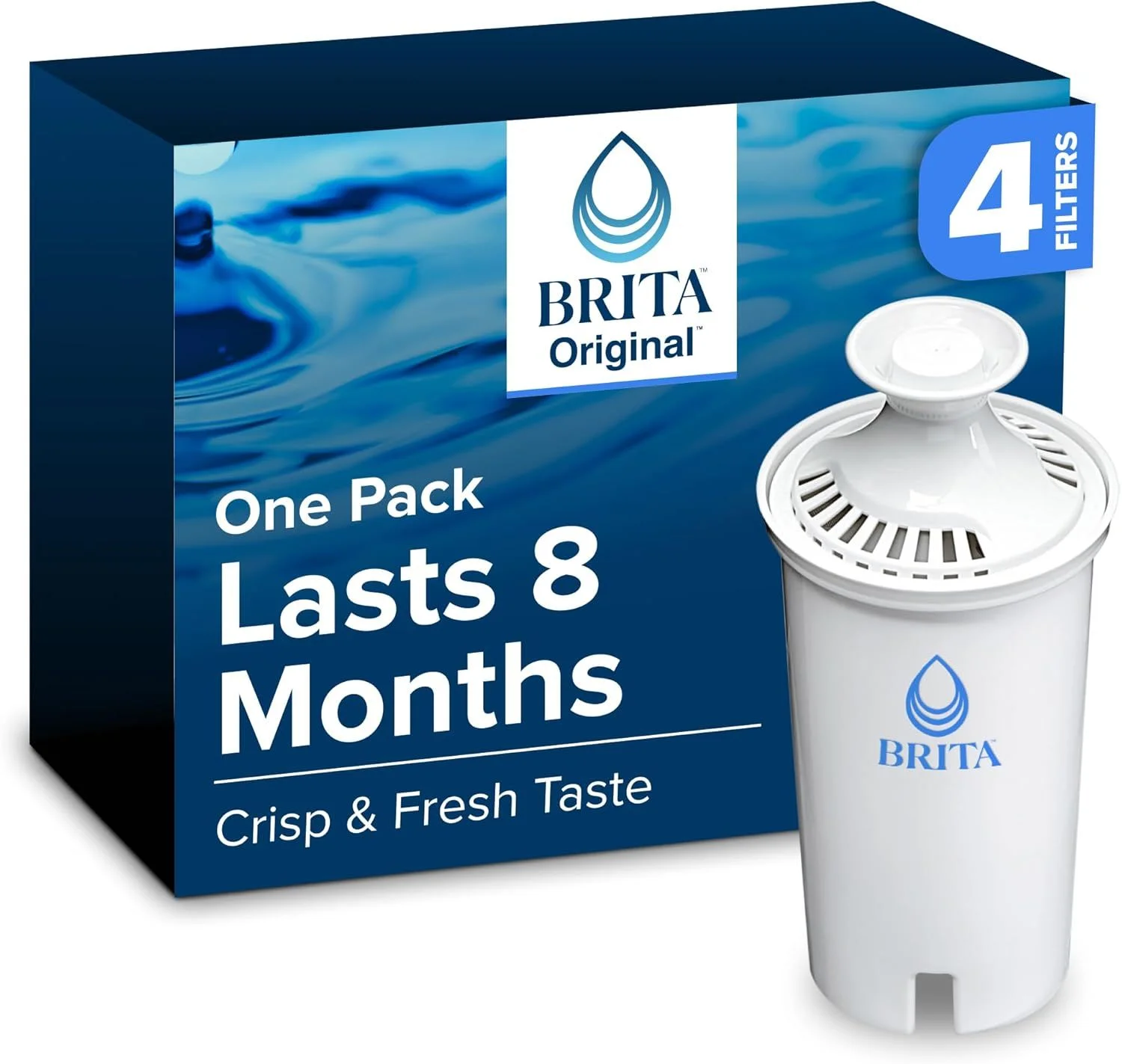
If you're committed to genuine Brita Standard filters, the 4-pack is the way to buy. But honestly, the Brita Elite or Amazon Basics Enhanced offer more filtration for similar or less money.
Overview
The Brita Standard 4-Pack is identical in filtration to the 3-pack — same activated carbon and ion exchange resin, same 40-gallon capacity per filter, same NSF 42 certification. The only difference is the extra filter and a negligible price bump over the 3-pack.
That math works overwhelmingly in the 4-pack's favor. The per-filter cost drops roughly 23% compared to the 3-pack, and over a year of replacements (about 6 filters), the savings add up to essentially a free filter. For a product you will repurchase indefinitely, the 4-pack should be your default.
The caveat remains the same as for any Brita Standard filter: NSF 42 certification only covers chlorine taste and odor. If you need lead, pharmaceutical, or PFAS reduction, the Brita Elite or a different brand is the better move. But if you are buying Standard, this is the pack size to choose.
It is also worth noting that the Brita Standard has been around long enough to have a well-documented track record. Millions of households have used these filters for years, which means there is a broad base of real-world performance data beyond lab testing. The consensus is consistent: the filters do exactly what they claim — no more, no less. That reliability and predictability is itself a form of value, particularly for buyers who have tried cheaper off-brand alternatives and found them inconsistent.
The optimal way to buy Brita Standard filters — 8 months of filtration at the lowest per-filter cost for genuine Brita cartridges.
Key Features & Specifications
| Filtration Technology | Activated Carbon + Ion Exchange |
| Filter Capacity | 40 gallons per filter |
| Certifications | NSF 42 |
| Pack Size | 4 |
| Filter Life | 40 gallons (~2 months per filter) |
| Compatibility | All Brita pitchers and dispensers (except Stream) |
| Contaminants Removed | Chlorine taste/odor, copper, cadmium, mercury, zinc |
The 4-pack uses the same OB03 filter cartridge as all Brita Standard products. Each filter contains granulated activated carbon from coconut shells paired with an ion exchange resin. This combination is effective at improving taste but does not address more serious contaminants like lead or microplastics.
The ion exchange resin component is specifically what handles heavy metals like copper, cadmium, and zinc — contaminants that can leach from older household plumbing. While this is a meaningful benefit, it is important to understand that the resin becomes saturated over the course of the filter's 40-gallon lifespan. Using the filter significantly beyond its rated life means relying on a medium that is no longer actively exchanging ions, which can actually allow previously captured contaminants to re-enter your water. Replacing on schedule is not optional — it is a core part of how the filtration system works.
On a per-gallon basis, the Brita Standard 4-Pack is roughly 20% cheaper than the 3-Pack. But the Amazon Basics Enhanced 3-Pack undercuts both by a wide margin, and the Brita Elite 2-Pack — despite costing more upfront — actually filters water at a lower cost per gallon than the Standard 3-Pack while offering far superior contaminant reduction.
If you are committed to the Brita Standard long-term, enrolling in Amazon's Subscribe & Save program on the 4-pack can shave an additional percentage off an already discounted price. Set your delivery cadence to every 4–5 months — slightly shorter than the theoretical 8-month life — to account for real-world usage patterns in busier households. You can pause or skip deliveries anytime, so there is little downside to locking in the lower rate.
Pros & Cons
What We Like
- Best per-filter price for genuine Brita — lowest cost per cartridge in the lineup
- 8 months of filtration in one purchase
- Same proven performance as the 3-pack
- Reduces chlorine taste, copper, cadmium, and mercury
- Universal Brita pitcher/dispenser compatibility
What Could Be Better
- Still more expensive per filter than Amazon Basics Enhanced
- Same basic NSF 42 certification — no lead or PFAS coverage
- Packaging sometimes arrives with damaged filters
- Considering the Elite upgrade may be better long-term value
To elaborate on the most important pros: the NSF 42 certification is not just a marketing badge — it requires third-party laboratory verification that the filter actually reduces chlorine taste and odor by at least a specific percentage under standardized conditions. This distinguishes genuine Brita cartridges from many uncertified alternatives that make similar claims without third-party validation. The broad pitcher compatibility is also genuinely useful; the Standard filter works in everything from older Brita pitchers to current models, so if you upgrade your pitcher you are unlikely to need to switch filter types.
On the cons side, the absence of NSF 53 certification is the most consequential limitation. NSF 53 covers health-based contaminant reduction — primarily lead, but also certain VOCs and cysts. Households on older plumbing, especially pre-1986 construction where lead solder was common, should seriously consider whether NSF 42 alone provides adequate protection. The Brita Standard is not designed for that job, and no amount of bulk purchasing changes that fundamental limitation.
Performance
Performance is identical to the 3-pack since the filters are the same product. Chlorine taste reduction is immediate and consistent through most of the filter life. Copper, cadmium, mercury, and zinc are reduced to levels below EPA thresholds. Water tastes clean and neutral.
The 4-pack advantage is purely logistical: fewer trips to the store and a lower effective cost. Each filter provides approximately 2 months of service for a household of 2-3 people drinking 2-3 glasses of filtered water per day. Heavier usage will shorten the cycle.
One thing we noticed across multiple Brita Standard packs is occasional variability in packaging quality. A small percentage of users report receiving filters with carbon dust visible in the packaging. This does not affect performance — the initial rinse recommended by Brita clears any loose carbon — but it can be concerning visually.
In side-by-side taste tests comparing Brita Standard-filtered water against unfiltered municipal tap water from a chlorinated city supply, the difference is readily apparent. The characteristic pool-water edge that many city supplies carry is largely eliminated within the first pitcher. Flow rate through the filter starts brisk and remains acceptable through the first month of use, with a modest slowdown in the second month as the carbon medium becomes partially exhausted. This gradual flow reduction is actually a useful informal indicator that your filter is working and approaching the end of its useful life.
For households with moderately hard water, we observed that the ion exchange resin also provides a minor reduction in water hardness, which can slightly improve the flavor profile beyond just chlorine removal. This is not a water softening solution by any measure, but it is a secondary benefit that contributes to the overall improvement in taste that Brita Standard users consistently report.
Who Should Buy the Brita Standard 4-Pack
This pack size is the clear choice for existing Brita Standard users who are already satisfied with the filtration level they are getting. If you live in an area with municipally treated water that smells or tastes of chlorine but has no documented issues with lead or other serious contaminants, the Standard 4-pack delivers exactly the improvement you need at the lowest possible cost per filter. It is also the right pick for renters who want an uncomplicated, no-installation filtration solution that moves with them when they relocate.
College students, young professionals living alone or with one roommate, and anyone stocking a vacation property or secondary residence will find the 4-pack's 8-month theoretical lifespan practical. You can set up the pitcher, load a filter, tuck the remaining three cartridges in a cabinet, and largely forget about it for the better part of a year.
Who Should Skip This and Consider Alternatives
If you live in a home built before 1986, have well water rather than municipal supply, or have received any notice from your utility about elevated contaminants, the Brita Standard is not sufficient for your needs. In those cases, look at the Brita Elite (which adds NSF 53 and 401 certifications), the PUR Plus pitcher filter (NSF 53 certified and tested against a wider contaminant list), or — for the most demanding water quality situations — a countertop or under-sink system with multi-stage filtration.
Budget-focused shoppers who are not brand-loyal should also compare the Amazon Basics Enhanced pitcher filter before committing to Brita Standard. The Amazon Basics option offers broader certification coverage at a lower price point, making it a compelling alternative for anyone not specifically seeking the Brita name. The trade-off is that Amazon Basics filters are only compatible with Amazon Basics pitchers, so if you already own a Brita pitcher, you would need to factor in the cost of switching ecosystems.
Cost-of-Ownership Analysis
The Brita Standard 4-Pack sits in the budget-friendly tier of pitcher filter replacement packs. Over the course of a full year, a typical two-person household will use approximately six Standard filters, making the annual filtration cost comfortably within the budget-friendly range when purchasing by the 4-pack and supplementing with individual filters or another 4-pack as needed.
Compare this to the mid-range cost of ownership for the Brita Elite: despite each Elite filter costing noticeably more per unit, the 120-gallon capacity means you only need about two filters per year for the same household. The result is that Elite ownership can actually cost less annually than Standard, while delivering substantially better contaminant reduction. This counterintuitive math is why we consistently recommend that buyers evaluate cost per gallon rather than cost per filter when comparing pitcher filter options.
For the largest households — four or more people relying on a single pitcher as their primary drinking water source — the annual filter consumption climbs significantly, and the per-unit savings of the 4-pack become even more meaningful. In this scenario, pairing a Subscribe & Save subscription on the 4-pack with a secondary pitcher can stretch each filter further by reducing the volume any single filter needs to process.
Frequently Asked Questions
Is the Brita Standard 4-Pack a better deal than the 3-Pack?
Can I use Brita Standard 4-Pack filters in a ZeroWater or PUR pitcher?
How do I know when to replace a Brita Standard filter?
Should I upgrade to Brita Elite instead of buying the Standard 4-Pack?
How long does the Brita Standard 4-Pack last for a family of four?
Are generic or off-brand filters compatible with Brita pitchers?
Does soaking the Brita Standard filter before use actually matter?
Final Verdict
If you're committed to genuine Brita Standard filters, the 4-pack is the way to buy. But honestly, the Brita Elite or Amazon Basics Enhanced offer more filtration for similar or less money.
Check Price on Amazon