iSpring RCC7AK vs Waterdrop G5P500A Alkaline: Which Alkaline RO System Should You Choose in 2026?
Quick Verdict: Both deliver alkaline reverse osmosis water, but they represent two generations of RO engineering. The iSpring RCC7AK ($100–$250) is the proven value leader — 18,000+ reviews, more aggressive alkaline output, and a lower price. The Waterdrop G5P500A Alkaline ($100–$250) is the modern upgrade — tankless design, 500 GPD (7x faster), 70% space savings, and tool-free maintenance. If price and proven track record matter most, get the iSpring. If speed, space, and modern convenience matter most, the Waterdrop G5P500A justifies its premium.
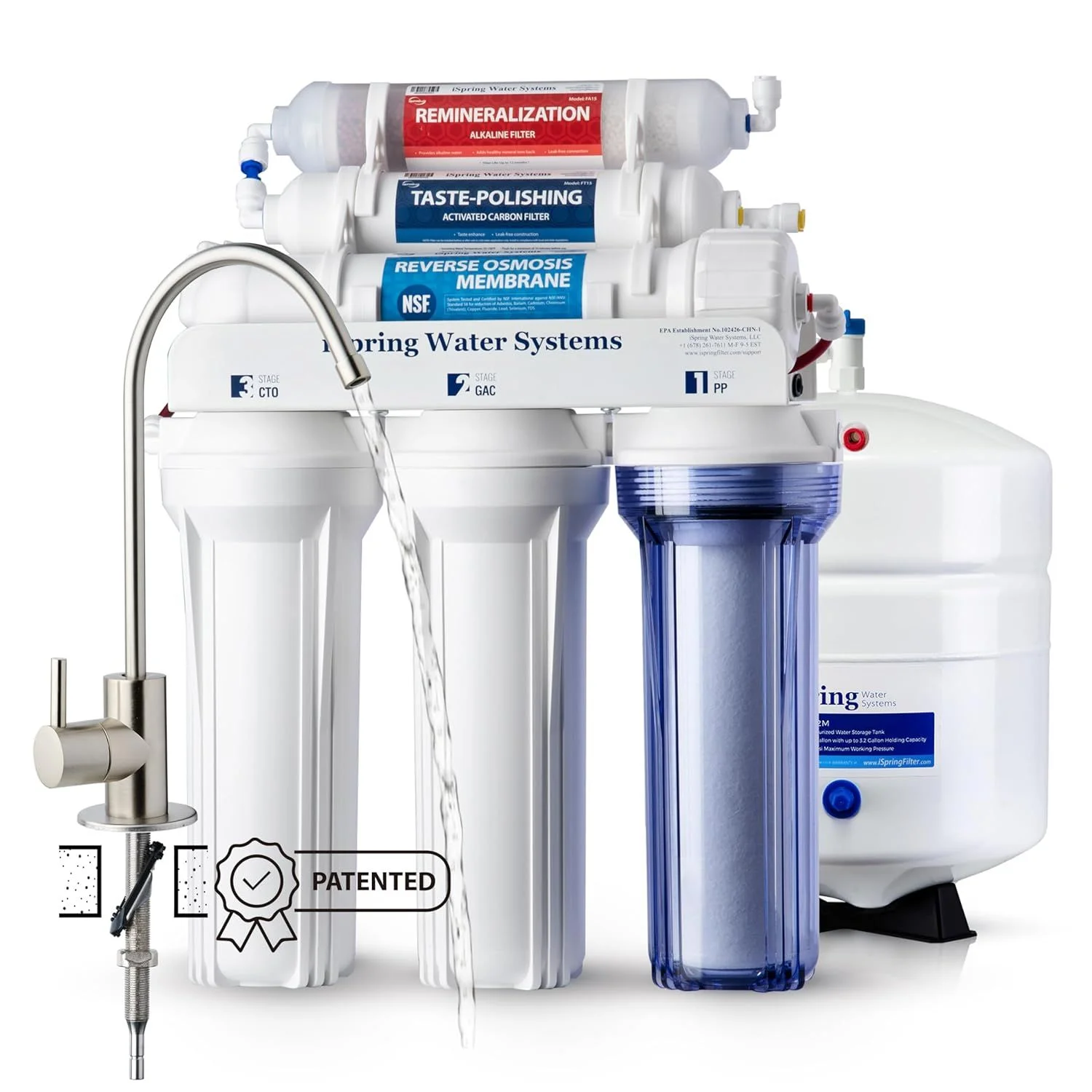
iSpring RCC7AK 6-Stage Reverse Osmosis System
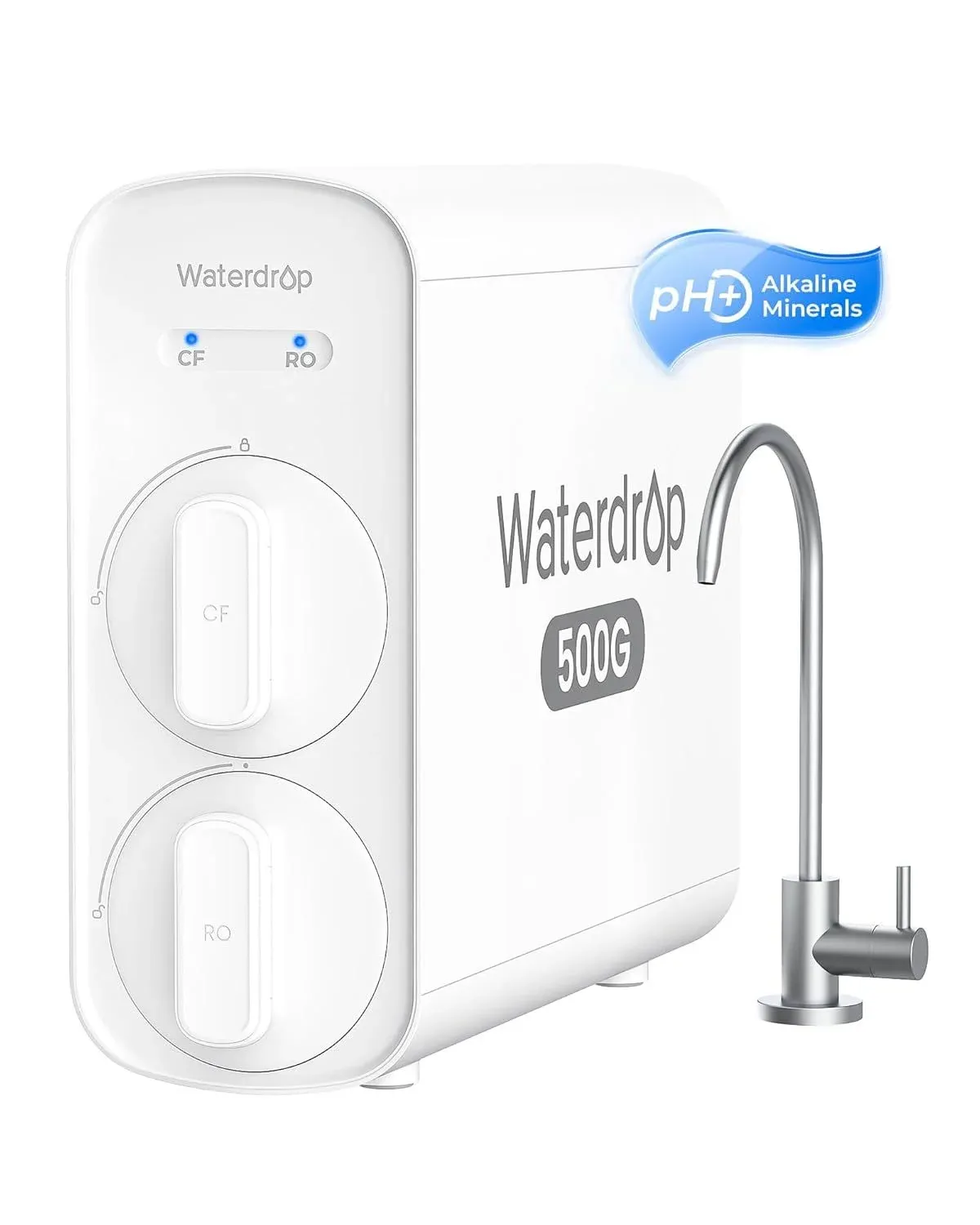
Waterdrop G5P500A Alkaline Mineral pH+ Reverse Osmosis System 500 GPD
At a Glance
| Feature | iSpring RCC7AK 6-Stage Reverse Osmosis System | Editor's Pick Waterdrop G5P500A Alkaline Mineral pH+ Reverse Osmosis System 500 GPD |
|---|---|---|
| Price | $100–$250 | $100–$250 |
| Filtration Stages | 6 | 8-stage RO with alkaline mineralization |
| Flow Rate / GPD | 75 GPD | 500 GPD |
| Certifications | NSF 58 | NSF 58/372 |
| Filter Life | 6-12 months (pre/post filters), 2-3 years (RO membrane) | — |
| Contaminants Removed | TDS (93-98%), lead (>98.9%), PFAS (96-99%), fluoride, chlorine, arsenic, bacteria | 1,000+ impurities including TDS, PFOA/PFOS, chlorine, fluoride, lead — then remineralizes |
| Check Price | Check Price |
This is the alkaline RO showdown — both systems purify water through reverse osmosis and then add minerals back. The question is not whether you will get clean, mineralized water (both deliver that), but which engineering approach you prefer: the iSpring's proven tank-based design at a lower price, or the Waterdrop's modern tankless architecture at a modest premium. We break down every meaningful difference to help you decide.
Category-by-Category Breakdown
Alkaline Output & Mineral Quality
The iSpring RCC7AK uses a dedicated sixth-stage alkaline remineralization cartridge containing calcite and corosex media. This stage is specifically designed to restore minerals stripped by the RO membrane and push the pH upward — typically achieving pH 7.5 to 8.5 depending on the source water's mineral content. The result is water with a distinctly mineral character that many users describe as tasting like quality spring water. The iSpring's alkaline stage has been refined over years of production and is consistently cited in reviews as one of the system's strongest features.
The Waterdrop G5P500A adds calcium, magnesium, sodium, and potassium through its eighth filtration stage. The target pH is approximately 7.5 — slightly lower than the iSpring's range. This produces a more subtle mineralization that restores water to a neutral, natural-tasting state rather than pushing it into clearly alkaline territory. Users who prefer water that tastes "natural" rather than "mineralized" tend to prefer this approach. Users who specifically want high-pH alkaline water (8.0+) may find the Waterdrop's output modest.
Neither approach is objectively better — it depends on your taste preference. The iSpring produces more noticeably alkaline water with a stronger mineral character. The Waterdrop produces more neutrally mineralized water that some palates prefer for its subtlety. If you are buying an alkaline RO system specifically because you want high-pH water, the iSpring delivers more alkaline output per dollar. If you want the health benefits of mineral restoration without a strong alkaline taste, the Waterdrop's approach may suit you better. Both are vastly superior to drinking unmineralized RO water, which tastes flat and lacks the minerals your body expects from drinking water.
ProTip: If you want to verify the pH output of either system in your home, an inexpensive digital pH meter or pH test strips can measure your actual tap output within minutes of setup. Source water mineral content varies significantly by region, so real-world pH results may differ from manufacturer claims. Testing your output in the first week of ownership helps you confirm the alkaline stage is performing as expected and gives you a baseline for comparison over the system's lifespan.
Production Speed & Daily Throughput
The Waterdrop G5P500A produces 500 GPD — filling a glass in roughly 8 seconds directly from the faucet. This is on-demand RO water with no waiting, no buffer tank to deplete, and no recovery period between uses. For families that use RO water for drinking, cooking, coffee, ice, and plant watering, the 500 GPD throughput means you will never outpace the system's production capability under any normal household scenario.
The iSpring RCC7AK produces 75 GPD and relies on a pressure tank that stores approximately 2.5 to 3 gallons of purified water. Initial flow from a full tank is good — comparable to a standard faucet — but the flow rate drops as the tank depletes. Once the tank is empty, you are waiting for the RO membrane to produce water at its 75 GPD rate, which is slow by modern standards. A full tank refill can take one to two hours depending on water pressure and temperature. For a single person or couple with light usage, this is rarely an issue. For a family of four using RO water throughout the day, tank depletion is a recurring inconvenience.
The speed differential is the clearest engineering advantage the newer Waterdrop design holds over the traditional iSpring architecture. At nearly seven times the production rate with zero storage dependency, the Waterdrop eliminates the single most frustrating aspect of traditional under-sink RO ownership: waiting for water. If your household has experienced the "empty tank at dinner prep time" scenario, the Waterdrop's tankless design permanently solves that problem.
Space & Installation
The Waterdrop G5P500A fits in a compact footprint of approximately 5.7 x 16.7 x 13.9 inches — a single unit that mounts in one corner of your under-sink cabinet. Waterdrop claims this saves 70% of space compared to tank-based systems, and the claim holds up. After installing the Waterdrop, most of your under-sink cabinet remains usable for cleaning supplies, trash storage, or whatever else you keep there.
The iSpring RCC7AK requires space for the filter assembly (15 x 5.2 x 17.5 inches) plus a pressure tank roughly 8 inches in diameter and 14 inches tall. Together, these components consume the majority of a standard under-sink cabinet. In compact kitchens — particularly in apartments, condos, and older homes with smaller cabinetry — fitting the iSpring can require creative arrangement or the removal of other stored items. The tank also needs periodic access for sanitization, adding another space consideration.
Installation follows the same pattern. Both require connection to the cold water supply, a drain line, and a dedicated faucet. The iSpring adds the complexity of positioning and connecting the pressure tank — an extra step that takes time and requires additional fittings. The Waterdrop's installation is more straightforward with fewer components to position and connect. For DIY installers, the Waterdrop saves roughly 30 to 45 minutes of installation time. For professional installation, the cost difference is minimal but the Waterdrop is still the simpler job.
ProTip: Before purchasing either system, measure your under-sink cabinet's interior width, depth, and height — including any obstacles like the garbage disposal, drain P-trap, or existing plumbing. The iSpring requires clear vertical clearance for the pressure tank in addition to horizontal space for the filter assembly. Many buyers discover after purchase that the tank does not fit alongside the filter head in their particular cabinet configuration. A two-minute measuring exercise before ordering can save you a complicated return.
Price & Value
The iSpring RCC7AK at $100–$250 is the more affordable option — roughly $40 less than the Waterdrop G5P500A at $100–$250. That forty-dollar gap buys you a complete 6-stage alkaline RO system with 18,000+ reviews confirming its reliability. On a pure cost basis, the iSpring delivers more alkaline output at a lower price, making it the better value for buyers who do not need the tankless form factor or 500 GPD speed.
The Waterdrop G5P500A's premium buys tangible upgrades: 7x production speed, 70% space savings, 6x water efficiency (2:1 vs 1:3 waste ratio), and dramatically simpler maintenance with tool-free 3-second filter replacement. Whether these upgrades are worth forty dollars depends on your situation. For buyers with limited space, the Waterdrop is worth every penny of the premium because it fits where the iSpring literally cannot. For buyers with ample space and moderate usage, the iSpring delivers comparable water quality at a lower price.
Long-term maintenance costs are roughly comparable between the two systems. The iSpring's individual cartridges are cheaper per unit but you buy more of them more often across staggered schedules. The Waterdrop's composite filters cost more per replacement but you buy fewer replacements per year. Over a three to five year ownership period, total filter expenditure is similar. The upfront price difference is the main financial differentiator, and at roughly forty dollars, it is a modest gap relative to the total cost of either system.
It is also worth factoring in the water waste cost over time. The iSpring's 1:3 pure-to-waste ratio means that for every gallon of filtered water you drink, three gallons go down the drain. In areas with high municipal water rates or during drought restrictions, this adds a measurable ongoing cost to iSpring ownership. The Waterdrop's 2:1 ratio — producing two gallons of clean water for every one gallon wasted — cuts that ongoing water cost significantly. Depending on your local water rates and daily usage volume, this efficiency gap can meaningfully shift the long-term cost-of-ownership math in the Waterdrop's favor even after accounting for its higher upfront price.
Maintenance & Ease of Use
The Waterdrop G5P500A uses a simplified two-filter system — a composite filter combining all pre-filtration stages and the alkaline mineralization, and a separate RO membrane. Filter replacement is tool-free and takes approximately three seconds: twist the old filter out, push the new one in. LED indicators on the faucet tell you when each filter needs replacement. The entire maintenance experience is designed around simplicity. You do not need to track multiple schedules, buy five different cartridge types, or use any tools. This is maintenance that anyone can handle without referring to a manual.
The iSpring RCC7AK has five separate filter cartridges — a sediment pre-filter, two carbon pre-filters, the RO membrane, a post-carbon polishing filter, and the alkaline remineralization cartridge. Each has a different replacement interval: pre-filters every 6 to 12 months, the RO membrane every 2 to 3 years, and the post-filters annually. Replacing cartridges involves opening the filter housing with a wrench, removing the old cartridge, and seating the new one. It is not difficult, but it requires tools, tracking multiple timelines, and knowing which cartridge goes where in the sequence.
For hands-off households who want the simplest possible maintenance experience, the Waterdrop is meaningfully easier to live with. The difference between "twist and click" with LED reminders and "wrench open, track five schedules, order the right cartridge type" is significant over years of ownership. This is an area where modern engineering provides a genuine quality-of-life improvement that traditional systems have not matched.
Contaminant Removal & Filtration Depth
Both systems rely on the same core technology — a semipermeable reverse osmosis membrane — which is the gold standard for residential water purification. RO membranes reject a broad spectrum of contaminants including lead, arsenic, chromium-6, nitrates, fluoride, chloramines, PFAS compounds, pharmaceuticals, and dissolved solids at rates typically exceeding 95%. In terms of what the RO stage removes, both systems are functionally equivalent: you are getting the same class of membrane performance regardless of which you choose.
Where the systems differ is in their pre-filtration depth. The iSpring RCC7AK uses three dedicated pre-filter stages — a 5-micron sediment filter, a granular activated carbon block, and a second carbon block — before water reaches the RO membrane. This staged pre-filtration is effective at removing sediment, chlorine, chloramines, and volatile organic compounds that would otherwise degrade the RO membrane prematurely. The Waterdrop G5P500A consolidates equivalent pre-filtration into its composite filter, achieving similar results in a more compact form. Both approaches protect the RO membrane effectively under normal municipal water conditions.
Who Should Get Which?
Get the iSpring RCC7AK 6-Stage Reverse Osmosis System if...
- You want the most alkaline output — pH 7.5-8.5 with aggressive mineral restoration
- Budget matters — lower upfront cost with comparable long-term maintenance
- You value the proven track record of 18,000+ reviews over many years
- Under-sink space is not a concern — you can accommodate the filter unit and tank
- Noise sensitivity is important — the iSpring is effectively silent in operation
Get the Waterdrop G5P500A Alkaline Mineral pH+ Reverse Osmosis System 500 GPD if...
- You want on-demand alkaline RO water — 500 GPD, no tank, no waiting
- Under-sink space is limited — tankless design saves 70% of cabinet space
- Simple maintenance matters — tool-free 3-second filter replacement with LED indicators
- Water efficiency is a priority — 2:1 pure-to-waste ratio (6x better than iSpring)
- You prefer modern, compact engineering over traditional tank-based systems
How These Two Compare to Other Alkaline RO Systems
The iSpring RCC7AK and Waterdrop G5P500A occupy different positions in the broader alkaline RO market, and understanding where they sit relative to alternatives helps clarify the decision. At the budget-friendly end of the spectrum, systems like the APEC ROES-PH75 offer a similar tank-based alkaline RO design to the iSpring at a comparable price point — but the iSpring's sixth-stage alkaline cartridge and its years of refinement give it an edge in mineral output consistency. Buyers cross-shopping those two will generally find the iSpring the stronger alkaline performer.
At the premium tankless end, the Waterdrop G5P500A competes with systems like the AquaTru Countertop and the Frizzlife PD600-TAM3. The AquaTru is a countertop system with no installation required — ideal for renters — but it lacks the continuous flow speed and under-sink convenience of the Waterdrop. The Frizzlife PD600-TAM3 is a close tankless competitor at a similar price tier, though it carries fewer alkaline-specific user reviews. For buyers who have narrowed to the tankless alkaline RO category, the Waterdrop G5P500A's combination of production speed, NSF certifications, and alkaline mineralization makes it the strongest all-around option in its price range.
Frequently Asked Questions
Both systems have alkaline — which produces better-tasting water?
Is the Waterdrop G5P500A worth the extra money over the iSpring RCC7AK?
How do the maintenance schedules compare?
Do both systems carry NSF 58 certification?
How noisy is the Waterdrop tankless system compared to the iSpring?
Which system is better for a small apartment kitchen?
Can either system be used with well water?
How does water pressure affect each system's performance?
Our Final Recommendation
The iSpring RCC7AK and Waterdrop G5P500A Alkaline both deliver on the promise of alkaline reverse osmosis water at accessible price points. Both carry NSF 58 certification, both produce genuinely clean and mineralized water, and both represent excellent value in the under-sink RO category. The difference is not in filtration quality — it is in engineering philosophy and what you are willing to trade off.
The iSpring RCC7AK is our recommendation for value-focused buyers who want proven alkaline RO at the lowest price. Its 18,000+ reviews provide unmatched confidence in long-term reliability, its alkaline stage produces noticeably mineral-rich water at higher pH levels than the Waterdrop, and it costs roughly forty dollars less. The trade-offs — tank space requirements, slower production, higher water waste, and more complex maintenance — are real but manageable for households with adequate space and moderate usage.
The Waterdrop G5P500A Alkaline is our recommendation for buyers who want the best modern alkaline RO experience. The tankless design, 500 GPD production, 2:1 water efficiency, and tool-free maintenance represent genuine engineering advances over tank-based systems. The roughly forty-dollar premium buys you a fundamentally better daily experience — especially in kitchens where space is at a premium or households where RO water usage is heavy. Its shorter track record (shared 1,200 reviews with the base G5P500) is the main reason for hesitation, but early review data is consistently positive.
For most buyers reading this comparison in 2026, we lean slightly toward the Waterdrop G5P500A if budget allows. The forty-dollar premium buys meaningful improvements in speed, space, efficiency, and maintenance simplicity that you will appreciate every day of ownership. However, if you want the strongest alkaline output, the lowest price, and the security of the most-reviewed RO system on the market, the iSpring RCC7AK remains an outstanding choice that will not disappoint.
Track Both Products
We'll email you if either price drops or availability changes.
Only when something changes. Unsubscribe anytime.