Amazon Basics Enhanced vs Brita Standard: Which Pitcher Filter Is Better in 2026?
Quick Verdict: The Amazon Basics Enhanced (Under $25) is the better value by every measurable metric — more NSF certifications (42/53/401/372 vs 42), lead reduction capability, and roughly half the price of Brita Standard. The Brita Standard (Under $25) has the trusted brand name and 95,000+ reviews, but commands a significant premium for fewer certifications. For most buyers, Amazon Basics is the smarter pick.
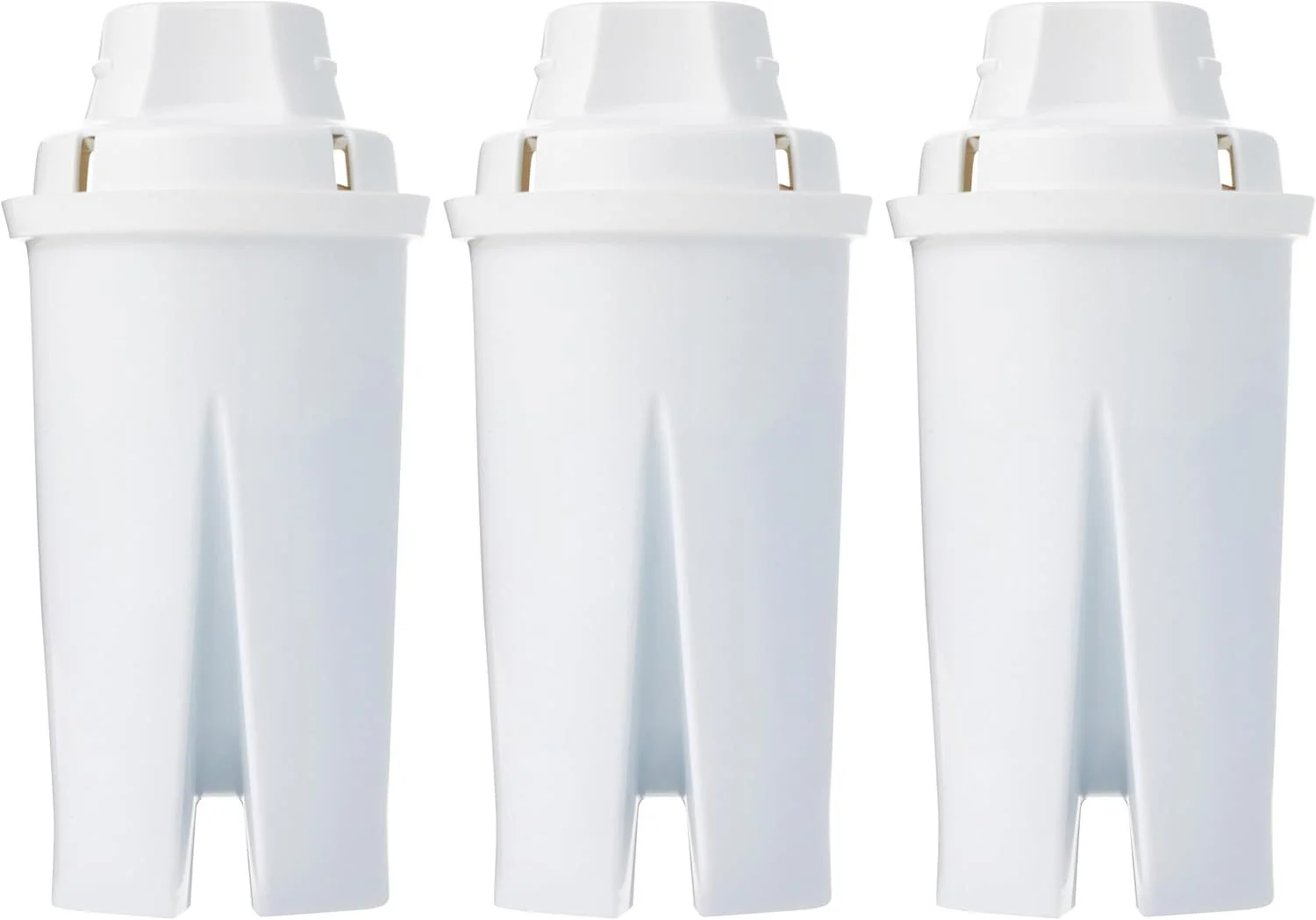
Amazon Basics Enhanced Replacement Water Filters (3-Pack)
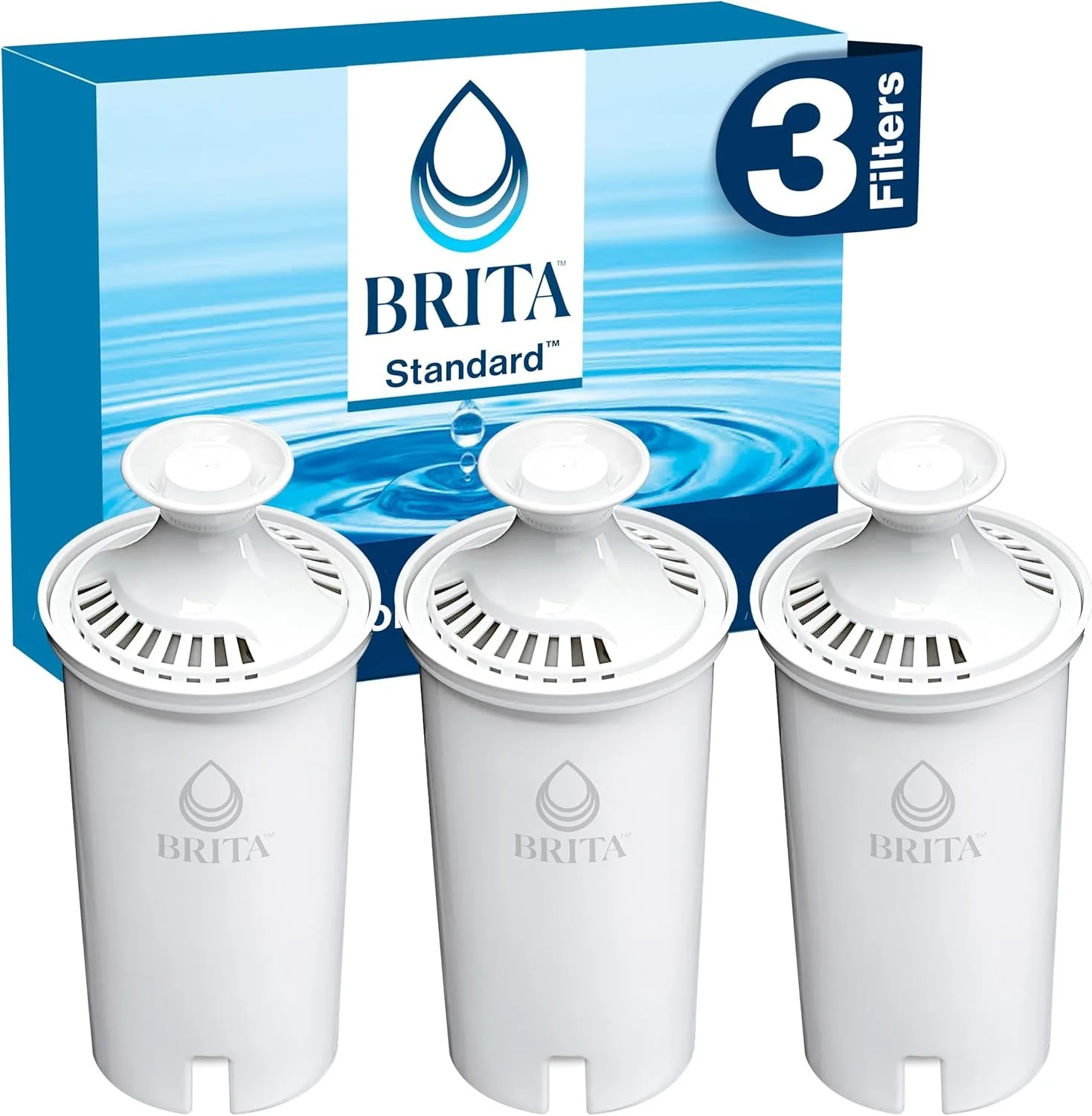
Brita Standard Replacement Filters (3-Pack)
At a Glance
| Feature | Editor's Pick Amazon Basics Enhanced Replacement Water Filters (3-Pack) | Brita Standard Replacement Filters (3-Pack) |
|---|---|---|
| Price | Under $25 | Under $25 |
| Pack Size | 3 | 3 |
| Capacity | 40 gallons per filter | 40 gallons per filter |
| Certifications | NSF 42/53/401/372 | NSF 42 |
| Filter Life | 40 gallons (~2 months per filter) | 40 gallons (~2 months per filter) |
| Filtration | Activated Carbon + Ion Exchange | Activated Carbon + Ion Exchange |
| Check Price | Check Price |
This comparison reveals one of the best-kept secrets in water filtration: Amazon's store-brand filter actually outperforms the category-defining Brita Standard on certifications while costing nearly half the price. The data is clear, but there are nuances worth understanding before you switch.
Category-by-Category Breakdown
Certifications & Filtration
Amazon Basics Enhanced filters carry NSF 42/53/401/372 — a quad certification that is genuinely impressive for a budget filter. This covers chlorine taste (42), health contaminants including lead (53), emerging contaminants like pharmaceuticals (401), and lead-free materials (372). Brita Standard has only NSF 42 for chlorine taste and odor. The certification gap is striking: the Amazon Basics filter has three additional NSF certifications at nearly half the price.
To put the NSF certification difference in practical terms: NSF 42 is the baseline standard that confirms a filter improves aesthetic water qualities like taste and odor — it says nothing about whether the filter removes anything harmful to your health. NSF 53 is the critical upgrade, as it certifies reduction of health-related contaminants including lead, certain volatile organic compounds (VOCs), and other substances with established health risk thresholds. NSF 401 covers a newer category of "emerging contaminants" — things like trace pharmaceuticals, herbicides, and personal care product chemicals that are increasingly detected in municipal water supplies. NSF 372 certifies the filter materials themselves are lead-free, an important assurance about the physical construction of the product you are putting in your drinking water. The fact that a budget-tier filter like Amazon Basics Enhanced carries all four of these certifications while Brita Standard carries only one is not a minor footnote — it is the central finding of this comparison.
Price & Value
Amazon Basics Enhanced costs roughly half what Brita Standard charges for the same 3-pack size, making it one of the cheapest per-gallon options in the pitcher filter category. Both provide 40 gallons per filter and 120 total gallons per pack, so the capacity is identical — the only difference is what you pay. The Amazon Basics delivers the lowest cost-per-gallon of any pitcher filter we have tested in this tier, while the Brita Standard costs nearly double per gallon for fewer certifications. This is a rare case where the budget option is genuinely better.
When you extend this cost difference over a full year of use, the savings become meaningful. The average household replaces pitcher filters approximately five to six times per year depending on consumption volume. Over twelve months, switching from Brita Standard to Amazon Basics Enhanced can save a typical household enough to cover the cost of another household staple entirely — all while getting superior certifications. If you have been buying Brita Standard filters out of habit, this is worth reconsidering. The only scenario where Brita Standard makes economic sense is if you find it on a significant sale or have a retailer coupon that brings the per-filter cost down to parity with Amazon Basics Enhanced.
Compatibility
Both filters are compatible with all Brita pitchers and dispensers except the Stream series. Amazon Basics Enhanced filters are designed as a direct drop-in replacement for Brita Standard filters using the same physical form factor. If you own a Brita pitcher, you can switch to Amazon Basics without buying any new hardware. This perfect cross-compatibility makes switching completely frictionless.
Compatibility extends beyond just physical fit. Brita pitchers with electronic filter-life indicators — the small LED strip on the lid that tracks gallons filtered — continue to function normally with Amazon Basics Enhanced filters. The indicator resets the same way (hold the button for a few seconds after inserting a new filter), and it counts down the same 40-gallon cycle regardless of which compatible filter brand you use. Some users initially worry that using a third-party filter will void their Brita pitcher warranty; in practice, Brita's warranty covers manufacturing defects in the pitcher itself rather than filter performance, so using compatible off-brand filters does not create meaningful warranty risk for most buyers.
Brand Trust & Track Record
Brita is the most recognized name in pitcher filtration, with the Standard filter accumulating 95,000+ reviews and a 4.7-star rating over many years. The Amazon Basics Enhanced has 12,000+ reviews with a 4.4-star rating — solid but significantly less proven. Some users report that Amazon Basics filters may not seat as snugly in older Brita pitchers, and a small minority report shorter effective life. Brita's decades of brand trust and overwhelming social proof still carry weight.
That said, it is worth contextualizing what a 4.4-star versus 4.7-star rating actually represents. With 12,000+ reviews, the Amazon Basics Enhanced rating is statistically meaningful — this is not a product with sparse feedback that could swing dramatically with a few more reviews. The 0.3-star gap between the two products is real but narrow, and a significant portion of the lower Amazon Basics scores relate to individual unit issues (occasional carbon dust, rare seating problems) rather than sustained filtration underperformance. For buyers who want the absolute peace of mind of the most socially validated pitcher filter on the market, Brita Standard remains the default choice — but the data suggests that choosing Amazon Basics Enhanced is not a gamble.
Manufacturing Quality
Amazon Basics Enhanced filters are manufactured in Europe, which suggests reputable production standards. Brita filters are also manufactured to consistent quality standards across their global supply chain. Both use activated carbon and ion exchange technology. However, some reviewers note that Amazon Basics filters occasionally produce more initial carbon dust during the first rinse, and a few report that the filter housing feels slightly less precise than genuine Brita. These are minor differences that do not affect filtration performance.
The carbon dust issue, while cosmetic and harmless, is worth addressing directly: activated carbon fines (the small black particles sometimes visible in the first one or two pitchers of filtered water after installing a new filter) are a normal byproduct of manufacturing and are completely safe to consume. Both Brita and Amazon Basics recommend flushing a new filter by running two full pitchers through it before using the output for drinking. Following this step with Amazon Basics Enhanced filters virtually eliminates the carbon dust concern that appears in some reviews. If you are meticulous about this initial flush, the real-world manufacturing quality difference between the two products becomes negligible for the vast majority of users.
Cost-of-Ownership Analysis
Looking beyond the sticker price of a single filter pack reveals just how large the long-term savings potential is when switching from Brita Standard to Amazon Basics Enhanced. Because both filters are rated for 40 gallons and come in the same 3-pack configuration, the per-pack comparison is apples-to-apples — and Amazon Basics Enhanced consistently lands in the budget-friendly tier while Brita Standard sits in the mid-range tier for the same quantity of filtration capacity.
For a household of two adults consuming roughly one to two pitchers of filtered water daily, annual filter consumption typically runs between four and six filter packs. At the price gap that currently exists between these two products, a household switching from Brita Standard to Amazon Basics Enhanced can expect to save an amount in the low-to-mid double digits annually — modest in isolation, but noteworthy when paired with the fact that the cheaper option carries superior certifications. Over three to five years of pitcher ownership, the cumulative savings are genuinely significant relative to what a replacement pitcher filter costs in the first place.
It is also worth comparing both products against the Brita Elite (Longlast) filter, which uses a different form factor but offers 120 gallons per filter — three times the capacity of either product reviewed here. The Brita Elite falls in the mid-range tier per filter, but because it lasts three times as long, the per-gallon cost is competitive with Amazon Basics Enhanced. If your pitcher accepts the Longlast format, the Brita Elite deserves a place in your cost-of-ownership calculation. For pitchers that only accept the Standard form factor, however, Amazon Basics Enhanced remains the clear cost leader.
Who Should Get Which?
Get the Amazon Basics Enhanced Replacement Water Filters (3-Pack) if...
- You want the best certifications per dollar — quad NSF at the lowest per-filter cost in this category
- Lead reduction matters but you do not want to pay Brita Elite prices
- You already own a Brita pitcher and want to cut filter costs in half
- You are a value-driven buyer who trusts certifications over brand names
Get the Brita Standard Replacement Filters (3-Pack) if...
- You value the proven reliability of the most-reviewed pitcher filter (95K reviews)
- You prefer the most consistent fit and build quality for your Brita pitcher
- Brand trust matters more to you than saving a few dollars per filter
Who Should Skip Both Products
There are specific situations where neither the Amazon Basics Enhanced nor the Brita Standard is the right tool for the job, and it is worth naming them explicitly rather than letting buyers discover this after purchase.
If your household water has confirmed contamination with heavy metals beyond lead — arsenic, mercury, or chromium-6 — a pitcher filter of any kind is not sufficient. These contaminants require a more robust treatment method, typically a reverse osmosis system rated for the specific contaminant at your detected concentration levels. Pitcher filters, even the best-certified ones, are designed for municipal water that already meets regulatory standards; they provide an additional layer of protection for common trace contaminants, not remediation for significantly polluted water.
If you consume very high volumes of filtered water daily — think a household of four or more adults, or any setting approaching commercial use — the 40-gallon filter life of both products will feel frustratingly short. In that scenario, consider either a high-capacity pitcher using the Brita Elite (Longlast) format, an under-sink filter with a multi-thousand-gallon filter life, or a countertop filtration system with a larger reservoir and longer-lasting media. The math on per-gallon cost also shifts at high volume, making a slightly larger upfront investment in a more capable system worthwhile.
Finally, if you are specifically trying to address well water with high sediment load, iron, or sulfur odor, pitcher filters are not designed for that application. Activated carbon and ion exchange resin work well for the contaminant profile of treated municipal water; well water with specific mineral or bacterial challenges requires targeted pre-treatment before reaching a pitcher-style filter. In that case, consult a licensed water quality professional or obtain a comprehensive water test before selecting any filtration product.
Frequently Asked Questions
Are Amazon Basics Enhanced filters as good as Brita Standard?
Do Amazon Basics Enhanced filters fit in Brita pitchers?
Why are Amazon Basics filters so much cheaper than Brita?
Do Amazon Basics filters reduce lead like Brita Standard?
How often should I replace Amazon Basics Enhanced filters?
Can I use Amazon Basics Enhanced filters with the Brita Longlast or Brita Elite pitcher?
Is there a noticeable taste difference between Amazon Basics Enhanced and Brita Standard filtered water?
What happens if I run my filter longer than the recommended 40 gallons?
How does Amazon Basics Enhanced compare to Brita Elite (Longlast)?
Final Verdict
The Amazon Basics Enhanced vs Brita Standard comparison is one of the clearest cases we have encountered in pitcher filter reviews: the less expensive option is objectively better on the metrics that matter most for water quality. Quad NSF certifications — including NSF 53 for lead reduction and NSF 401 for emerging contaminants — at roughly half the per-gallon cost of Brita Standard is not a close call. If you are currently buying Brita Standard filters on autopilot, switching to Amazon Basics Enhanced is one of the easiest money-saving, quality-improving decisions you can make in your household consumables budget.
The only legitimate reasons to stay with Brita Standard are a strong preference for the most socially validated product in the category (95,000+ reviews carries genuine peace of mind for many buyers) or a specific physical fit concern with your particular pitcher model. Both are valid personal preferences. But on filtration performance as measured by independent certification, the Amazon Basics Enhanced wins this comparison decisively, and we recommend it as our top pick for buyers prioritizing value without sacrificing filtration quality.
If you find yourself wanting longer filter life between replacements, consider stepping up to the Brita Elite (Longlast) format if your pitcher supports it — its 120-gallon capacity changes the replacement math substantially and brings NSF 53 certification within the Brita product line. For everyone else with a Standard-format Brita pitcher, the Amazon Basics Enhanced is the filter we recommend buying today.
Track Both Products
We'll email you if either price drops or availability changes.
Only when something changes. Unsubscribe anytime.