Best Water Filters for Travel
Traveler's diarrhea affects 30-70% of international travelers to developing regions, and contaminated water is the leading cause. We cover the portable water purification strategies that keep you healthy on the road, from weekend getaways to extended international trips.
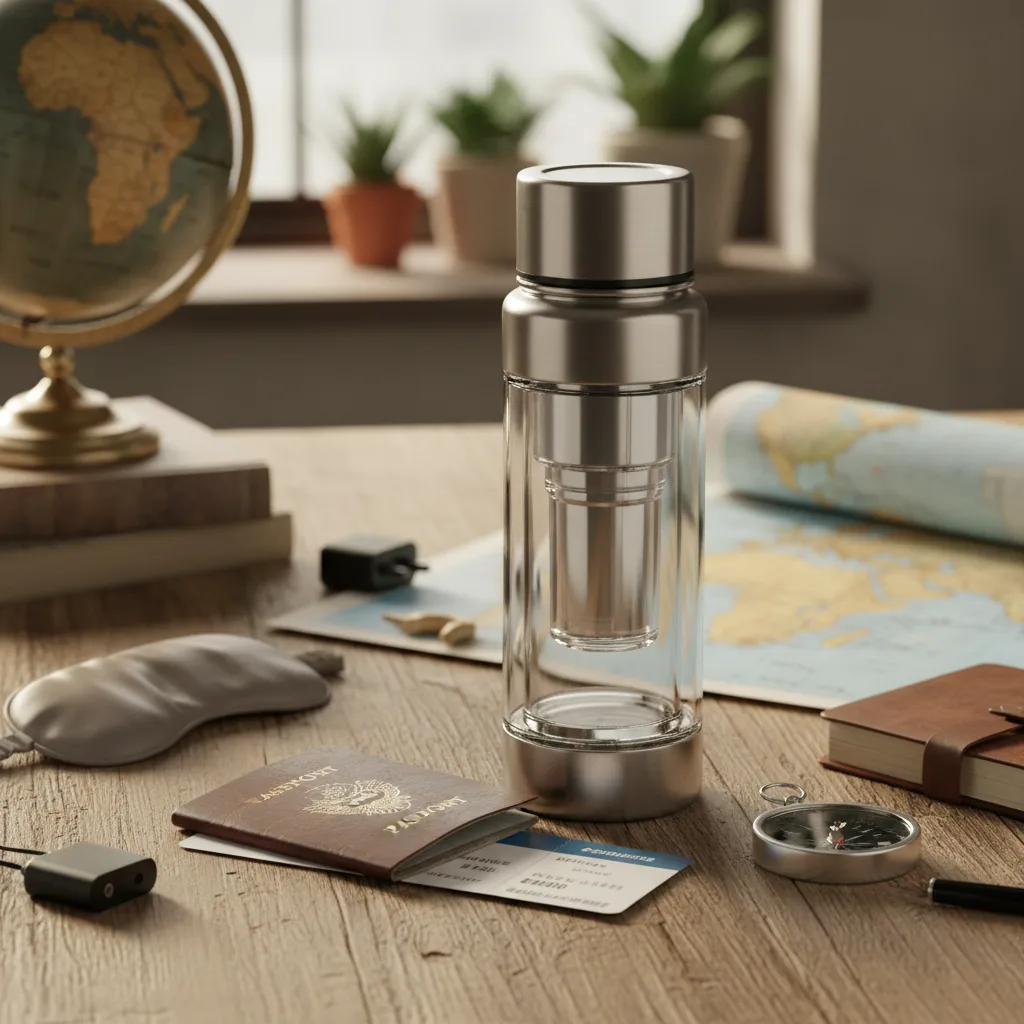
Why Travelers Need Water Purification
The CDC estimates that traveler's diarrhea strikes 30-70% of visitors to high-risk destinations in Central and South America, Africa, and Asia. The primary culprit is contaminated water — not just from drinking tap water directly, but from ice in drinks, salads washed in local water, and brushing teeth with unfiltered water. A single waterborne illness can derail an entire trip.
Even in countries with treated municipal water, the local pathogen profile differs from what your immune system is accustomed to. Your body may react to bacteria that locals tolerate without issue. This is why experienced travelers filter and purify water as a default practice, regardless of official water quality ratings.
The key challenge for travel water purification is that viruses are a major concern, especially in regions with poor sanitation. Standard filter straws with 0.1-micron membranes remove bacteria and protozoa but physically cannot capture viruses. This is why chemical purification — specifically MSR Aquatabs — is essential for international travel. The combination of filtration plus chemical treatment provides the most comprehensive protection available in a portable format.
What to Look For in a Travel Water Filter
Travel water purification has unique constraints compared to home or camping use:
- Virus protection: The most critical factor for international travel. Viruses like hepatitis A, norovirus, and rotavirus are too small for filter membranes. Chemical treatment (Aquatabs) or UV purification is essential.
- TSA compliance: Your purification system must pass through airport security. Filter straws and tablets are fully TSA-compliant. Liquids and gel-based purifiers are not.
- Weight and packability: Space in a travel bag is precious. A filter straw weighs 2 ounces, and Aquatabs weigh half an ounce. Together, they add negligible weight to your luggage.
- Ease of use in varied situations: You might need to purify water in a hotel room, at a restaurant, from a tap, or from a natural source while trekking. Versatile tools that work in multiple scenarios are best.
- Speed: Filter straws provide instant filtration. Aquatabs require a 30-minute wait. Plan accordingly — treat water before you need it so it is ready when you are thirsty.
Who Should Prioritize Travel Water Purification
Not every traveler faces the same level of risk, and understanding your personal risk profile helps you choose the right level of preparation. Backpackers and budget travelers who eat at local restaurants, stay in guesthouses, and move between destinations frequently face the highest exposure — they interact with local water sources at almost every meal and accommodation stop. These travelers should treat every water source as suspect and carry the full straw-plus-tablets kit without exception.
Business travelers staying in four- and five-star international hotels in major urban centers face a lower but still real risk. Many upscale hotels in developing countries provide filtered or bottled water in rooms, but the hotel gym tap, the ice machine, and the coffee maker may still draw from municipal lines. Carrying a small pack of Aquatabs adds virtually no luggage weight and provides meaningful insurance even in comfortable accommodations.
Travelers with compromised immune systems, including those undergoing chemotherapy, living with HIV, or managing autoimmune conditions, should apply the strictest purification standards regardless of destination. Pathogens that cause mild discomfort in healthy adults can become life-threatening for immunocompromised individuals. For this group, the Bluevua countertop RO system is worth considering even on shorter stays, and they should consult their physician before travel to high-risk regions.
Top Picks for Travel
1. MSR Aquatabs Water Purification Tablets (30-Pack) — Essential for International Travel
For international travel where viral contamination is a primary concern, Aquatabs are the single most important water purification item to carry. These EPA-registered tablets kill hepatitis A, norovirus, rotavirus, bacteria, and Giardia in 30 minutes using NaDCC chlorine-based chemistry. No iodine aftertaste, no complicated equipment, no batteries.
The practical travel usage is straightforward: fill a water bottle with tap water (or pre-filtered water from your straw), drop in one tablet, shake gently, and wait 30 minutes. Treat a batch before bed and it is ready in the morning. Treat a batch at lunch and it is ready for your afternoon exploration. At 30 tablets in a pack that weighs half an ounce, you have 15 gallons of purification capacity — enough for a 2-week trip.
In areas where water is visibly cloudy, pre-filter through your straw first. Turbid water reduces the effectiveness of chemical treatment because particles shield pathogens from the chlorine. Filter first, then treat — this two-step approach handles every water quality scenario.
Price Range: Under $25 | Full Review | Check Price on Amazon
2. Timain 4-Stage Water Filter Straw (2-Pack) — Best Lightweight Travel Filter
The Timain filter straw is the perfect complement to Aquatabs for travelers. While tablets handle viruses, the straw handles instant filtration for bacteria, protozoa, and sediment — no 30-minute wait required. When you are thirsty and need water now, the straw delivers.
For travel, the dual-use design is especially practical. Use it as a direct straw to drink from tap water at your hotel (after checking that it is not chemically contaminated). Use it as a squeeze filter to fill your reusable bottle on the go. The 4-stage filtration with activated carbon even improves the taste of heavily chlorinated municipal water common in many countries.
The 2-pack at Under $25 means you can carry one and leave a backup at your hotel. At 2.1 ounces per straw, it takes up less space than a tube of sunscreen.
Price Range: Under $25 | Full Review | Check Price on Amazon
3. Membrane Solutions Portable Water Filter Straw — Best for Group Travel
Traveling with family or friends? The Membrane Solutions straw is affordable enough to grab one per person so no one has to share or go without. At Under $25 per straw, equipping your whole travel group costs less than a single airport meal.
The 28mm bottle compatibility is particularly useful for travelers who buy sealed bottled water and want to refill the same bottle from filtered tap water later. Thread the straw onto the bottle opening, flip, and squeeze — filtered water on demand. Each straw's 1,500+ liter capacity far exceeds what any traveler would need on a single trip, so they can be used on future trips as well.
Price Range: Under $25 | Full Review | Check Price on Amazon
4. Bluevua RO100ROPOT-Lite(UV) Countertop Reverse Osmosis System — Best for Extended Stays
For digital nomads, expats, or travelers on extended stays of a month or more, a countertop RO system transforms the quality of daily life. The Bluevua Lite UV provides full reverse osmosis with UV sterilization from any electrical outlet — no plumbing required. Set it up in your rental apartment or long-term hotel room, and you have hospital-grade purified water on demand.
The cost math favors the Bluevua on longer stays. At $100–$250 one-time, it replaces the daily cost of buying bottled water (typically a few dollars per day in developing countries). Over a 3-month stay, bottled water costs hundreds of dollars while the Bluevua costs the one-time investment plus electricity. For travelers who stay put for extended periods, it is the more economical and environmentally friendly choice.
Price Range: $100–$250 | Full Review | Check Price on Amazon
Travel Water Safety Tips by Region
- Southeast Asia (Thailand, Vietnam, Cambodia, Indonesia): Do not drink tap water. Use filter straw + Aquatabs. Avoid ice from street vendors. Sealed bottled water is widely available as a backup.
- Central and South America (Mexico, Peru, Brazil): Tap water quality varies by city. In major cities, filtered tap water is usually fine. In rural areas and smaller towns, treat all water. Avoid salads washed in local water.
- Africa: Assume all non-bottled water needs treatment. Carry ample Aquatabs. In sub-Saharan Africa, viral contamination is a significant concern — do not rely on filtration alone.
- India and South Asia: Universally avoid tap water. Even locals drink bottled or filtered water. Check that sealed bottles are genuinely sealed — resealed bottles with tap water are a known scam in tourist areas.
- Western Europe, Japan, Australia: Tap water is safe to drink in most areas. A filter straw provides extra assurance and taste improvement but is not strictly necessary.
Cost of Ownership: What Travel Water Purification Actually Costs You
One of the most common objections to carrying personal water purification is the upfront cost — but the math strongly favors bringing your own system rather than relying on purchased bottled water. In most developing countries, a 1.5-liter bottle of water from a hotel minibar or tourist-area shop sits in the mid-range of daily incidentals, and buying three or four per day adds up quickly over a two-week trip.
By contrast, the straw-plus-tablets travel kit sits in the budget-friendly tier and covers the entire trip's water needs from a single purchase. A pack of Aquatabs at the budget-friendly price point provides enough treatment capacity for two weeks of daily use with tablets to spare. Filter straws in the budget-to-mid-range tier last for multiple trips before reaching the end of their rated capacity. Over a year of two or three international trips, the per-trip cost of owning your own purification system drops to a few dollars — far less than a single bottle of tourist-area water.
For longer-term stays, the Bluevua Lite represents a premium one-time investment that pays for itself within one to two months compared to bottled water costs in most developing countries. Digital nomads who spend three or more months per year in Southeast Asia, Latin America, or South Asia will find the math particularly compelling — and gain the added benefit of eliminating hundreds of single-use plastic bottles from their environmental footprint.
Frequently Asked Questions
Can a filter straw make tap water in developing countries safe?
Is it safe to use ice in drinks when traveling internationally?
How do I purify water in a hotel room abroad?
Are water purification tablets safe for daily use?
Where is it safe to drink tap water when traveling?
What is the best way to carry water purification when flying?
How long do filter straws last when used for travel?
Can children use filter straws and purification tablets when traveling?
What should I do if I accidentally drink untreated water abroad?
Our Top Pick for Travel
For international travel, the combination of MSR Aquatabs Water Purification Tablets (30-Pack) and a Timain 4-Stage Water Filter Straw (2-Pack) provides the most comprehensive portable water purification for less than the cost of an airport meal and under 3 ounces. Aquatabs cover the critical virus threat that filters miss, while the Timain straw provides instant bacteria and protozoa filtration. Together, they handle every water scenario you will encounter on the road.
Get Our Top 3 Picks
Get our top 3 picks for your budget — one email, then only updates.
Only when something changes. Unsubscribe anytime.