Timain vs NatureNova Filter Straw: Which Is Better in 2026?
Quick Verdict: The NatureNova is the better overall kit with an included water bag and backwash syringe that make it field-ready out of the box. The Timain 2-Pack is the budget king with the lowest per-straw cost for the same 4-stage filtration technology. Both are ultra-affordable and share identical filtration specs — the difference is in accessories and completeness.
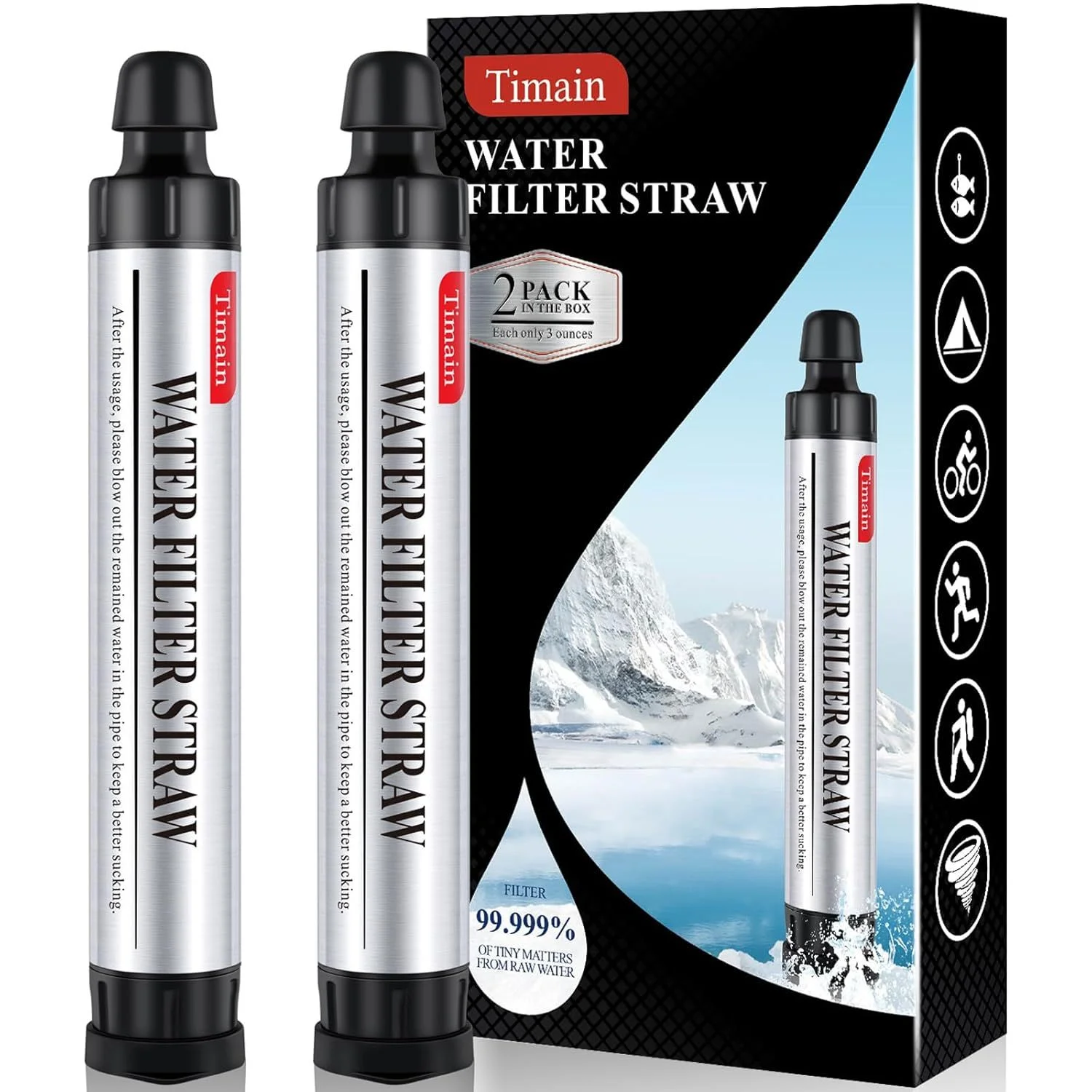
Timain 4-Stage Water Filter Straw (2-Pack)
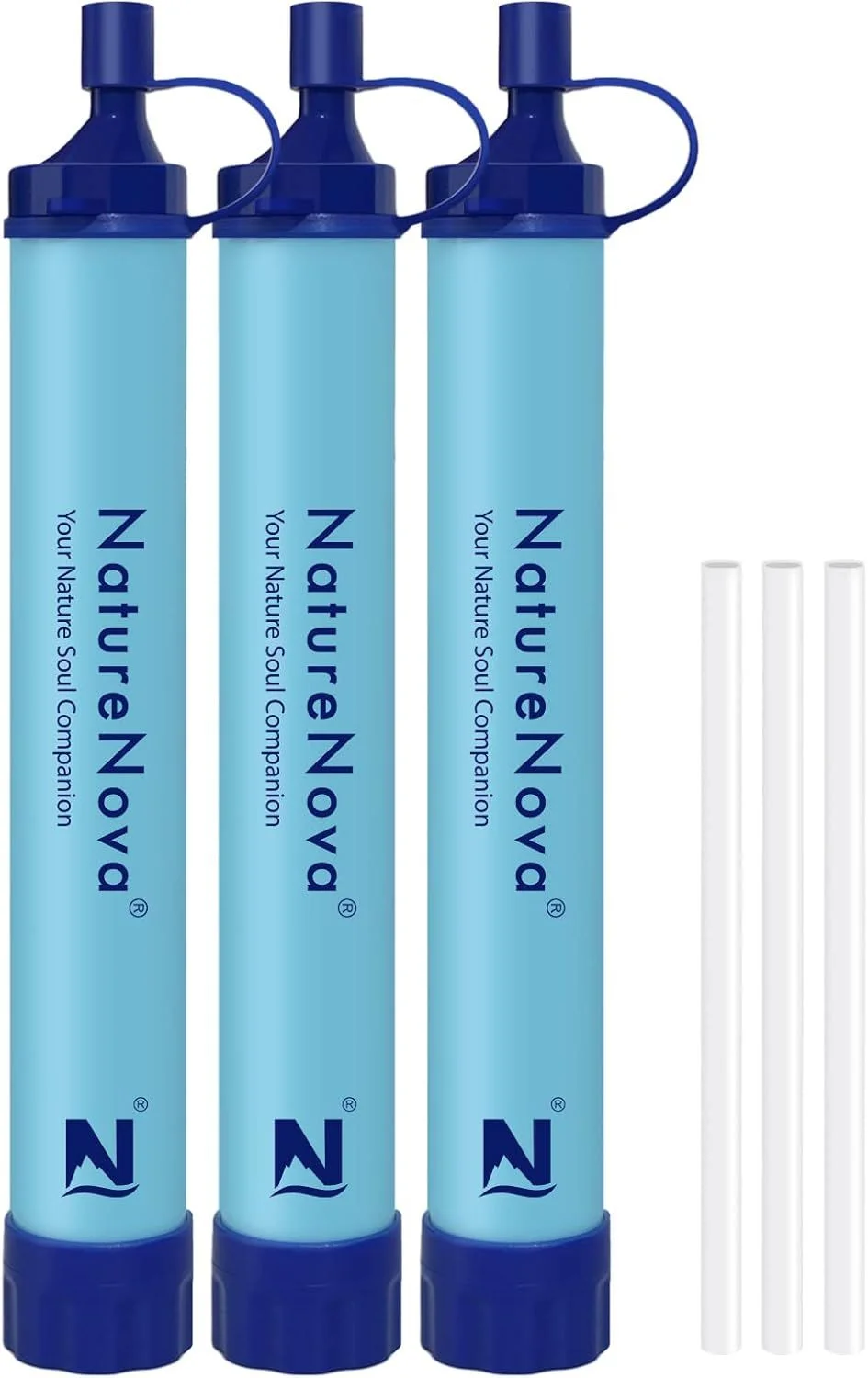
NatureNova Personal Water Filter Straw
At a Glance
| Feature | Timain 4-Stage Water Filter Straw (2-Pack) | Editor's Pick NatureNova Personal Water Filter Straw |
|---|---|---|
| Price | Under $25 | Under $25 |
| Pack Size | 2 | 1 (includes foldable water bag + backwash syringe) |
| Stages | 4 | 4 |
| Micron Rating | 0.1 | 0.1 |
| Capacity | 1,500 liters per straw | 1,500 liters |
| Filtration | PP Cotton + Coconut Carbon + PP Fiber + 0.1μm UF Membrane | PP Cotton + Coconut Carbon + PP Fiber + 0.1μm UF Membrane |
| Check Price | Check Price |
The Timain and NatureNova are remarkably similar straws — same filtration technology, same micron rating, same capacity. What separates them is the NatureNova's included accessories (water bag + backwash syringe) and the Timain's lower per-straw price. This comparison helps you decide whether the extras are worth the premium.
Category-by-Category Breakdown
Filtration Quality
Both straws use an identical 4-stage filtration approach: PP cotton pre-filter, coconut shell activated carbon, PP fiber, and a 0.1-micron ultrafiltration membrane. Both remove 99.9999% of bacteria and 99.99% of protozoa. The NatureNova claims partial heavy metal reduction from its carbon stage, which the Timain does not specifically advertise. In terms of core water safety — making stream or lake water drinkable — they perform identically.
It is worth understanding what a 0.1-micron rating actually means in practical terms. Most harmful bacteria, including E. coli, Salmonella, and Campylobacter, measure between 0.5 and 5 microns — well above the 0.1-micron cutoff. Common waterborne protozoa like Giardia lamblia (6–20 microns) and Cryptosporidium parvum (4–6 microns) are also blocked with comfortable margin. Neither straw, however, removes viruses, which typically range from 0.02 to 0.3 microns. In North American backcountry water sources, virus contamination is rare. In international travel or post-disaster scenarios, virus risk is higher and supplemental chemical treatment is advisable regardless of which straw you carry.
The coconut shell activated carbon stage in both straws also plays a meaningful role beyond heavy metal claims. Activated carbon adsorbs chlorine, chloramines, and many volatile organic compounds (VOCs), which meaningfully improves the taste and odor of treated water. This is especially welcome when you are filtering water from sources that smell of algae, stagnant debris, or agricultural runoff. Both straws benefit equally from this stage, so taste improvement is a wash between the two products.
Included Accessories
This is the NatureNova's defining advantage. Each straw comes with a foldable water bag for gravity-feed filtering AND a backwash syringe for extending filter life. The water bag enables hands-free filtering — fill the bag, hang it up, and let gravity push water through the straw into a clean container. The backwash syringe reverses water flow to clear trapped sediment from the membrane. The Timain includes just the straws — you supply your own container and have no backwash capability.
The practical impact of these accessories cannot be overstated, particularly for non-technical users. If you hand a Timain to a family member who has never used a filter straw, they will likely drink directly from a stream — which works fine — but they will have no way to filter water into a pot for cooking, no way to fill a water bottle for the trail ahead, and no way to restore the filter if it slows to a trickle after filtering silty water. The NatureNova kit solves all three of these scenarios out of the box. For preppers building emergency water kits, the NatureNova's completeness reduces the chance of a critical equipment gap when it matters most.
Price Per Straw
The Timain 2-pack delivers the lowest per-straw cost in our catalog — roughly half the price per unit compared to buying the NatureNova kit. Both are ultra-affordable options. While the NatureNova costs more per straw, the included accessories (water bag + backwash syringe) would cost a noticeable amount if purchased separately for the Timain, closing the value gap considerably. For bare-minimum filtration at the absolute lowest price, the Timain wins.
To frame this in cost-of-ownership terms: if you already own a compatible squeeze pouch and plan to perform occasional backwashing by blowing air through the mouthpiece (a less effective but functional workaround), the Timain 2-pack delivers excellent value. Families who want to equip multiple members — say, four hikers going on a group trip — will find the Timain 2-pack economics compelling, since purchasing two packs provides four straws for roughly the same outlay as two NatureNova kits. The accessories trade-off is real, but the per-unit savings at scale are equally real.
Weight & Portability
The Timain weighs 2.1 oz per straw while the NatureNova weighs 2.5 oz per straw (plus accessories). For ultralight backpackers counting every gram, the Timain's lighter weight is an advantage. However, the 0.4 oz difference per straw is negligible for most users. The NatureNova's accessories add some weight but pack flat and take up minimal space. For the vast majority of hikers and preppers, the weight difference is irrelevant.
Where portability becomes a more nuanced conversation is in pack organization. Both straws are compact enough to slip into a hip belt pocket, a jacket chest pocket, or a small pouch in a day pack. The NatureNova's foldable water bag, when empty, compresses to roughly the size of a credit card wallet, so it adds almost no bulk to a pack. The backwash syringe is the bulkiest accessory item, but it is still far smaller than carrying a dedicated water bottle or hydration reservoir. If you are thru-hiking with an ultralight kit where every cubic centimeter is accounted for, the Timain's single-item simplicity may be preferable. For casual day hiking or emergency preparedness bags, the NatureNova's added volume is trivial.
Filter Longevity & Maintenance
Both straws are rated for 1,500 liters. However, the NatureNova's included backwash syringe provides a meaningful lifespan advantage. Regular backwashing clears accumulated sediment from the UF membrane, restoring flow rate and extending effective filter life. Without backwashing capability (Timain), the filter will clog sooner in turbid water conditions. For extended backcountry trips or emergency scenarios where filter replacement is not an option, the NatureNova's maintenance capability is a significant practical benefit.
To put the 1,500-liter rating in perspective: an average adult drinks roughly 2 liters per day, meaning each straw is theoretically rated for about 750 days of sole-source drinking water for one person. In practice, lifespan is heavily dependent on source water quality. Filtering clear mountain spring water will get you close to the rated capacity. Filtering silty river water or stagnant pond water will dramatically shorten filter life as sediment accumulates in the membrane — sometimes within just a few dozen liters if no backwashing is performed. The NatureNova's syringe makes maintaining that rated lifespan a realistic goal even in challenging field conditions, while Timain users must accept faster degradation in turbid water or develop their own backwash workaround.
Real-World Use Scenarios
Scenario 1: Weekend Backpacking Trip
For a two-night backcountry trip with clear trail water sources, both straws perform identically. You will drink directly from streams, flow will remain strong throughout the trip, and neither straw will approach its capacity limits. In this scenario, the Timain's lower cost makes it the sensible pick — especially if you already own a squeeze pouch for cooking water. The NatureNova's accessories become more useful as trip length increases and water source quality decreases.
Scenario 2: Emergency Preparedness Kit
For a 72-hour emergency go-bag or a home emergency water kit, the NatureNova's completeness is a meaningful advantage. During a real emergency, you may need to filter water into containers for family members who cannot drink directly through a straw — infants, elderly relatives, or injured individuals. The foldable water bag enables that flexibility immediately. The NatureNova also ensures that whoever picks up the kit during a crisis has everything they need without having to source additional equipment under pressure.
Scenario 3: International Travel
Either straw works well for biological contamination in tap or surface water abroad. Both remove the bacteria and protozoa responsible for traveler's diarrhea reliably. The NatureNova's water bag is especially practical in hotel or hostel settings where you want to pre-filter a day's supply of water into a clean bottle each morning without standing at the tap for an extended period. Pair either straw with virus-targeting chemical tablets for destinations in Southeast Asia, Sub-Saharan Africa, or Central America where viral waterborne illness is a documented risk.
Scenario 4: Car Camping & Base Camp Use
If you are car camping or operating from a fixed base camp with a consistent water source, the NatureNova's gravity-feed mode is particularly appealing. You can hang the filled water bag from a tree branch or tent pole and let it slowly filter into a communal container throughout the day, providing filtered drinking water for a small group with zero effort. The Timain can achieve something similar with a purchased squeeze pouch, but the NatureNova delivers this functionality right out of the packaging.
ProTip: Maximizing Filter Life on Both Straws
Pro Tip: Regardless of which straw you choose, you can extend filter life significantly by pre-filtering visibly turbid water through a bandana, coffee filter, or piece of clothing before running it through the straw. Removing large sediment particles before they reach the UF membrane dramatically reduces clogging and extends the effective lifespan of the hollow fiber strands. This pre-filtering technique is especially valuable for Timain users who lack a backwash syringe, as it compensates for the inability to clear accumulated debris from the membrane in the field. For NatureNova users, pre-filtering combined with regular backwashing can push a single straw well beyond its rated 1,500-liter capacity in real-world conditions.
Who Should Get Which?
Get the Timain 4-Stage Water Filter Straw (2-Pack) if...
- Budget is your primary constraint — the Timain 2-pack has the lowest per-straw cost
- You already own squeeze bags or other water containers
- You want the lightest possible straw for ultralight backpacking
- You need a simple, bare-bones emergency backup filter
- You are equipping multiple people and need to stretch your budget across several straws
- You primarily filter from clear, low-turbidity water sources where backwashing is rarely needed
Get the NatureNova Personal Water Filter Straw if...
- You want a complete, field-ready kit with water bag and backwash syringe
- You plan extended backcountry trips where filter longevity matters
- You want a complete field-ready kit with water bag and syringe included
- You value the backwash capability for maintaining filter performance
- You need to filter water for others who cannot drink directly through a straw
- You are building an emergency preparedness kit and want everything in one package
- You anticipate filtering turbid or sediment-heavy water sources where maintenance is critical
How These Straws Compare to Other Market Options
Both the Timain and NatureNova occupy the budget-friendly tier of the filter straw market. The LifeStraw Personal is the most well-known competitor at a slightly higher mid-range price point, and it carries independent NSF/ANSI certifications that provide third-party validation of its performance claims. The Sawyer Squeeze and Sawyer Mini operate on the same hollow fiber technology but offer significantly higher rated capacities (100,000 gallons for the Squeeze) at a mid-range price — making them the preferred choice for serious long-distance hikers like PCT or AT thru-hikers. The Katadyn BeFree sits at the premium end with a faster flow rate and a softer squeezable flask, but at a substantially higher cost than any of these budget straws.
Within the budget-friendly tier, the Timain and NatureNova are genuinely competitive with the best options available. Their 0.1-micron membranes match the filtration rating of the Sawyer Mini, and their 1,500-liter capacity is more than sufficient for casual outdoor use. The primary limitation shared by all budget straws in this category — including the LifeStraw — is the absence of virus filtration, which is a non-issue for most domestic use cases but worth noting for international travel planning.
Frequently Asked Questions
What is the difference between the Timain and NatureNova filter straws?
Is the NatureNova water bag worth the extra cost?
What does the backwash syringe do?
Which straw is lighter for backpacking?
Do both straws remove heavy metals?
Can I use these straws for international travel?
How do I store these filter straws long-term without damaging the membrane?
Are these straws suitable for children or people with limited jaw strength?
How does the Timain 2-pack compare to the LifeStraw for emergency use?
Our Final Recommendation
After evaluating both products across filtration quality, accessories, value, weight, and real-world usability, our recommendation comes down to your specific use case rather than a universal winner. The core filtration technology is identical — both straws will keep you safe from biological contaminants in North American backcountry water. The decision hinges entirely on whether you need a complete, self-contained kit or a bare-bones, low-cost straw to complement equipment you already own.
If you are building an emergency preparedness kit from scratch, equipping a family member unfamiliar with water filtration, or heading into the field without other water collection gear, the NatureNova is the obvious choice. The included water bag and backwash syringe transform it from a simple drinking tool into a versatile field water treatment system. The extra investment over the Timain is modest and quickly justified by the accessory value alone.
If you are an experienced backpacker who already carries a squeeze pouch and knows how to improvise a backwash when needed, the Timain 2-pack is a compelling deal. Two straws for the household emergency kit, one for your day pack, and one as a backup — all for a remarkably low outlay. At this price tier, carrying a backup straw is a no-brainer, and the Timain's 2-pack format makes that easy to justify. Whichever you choose, either straw represents a genuinely worthwhile investment in portable water safety that could prove invaluable when clean drinking water is not available on demand.
Track Both Products
We'll email you if either price drops or availability changes.
Only when something changes. Unsubscribe anytime.