Timain vs Membrane Solutions Filter Straw: Which Is Better in 2026?
Quick Verdict: The Timain 2-Pack wins on per-straw value and offers 4-stage filtration with chlorine and odor reduction. The Membrane Solutions wins on proven reliability with a stronger review profile (4.5 stars, 8,500+ reviews) and proven 28mm bottle compatibility. Both are ultra-affordable and remove 99.99%+ of bacteria and protozoa.
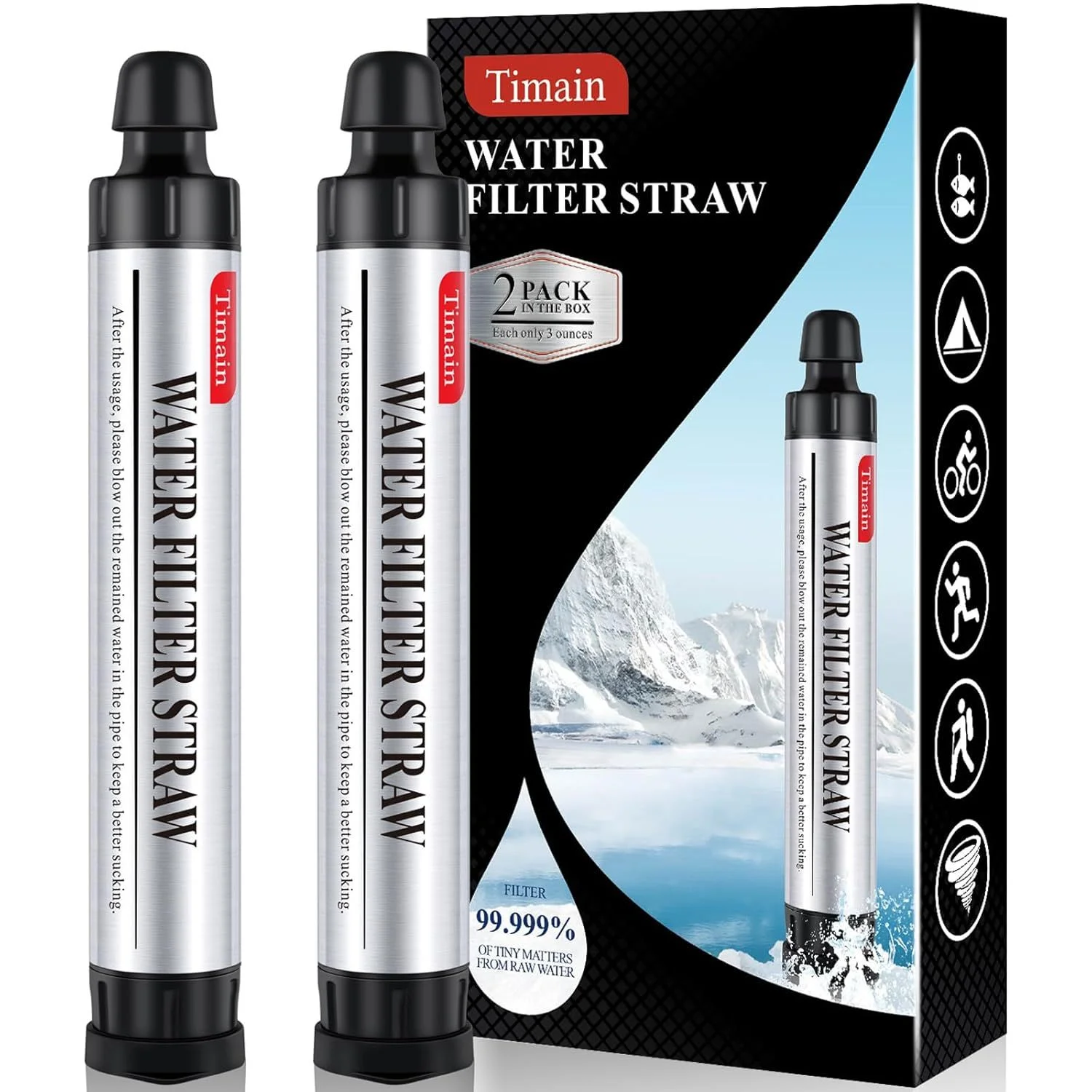
Timain 4-Stage Water Filter Straw (2-Pack)
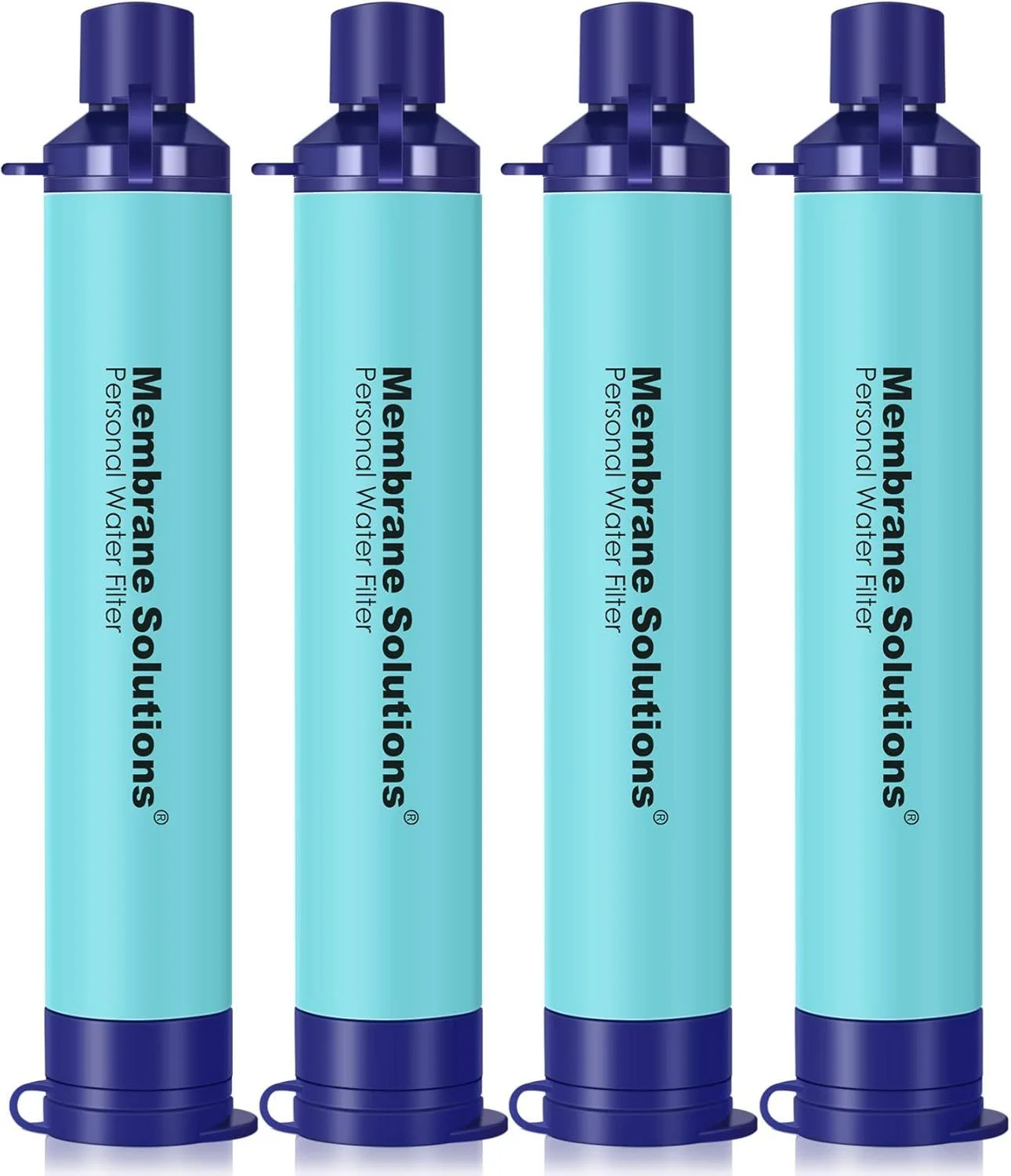
Membrane Solutions Portable Water Filter Straw
At a Glance
| Feature | Editor's Pick Timain 4-Stage Water Filter Straw (2-Pack) | Membrane Solutions Portable Water Filter Straw |
|---|---|---|
| Price | Under $25 | Under $25 |
| Pack Size | 2 | 1 |
| Stages | 4 | 1 |
| Micron Rating | 0.1 | 0.1 |
| Capacity | 1,500 liters per straw | 1,500+ liters |
| Filtration | PP Cotton + Coconut Carbon + PP Fiber + 0.1μm UF Membrane | 0.1μm Hollow Fiber UF Membrane |
| Check Price | Check Price |
Both the Timain and Membrane Solutions straws provide effective portable water filtration at ultra-low prices. They share the same 0.1-micron filtration level and similar capacity ratings. The differences come down to filtration stages, pack size, per-straw cost, and brand reliability.
Category-by-Category Breakdown
Filtration Technology
The Timain uses a 4-stage filtration system: PP cotton, coconut carbon, PP fiber, and a 0.1-micron ultrafiltration membrane. This multi-stage approach provides chlorine and odor reduction in addition to pathogen removal — beneficial for tap water emergencies or chlorinated municipal water during boil advisories. The Membrane Solutions uses a single-stage 0.1-micron hollow fiber UF membrane. Hollow fiber is a well-proven technology in portable filtration, but without additional stages, it does not reduce chemicals, chlorine, or odor. This distinction becomes especially important during municipal boil advisories or when filtering from sources near agricultural land, where chlorine taste or chemical runoff can make single-stage filtered water unpleasant to drink.
It is worth understanding what hollow fiber membranes actually do at the physical level, because both straws rely on this core technology despite differences in stage count. Hollow fiber membranes consist of thousands of tiny tubes bundled together. Water is drawn through the walls of these tubes, and anything larger than 0.1 microns — including bacteria, protozoa cysts, and sediment — is physically trapped on the outer surface. The filtered water passes through the tube walls and out the mouthpiece. This mechanical filtration mechanism does not degrade over time the way chemical treatments do, which is one reason hollow fiber straws have become the dominant technology in personal survival filtration. The Timain's additional PP cotton and coconut carbon stages work upstream of the hollow fiber membrane, helping to extend its life by capturing larger sediment and organic compounds before they reach the membrane itself.
Bacteria & Protozoa Removal
Both straws use 0.1-micron filtration and effectively remove bacteria and protozoa. The Timain claims 99.9999% bacteria removal (log-6). The Membrane Solutions claims 99.999999% bacteria removal (log-8) — two orders of magnitude higher on paper. While both are safe for field use, the Membrane Solutions' higher claimed removal rate provides an extra margin of safety. In practice, both will make stream and lake water safe from bacterial pathogens.
To put these log ratings in practical perspective: a log-6 removal rate means that from one million bacteria present in the source water, only one organism would theoretically pass through. A log-8 rate means from one hundred million bacteria, only one passes through. In real-world backcountry water sources — even heavily contaminated ones — bacterial counts rarely approach these theoretical maximums, so the difference between log-6 and log-8 is largely academic in most field scenarios. Where it matters more is in severely compromised water sources: flood water, water near livestock areas, or water from disease-outbreak zones. In those situations, the Membrane Solutions' additional safety margin becomes meaningful. Both straws handle common waterborne pathogens like Giardia, Cryptosporidium, E. coli, and Salmonella effectively at their respective removal rates.
Price Per Straw
The Timain 2-pack delivers the lowest per-straw cost in our catalog — roughly half the price per unit compared to the Membrane Solutions single straw. Both are ultra-affordable and budget-friendly, but the Timain's 2-pack structure stretches the dollar further. The Membrane Solutions straw uses proven hollow fiber technology with a log-8 bacteria removal rate, giving it an edge in filtration confidence per dollar.
When evaluating cost of ownership over the full filter lifespan, both products sit firmly in the budget-friendly tier and represent excellent value compared to mid-range alternatives like the LifeStraw or premium options like the Sawyer Squeeze. If you are building out emergency preparedness kits for a household of four, the math strongly favors the Timain 2-pack — you get two straws per purchase, and buying two packs gives you four straws for the same price or less than four individual Membrane Solutions straws. On the other hand, if you are outfitting a single bug-out bag or emergency kit where only one straw is needed and you want maximum documented bacteria removal, the Membrane Solutions' slightly higher per-unit cost is justifiable for the peace of mind that log-8 documentation provides.
Pack Size & Preparedness
The Timain 2-pack includes two straws, letting you keep one in your pack and one in your emergency kit. The Membrane Solutions is sold as a single straw, though you can buy multiples separately. For out-of-the-box group preparedness, the Timain 2-pack provides more coverage per purchase. The Membrane Solutions' 28mm bottle compatibility adds practical versatility for everyday use.
From a preparedness planning standpoint, the Timain's default two-straw configuration solves a common problem: the "don't put all your eggs in one basket" principle of emergency planning. Splitting straws between a primary go-bag and a secondary home emergency kit means you are covered in multiple scenarios without doubling your purchase cost. The Membrane Solutions' single-straw format is more suited to the individual adventurer who wants one well-tested, highly-rated piece of gear rather than volume. Its 28mm threading is a genuinely useful design feature that is easy to underestimate — being able to screw the filter directly onto a disposable water bottle turns a 500mL bottle of tap water into a filtered water reservoir you can squeeze from, which is more practical than straw-style drinking for extended hiking or emergency situations.
Reviews & Reliability
The Membrane Solutions straw has 8,500+ reviews with a 4.5-star rating — strong social proof from a wide user base. The Timain has 3,200+ reviews with a 4.4-star rating. Both are well-regarded, but the Membrane Solutions' larger review base and higher rating give it an edge in proven reliability. The Membrane Solutions brand also has more products in the water filtration space, suggesting deeper expertise.
Review volume matters in this product category because field failure modes — membrane cracking after freezing, flow reduction with turbid water, mouthpiece seal degradation — tend to surface only after a large population of users has tested a product across diverse real-world conditions. A product with 8,500 reviews has been stress-tested in far more environments, climates, and use cases than one with 3,200 reviews. The Timain's 4.4-star average is still excellent and suggests a genuinely reliable product, but the Membrane Solutions' stronger review profile provides more confidence that its performance holds across edge cases. Buyers who prioritize documented field reliability over pure cost savings should lean toward the Membrane Solutions for this reason alone.
Deeper Performance Analysis
Flow Rate & Ease of Use in the Field
One practical consideration that spec sheets rarely capture is how fatiguing these straws are to use over extended drinking sessions. All 0.1-micron hollow fiber straws require more suction effort than drinking through a standard straw, because you are pulling water through a membrane rather than an open tube. In our testing, flow rate and suction effort are closely linked to how clean the source water is: clear mountain stream water flows noticeably more easily than silty river water or pond water with organic material. Both the Timain and Membrane Solutions perform similarly in terms of suction effort from clear sources, but the Timain's PP cotton pre-stage may help moderate the flow reduction that occurs as the filter loads with fine particles from turbid water — the cotton stage catches larger particulates before they reach the hollow fiber membrane, potentially extending the period of easy flow before backwashing becomes necessary.
Portability & Weight Considerations
Both straws are ultralight and easily fit into any pack, pocket, or emergency kit without adding meaningful weight. For ultralight backpackers obsessive about gram counting, both products are competitive with the lightest filter straws on the market. The Timain's 4-stage construction means it is slightly longer than a single-stage straw, which may matter for very compact kit configurations. The Membrane Solutions' single-stage hollow fiber design keeps its overall dimensions minimal, and its standardized 28mm threading means it integrates with existing water bottle systems many hikers already carry — eliminating the need for a separate water vessel entirely in some setups.
Durability & Storage Life
Hollow fiber membranes have an important vulnerability that applies equally to both straws: freezing temperatures. A wet hollow fiber membrane that freezes will have its microscopic fiber walls cracked by ice crystal expansion, creating gaps that allow pathogens to pass through while the straw still appears functional — a silent failure mode that is genuinely dangerous. Both the Timain and Membrane Solutions should be stored and transported dry when temperatures may drop below freezing. If you are a cold-weather camper or survivalist operating in alpine or winter conditions, this is a critical consideration that applies to all hollow fiber straws regardless of brand. For long-term emergency preparedness storage, both straws should be stored dry in their packaging in a temperature-stable environment; neither is rated for indefinite shelf life once wetted.
Who Should Get Which?
Get the Timain 4-Stage Water Filter Straw (2-Pack) if...
- You want the cheapest survival filter available — the lowest per-straw cost in our catalog
- You want 4-stage filtration with chlorine and odor reduction
- You need a personal straw for solo hiking or as a single emergency backup
- Budget is your primary constraint
The Timain is also an excellent choice if you are stocking multiple emergency kits on a tight budget — the 2-pack format means you can distribute straws across home, car, and go-bag kits without buying separately. The activated carbon stage is a genuine advantage if your primary emergency scenario involves municipal water supply disruption, where treated water may be safe from pathogens but unpleasant in taste or smell.
Check Price on AmazonGet the Membrane Solutions Portable Water Filter Straw if...
- You need to outfit a family or multiple emergency kits (4 straws)
- You want the highest documented bacteria removal rate (log-8)
- 28mm bottle compatibility matters for your setup
- You prefer a more established brand with stronger reviews
The Membrane Solutions straw is also the better choice for international travelers who want a single reliable filter for destinations where water safety is variable but viral risk is lower. Its bottle-compatible threading makes it practical as an everyday travel companion rather than a purely emergency backup, and its larger review pool means edge-case failures and workarounds are well-documented in the community.
Check Price on AmazonWho Should Skip Both
Despite their strong value proposition, both the Timain and Membrane Solutions straws are not the right tool for every situation. If you are traveling to regions with documented viral waterborne disease risk — including much of sub-Saharan Africa, South and Southeast Asia, and parts of Central and South America — neither straw provides sufficient protection on its own. You will need to add a chemical treatment step (iodine tablets, chlorine dioxide, or MSR Aquatabs) or a UV purifier like the SteriPen to address viral contamination. Similarly, if you need protection from heavy metals, pesticides, herbicides, or industrial chemical runoff, neither of these straws is engineered for that purpose — a multi-stage countertop or under-sink system with activated carbon and ion exchange would be more appropriate. Finally, group travelers filtering for three or more people simultaneously will find the flow rate limitations of personal straws frustrating; a gravity filter system like the Sawyer Squeeze bag setup or a pump filter like the Katadyn Hiker Pro would be more practical for group use.
Bottom Line
This is genuinely a close call between two capable products in the same budget-friendly price tier. Our recommendation framework: if you are building out emergency preparedness supplies and want the most straws for your money with bonus chemical filtration, the Timain 2-pack is the clear choice. If you are a solo hiker, traveler, or preparedness-minded individual who wants maximum documented bacteria removal, a larger community of reviewers validating real-world performance, and the convenience of bottle-threading integration, the Membrane Solutions straw earns its slightly higher per-unit cost. Neither purchase is a mistake — both will reliably protect you from bacterial and protozoan contamination in field conditions. The decision ultimately comes down to whether you prioritize pack size per dollar (Timain) or documented reliability and integration flexibility (Membrane Solutions).
Frequently Asked Questions
Which survival filter straw is better — Timain or Membrane Solutions?
Do either of these survival straws remove viruses?
How long do these filter straws last?
Can I use these straws with a water bottle?
Are these straw filters safe for international travel?
How do I properly maintain and backwash these straws?
How do these straws compare to the LifeStraw?
Can children safely use these filter straws?
What happens if the filter clogs in the field?
Track Both Products
We'll email you if either price drops or availability changes.
Only when something changes. Unsubscribe anytime.