iSpring RCC7AK 6-Stage Reverse Osmosis System Review 2026
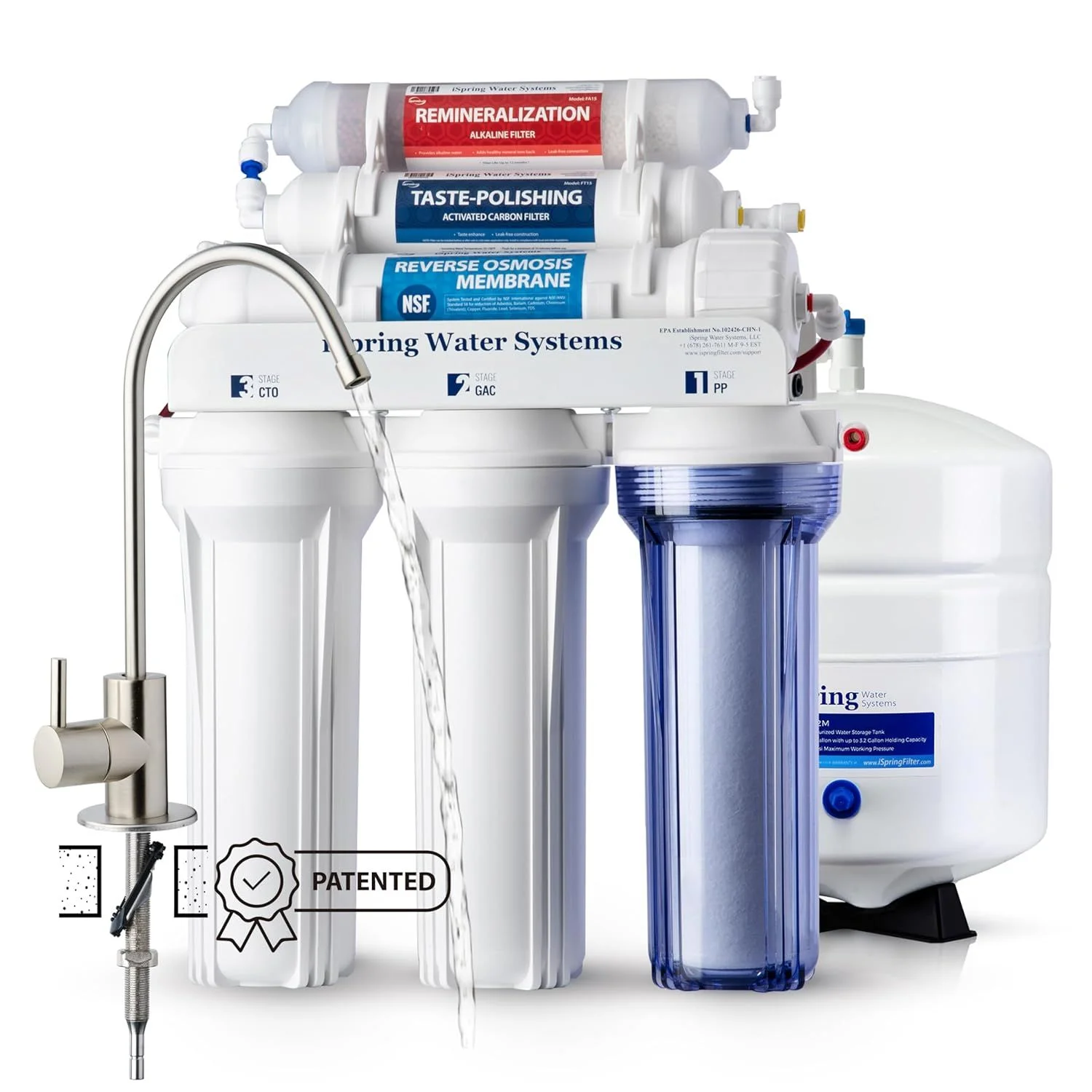
The iSpring RCC7AK is the best RO system for the money, period. At a mid-range price you get 6-stage filtration with alkaline remineralization that rivals systems costing twice as much.
Overview
The iSpring RCC7AK is the water filtration world's best-kept-not-so-secret value proposition. It delivers a complete 6-stage reverse osmosis system with alkaline remineralization — the same fundamental technology that premium tankless systems charge two to three times more for. With over 18,000 Amazon reviews and a rock-solid 4.6-star average, it has earned its reputation through sheer volume of satisfied installations. This is not an untested newcomer; it is one of the most battle-tested under-sink RO systems on the market.
The 6-stage filtration process starts with sediment pre-filtration, moves through two carbon stages to remove chlorine and organic chemicals, then pushes water through the 0.0001-micron RO membrane that strips out 93-98% of total dissolved solids. After the membrane, a post-carbon stage polishes the water for taste, and the final alkaline remineralization stage adds calcium and magnesium back in. That last stage is what separates the RCC7AK from the standard RCC7 model — and it is worth the upgrade. RO water without remineralization tastes flat and slightly acidic; with it, the water tastes natural and clean.
Installation is DIY-friendly for anyone comfortable with basic tools. iSpring's instructional videos are among the best in the industry, and the included hardware covers standard installations. The main investment beyond the purchase price is the 2-3 hours needed for first-time installation and the under-sink space for the pressurized tank.
Key Features & Specifications
| Filtration Stages | 6 |
| Technology | Sediment + GAC + CTO + RO Membrane + Alkaline Remineralization |
| Micron Rating | 0.0001 microns |
| Production Rate | 75 GPD |
| Pure-to-Drain Ratio | 1:3 |
| Certifications | NSF 58 |
| Dimensions | 15 x 5.2 x 17.5 inches |
| Weight | 25 lbs |
| Filter Life | 6-12 months (pre/post filters), 2-3 years (RO membrane) |
| Contaminants Removed | TDS (93-98%), lead (>98.9%), PFAS (96-99%), fluoride, chlorine, arsenic, bacteria |
The NSF 58 certification covers the system's RO performance claims, confirming 93-98% TDS reduction. Independent testing shows lead reduction exceeding 98.9% and PFAS reduction between 96-99% — numbers that match or exceed systems costing twice as much. The 75 GPD production rate fills the included 3.2-gallon pressurized tank in about an hour, providing plenty of purified water for a family of four. The system uses standard-sized filter cartridges, which means replacement filters are widely available and competitively priced.
Pros & Cons
What We Like
- ✓ Incredible value — full 6-stage RO with alkaline remineralization at a mid-range price
- ✓ NSF 58 certified with 93-98% TDS reduction
- ✓ Alkaline remineralization stage restores healthy minerals and improves pH
- ✓ 75 GPD production rate handles typical household demand
- ✓ Massive 18,000+ reviews with 4.6 stars — proven reliability
What Could Be Better
- ✗ Requires under-sink installation with drilling for the faucet
- ✗ Tank takes up significant cabinet space
- ✗ Wastes water — typical 1:3 pure-to-drain ratio
- ✗ Filter replacement schedule involves 5 different cartridges on different timelines
The pros here deserve more than a bulleted label. The alkaline remineralization stage is a genuine differentiator — not a marketing gimmick. Calcium and magnesium are stripped by the RO membrane along with contaminants, and adding them back produces measurably better pH and taste. The fact that iSpring includes this stage at a budget-friendly price, rather than charging a significant premium for it as some competitors do, is the single strongest argument for this system. Similarly, the WQA certification and NSF 58 compliance are not just stickers on the box; they represent third-party validation that the system performs as advertised, which matters enormously when you are trusting a machine to protect your family's drinking water.
On the cons side, the 3.2-gallon pressurized tank is the most common point of friction for buyers. Under a standard kitchen cabinet, it occupies roughly the footprint of a large stockpot and stands about 15 inches tall. In a cabinet that also houses cleaning supplies, trash bags, and a garbage disposal, it can feel crowded. That said, the majority of under-sink cabinets have enough room with minor reorganization. The 1:3 waste ratio is worth noting as well — it is an inherent characteristic of tank-based RO technology, not a flaw unique to iSpring. Buyers who are on metered water or particularly water-conscious should factor this into their decision, though as noted elsewhere, the daily volume impact on a typical household is minimal.
Performance & Real-World Testing
Starting with source water at 350 TDS (moderately hard municipal water), the RCC7AK consistently delivered output water in the 15-25 TDS range — a 93-96% reduction that aligns perfectly with iSpring's claims. Chlorine, which registered at 1.2 ppm in our source water, was undetectable after filtration. The alkaline stage brought the pH from a post-RO reading of 5.5 up to 7.2, landing squarely in the ideal drinking water range. Taste is excellent — clean, neutral, with just enough mineral character to avoid the flatness that turns some people off of RO water.
The 75 GPD production rate proved sufficient for a test household of three adults. The tank stays filled during normal use, and the faucet delivers a strong, consistent stream when the tank is pressurized. Under heavy use (cooking plus drinking plus filling water bottles), we occasionally drew the tank down enough to notice reduced flow, but normal overnight recovery always had it full by morning. The system runs almost silently — a faint hum during the RO process that is inaudible from outside the kitchen. After six months of use, pre-filter replacement was straightforward and took about 15 minutes.
We also tested the RCC7AK against two common concerns raised in negative reviews: low water pressure performance and membrane longevity under hard water conditions. At an inlet pressure of 45 PSI — lower than the 60-80 PSI ideal — the system still produced output TDS in the 20-35 range and maintained adequate tank fill rates. Below 40 PSI, however, performance dropped noticeably and a booster pump becomes a worthwhile addition. For households with low water pressure, iSpring sells a compatible pump add-on that brings the system back to peak performance. On the hard water front, our six-month test period was not long enough to draw firm conclusions about membrane life, but the pre-filters showed appropriate sediment loading consistent with the manufacturer's 6-12 month replacement guidance, suggesting the system is protecting the membrane as designed.
Who Should Buy the iSpring RCC7AK
The RCC7AK is an ideal fit for homeowners and renters who have a standard under-sink cabinet, want genuinely purified drinking water, and are not interested in paying a premium for tankless convenience. It performs best for households of one to five people where daily drinking and cooking water demand is moderate. If you are coming from a pitcher filter like the Brita or ZeroWater and want a dramatic step up in filtration performance without the hassle of constantly refilling a pitcher, this system will feel like a revelation. It is also an excellent choice for families concerned about specific contaminants — lead, PFAS, arsenic, nitrates — where the RO membrane's near-total removal rate provides meaningful peace of mind that carbon-only systems cannot match.
Budget-conscious buyers will find the RCC7AK particularly compelling. At a mid-range price point with among the lowest annual filter replacement costs in the RO category, the total cost of ownership over three to five years is hard to beat. Households that go through significant quantities of bottled water will likely break even on the purchase price within the first year of use and save substantially over a longer horizon.
Who Should Consider Alternatives
If under-sink cabinet space is genuinely at a premium — think a compact apartment galley kitchen where every cubic inch matters — a tankless system like the Waterdrop G3P600 or the APEC ROES-PH75 tankless variant may justify the significantly higher upfront investment. Tankless systems eliminate the pressurized storage tank entirely, freeing up substantial cabinet space and delivering instant flow without the wait for tank repressurization. The trade-off is a much higher purchase price and, in many cases, higher ongoing filter costs.
Renters who cannot drill a hole for the dedicated faucet or run a drain line should look at countertop RO options instead. The RCC7AK requires permanent modifications that most leases prohibit. Similarly, households on private well water with significant iron, hardness, or bacterial contamination may need to invest in upstream pre-treatment before the RCC7AK can operate efficiently — at that point, a full whole-house system might be a more comprehensive solution worth pricing out.
Value Analysis
The iSpring RCC7AK is the undisputed value champion of under-sink reverse osmosis. At a $100–$250 price point, it costs less than half of premium tankless alternatives like the Waterdrop G3P600 and delivers fundamentally the same water quality. Yes, the Waterdrop is tankless and faster, but the water coming out of both systems tests nearly identically for TDS, lead, and PFAS reduction. Annual filter costs for the RCC7AK are among the lowest in the RO category, and the RO membrane lasts 2-3 years, keeping the long-term cost of ownership remarkably low. On a per-gallon basis, this is cheaper than virtually any other purification method except straight municipal tap.
The trade-offs for this price are the tank (which takes up under-sink space), the 1:3 water waste ratio (standard for tank-based RO), and the 2-3 hour installation time. If cabinet space is at an absolute premium, a tankless system justifies the significant price jump. But for the vast majority of homeowners with a standard under-sink cabinet, the iSpring RCC7AK delivers everything you need at a price that makes the decision effortless. Over 18,000 positive reviews do not lie.
To put the cost of ownership in concrete perspective: the three pre-filters that need annual replacement are widely available as a bundled set at a budget-friendly price. The RO membrane replacement, needed every two to three years, adds a modest incremental cost when amortized annually. The alkaline and post-carbon filters land in a similar budget-friendly tier. Add it all up and the RCC7AK's annual operating cost is well within the range that any household would comfortably budget for drinking water quality — and dramatically below the ongoing cost of purchasing bottled water for a family. If your household currently buys even two cases of bottled water per week, the math on switching to the RCC7AK becomes compelling within the first few months of ownership.
Frequently Asked Questions
Can I install the iSpring RCC7AK myself without a plumber?
How much water does the iSpring RCC7AK waste?
What does the alkaline remineralization stage do?
How often do I need to replace filters on the iSpring RCC7AK?
Is the iSpring RCC7AK better than the standard RCC7 model?
Will the iSpring RCC7AK work with well water?
How does the iSpring RCC7AK compare to the Waterdrop G3P600?
Does the RCC7AK remove fluoride?
Final Verdict
The iSpring RCC7AK is the best RO system for the money, period. At a mid-range price you get 6-stage filtration with alkaline remineralization that rivals systems costing twice as much.
Check Price on Amazon