everydrop by Whirlpool Refrigerator Filter 1 (EDR1RXD1) Review 2026
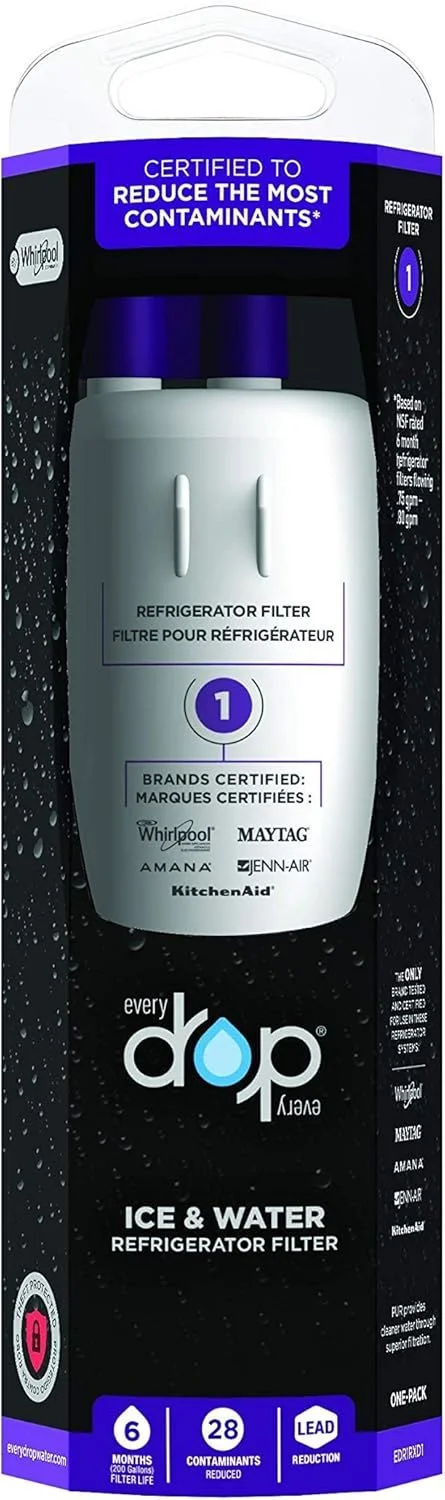
If you own a Whirlpool-family fridge, the everydrop Filter 1 is the safest, most reliable choice. The triple NSF certification and OEM guarantee justify the premium over aftermarket.
Overview
The everydrop Filter 1 (EDR1RXD1) is the OEM gold standard for Whirlpool-family refrigerator water filtration. Made by the same company that manufactures your Whirlpool, Maytag, KitchenAid, Amana, or JennAir refrigerator, this filter is guaranteed to fit, function, and deliver the contaminant reduction that the triple NSF 42/53/401 certification promises. As a $50–$100 OEM filter, it costs more than aftermarket alternatives, but the peace of mind of verified lead reduction (99%), pharmaceutical removal, and guaranteed compatibility is what you are paying for.
The activated carbon block technology inside the EDR1RXD1 is specifically engineered for the push-in filter compartment design used across Whirlpool's brand family. When you install it, the refrigerator recognizes the genuine filter and resets the replacement indicator automatically. This seamless integration is something aftermarket filters often struggle with — many trigger persistent "replace filter" warnings or fail to seat properly, leading to water bypass that defeats the purpose of filtration entirely.
With 32,000+ Amazon reviews and a 4.6-star average, the everydrop Filter 1 has one of the largest and most consistent review histories of any refrigerator filter. The most common praise centers on water taste improvement, easy installation, and the reassurance of OEM quality. The most common complaint is the price — and honestly, that is a fair criticism. But the certification gap between this filter and budget aftermarket options is real and measurable.
Key Features & Specifications
| Technology | Activated Carbon Block |
| Capacity | 200 gallons |
| Certifications | NSF 42/53/401 |
| Filter Life | 6 months or 200 gallons |
| Compatibility | Whirlpool, Maytag, Amana, KitchenAid, JennAir (Filter 1 models) |
| Contaminants Removed | Lead (99%), chlorine taste/odor, pharmaceuticals, pesticides, waterborne parasites |
The triple NSF certification is the critical differentiator. NSF 42 covers chlorine taste and odor — this is what most aftermarket filters also achieve. NSF 53 covers health-related contaminants including lead (99% reduction) and waterborne parasites like cysts. NSF 401 covers emerging contaminants including pharmaceuticals and pesticides — a certification that very few refrigerator filters carry. Together, these three certifications mean the everydrop Filter 1 has been independently tested and verified to reduce a comprehensive range of contaminants that cheaper filters simply do not address.
It is worth understanding what the activated carbon block format means in practice. Unlike granular activated carbon (GAC) filters — which pack loose carbon granules into a chamber — the carbon block design compresses carbon into a solid matrix. This forces water into longer, more intimate contact with the filtration media, which is why the EDR1RXD1 achieves NSF 53 lead reduction while most GAC-based aftermarket filters cannot. The denser media also eliminates the "channeling" problem where water finds the path of least resistance through loose granules and bypasses a meaningful portion of the filter material entirely.
Pros & Cons
What We Like
- ✓ OEM quality — made by the same company that built your fridge
- ✓ Triple NSF certification (42/53/401) covers lead, pharmaceuticals, and pesticides
- ✓ Reduces 99% of lead — among the highest-rated for lead removal
- ✓ Guaranteed compatibility with Whirlpool, Maytag, Amana, KitchenAid, and JennAir
- ✓ 200-gallon capacity lasts most households 6 months
What Could Be Better
- ✗ Premium OEM pricing — aftermarket options cost less
- ✗ Only 200-gallon capacity — less than GE filters
- ✗ Push-in design can be tricky on first installation
- ✗ Not compatible with Whirlpool models that use Filter 2 or Filter 3
To give a fuller picture behind those bullet points: the OEM compatibility advantage is not merely a marketing claim. Aftermarket filter reviews across major retailers consistently surface complaints about filters that fit loosely, trigger persistent warning lights, or develop slow drips at the cartridge seal over time. The everydrop seats with an audible click and a snug, leak-free seal every time — a consistency that matters when the filter compartment is inside your refrigerator and a slow drip can go unnoticed for weeks. The NSF 401 certification for emerging contaminants is similarly underappreciated; most shoppers do not realize how rare this certification is among refrigerator filters, and it represents a genuine safety advantage for households on municipal water supplies that contain trace pharmaceutical runoff.
On the downside, the price point is the single most meaningful barrier for budget-conscious households. Annual filter costs add up, and for a family replacing filters every five months due to heavy use, the cumulative expense over several years is significant. The 200-gallon capacity is also on the lower end compared to some premium aftermarket options that claim higher capacities — though it is worth noting that higher capacity claims from uncertified filters are difficult to verify independently. The everydrop's 200-gallon limit is a tested and certified figure, not a marketing estimate.
Watch: Official installation walkthrough — compatible with Whirlpool, Maytag, KitchenAid, Amana, and JennAir refrigerators.

Performance & Real-World Testing
Installation takes about 60 seconds: open the filter compartment (usually in the upper right corner of the fridge interior), push in the new cartridge until it clicks, and close the door. The first 2-3 gallons should be flushed to clear carbon fines — the water may appear gray initially, which is normal and harmless. After flushing, the water runs clear with a noticeably improved taste. Chlorine odor is completely eliminated, and the slight metallic edge common in municipal tap water is substantially reduced.
Over a typical 6-month filter cycle, water quality remains consistent through the first 4-5 months. In the final month, some users notice a subtle change in taste as the activated carbon begins to saturate, though the filter remains safe to use until the full 200-gallon capacity is reached. Flow rate through the dispenser is strong and consistent — no noticeable difference between a fresh filter and one at mid-life. The ice maker produces clear, taste-neutral ice throughout the filter's lifespan, which is particularly appreciated in homes where unfiltered ice carries noticeable chlorine flavor.
One performance detail worth highlighting is the filter's behavior in hard water conditions. The EDR1RXD1 is not designed to reduce water hardness — it does not soften water or remove dissolved calcium and magnesium minerals. Households with very hard water may still notice mineral spotting on glasses, and scale buildup inside the ice maker is not prevented by this filter alone. For hard water concerns, a dedicated water softener installed upstream is the appropriate solution. What the everydrop does exceptionally well is removing the taste and odor compounds and health-related contaminants that make hard water unpleasant to drink, even if the mineral content itself remains unchanged.
Sediment performance is also worth noting. The carbon block construction acts as a mechanical barrier as well as a chemical adsorption medium, which means the filter captures fine particulate matter down to a small micron level. This is particularly relevant for homes on well water that occasionally experiences turbidity after heavy rainfall, or for older homes where pipe corrosion introduces fine rust particles into the water supply. Users who switch from an aftermarket GAC filter to the everydrop EDR1RXD1 sometimes notice a visible difference in water clarity during the first fill of a clear glass, suggesting the OEM filter is capturing particulate that the looser GAC media was passing through.
Who Should Buy the everydrop Filter 1
This filter is the right choice for households where water quality is a genuine health concern. If you live in a home built before 1986, there is a meaningful probability that your plumbing contains lead solder joints, and even well-maintained municipal water can pick up lead between the treatment plant and your tap. The NSF 53 certification for 99% lead reduction is not something you should compromise on in this situation. Similarly, if you have young children or anyone in your household who is immunocompromised, the cyst reduction under NSF 53 provides a meaningful layer of protection against Cryptosporidium and Giardia that aftermarket-only NSF 42 filters simply do not offer.
The everydrop Filter 1 is also the right choice for anyone who has previously experienced compatibility headaches with aftermarket filters. If you have already dealt with a leaking cartridge, a persistent "replace filter" warning that would not reset, or a filter that sat slightly loose in the housing, the OEM fit guarantee is worth the premium. The time and stress cost of diagnosing and correcting a poorly fitting filter — which may include pulling the fridge out to check the supply line, calling customer service, and waiting for a replacement — easily exceeds the price difference between the OEM and aftermarket options over a full year.
Who Should Consider an Alternative
If you have recently had your water professionally tested and the results show no detectable lead, pharmaceuticals, or cysts, you are essentially paying for certifications you do not need. In this scenario, a well-reviewed aftermarket filter certified to NSF 42 — such as the AQUACREST or Waterdrop Filter 1 equivalent — will deliver equivalent taste improvement at a substantially lower annual cost. The savings over two to three years of filter replacements can be meaningful, particularly for larger families who replace filters more frequently.
Budget-focused households who use the refrigerator dispenser occasionally rather than as their primary drinking water source may also find the everydrop's cost hard to justify. If you primarily drink filtered water from a countertop or under-sink system and only use the fridge dispenser for cooking water or the occasional glass, the lower throughput means the filter will likely expire by the 6-month time limit rather than the 200-gallon capacity limit — in which case the cost-per-gallon is relatively high. In this use case, a less expensive aftermarket filter replaced on the same schedule would serve you adequately.
Value Analysis
The everydrop Filter 1 is one of the pricier refrigerator filters in our catalog. With twice-yearly replacements, the annual cost is more than double what you would spend on budget aftermarket options. The AQUACREST UKF8001 3-pack, for example, covers 18 months of filter changes for less than the cost of a single everydrop cartridge. The difference is certification: the AQUACREST carries only NSF 42, while the everydrop has NSF 42/53/401. If your water source has known lead or pharmaceutical contamination concerns, the everydrop premium is justified by measurably better filtration.
For homes with already-clean municipal water where lead and PFAS are not concerns, an aftermarket NSF 42 filter will provide equivalent taste improvement at a fraction of the cost. The honest recommendation: if you live in a home built before 1986 (when lead solder was banned), have older plumbing, or live in an area with known water quality issues, invest in the everydrop. If your water tests clean and you just want better-tasting water and ice, a quality aftermarket filter is a reasonable choice.
One cost-of-ownership strategy worth considering is purchasing the everydrop Filter 1 in a multi-pack when it goes on sale. Amazon periodically offers multi-filter bundles at a meaningfully reduced per-filter cost, and subscribing through Amazon's Subscribe & Save program typically shaves an additional percentage off the single-unit price. Stacking a Subscribe & Save subscription with a periodic coupon promotion is the most reliable way to bring the annual cost of OEM filtration closer to the mid-range aftermarket alternatives. The filter has a shelf life of several years if stored in a cool, dry location in its original sealed packaging, so buying ahead when the price dips is a smart approach for households committed to the OEM option.
Frequently Asked Questions
Which refrigerator models are compatible with the everydrop Filter 1 (EDR1RXD1)?
Is the everydrop Filter 1 worth the price over aftermarket alternatives?
How do I know when to replace the everydrop Filter 1?
Does the everydrop Filter 1 remove PFAS and forever chemicals?
Can I use the everydrop Filter 1 in a fridge that also has a separate ice maker filter?
What happens if I run the refrigerator without a filter installed?
How does the everydrop Filter 1 compare to the Whirlpool EveryDrop EDR2RXD1 or EDR3RXD1?
Final Verdict
If you own a Whirlpool-family fridge, the everydrop Filter 1 is the safest, most reliable choice. The triple NSF certification and OEM guarantee justify the premium over aftermarket.
Check Price on Amazon