GE XWFE Refrigerator Water Filter vs GE RPWFE Refrigerator Water Filter: Which Is Better in 2026?
Quick Verdict: The GE XWFE ($25–$50) is the objectively better filter with 300-gallon capacity, 50+ contaminant reduction, and NSF 42/53/401 certification. The GE RPWFE ($25–$50) has lower capacity (170 gal) and fewer certifications at nearly identical pricing. However, compatibility is not optional — your GE fridge model dictates which filter you must use. Check your model number first.
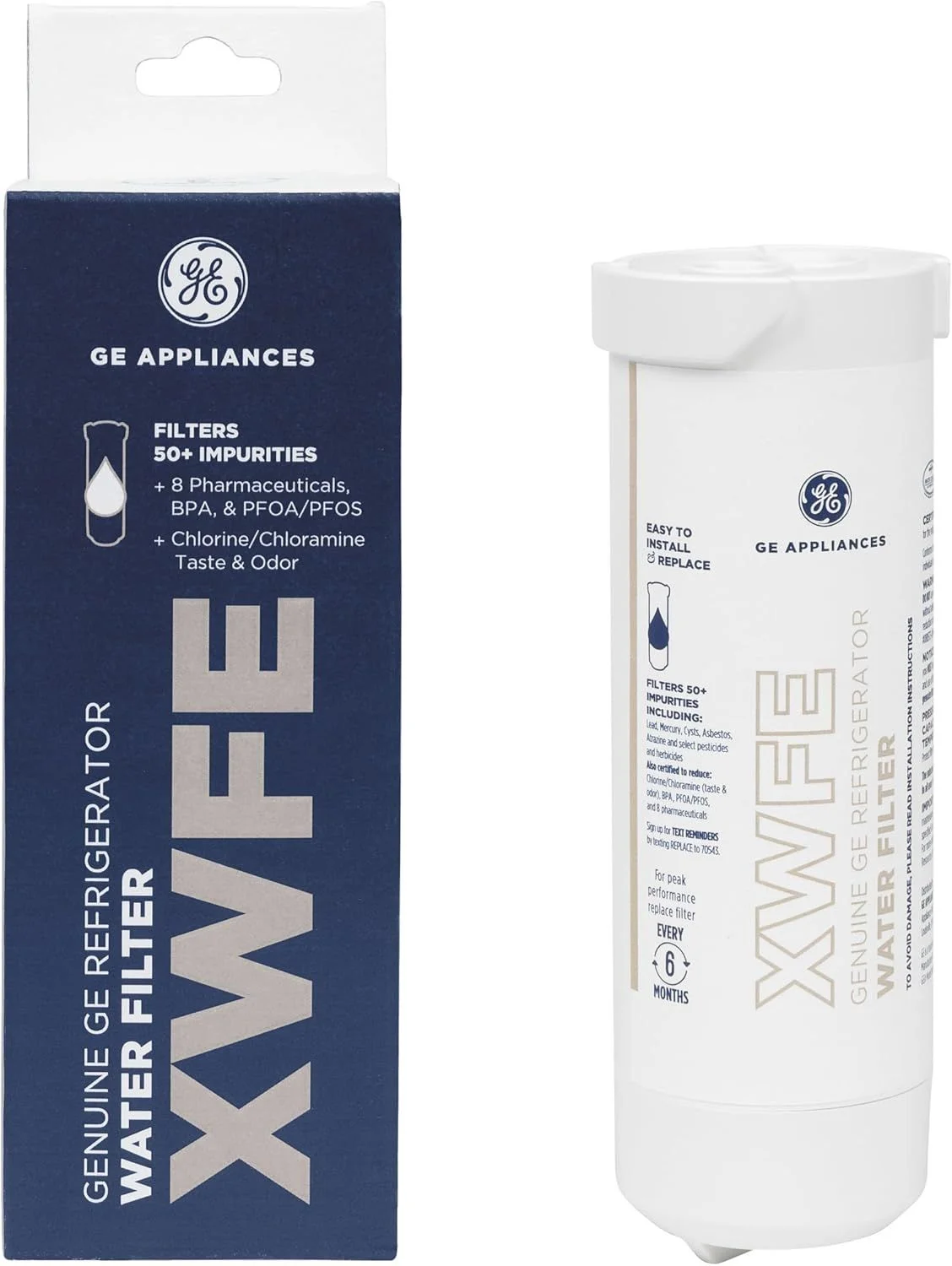
GE XWFE Refrigerator Water Filter
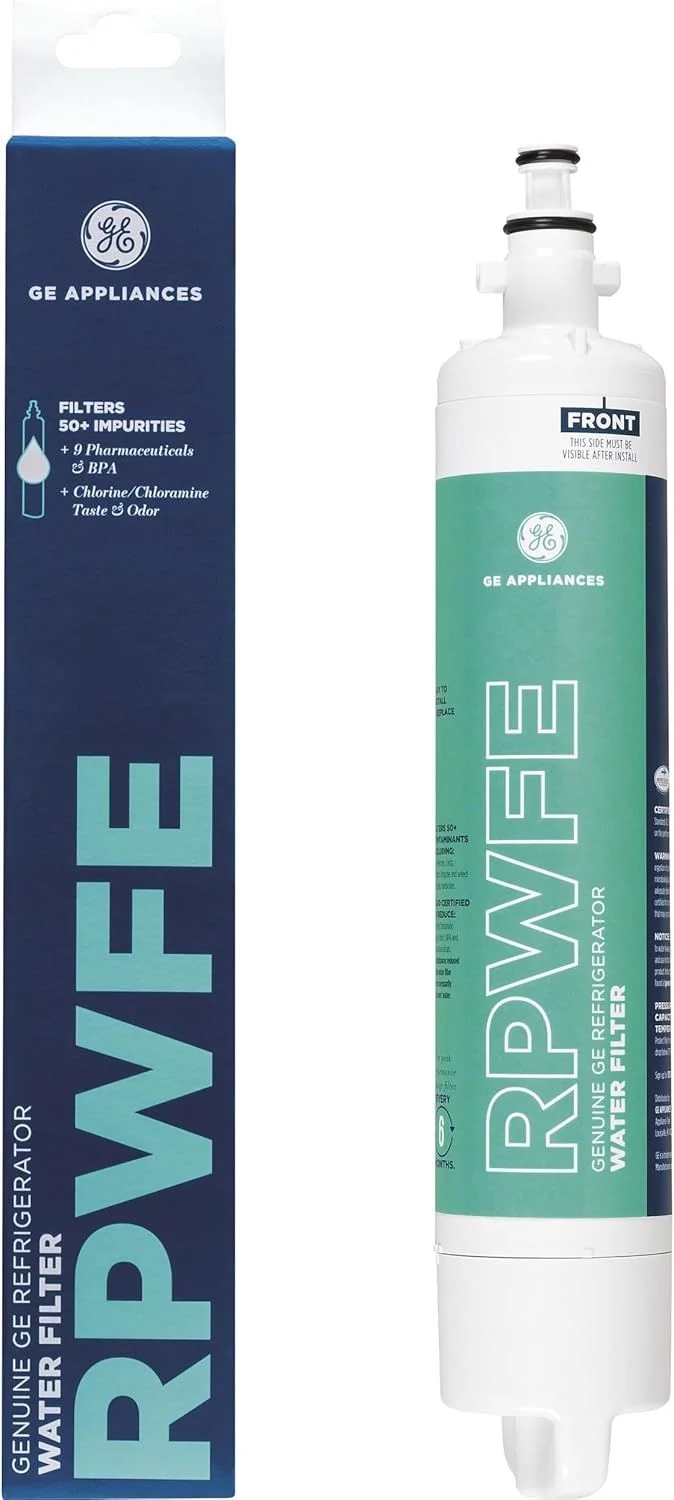
GE RPWFE Refrigerator Water Filter
At a Glance
| Feature | Editor's Pick GE XWFE Refrigerator Water Filter | GE RPWFE Refrigerator Water Filter |
|---|---|---|
| Price | $25–$50 | $25–$50 |
| Capacity | 300 gallons | 170 gallons |
| Certifications | NSF 42/53/401 | NSF 42/53 |
| Filter Life | 6 months or 300 gallons | 6 months or 170 gallons |
| Compatibility | GE refrigerators (XWFE compatible models) | GE French Door refrigerators (RPWFE models) |
| Filtration | Activated Carbon Block | Activated Carbon Block |
| Check Price | Check Price |
Both the XWFE and RPWFE are GE OEM filters with RFID authentication. In most cases, your refrigerator model determines which one you buy — they are not interchangeable. But if you are shopping for a new GE fridge, the XWFE-compatible models offer better filtration specs.
Category-by-Category Breakdown
Contaminant Removal
The XWFE removes 50+ contaminants including PFOA, PFOS, microplastics, lead, and cysts. It carries the comprehensive NSF 42/53/401 certification — the 401 covering emerging contaminants like pharmaceuticals and pesticides. The RPWFE also reduces lead, PFOA, PFOS, and microplastics but has only NSF 42/53 certification. The XWFE's broader testing and certification against more substances gives it a clear filtration advantage. The NSF 401 distinction is increasingly important as municipal water systems face growing scrutiny over pharmaceutical residues and PFAS contamination — contaminants that standard NSF 42/53 testing does not evaluate.
To put NSF 401 in practical context: this certification specifically targets trace pharmaceuticals, over-the-counter medications, pesticides, and herbicides that can find their way into groundwater and surface water supplies. Contaminants like ibuprofen, atenolol, estrone, and linuron are among those covered under NSF 401 testing protocols. While concentrations of these substances in tap water are typically very low, long-term cumulative exposure is an area of growing scientific interest. The XWFE's NSF 401 rating means it has been independently verified to reduce these substances to acceptable thresholds — a meaningful distinction for households with sensitive family members or those served by surface water treatment plants.
Capacity
The XWFE provides 300 gallons of capacity versus just 170 gallons for the RPWFE — a 76% advantage. For a family of four using 3 gallons of filtered water daily, the XWFE lasts about 100 days while the RPWFE lasts roughly 57 days. In high-use households with heavy ice maker demand, the RPWFE may not make it to the 6-month replacement mark. The XWFE provides a comfortable buffer for virtually any household size.
The capacity gap becomes even more significant when you factor in ice maker consumption. A standard refrigerator ice maker can produce between 3 and 8 pounds of ice per day depending on usage patterns, which represents a substantial portion of filtered water volume that is easy to overlook when estimating how quickly you are burning through your filter's rated capacity. RPWFE owners in warm climates or households that entertain frequently may find themselves replacing filters every three to four months rather than the recommended six. Budgeting for that accelerated replacement cadence is worth factoring into your total cost of ownership calculation.
Price & Value
These two filters carry nearly identical price tags — both land in the $25–$50 range. But the XWFE delivers 76% more capacity and broader certifications for essentially the same money. On a per-gallon basis, the XWFE costs nearly half what the RPWFE costs because it filters 300 gallons per cartridge versus just 170. Over a typical two-year ownership period replacing filters every six months, RPWFE owners spend roughly the same upfront but get significantly fewer filtered gallons — about 680 gallons versus 1,200 gallons for the XWFE under identical usage patterns. The XWFE is the clear value winner, but again — you can only buy the filter your fridge accepts.
It is also worth noting that GE periodically offers multi-pack deals — typically two- or three-filter bundles — at a meaningful per-unit discount compared to single purchases. If your refrigerator uses the RPWFE and you are concerned about the lower per-gallon value, buying a two-pack can partially close the cost gap while also ensuring you always have a replacement on hand. Subscription options through major retailers can bring additional savings and eliminate the inconvenience of forgetting to reorder. Regardless of which filter your fridge requires, buying in bulk is almost always the smarter financial move for either the XWFE or RPWFE.
Compatibility
The XWFE fits GE side-by-side and select bottom-freezer models with a twist-and-lock mechanism. The RPWFE is designed specifically for GE French door refrigerators with a rear-access installation. Both use RFID chips that must be recognized by the fridge. The RPWFE wins for French door owners simply because it is the only option, but the XWFE covers a broader range of GE models overall.
When verifying compatibility, the most reliable method is to locate your refrigerator's model number — typically found on a label inside the fresh food compartment, along the door frame, or on the back panel — and cross-reference it directly on GE's official appliance parts page or through Amazon's parts finder tool. Do not rely solely on the filter packaging description, as GE has updated filter naming conventions over the years and some older MSWF-compatible fridges were later transitioned to XWFE compatibility through firmware updates. When in doubt, GE's customer support line can confirm the exact filter part number for your specific model serial number, which is the most authoritative source available.
User Reviews & Reliability
The XWFE has 22,000+ reviews with a 4.5-star rating, while the RPWFE has 18,000+ reviews with a 4.4-star rating. Both have occasional complaints about RFID recognition failures — an inherent risk with GE's authentication system. When the RFID chip fails to register, the refrigerator may disable water and ice dispensing entirely until a recognized filter is installed, which can be frustrating during replacement. The XWFE has a slight edge in overall satisfaction, likely driven by its larger capacity providing more value per purchase. Both filters have consistent reports of excellent taste improvement.
Looking more closely at the negative review patterns for both filters, RFID chip failures account for the majority of one- and two-star ratings rather than any deficiency in filtration performance itself. Users report that in some cases, simply reinstalling the filter or ensuring the twist-and-lock mechanism is fully engaged resolves the recognition issue. For the RPWFE, which uses a push-in rear-access design, ensuring the filter is fully seated against the RFID reader contact point is critical. GE's support documentation recommends resetting the filter status indicator after installation, which occasionally resolves RFID detection problems without requiring a return. Overall build quality for both filters is well-regarded, with very few reports of leaks or housing defects.
Installation Experience
The XWFE uses a quarter-turn twist-and-lock design that most users find intuitive and straightforward. It is typically located in the upper right interior of the refrigerator compartment and can be swapped in under a minute without any tools. The RPWFE, by contrast, is accessed from the back of the refrigerator's fresh food compartment through a rear grille panel. While not technically difficult, the rear-access design is less ergonomic — particularly in tighter kitchen installations where pulling the fridge away from the wall is inconvenient. First-time RPWFE installers often report mild confusion about the access panel until they watch a brief installation video. After the first replacement, most users describe both filters as easy to change on subsequent cycles.
Cost of Ownership Analysis
Beyond the sticker price of individual filter cartridges, the true cost of owning either the XWFE or RPWFE involves factoring in replacement frequency and your household's actual water consumption. Both filters are positioned in the mid-range price tier for OEM refrigerator filters — comparable in price to Samsung HAF-CIN or LG LT1000P filters, but carrying GE's premium OEM markup over aftermarket alternatives.
For a household replacing filters on the standard 6-month schedule, the annual cost of XWFE ownership runs to two filter cartridges per year. At the RPWFE's lower per-gallon efficiency, a high-consumption household might require three or even four cartridges annually to stay within rated capacity — substantially increasing annual spend. Over a five-year appliance ownership window, the difference in total filter expenditure between a 6-month XWFE schedule and a 4-month RPWFE schedule for heavy users can add up to the cost of an additional year's worth of filters. Tracking your fridge's filter indicator behavior against actual calendar dates is the simplest way to determine whether you fall into the standard or accelerated replacement category.
One often-overlooked cost factor is the water quality context of your specific municipality. Households served by older distribution infrastructure with higher lead pipe risk, or those in agricultural regions with elevated nitrate and pesticide runoff, are effectively getting more measurable value from the XWFE's NSF 401 coverage than households in areas with very clean source water. If your local water quality report (available from your utility provider under the Safe Drinking Water Act) shows elevated levels of emerging contaminants, the XWFE's broader certification translates directly into tangible health value — not just a marketing distinction.
How These Filters Compare to the Broader Market
It is useful to situate both the XWFE and RPWFE within the wider refrigerator filter market to understand where GE's OEM offerings stand relative to the competition. Samsung's HAF-CIN/EXP filter, which serves a similarly wide range of Samsung French door and side-by-side models, offers comparable NSF 42/53 certification and a 300-gallon capacity — making it a closer performance match to the XWFE than to the RPWFE for Samsung owners facing an analogous decision. LG's LT1000P filter is another widely-used OEM option with NSF 42/53/401 certification and a 200-gallon capacity, positioning it between the RPWFE and XWFE on the capacity spectrum.
What sets GE's filters apart from most competitors — for better or worse — is the RFID authentication requirement. Brands like Samsung and LG do not use the same chip-based lockout system, giving those appliance owners more flexibility to choose NSF-certified aftermarket alternatives at lower price points. GE's closed ecosystem approach means XWFE and RPWFE owners are effectively committed to OEM pricing unless they are willing to accept the risk of RFID incompatibility warnings. For buyers who prioritize filtration confidence and OEM reliability over purchase flexibility, this is an acceptable trade-off. For budget-conscious buyers, it is worth factoring in when comparing GE refrigerators against competing brands at the appliance purchase stage.
Who Should Get Which?
Get the GE XWFE Refrigerator Water Filter if...
- Your GE fridge model requires the XWFE filter
- You want the best contaminant reduction available in a GE fridge filter
- You prefer the 300-gallon capacity for longer filter life
- You have a large household or heavy ice maker usage and want to avoid mid-cycle filter exhaustion
- Your local water quality report indicates elevated pharmaceutical residues, PFAS, or pesticide contamination — the NSF 401 certification makes a measurable difference in these scenarios
Get the GE RPWFE Refrigerator Water Filter if...
- Your GE French door refrigerator requires the RPWFE filter
- You value the convenience of the rear-access installation design
- You need a reliable OEM filter with RFID authentication for your fridge
- Your household uses moderate amounts of filtered water and you are comfortable with the 170-gallon capacity on the standard 6-month schedule
- You want to purchase in multi-packs to improve per-unit value and keep a spare on hand for immediate replacement