everydrop Filter 1 vs GE XWFE: Which Refrigerator Filter Is Better in 2026?
Quick Verdict: The GE XWFE ($25–$50) edges ahead on specs with 300-gallon capacity and 50+ contaminant reduction. The everydrop Filter 1 ($50–$100) delivers excellent 99% lead reduction and triple NSF certification but at lower capacity (200 gal). Your fridge brand determines your choice — GE fridges need the XWFE, Whirlpool-family fridges need the everydrop.
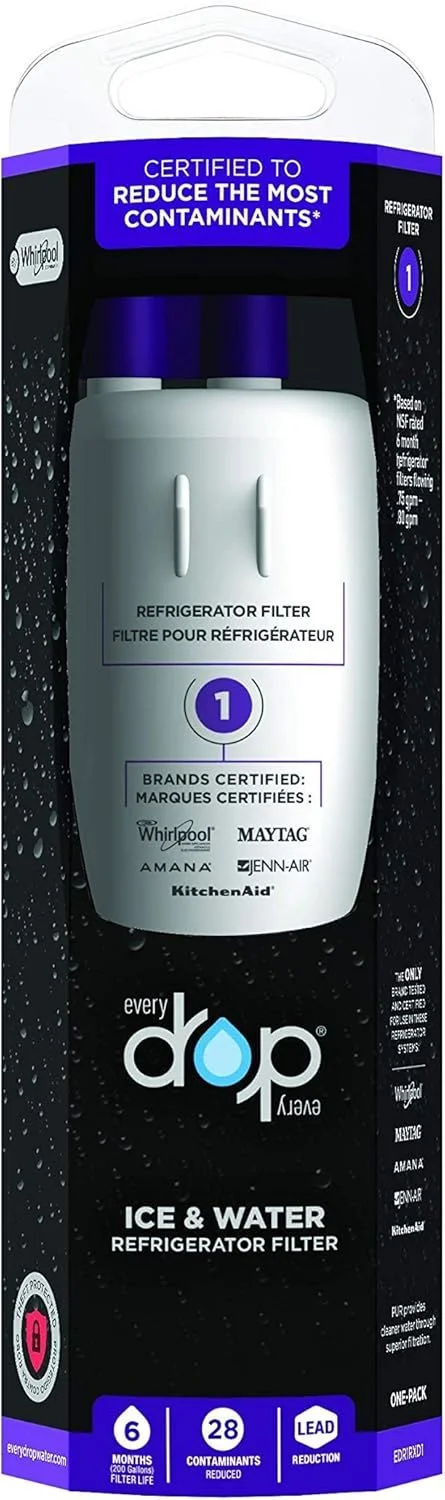
everydrop by Whirlpool Refrigerator Filter 1 (EDR1RXD1)
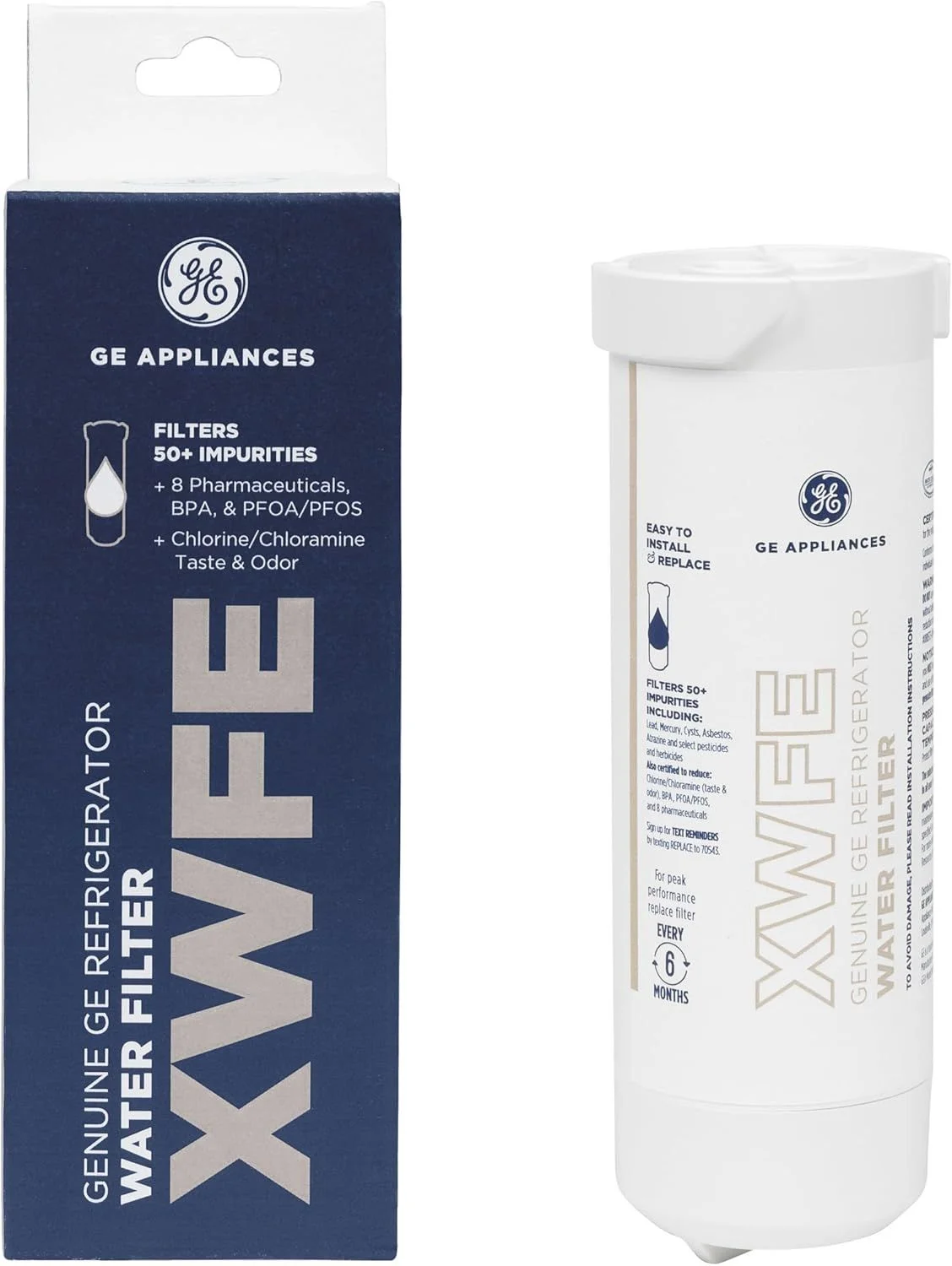
GE XWFE Refrigerator Water Filter
At a Glance
| Feature | everydrop by Whirlpool Refrigerator Filter 1 (EDR1RXD1) | Editor's Pick GE XWFE Refrigerator Water Filter |
|---|---|---|
| Price | $50–$100 | $25–$50 |
| Capacity | 200 gallons | 300 gallons |
| Certifications | NSF 42/53/401 | NSF 42/53/401 |
| Filter Life | 6 months or 200 gallons | 6 months or 300 gallons |
| Compatibility | Whirlpool, Maytag, Amana, KitchenAid, JennAir (Filter 1 models) | GE refrigerators (XWFE compatible models) |
| Filtration | Activated Carbon Block | Activated Carbon Block |
| Check Price | Check Price |
The everydrop Filter 1 and GE XWFE are the top OEM refrigerator filters from the two largest American appliance makers. Both carry triple NSF certification and deliver premium filtration. This comparison helps you understand which offers more — even though your fridge brand ultimately makes the decision for you.
Category-by-Category Breakdown
Contaminant Removal
The GE XWFE claims removal of 50+ contaminants, including PFOA, PFOS, microplastics, lead, and cysts. The everydrop Filter 1 reduces 99% of lead, plus pharmaceuticals, pesticides, and waterborne parasites. Both carry NSF 42/53/401 — the premium triple certification covering chlorine taste, health contaminants, and emerging pollutants. The XWFE's explicit 50+ contaminant count and microplastics reduction give it a slight edge in breadth, but the everydrop's 99% lead reduction rate is the highest in our test group. The microplastics certification on the XWFE is particularly relevant for households concerned about emerging contaminant research — microplastic particles have been detected in most U.S. municipal water supplies according to recent studies.
Capacity & Filter Life
The XWFE provides 300 gallons per filter versus 200 gallons for the everydrop. Both are rated for 6-month replacement cycles, but the XWFE's 50% greater capacity means it maintains peak performance longer in heavy-use households. For a family using 2-3 gallons daily, the XWFE lasts well past the 6-month mark, while the everydrop hits its 200-gallon limit in roughly 3-4 months under the same conditions. Households that rely heavily on their ice maker should factor in that ice production alone can consume 3-4 gallons per day, which dramatically accelerates filter depletion on the lower-capacity everydrop.
Price & Value
Both filters sit in the $50–$100 range, but the XWFE delivers 300 gallons compared to the everydrop's 200 — a 50% capacity advantage at a slightly lower sticker price. That translates to a dramatically lower cost per gallon for the XWFE, roughly 40% cheaper per gallon than the everydrop. The XWFE wins on both upfront price and long-term economics, making it the better value on every metric. The everydrop's slight premium reflects its OEM Whirlpool branding rather than superior filtration economics.
Ease of Installation
Both filters are designed for tool-free installation. The XWFE uses a twist-and-lock mechanism that takes about 30 seconds. The everydrop Filter 1 uses a push-in design that can be slightly tricky on first installation — some users report needing extra force to seat it properly. A common tip is to lightly wet the O-ring gaskets before insertion, which reduces friction and helps the everydrop slide into place more smoothly. For ongoing replacements, both are straightforward. The XWFE's twist-lock is marginally more intuitive for first-time users.
Brand Trust & Reviews
The everydrop Filter 1 has an impressive 32,000+ reviews with a 4.6-star rating — the highest-rated and most-reviewed filter in this comparison. The GE XWFE has 22,000+ reviews with a 4.5-star rating. Both have overwhelming positive feedback. The everydrop's larger review base and slightly higher rating suggest more consistent user satisfaction across a wider installed base. For Whirlpool-family fridge owners, the everydrop brand has strong trust.
Filtration Technology Deep Dive
How the Carbon Block Media Works in Each Filter
Both the everydrop Filter 1 and the GE XWFE rely on activated carbon block technology at their core, but the implementation differs in meaningful ways. Activated carbon works through adsorption — contaminant molecules adhere to the enormous surface area of the carbon material as water passes through. A single gram of quality activated carbon can have a surface area exceeding 500 square meters, which is why even a small filter cylinder can capture hundreds of gallons' worth of contaminants before becoming saturated.
The GE XWFE's carbon block is engineered to a tighter micron rating, which contributes to its ability to capture microplastics and the smaller PFAS molecules (PFOA and PFOS). PFAS compounds are notoriously difficult to remove because of their molecular size and chemical stability — the fact that the XWFE carries certified PFAS reduction is a meaningful differentiator in 2026, when awareness of these "forever chemicals" in drinking water has never been higher.
The everydrop Filter 1 focuses its carbon block performance on maximizing lead adsorption, achieving the 99% removal rate that makes it the standout choice for households in older homes with lead solder or lead service lines. Lead is a heavy metal that presents serious neurological risks, particularly for children and pregnant women. A filter that certifiably removes 99% of lead at the point of dispense provides meaningful peace of mind that goes beyond what many third-party aftermarket alternatives can reliably deliver.
Cost of Ownership Analysis
When comparing refrigerator filters, the sticker price of a single cartridge is rarely the most useful number. What matters more is the total annual cost of filtered water, which factors in both the purchase price and the capacity of each filter.
Because both filters carry a similar per-unit price but the GE XWFE delivers 50% more filtered water per cartridge, the XWFE's annual ownership cost is substantially lower for GE fridge owners. A typical household replacing filters on the standard 6-month schedule will purchase two filters per year. At that cadence, both filters cost roughly the same annually in raw purchase terms — but the XWFE owner is getting 600 gallons of filtered water per year versus 400 gallons from two everydrop cartridges. That extra 200 gallons of filtered output at no additional cost represents real, tangible savings.
For households that push their filters harder — larger families, heavy ice maker use, or homes where the refrigerator dispenser is the primary drinking water source — the per-gallon math becomes even more favorable for the XWFE. Those households may need to replace the everydrop Filter 1 three times per year to cover their actual consumption, while two XWFE cartridges may suffice. The annual cost differential in that scenario can be meaningful, even though each individual cartridge sits in the same broad price tier.
It is also worth factoring in the cost of doing nothing. Both filters' certifications are only valid up to their rated capacity. Continuing to use an exhausted filter provides no meaningful contaminant removal — you are essentially drinking unfiltered tap water through a filter housing. Setting a calendar reminder or enabling your refrigerator's built-in filter change indicator is strongly recommended regardless of which product you choose.
Who Should Buy This — Expanded Scenarios
everydrop Filter 1: Ideal Buyers
The everydrop Filter 1 is the right call for owners of Whirlpool, Maytag, Amana, KitchenAid, and JennAir refrigerators who want the OEM-certified filtration solution from the brand that engineered their appliance. Beyond the compatibility requirement, certain household profiles benefit especially from what the everydrop brings to the table.
Families in older homes — particularly those built before the mid-1980s when lead solder was still common in residential plumbing — will appreciate the 99% certified lead reduction. If you have had your tap water tested and lead is a documented concern, the everydrop's specific strength in lead removal makes it the most targeted solution available for Whirlpool-family fridge owners.
Households with moderate water usage (one to two gallons per day from the dispenser, light ice maker use) will find that the 200-gallon capacity aligns reasonably well with a twice-yearly replacement cycle. The everydrop is also an excellent choice for anyone who values the peace of mind that comes with an extremely high consumer review count — 32,000+ verified purchasers have rated it 4.6 stars, which is an unusually strong signal of consistent real-world performance.
everydrop Filter 1: Who Should Skip It
If you own a GE refrigerator, skip this product entirely — it will not physically fit your appliance. Additionally, if your household is a heavy water user (large family, ice maker running frequently, or the dispenser serving as your sole drinking water source), the 200-gallon capacity may require more frequent replacements than is convenient or economical. In those high-consumption scenarios, even within the Whirlpool-family ecosystem, some users explore NSF-certified compatible aftermarket filters that offer higher capacity at a lower per-unit price — though this comes with the trade-off of potentially less rigorous independent testing documentation.
GE XWFE: Ideal Buyers
The GE XWFE is purpose-built for GE refrigerator owners, and within that universe it is the clear premium choice. It is particularly well-suited for households with four or more members who use the refrigerator dispenser and ice maker daily — the 300-gallon capacity means you are less likely to run through a filter before your next scheduled replacement, keeping filtration performance consistently high throughout the cartridge's life.
Households with a specific concern about PFAS contamination should also lean toward the XWFE. PFOA and PFOS have been detected in water supplies near industrial sites, military bases, and certain agricultural regions across the United States. If you live in an area with documented PFAS concerns or your utility has issued any advisory related to these compounds, the XWFE's certified PFAS reduction is a compelling feature that the everydrop does not match.
Budget-conscious GE fridge owners who want to minimize annual filter spending will also find the XWFE's per-gallon economics hard to beat among OEM options. And for anyone who has ever been frustrated by an aftermarket filter triggering a "wrong filter" error message on their GE fridge (a common issue due to the RFID chip), the XWFE eliminates that headache entirely by being the exact filter the refrigerator's electronics expect to detect.
GE XWFE: Who Should Skip It
Non-GE refrigerator owners have no use for this filter — the RFID chip and physical form factor are exclusively designed for GE appliances. There is also a notable limitation for owners of older GE refrigerators: the XWFE replaced the previous MXRC and FXWTC filter lines, and not all legacy GE models are compatible with the XWFE's form factor. Always verify your model number against GE's compatibility list before purchasing. If you own an older GE fridge that takes a different filter series, the XWFE will not be a drop-in replacement.
Comparing Against Third-Party Alternatives
Both the everydrop Filter 1 and GE XWFE face competition from third-party manufacturers that produce compatible filter designs at lower price points. Brands like Waterdrop, GLACIER FRESH, and EveryDrop-compatible aftermarket options flood the market with products claiming equivalent filtration at a fraction of the OEM cost. It is worth addressing this directly.
For the GE XWFE specifically, the RFID chip is a significant barrier to aftermarket alternatives. GE refrigerators manufactured from around 2019 onward require the RFID signal from a genuine GE filter to fully enable water and ice dispensing. Some aftermarket manufacturers have developed filters with cloned or compatible RFID chips, but performance and reliability vary widely. Independent third-party lab testing on these alternatives is often limited or not publicly verifiable. For a filter whose entire purpose is protecting your family's health, the absence of documented NSF testing data is a meaningful risk.
The everydrop Filter 1 does not use RFID, which means the aftermarket landscape for Whirlpool-family compatible filters is broader and more competitive. Several reputable third-party brands offer NSF-certified alternatives at budget-friendly price points. If your primary concern is cost reduction and you are comfortable researching the specific NSF certifications of a given aftermarket brand, there are viable alternatives. However, the OEM everydrop still leads on total verified review volume and the confidence that comes with Whirlpool's own testing and approval.
Who Should Get Which?
Get the everydrop by Whirlpool Refrigerator Filter 1 (EDR1RXD1) if...
- You own a Whirlpool, Maytag, Amana, KitchenAid, or JennAir refrigerator
- You want the highest-rated OEM filter with 32,000+ positive reviews
- Lead reduction is your top priority (99% certified removal)
Get the GE XWFE Refrigerator Water Filter if...
- You own a GE refrigerator compatible with XWFE filters
- You want the highest capacity fridge filter available (300 gallons)
- You want 50+ contaminant reduction including microplastics
Frequently Asked Questions
Can I use a GE XWFE filter in a Whirlpool refrigerator?
Which filter removes more contaminants — everydrop Filter 1 or GE XWFE?
Why does the GE XWFE have more capacity than the everydrop Filter 1?
Do both of these filters use RFID technology?
Which filter is cheaper in the long run?
How do I know when to replace my refrigerator water filter?
Are OEM refrigerator filters actually better than aftermarket options?
Can I run my GE refrigerator without the XWFE filter installed?
Does the everydrop Filter 1 work with all Whirlpool refrigerators, or just certain models?
Track Both Products
We'll email you if either price drops or availability changes.
Only when something changes. Unsubscribe anytime.