Brita UltraMax 27-Cup vs Waterdrop Alkaline Chubby 10-Cup: Which Pitcher Should You Choose in 2026?
Quick Verdict: The Brita UltraMax ($25–$50) wins for families who need maximum capacity — 27 cups with a convenient spigot, 42,000+ reviews, and compatibility with Brita Elite filters for premium filtration. The Waterdrop Alkaline Chubby ($25–$50) wins for individuals and health-conscious buyers who want 7-stage alkaline filtration with mineral infusion at a faster flow rate. Two fundamentally different approaches to pitcher filtration at a similar price point.
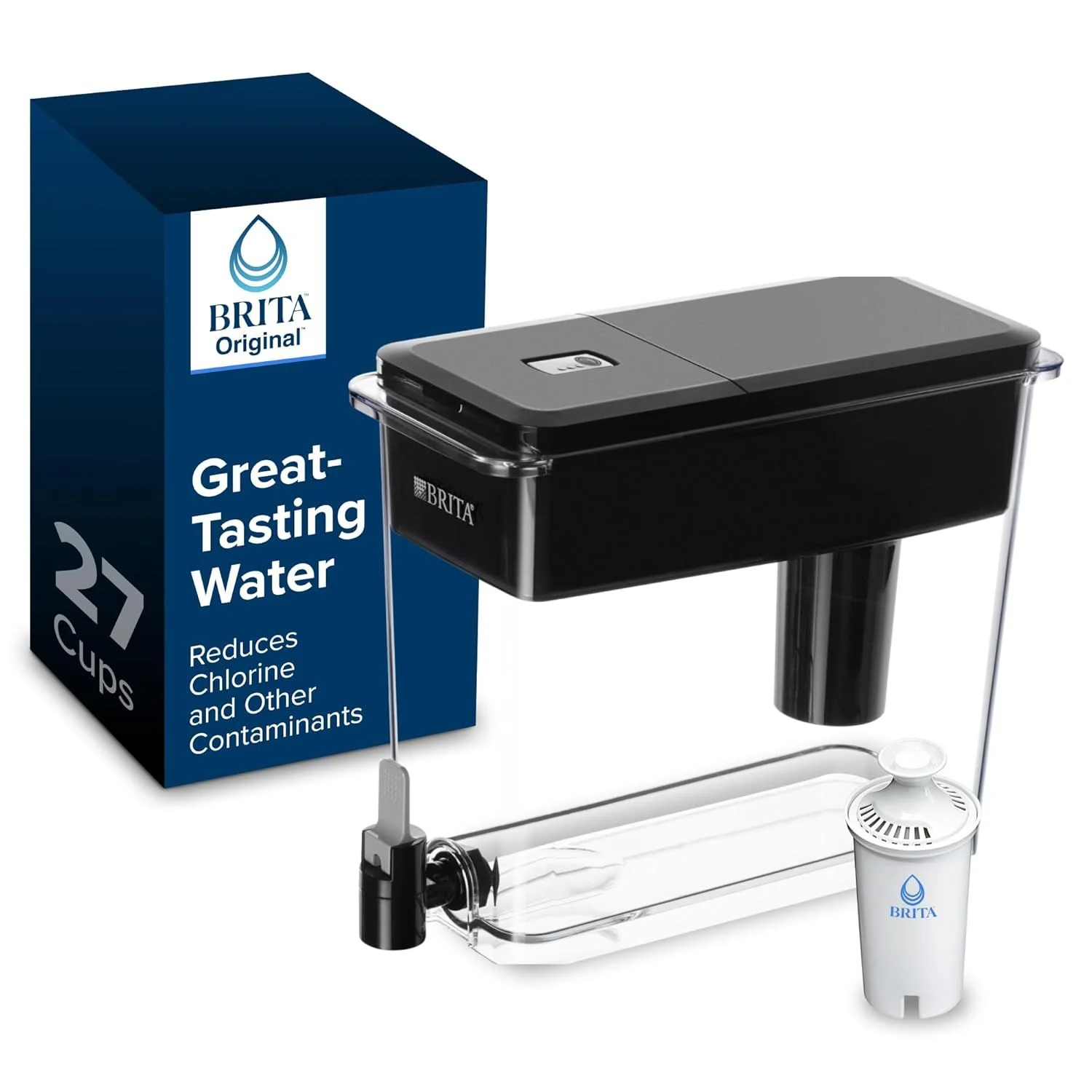
Brita UltraMax 27-Cup Water Filter Dispenser
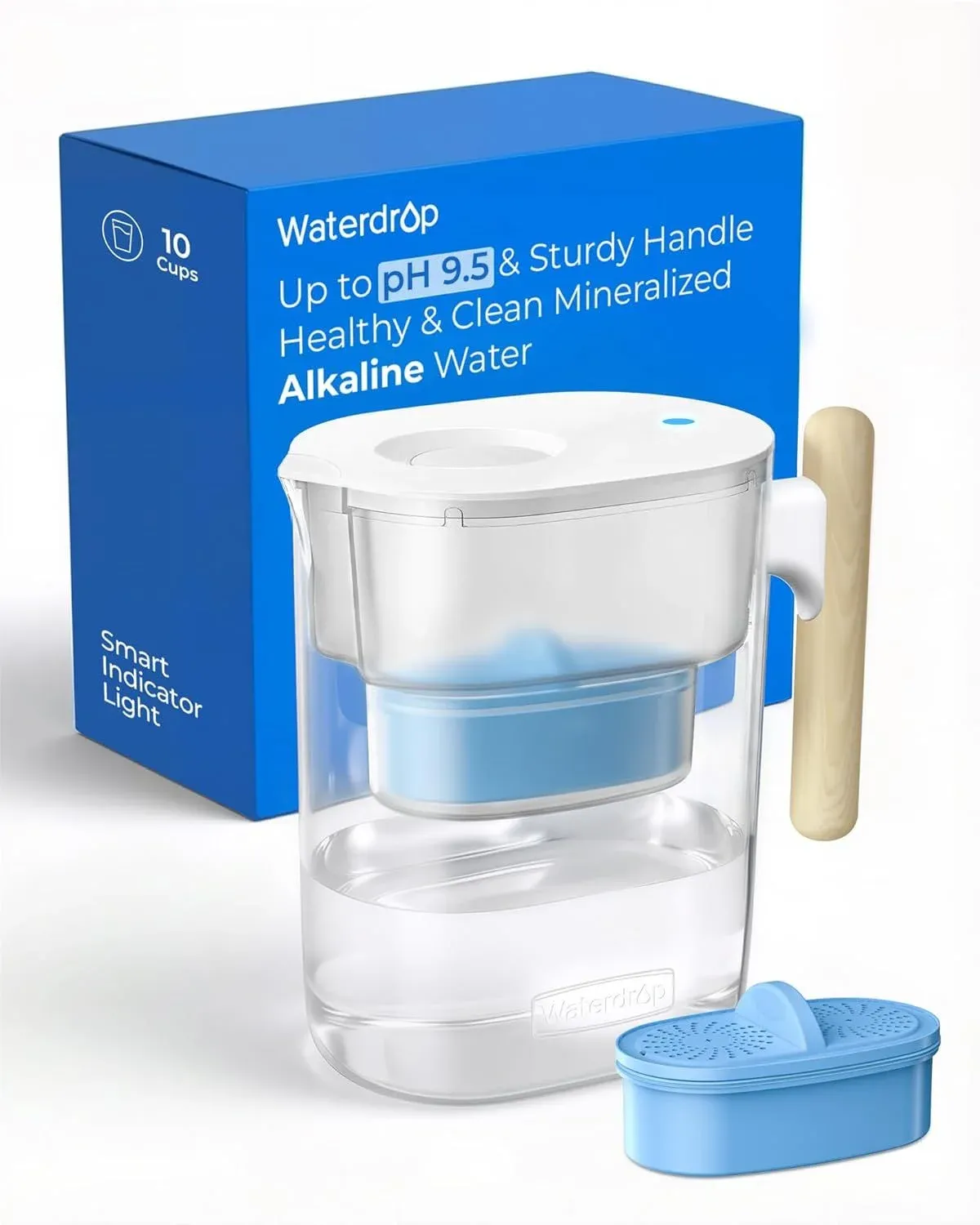
Waterdrop Alkaline Chubby 10-Cup Water Filter Pitcher
At a Glance
| Feature | Editor's Pick Brita UltraMax 27-Cup Water Filter Dispenser | Waterdrop Alkaline Chubby 10-Cup Water Filter Pitcher |
|---|---|---|
| Price | $25–$50 | $25–$50 |
| Capacity | 27 cups (6.3 liters) | 10 cups |
| Filtration | Activated Carbon + Ion Exchange | 7-stage alkaline (silver-loaded ACF + activated carbon + mineral stage) |
| Certifications | NSF 42/53 (Standard filter), NSF 42/53/401 (Elite filter) | NSF 42/372 |
| Filter Life | 40 gallons / 2 months (Standard), 120 gallons / 6 months (Elite) | 100 gallons |
| Weight | 3.2 lbs (empty) | 2.93 lbs |
| Check Price | Check Price |
This comparison pits two fundamentally different pitcher philosophies against each other: Brita's volume-first approach with a 27-cup dispenser versus Waterdrop's filtration-first approach with 7-stage alkaline technology. Both cost roughly the same, but they serve very different households. Understanding the trade-offs between capacity, filtration depth, and alkaline mineralization will help you pick the right one.
Category-by-Category Breakdown
Capacity & Daily Convenience
The Brita UltraMax holds 27 cups — nearly three times the Waterdrop's 10-cup capacity. For a family of four, the UltraMax provides enough filtered water for an entire day without refilling. The spigot-style dispenser means you never have to lift a heavy container — just push the lever and pour. This is a genuine quality-of-life advantage that becomes more important as household size increases.
The Waterdrop Alkaline Chubby at 10 cups is designed for individuals or couples. You will refill it one to two times daily for a two-person household, which is manageable but noticeably more hands-on than the UltraMax's set-and-forget dispenser approach. The Waterdrop does have a hands-free refill spout lid — you can add water without removing the lid — which partially offsets the more frequent refill cycle. However, if your household goes through more than 10 cups of filtered water per day, you will find yourself constantly waiting for the next batch, and at that point the UltraMax's raw capacity becomes the deciding factor.
The size trade-off is real on both sides. The UltraMax's 14.4-inch length takes up a full refrigerator shelf. The Waterdrop fits in most refrigerator door shelves. If your kitchen is tight on space, the UltraMax's footprint is a meaningful compromise. If space is not an issue, the UltraMax's capacity advantage is difficult to argue against for any household larger than two people.
Filtration Technology & Depth
The Waterdrop Alkaline Chubby uses a 7-stage filtration process — silver-loaded activated carbon fiber, activated carbon, and a mineral stage that adds calcium, magnesium, potassium, and zinc. This multi-stage approach targets chlorine (97.4% reduction), PFOA/PFOS, lead, fluoride, arsenic, mercury, and sediment. The mineral infusion stage raises pH up to 9.5, transforming the water's character from "clean" to "enhanced."
The Brita UltraMax ships with a Standard filter — a 2-stage activated carbon and ion exchange system that primarily targets chlorine taste and odor. This is basic but effective for its purpose. The real comparison changes significantly if you upgrade to the Brita Elite filter, which adds lead reduction, asbestos removal, and benzene filtration with NSF 42/53/401 certification. With Elite filters, the Brita's contaminant reduction profile narrows the gap with the Waterdrop substantially — minus the alkaline mineralization, which the Brita cannot replicate regardless of filter choice.
Filtration speed also matters for daily use. The Waterdrop filters at 3.52 gallons per hour — among the fastest pitcher filtration rates on the market. The Brita UltraMax with Standard filters is moderate in speed, and with the denser Elite filters, flow rate slows noticeably. If you find yourself impatient waiting for filtered water, the Waterdrop's flow rate is a practical advantage that shows up every time you refill. On pure filtration technology, the Waterdrop's 7-stage system is more sophisticated than either Brita filter option.
Certifications & Verified Performance
Certifications tell you what independent labs have verified, not what marketing copy claims. The Brita UltraMax with its Standard filter carries NSF 42/53, covering chlorine taste and odor (42) and health-related contaminants including lead (53). Upgrade to the Elite filter and you add NSF 401 for emerging contaminants like pharmaceuticals and pesticides. The Waterdrop Alkaline Chubby carries NSF 42 for chlorine and NSF 372 for lead-free materials — but does not have NSF 53 for health contaminant reduction.
This certification gap is meaningful. NSF 53 is the standard that independently verifies a filter reduces lead, mercury, and other health-relevant compounds to safe levels. The Waterdrop claims to reduce lead, fluoride, and arsenic, but without NSF 53 certification, those claims have not been independently validated by a third-party lab. The Brita with either Standard or Elite filters has that independent verification. For buyers who prioritize certified, lab-verified contaminant reduction, the Brita ecosystem has a clear documentation advantage.
That said, NSF 372 (which the Waterdrop carries but Brita does not list separately) certifies that the pitcher materials themselves are lead-free — a construction quality assurance that has value even if it is not a filtration performance certification. Both products are safe and well-made, but on the question of independently verified filtration claims, Brita's certification portfolio is stronger, particularly with the Elite filter upgrade.
Price & Long-Term Value
The upfront cost difference between these two is minimal — the Brita UltraMax at $25–$50 and the Waterdrop Alkaline Chubby at $25–$50 are essentially the same price tier. The real value difference shows up in ongoing filter replacement costs and how much filtered water you get per dollar.
The Waterdrop's alkaline filter is rated for 100 gallons. The Brita Standard filter is rated for 40 gallons, but the Brita Elite filter is rated for a substantial 120 gallons — the longest filter life in the pitcher category. On a cost-per-gallon basis over a full year, the Brita with Elite filters delivers the lowest ongoing cost because each filter lasts six months instead of two to three months. The Waterdrop's filter replacement cost is moderate and consistent at roughly every 2.5 months for a two-person household.
If you factor in the alkaline mineralization as an added feature — something you cannot get from any Brita filter — the Waterdrop's cost structure includes a capability that otherwise requires a much more expensive alkaline pitcher or an under-sink RO system with an alkaline stage. For buyers who specifically want alkaline water, the Waterdrop offers genuine value that the Brita cannot match at any price point within the pitcher category. For buyers who just want clean, high-volume filtered water at the lowest possible long-term cost, the Brita UltraMax with Elite filters is the better economic choice.
Build Quality & Brand Trust
The Brita UltraMax has 42,000+ reviews with a 4.6-star rating — a massive social proof advantage that reflects years of real-world use across tens of thousands of households. Brita is the most recognized name in pitcher filtration, and the UltraMax's precision-pour spigot, sturdy build, and reliable filter indicator are backed by a brand with decades of market presence. The most common complaints center on the dispenser's size (it is large) and the spigot occasionally dripping if not fully closed — minor issues for a product at this price.
The Waterdrop Alkaline Chubby has 12,900+ reviews with a 4.5-star rating — strong numbers that indicate a mature, well-received product, though significantly less social proof than the Brita. Waterdrop is a newer brand that has gained traction quickly in the filtration space, particularly with its RO systems. The Chubby pitcher features a wooden handle accent and smart LED filter indicator that shows blue or red status, giving it a more modern design language than the utilitarian Brita. The most common complaint is the metal trap door spring, which some users report can rust over time — a durability concern worth monitoring.
Both products are well-built for their price tier. The Brita's longer track record and three-to-one review volume advantage give it the edge on proven reliability. The Waterdrop's design feels more contemporary and premium, but it has not been on the market long enough to match Brita's long-term durability track record.
Real-World Performance: What Owners Actually Report
Beyond specifications and certifications, the pattern of real-world feedback across thousands of verified reviews tells a more nuanced story about both pitchers in daily use. Brita UltraMax owners consistently praise the no-lift spigot as transformative for households with elderly members or anyone with limited hand strength or grip issues. Pouring a full glass requires no more effort than turning a tap, which is a meaningful accessibility advantage that does not show up in any spec sheet.
Waterdrop Alkaline Chubby owners most frequently highlight the taste improvement over their previous pitcher — many report switching from competing alkaline brands like Clearly Filtered or Invigorated Water pitchers and finding the Chubby's output comparable at a more accessible price point. The LED filter indicator draws particular praise for eliminating the guesswork that plagues pitchers with simple mechanical flip indicators. One recurring observation: the Chubby's filter takes approximately 15 to 20 minutes to reach full flow rate when brand new, which can surprise first-time users expecting immediate performance.
⚡ Pro Tip: If you choose the Brita UltraMax, purchase Brita Elite filters separately rather than relying on the included Standard filter. The Elite filter's NSF 401 certification for emerging contaminants — including prescription drug residues and microplastics — represents a meaningful upgrade in filtration depth, and the 120-gallon lifespan brings the per-gallon cost down substantially compared to replacing Standard filters every two months. The upfront investment pays back within the first filter cycle for most households.
Who Should Get Which?
Get the Brita UltraMax 27-Cup Water Filter Dispenser if...
- Your household has 3+ people who drink filtered water daily
- You want set-and-forget convenience — fill once, dispense all day
- NSF-certified contaminant reduction matters more than alkaline features
- You plan to upgrade to Brita Elite filters for 6-month filter life
- You value the security of 42,000+ reviews and decades of brand trust
Get the Waterdrop Alkaline Chubby 10-Cup Water Filter Pitcher if...
- You want alkaline water with mineral infusion — calcium, magnesium, potassium
- You live alone or with one other person — 10 cups is sufficient
- Fast filtration speed matters — 3.52 GPH is among the fastest pitchers
- Your refrigerator space is limited — the Chubby fits in door shelves
- You prefer modern design with smart LED filter indicator
Who Should Skip Both Pitchers
Neither the Brita UltraMax nor the Waterdrop Alkaline Chubby is the right tool for every filtration situation. If your home has well water with elevated iron, bacteria, or sulfur content, a pitcher filter is not a sufficient solution — you need a whole-house or point-of-entry system with appropriate media for your specific water chemistry. Similarly, if you live in an older home with lead service lines or lead solder in your plumbing, a pitcher filter alone — even one with NSF 53 certification — may not be adequate given the volume of water that contacts the pipes before reaching the pitcher. In those cases, an under-sink reverse osmosis system with certified lead reduction is a stronger choice.
Large households that go through more than 40 cups of filtered water per day — think a family of five or six who also use filtered water for cooking — may find that even the UltraMax's 27-cup capacity creates bottlenecks during peak morning or evening use. For those households, a countertop RO system or under-sink unit with a dedicated faucet will deliver a more seamless experience without the refill management that any pitcher system requires. Pitcher filtration is excellent within its intended use case, but knowing where those boundaries are helps you make the right investment for your specific household.
Frequently Asked Questions
Is the Brita UltraMax better than a Waterdrop pitcher?
Does the Waterdrop Alkaline Chubby really make water alkaline?
How often do I need to replace filters in each pitcher?
Can the Brita UltraMax fit in a refrigerator?
Which pitcher has better certifications?
Is alkaline water actually healthier than regular filtered water?
How does the Brita UltraMax compare to other large-capacity pitchers on the market?
Can I use the Waterdrop Alkaline Chubby with well water?
What is the actual taste difference between water filtered by each pitcher?
Our Final Recommendation
The Brita UltraMax 27-Cup and Waterdrop Alkaline Chubby 10-Cup are both excellent pitchers that serve fundamentally different needs at nearly the same price point. This is not a case where one product is clearly superior — it is a case where the right choice depends entirely on your household size, filtration priorities, and whether alkaline mineralization matters to you.
For families of three or more, the Brita UltraMax is the clear recommendation. The 27-cup capacity with a spigot dispenser eliminates the constant refill cycle that smaller pitchers demand, and upgrading to Elite filters gives you NSF 42/53/401 certified filtration with a six-month filter life — the best combination of convenience and certified performance in the pitcher category. The 42,000+ reviews and 4.6-star rating provide the kind of social proof that makes this a safe, proven choice.
For individuals or couples who want more than just contaminant removal — specifically, alkaline mineralization with added minerals — the Waterdrop Alkaline Chubby is the better fit. Its 7-stage filtration system with pH enhancement up to 9.5 offers a genuinely different drinking experience that no Brita filter can replicate. The 3.52 GPH flow rate means you spend less time waiting for filtered water, and the compact form factor fits where the UltraMax simply cannot. If alkaline water is something you value, this is the most affordable way to get it in a pitcher format.
If you are still unsure, ask yourself one question: do you care more about volume or about what the filter adds back to your water? Volume points to the Brita UltraMax. Mineral enhancement points to the Waterdrop Alkaline Chubby. Both are well-priced, well-reviewed, and well-built for their respective missions.
Track Both Products
We'll email you if either price drops or availability changes.
Only when something changes. Unsubscribe anytime.