Bluevua RO100ROPOT-UV Countertop Reverse Osmosis System vs Bluevua RO100ROPOT-Lite(UV) Countertop Reverse Osmosis System: Which Is Better in 2026?
Quick Verdict: The Lite UV ($100–$250) is the smarter buy for most people, delivering 90% of the premium model's performance at a meaningful discount. Choose the full RO100ROPOT-UV ($250–$500) only if you care deeply about water efficiency — its 2:1 pure-to-drain ratio wastes significantly less water than the Lite's 3:1 ratio.
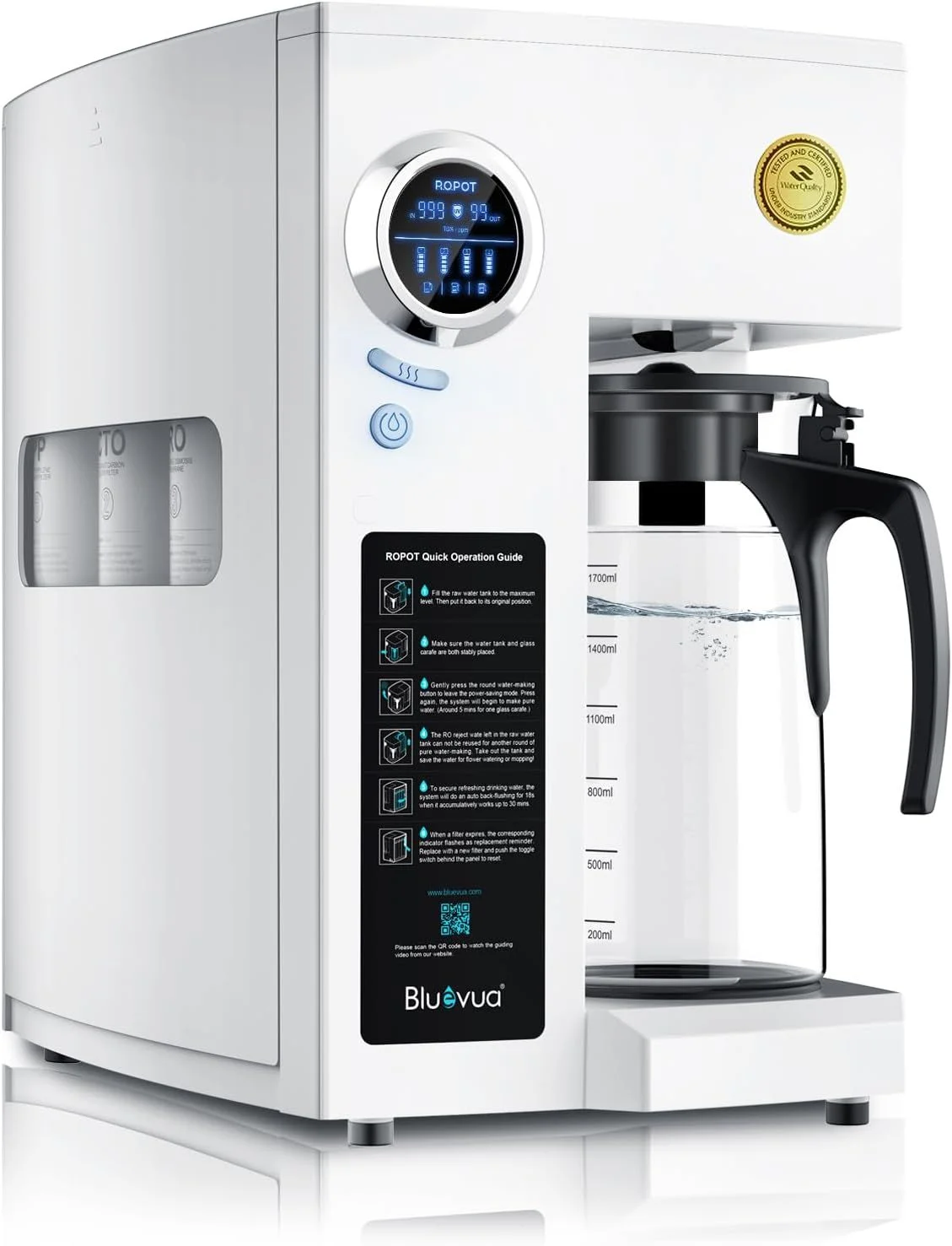
Bluevua RO100ROPOT-UV Countertop Reverse Osmosis System
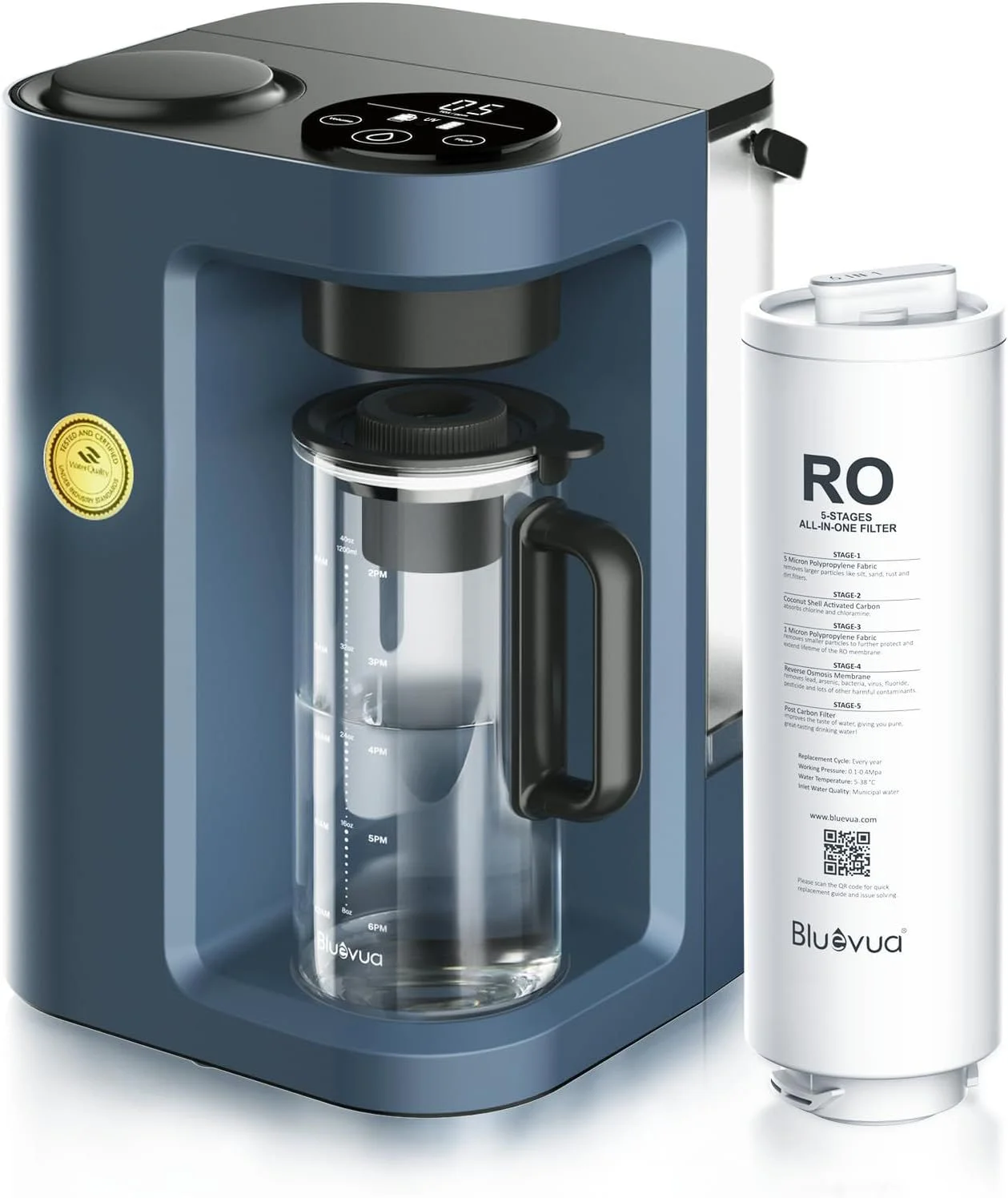
Bluevua RO100ROPOT-Lite(UV) Countertop Reverse Osmosis System
At a Glance
| Feature | Bluevua RO100ROPOT-UV Countertop Reverse Osmosis System | Editor's Pick Bluevua RO100ROPOT-Lite(UV) Countertop Reverse Osmosis System |
|---|---|---|
| Price Range | $250–$500 | $100–$250 |
| Stages | 6 | 7 |
| Technology | Reverse Osmosis + UV + Remineralization | Reverse Osmosis + UV + Remineralization |
| Capacity | 0.75 gallons per cycle | 0.75 gallons per cycle |
| Flow Rate | ~0.5 GPM | ~0.4 GPM |
| Micron Rating | 0.0001 | 0.0001 |
| Filter Life | 12 months (RO membrane), 6 months (other filters) | 12 months (RO membrane), 6 months (other filters) |
| Check Price | Check Price |
Both Bluevua countertop RO systems offer hospital-grade purification without any installation — just plug in and pour. They share the same glass carafe, UV sterilization, and remineralization features. The question is whether the premium model's better water efficiency justifies the significant price gap between these two siblings.
Category-by-Category Breakdown
Filtration Quality
Both systems use the same 0.0001-micron RO membrane and UV sterilization, removing TDS, lead, chlorine, fluoride, bacteria, viruses, heavy metals, and PFAS. The Lite UV actually edges ahead with 7 filtration stages versus the premium's 6. In practice, the water quality difference is negligible — both produce exceptionally pure, remineralized water. The Lite UV's additional stage provides a slight edge in pre-filtration before the RO membrane, which could extend membrane life.
To put the filtration capability in context: a 0.0001-micron membrane is roughly 700,000 times finer than a human hair. That level of filtration catches contaminants that activated carbon filters and even most gravity-fed systems simply cannot touch, including pharmaceutical residues, microplastics, and certain viral particles. The UV sterilization stage then adds a secondary kill step for any biological contaminants that might survive the membrane — a meaningful layer of redundancy that distinguishes both Bluevua models from carbon-only countertop competitors. If you are comparing these systems to pitcher filters or faucet-mounted units, the gap in contaminant removal is substantial.
Price & Value
The Lite UV comes in at a $100–$250 price point versus the premium model's $250–$500 tier — a roughly 30% discount for a system that matches or exceeds the premium model's filtration stages. Both models share similar replacement filter costs and schedules. For a first-time countertop RO buyer, the Lite UV delivers exceptional value. The premium model's higher price is only justified if you value water efficiency highly enough to recoup the upfront difference through lower water bills over time.
When evaluating the true cost of ownership, the upfront price is only part of the equation. Both systems require the same approximate annual spend on replacement filters — sediment pre-filters, carbon blocks, the RO membrane, and a post-carbon polishing filter. Neither model is dramatically cheaper to maintain year over year, which means the Lite UV's lower purchase price translates into a lower total cost of ownership across the first two to three years of use for most households. The one scenario where this math shifts is high daily water usage: if you are filtering a large volume every day, the premium model's better water efficiency may eventually generate measurable utility bill savings that narrow the gap.
Water Efficiency
This is where the premium model clearly earns its price. The RO100ROPOT-UV achieves a 2:1 pure-to-drain ratio, meaning for every 2 gallons of purified water, only 1 gallon goes to drain. The Lite UV's 3:1 ratio means it wastes 50% more water. For a household filtering 3 gallons per day, the premium model saves roughly 1.5 gallons daily — about 550 gallons per year. In drought-prone areas or homes with high water costs, that adds up.
It is worth understanding why countertop RO systems waste water at all. The reverse osmosis process forces water through a semi-permeable membrane under pressure, and the concentrated brine containing rejected contaminants must be flushed away continuously. Older countertop RO designs wasted as much as 4 or 5 gallons for every gallon of purified water produced, so both Bluevua models represent meaningful progress over first-generation systems. The premium model's 2:1 ratio is genuinely impressive for a no-installation countertop unit and is comparable to what you would expect from a higher-end under-sink RO system. For environmentally conscious buyers or those in water-scarce regions, the efficiency argument for the premium model is real and should not be dismissed simply because the Lite UV costs less upfront.
Features & Usability
The Lite UV includes a smart LED display that shows real-time filter life and water quality metrics — a feature absent from the premium model. Both systems feature glass carafes, zero-installation operation, and the same general form factor. The Lite UV's LED display is genuinely useful for knowing when filters need replacement without guesswork, making it the more user-friendly option day-to-day.
Beyond the LED display, day-to-day usability is nearly identical between the two systems. Both use a simple fill-and-purify workflow: add tap water to the input reservoir, press the start button, and let the system do its work. Neither requires under-sink plumbing, drilling, or a dedicated drain line — the drain water simply flows into a separate container that you empty periodically. The Lite UV's LED readout removes the need to remember when you last changed filters, which is a practical convenience that reduces the risk of running degraded filtration without realizing it. For households with multiple users — or anyone who tends to forget maintenance schedules — that real-time feedback is more valuable than it might initially seem.
Long-Term Reliability
The premium RO100ROPOT-UV has been on the market longer with 2,800+ reviews and a 4.4-star rating. The Lite UV, while well-reviewed with 1,900+ reviews and 4.3 stars, is a newer model with a shorter track record. For buyers who prioritize proven longevity, the premium model's longer market presence and larger review base offer more confidence. Both share Bluevua's warranty and support, however.
Digging into the review patterns for both models reveals a consistent theme: users praise the water taste improvement and ease of setup most frequently, while the minority of negative reviews cluster around two topics — the learning curve for filter replacement and occasional pump noise. Neither issue is unique to one model over the other, suggesting the underlying engineering is closely shared. The premium model's extra year or more of market exposure means more edge cases have been surfaced and, in many instances, addressed through firmware or component updates. If you are the type of buyer who reads one-star reviews carefully before purchasing, the larger review sample on the premium model gives you a more complete picture of what can go wrong — and how often.
How These Systems Compare to the Broader Market
Countertop RO systems occupy a specific niche between portable pitcher filters and permanently installed under-sink units. Pitcher filters like those from Brita or ZeroWater are far more affordable upfront but cannot match the contaminant removal depth of a reverse osmosis membrane. Under-sink RO systems from brands like iSpring or APEC offer larger daily output and often come with NSF certifications, but require professional installation and a dedicated faucet — barriers that many renters and apartment dwellers cannot overcome.
Within the countertop RO category specifically, Bluevua competes most directly with AquaTru and Waterdrop. AquaTru has the longest brand history in this segment and holds NSF/ANSI certifications for several contaminant classes, which provides a level of third-party validation that Bluevua currently lacks. However, AquaTru models at comparable price points generally do not include UV sterilization as a standard feature, meaning buyers must pay a premium to get the same biological protection that both Bluevua systems include by default. Waterdrop's countertop options lean toward sleek, tankless designs with faster flow rates, but similarly require an add-on or premium model to match Bluevua's UV capability. For buyers who want UV sterilization without paying a significant surcharge, both Bluevua models represent genuine value within the competitive landscape.
Who Should Get Which?
Choosing between these two systems ultimately comes down to three personal factors: how much you value water efficiency, whether real-time monitoring matters to your household, and how sensitive you are to the upfront price difference. Neither system is a bad choice — they are more alike than different — but the right answer does shift depending on your situation.
Get the Bluevua RO100ROPOT-UV Countertop Reverse Osmosis System if...
- You live in a drought-prone area or have high water utility costs
- You want the most water-efficient countertop RO available (2:1 ratio)
- You prefer a model with a longer track record and more user reviews
- You plan to use the system heavily every day and want to minimize cumulative water waste over years of ownership
- You are purchasing for an environmentally conscious household where resource efficiency is a priority alongside filtration performance
Get the Bluevua RO100ROPOT-Lite(UV) Countertop Reverse Osmosis System if...
- You want the best value in countertop RO — roughly 30% less than the premium model
- You want a smart LED display for real-time filter and water quality monitoring
- Filtration quality matters more to you than water waste ratios
- You are a first-time RO buyer and want to try the technology without committing to the premium price tier
- You live in an apartment or rental where you want a capable system you can take with you when you move
Who Should Skip Both Models
Despite the strengths of both systems, there are scenarios where neither Bluevua model is the right fit. If your household regularly needs more than five or six gallons of purified water per day, the relatively modest output of any countertop RO unit will feel like a bottleneck. In that case, an under-sink system with a dedicated pressurized storage tank will serve you better, even if installation is required. Similarly, if NSF/ANSI certification is a non-negotiable requirement — for health reasons, landlord rules, or institutional purchasing policies — you will need to look at certified alternatives until Bluevua pursues that validation process.
Renters with strict lease restrictions on any countertop appliances that drain water may also find the process of emptying the brine container inconvenient enough to look elsewhere. And if your budget is firmly in the entry-level range, a quality pitcher filter with a multi-stage carbon block will handle chlorine, taste, and some heavy metals at a fraction of the cost — it simply will not match RO-level purity for PFAS, fluoride, or biological contaminants.