Best Countertop & Pitcher Filters 2026: Expert Picks
We evaluated 6 countertop and pitcher filters across filtration quality, capacity, ongoing filter costs, and ease of use. Whether you need a budget-friendly pitcher for basic chlorine reduction or a countertop reverse osmosis system that eliminates 99% of dissolved contaminants, our picks cover every budget and need.
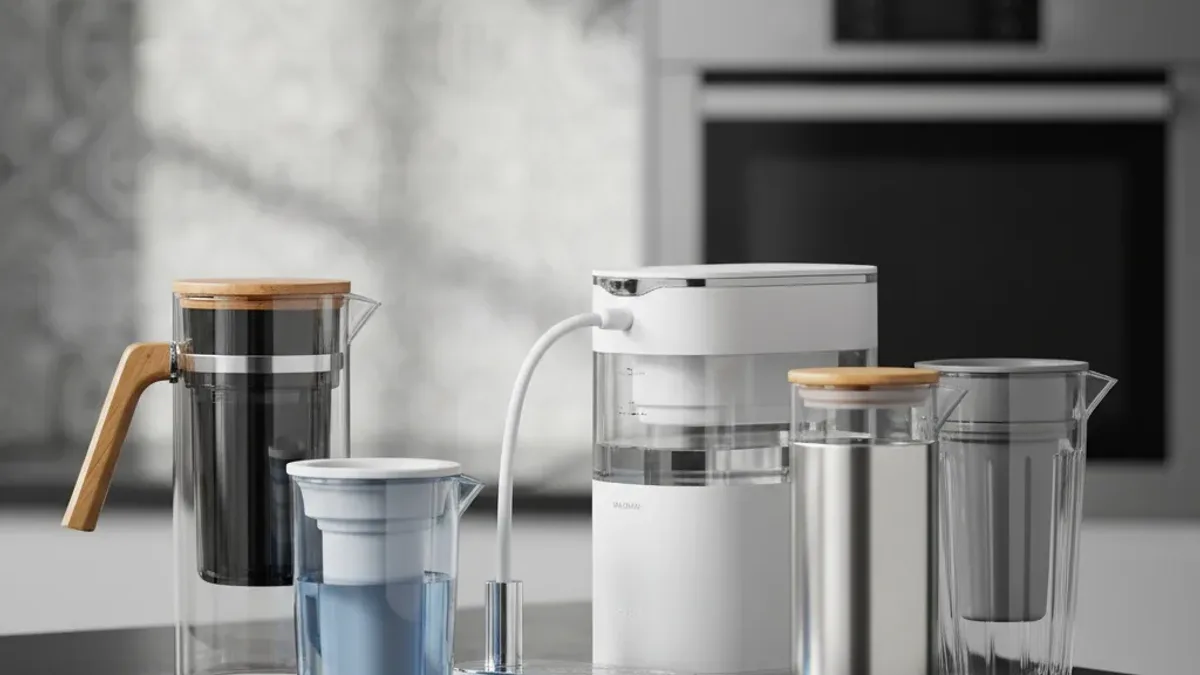
Quick Picks: Our Top Recommendations
| Feature | Editor's Pick Bluevua RO100ROPOT-UV Countertop Reverse Osmosis System | Bluevua RO100ROPOT-Lite(UV) Countertop Reverse Osmosis System | Amazon Basics 10-Cup Water Filter Pitcher | Brita UltraMax 27-Cup Water Filter Dispenser | Waterdrop Alkaline Chubby 10-Cup Water Filter Pitcher | Waterdrop WD-A2 Countertop Reverse Osmosis System |
|---|---|---|---|---|---|---|
| Price Range | $250–$500 | $100–$250 | Under $25 | $25–$50 | $25–$50 | $250–$500 |
| Stages | 6 | 7 | 2 | 2 | — | 5-stage RO with UV |
| Technology | Reverse Osmosis + UV + Remineralization | Reverse Osmosis + UV + Remineralization | Activated Carbon + Ion Exchange | Activated Carbon + Ion Exchange | 7-stage alkaline (silver-loaded ACF + activated carbon + mineral stage) | — |
| Capacity | 0.75 gallons per cycle | 0.75 gallons per cycle | 10 cups (2.4 liters) | 27 cups (6.3 liters) | 10 cups | 159 oz reservoir + 40 oz portable pitcher |
| Flow Rate | ~0.5 GPM | ~0.4 GPM | — | — | — | 100 GPD |
| Micron Rating | 0.0001 | 0.0001 | — | — | — | — |
| Filter Life | 12 months (RO membrane), 6 months (other filters) | 12 months (RO membrane), 6 months (other filters) | 40 gallons (~2 months) | 40 gallons / 2 months (Standard), 120 gallons / 6 months (Elite) | 100 gallons | — |
| Check Price | Check Price | Check Price | Check Price | Check Price | Check Price |
We weighted filtration quality (40%), value for money (25%), ease of use (20%), and ongoing filter costs (15%). A budget pitcher that handles chlorine well can outrank a premium RO system if the buyer only needs basic taste improvement.
1. Bluevua RO100ROPOT-UV Countertop Reverse Osmosis System — Best Premium Countertop RO
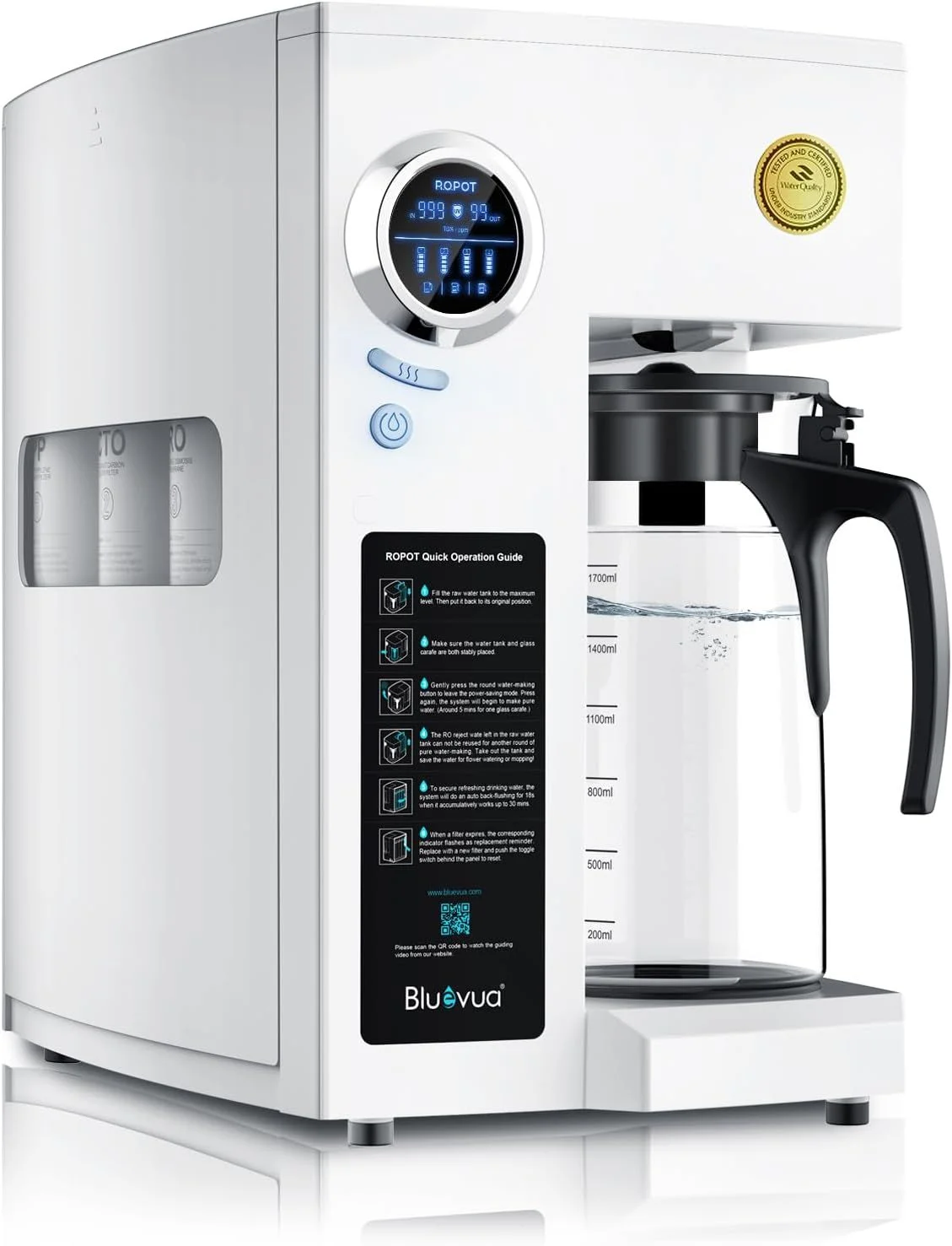
The Bluevua RO100ROPOT-UV earns our top spot as the most capable countertop filtration system you can buy. Its 6-stage reverse osmosis process paired with UV-C sterilization eliminates bacteria, viruses, heavy metals, fluoride, and PFAS that no pitcher filter can touch. The glass carafe is a thoughtful detail that keeps purified water free from plastic contact.
As the premium-priced option in our countertop lineup, this is a serious investment. But if your water quality report shows elevated lead, high TDS, or detectable PFAS levels, the RO100ROPOT-UV delivers peace of mind that a budget pitcher simply cannot. The 2:1 pure-to-drain ratio is efficient for an RO system, and the zero-installation design means renters can take it with them when they move.
The main trade-off is speed and counter space. Filtering a full carafe takes several minutes, and the unit has a substantial footprint. For a household that drinks large volumes of water quickly, an under-sink RO system with a tank may be more practical. But for 1-3 person households who prioritize water purity above all else, this is the gold standard.
Who should buy this: The RO100ROPOT-UV is the right choice for anyone living in an older home with lead pipes, households in areas with known PFAS contamination, or buyers who simply want the absolute highest level of purification available in a countertop form factor. It is also a strong pick for health-conscious individuals, pregnant women, or families with infants who need reassurance that their drinking water is as pure as possible. If you rent and cannot install an under-sink system, this is effectively the best filtration you can get without touching a single pipe.
Who should skip this: If your municipal water tests clean with low TDS and no flagged contaminants, you will be paying a significant premium for protection you do not need. Households that consume very high daily water volumes may also find the fill-and-wait cycle frustrating compared to a pressurized under-sink tank system. The footprint is also a genuine concern in galley kitchens or studio apartments with limited counter space.
- UV sterilization kills 99.99% of bacteria and viruses
- 6-stage filtration including remineralization for better taste
- Elegant glass carafe — no plastic contact with purified water
- Premium price point — significant investment for a countertop unit
- Takes up considerable counter space
2. Bluevua RO100ROPOT-Lite(UV) Countertop Reverse Osmosis System — Best Value Countertop RO
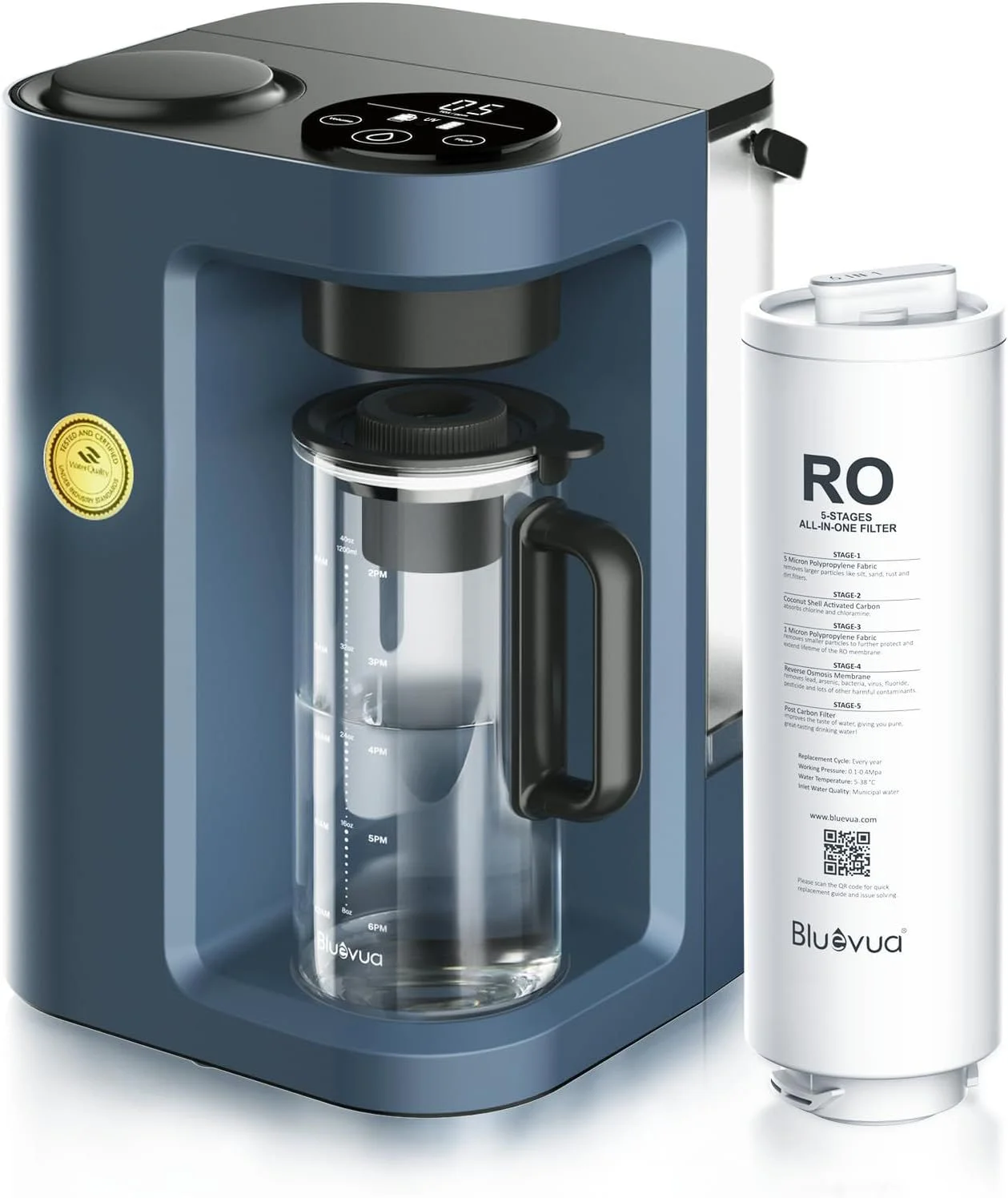
The Lite UV model delivers roughly 90% of the premium Bluevua's performance at about 70% of the price. You still get UV sterilization, reverse osmosis, remineralization, and a glass carafe. The addition of a smart LED display showing filter life and water quality is actually a feature the premium model lacks.
The key compromise is water efficiency: the Lite UV has a 3:1 pure-to-drain ratio versus the premium's 2:1. Over a year, that adds up to more wasted water. Filtering speed is also slightly slower. But at a noticeably lower price point than the flagship model, you are getting countertop RO with UV at a meaningful discount, which makes this the better pick for most budget-conscious buyers who still want serious filtration.
If you are choosing between these two Bluevua models, the Lite UV is the smarter buy unless your water bill makes the 3:1 waste ratio a real concern, or you want the absolute fastest countertop RO filtering speed.
Who should buy this: The Lite UV is the sweet spot for buyers who want genuine reverse osmosis purification and UV sterilization without committing to the premium tier price. It is particularly well-suited to 1-2 person households where the slightly slower throughput is not a daily frustration. The smart filter life indicator is a standout practical feature that takes the guesswork out of maintenance, making it a good choice for buyers who are new to RO systems and want guided upkeep.
Who should skip this: If your household drinks more than a gallon per person per day, the Lite UV's slower throughput may leave you waiting at peak demand times. Buyers in water-scarce regions or those on metered water systems may also want to weigh the 3:1 drain ratio carefully before committing, as that wasted water has a real cost over months of use.
- 7-stage filtration with UV at a significant savings over the full RO100
- Smart LED display shows filter life and water quality
- Glass carafe keeps water free from plastic leaching
- Less efficient 3:1 pure-to-drain ratio wastes more water
- Slower filtering speed than the premium model
3. Amazon Basics 10-Cup Water Filter Pitcher — Best Budget Pitcher
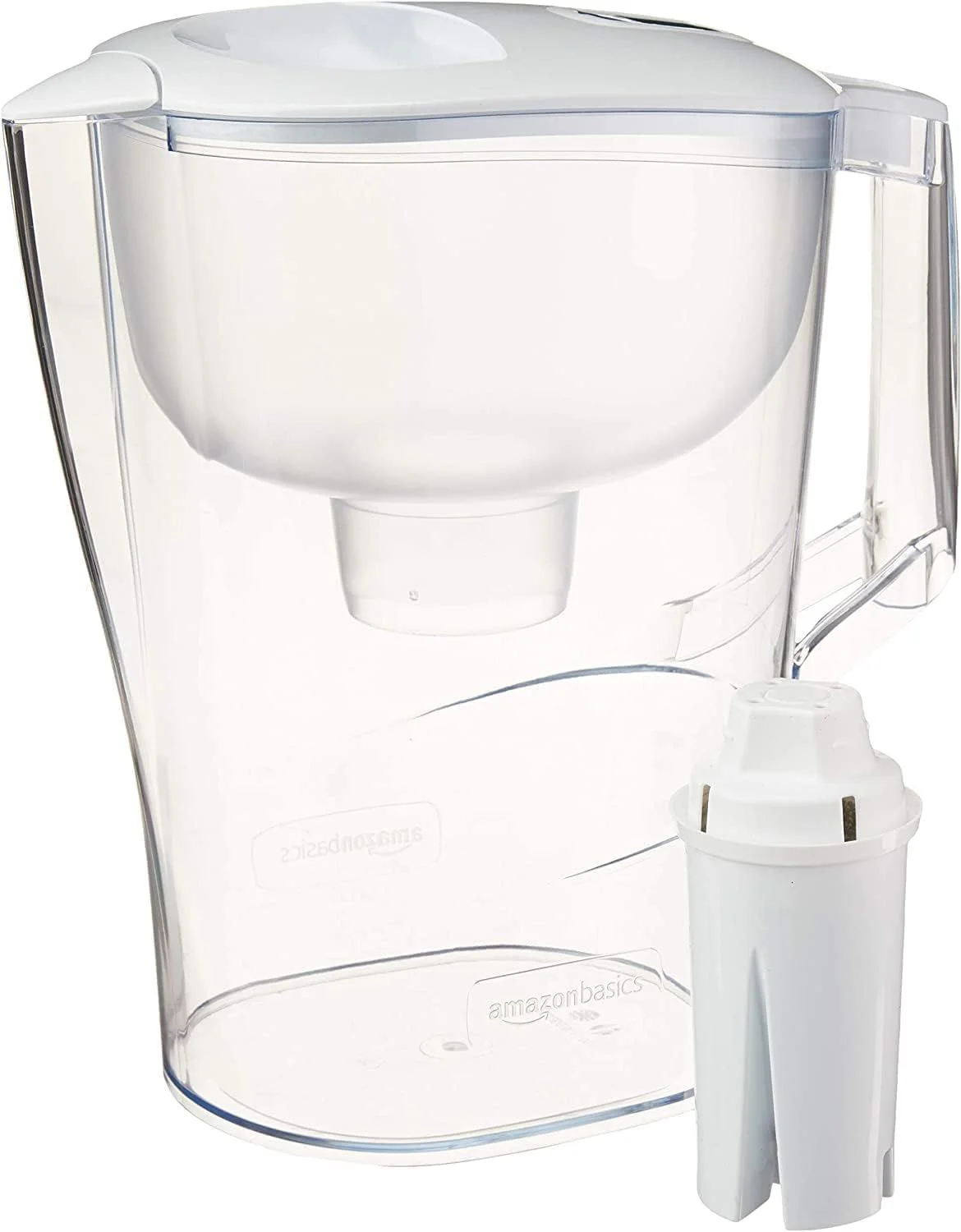
The Amazon Basics pitcher is the lowest-cost path to NSF-certified water filtration in our lineup. It does the basics well: chlorine taste and odor reduction, mercury, copper, and cadmium removal, all verified by NSF 42/53 testing. The electronic filter change indicator is a nice touch that removes the guesswork around replacement timing.
The trade-offs are exactly what you would expect at this price. Filtering is slow (8-10 minutes for a full pitcher), the design feels utilitarian rather than premium, and the lid seal is not as tight as Brita or PUR pitchers. More importantly, it does not remove TDS, lead, or PFAS — for those contaminants, you need to step up to a RO system or at minimum a Brita Elite filter.
This is our recommended starting point for anyone new to water filtration or on a tight budget. It is compatible with inexpensive Brita Standard filters, keeping ongoing costs minimal.
Who should buy this: This pitcher is ideal for renters, college students, or anyone dipping their toes into filtered water for the first time. If your tap water is already compliant and your primary complaint is chlorine taste or slight odor, this pitcher addresses that problem at the lowest possible cost of entry. It is also a good secondary filter to keep at an office desk or a bedroom nightstand where convenience matters more than advanced purification.
Who should skip this: Anyone whose water quality report flags lead, PFAS, nitrates, or elevated TDS should look past this pitcher entirely. The basic carbon filtration simply is not designed to handle those contaminants. Similarly, households that need to filter more than a few liters per day will find the slow fill speed genuinely inconvenient over time.
- Unbeatable budget-friendly price — cheapest NSF-certified pitcher
- Compatible with Brita Standard and generic filters for cheap refills
- Electronic filter change indicator removes guesswork
- Slow filtering speed — takes 8-10 minutes for a full pitcher
- Basic design feels less premium than Brita or PUR
4. Brita UltraMax 27-Cup Water Filter Dispenser — Best for Large Families
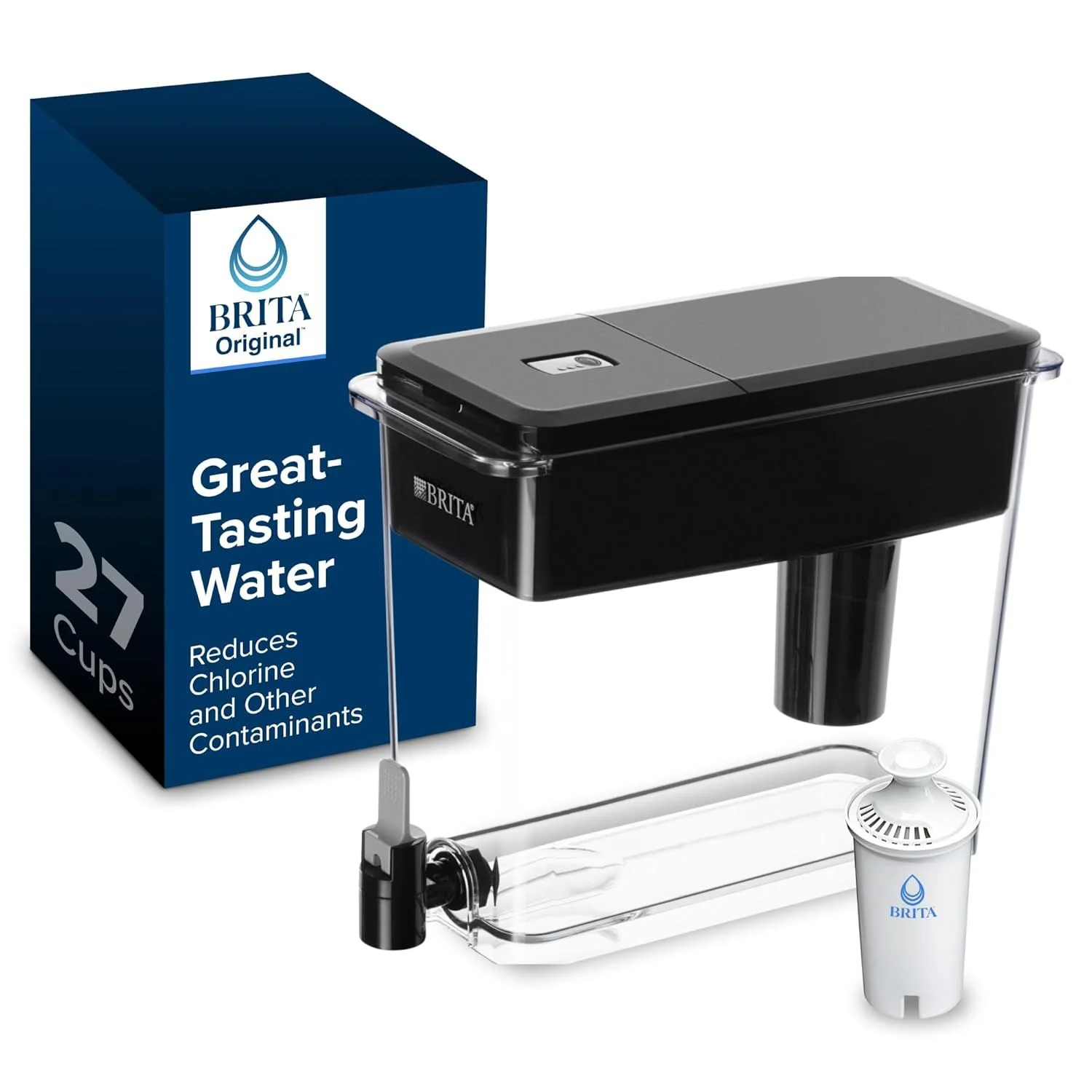
The Brita UltraMax dominates the large-capacity dispenser category with its 27-cup reservoir and precision-pour spigot. For families of four or more, this eliminates the constant refill cycle that makes smaller pitchers frustrating. Its 42,000+ reviews and 4.6-star rating reflect years of proven reliability that newer products have not matched.
The included Standard filter is adequate for chlorine reduction but basic. We strongly recommend upgrading to Brita Elite filters, which add lead, asbestos, and pharmaceutical reduction for a meaningful improvement in filtration quality. The UltraMax accepts both Standard and Elite cartridges.
The main downside is size. When full, this dispenser is heavy and takes up an entire refrigerator shelf. The spigot can drip if not fully closed. But for high-volume households that need simple, reliable filtration without any installation, the UltraMax remains the practical choice.
Who should buy this: The UltraMax is the definitive pick for large households that want set-it-and-forget-it filtered water from the fridge. The spigot dispenser design is genuinely more convenient than a traditional pitcher for families because nobody has to tip a heavy container. It also works well for households that host frequently and need enough filtered water ready to go without constant refilling. Pairing it with Elite filter cartridges turns this into a surprisingly capable dispenser at an accessible price point.
Who should skip this: Small households or single occupants will find the bulk of the UltraMax more of a burden than a benefit. The unit takes up a full refrigerator shelf, which is a real trade-off in compact kitchens or smaller fridges. If you live alone or with one other person, a standard 10-cup pitcher is more appropriately sized and easier to handle daily.
- Massive 27-cup capacity — serves families of 4+ without constant refilling
- Precision-pour spigot makes dispensing easy and mess-free
- Fits on refrigerator shelf or countertop
- Takes up significant refrigerator shelf space due to large footprint
- Heavy when full — difficult to move or pour from
5. Waterdrop Alkaline Chubby 10-Cup Water Filter Pitcher — Best Alkaline Water Pitcher
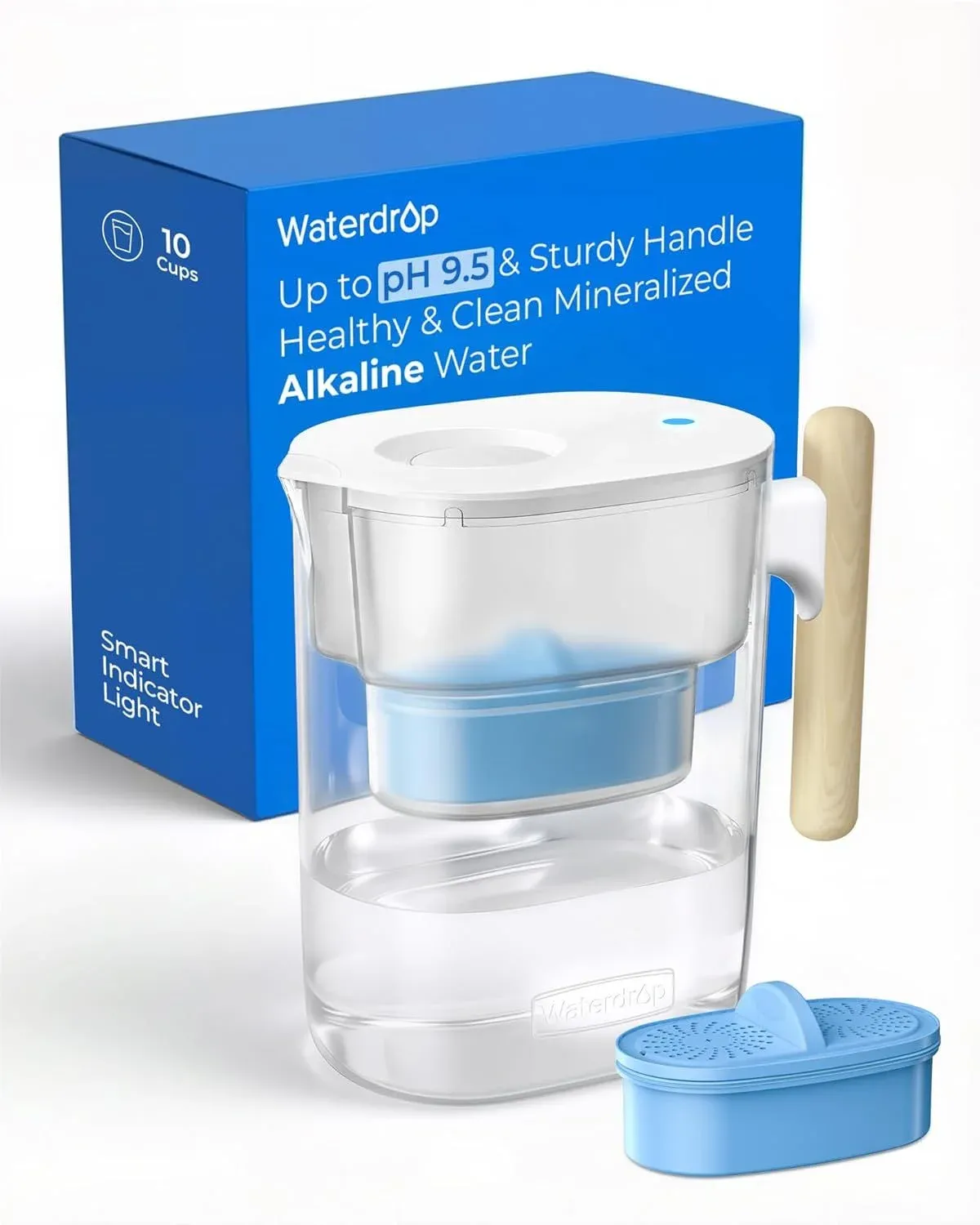
- Most affordable pitcher in the lineup with 7-stage filtration
- Alkaline mineralization raises pH up to 9.5 and adds calcium, magnesium, potassium, and zinc
- Smart LED filter indicator with blue/red status display
- Short alkaline filter lifespan at only 100 gallons vs 200 gallons for the standard version
- Limited NSF certifications — only NSF 42 (chlorine) and 372 (lead-free materials)
6. Waterdrop WD-A2 Countertop Reverse Osmosis System — Best Hot & Cold Countertop RO

- Zero installation required — plug-and-play countertop design with no plumbing
- Hot and cold water on demand with 6 temperature presets from 59°F to 203°F
- Smart touch control screen with TDS display, temperature/volume selection, and filter life indicator
- Temperature accuracy concerns — multiple reviewers report hot water maxing at 165-186°F, not the advertised 203°F
- Low 100 GPD throughput compared to under-sink models (500-1200 GPD)
How We Chose Our Picks
We evaluated each countertop and pitcher filter across five core criteria: filtration quality (what contaminants does it actually remove, with what certifications?), capacity and speed (how much water can it handle, and how quickly?), ongoing costs (what does a year of filter replacements actually cost?), ease of use (setup difficulty, maintenance, and daily convenience), and build quality (materials, durability, and design).
NSF certifications carry significant weight in our rankings. A filter certified to NSF 53 (health effects) or NSF 58 (reverse osmosis) has been independently verified by a third party. Marketing claims without NSF backing get treated with skepticism. We also calculate cost-per-gallon for every product, because a cheap filter with short cartridge life can cost more than a premium filter over a year.
Countertop Filter vs. Pitcher Filter: Understanding the Core Difference
These two terms are often used interchangeably, but they describe meaningfully different products. A pitcher filter is a gravity-fed container — you pour tap water into the top reservoir, it passes through a filter cartridge by gravity, and collects in the lower chamber. Simple, inexpensive, no power required. A countertop filter, in the context of products like the Bluevua models, refers to a self-contained unit that uses a pump, pressure, and multi-stage filtration including reverse osmosis membranes. The distinction matters because their filtration capabilities are in entirely different leagues.
Pitcher filters are excellent at what they are designed to do: improve the taste and odor of tap water by removing chlorine, chloramines, and a handful of metals. They are the most accessible entry point into home water filtration, and for households with clean municipal water, they are genuinely all you need. The limitation is physics: gravity-fed carbon filters simply cannot generate the pressure required to push water through a sub-micron RO membrane.
Countertop RO systems solve this by using a small electric pump to drive water through increasingly fine filtration stages. The result is water that measures dramatically lower in total dissolved solids, is free of PFAS compounds, and has been exposed to UV-C light that neutralizes biological contaminants. The trade-off is cost, counter space, and the need for an electrical outlet. Understanding which category you actually need is the single most important step before purchasing.
An inexpensive TDS (total dissolved solids) meter costs a few dollars on Amazon and will give you an instant read of your tap water's mineral and contaminant load. Water under 150 ppm TDS from a clean municipal source is unlikely to need RO treatment. Water above 300 ppm, or water from a well, almost always benefits from it. This one test can save you from either overspending on RO you do not need or underspending on a pitcher that cannot handle your actual water quality.
Cost of Ownership: The True Price of Filtered Water
The purchase price of a countertop filter is only part of the story. The ongoing cost of replacement cartridges is where the real financial commitment lives, and this calculation often surprises buyers who focus exclusively on the sticker price.
Budget-friendly pitchers (in the price range of the Amazon Basics and entry-level Brita models) have the lowest upfront cost but the highest frequency of cartridge replacement. Standard pitcher filters typically need replacing every 40 gallons, or roughly every six to eight weeks for an average household. Over the course of a year, that adds up to five or six replacement cartridges. Because individual cartridges are inexpensive, the annual spend is still modest — but it is worth calculating before assuming a cheap pitcher is always the cheapest option long-term.
Mid-range pitchers and dispensers like the Brita UltraMax with Elite cartridges strike a good balance. Elite-grade cartridges last longer per gallon than Standard cartridges, and bulk packs reduce the per-cartridge cost meaningfully. Annual filter spend for a large household using a UltraMax with Elite filters tends to fall in a moderate range — not trivial, but reasonable given the capacity and convenience.
Premium countertop RO systems have the highest upfront price but a more nuanced ongoing cost story. The pre-filters need replacing roughly every six months, while the RO membrane itself typically lasts twelve months or longer. Because a single RO membrane services a large volume of water before replacement, the cost-per-gallon for purified water from an RO system is often lower than you might expect. When you factor in what you would otherwise spend on bottled water — which many RO buyers are replacing — the payback period on a countertop RO unit is often shorter than anticipated.
The bottom line: do not compare products on purchase price alone. Build a simple two-year cost model that includes the unit price plus estimated annual cartridge spend. In many cases, a mid-range RO system will cost less over twenty-four months than a series of budget pitchers with frequent cartridge replacements, especially if you are currently buying bottled water regularly.
If your household spends a meaningful amount monthly on bottled water, almost any filter on this list will pay for itself within months. Even the premium Bluevua RO100ROPOT-UV, priced at the top of the countertop category, typically recoups its cost within a year for a household that was previously buying mid-range bottled water regularly. The environmental benefit of eliminating single-use plastic is an additional consideration that is difficult to quantify but very real.
Buying Guide: What to Look For in a Countertop Filter
Choosing the right countertop or pitcher filter depends on three factors: what contaminants you need to remove, how much water your household uses, and how much you are willing to spend on replacement filters over time.
Filtration technology matters most. Basic activated carbon (Brita Standard, Amazon Basics) handles chlorine taste, odor, and a handful of metals. Carbon block filters (Brita Elite) add lead, asbestos, and pharmaceutical reduction. Reverse osmosis (Bluevua) removes 95-99% of all dissolved solids including fluoride, PFAS, and heavy metals. Match the technology to your actual water quality concerns.
Calculate the annual filter cost, not just the sticker price. A budget pitcher with frequent cartridge replacements can actually cost more per year in consumables than you might expect. Meanwhile, a premium RO system with longer-lasting filters often costs less in year two than the cumulative pitcher cartridge spend. Consider the 2-year total cost of ownership when comparing options.
NSF certification is non-negotiable for health-effects claims. Any filter marketed as removing lead, PFAS, cysts, or other health-relevant contaminants should carry NSF 53 or NSF 58 certification to back that claim. NSF 42 certification covers aesthetic improvements like taste and odor — important, but not a health certification. Be skeptical of products that list impressive-sounding contaminant reduction claims without specifying the certification standard that validates them. Third-party testing from organizations like NSF, WQA, or IAPMO provides independent verification that a manufacturer's claims hold up in controlled conditions.
Flow rate and daily throughput affect real-world usability. A filter rated to remove every contaminant imaginable is useless if it produces water too slowly to meet your household's daily needs. Gravity pitchers are the slowest option. Countertop RO systems with pumps are meaningfully faster. If you have a large household or entertain frequently, prioritize throughput alongside filtration quality.
Consider the physical form factor honestly. A large dispenser like the Brita UltraMax is only practical if you have a refrigerator shelf to dedicate to it. A countertop RO unit with a glass carafe needs a dedicated section of counter space near an outlet. A standard 10-cup pitcher is the most flexible in terms of placement but the most limited in daily capacity. Measure your available space before committing to any of the larger units in this roundup.
Check your local water quality report before buying. If your water is already clean (low TDS, no lead, no PFAS), a basic pitcher is all you need. Do not overspend on RO for water that is already safe. Save RO for water with measurable contamination.
How Countertop Filters Compare to Under-Sink and Whole-House Systems
Countertop filters occupy a specific niche in the home filtration ecosystem — they are more capable than faucet-mount filters and far more accessible than under-sink or whole-house systems, but they have real limitations that buyers should understand before ruling out alternatives.
Faucet-mount filters (like the Brita Basic faucet filter) attach directly to your tap and filter water on demand. They are faster than pitchers for filling glasses but slower than countertop RO systems, and their filtration level is comparable to a standard pitcher filter. They are a good middle ground for renters who want filtered water at the tap without a pitcher taking up fridge space.
Under-sink filters offer the highest flow rates of any residential filtration option and keep the unit entirely out of sight. A quality under-sink RO system with a pressurized storage tank can deliver a full glass of purified water in seconds, compared to the fill-and-wait cycle of a countertop RO carafe. The trade-off is installation complexity (typically requiring drilling into your sink cabinet and connecting to the water supply) and a higher upfront cost. For homeowners committed to long-term use, under-sink systems often represent better value over a five-year horizon.
Whole-house systems treat every tap in your home — shower, laundry, kitchen, and bathrooms — but they are a significant investment and are overkill for buyers whose only concern is drinking water quality. They make more sense for well water with sediment or bacterial concerns than for typical municipal water consumers.
The countertop category sits in the ideal position for renters, apartment dwellers, or anyone who wants meaningful filtration improvement without a commitment to installation. The Bluevua models in our lineup deliver under-sink-caliber filtration quality in a form factor that unplugs and moves with you.
Frequently Asked Questions
Do countertop water filters require any installation or plumbing?
Is a countertop RO system worth the extra money over a pitcher?
How often do I need to replace countertop filter cartridges?
Can a countertop filter remove lead and PFAS?
What is the best countertop filter for a family of four?
How do I know if my tap water needs more than a basic pitcher filter?
What does TDS actually mean, and should I care about it?
Are there any countertop filters that remove fluoride?
Can I use a countertop filter with well water?
How do I dispose of used filter cartridges responsibly?
Does a countertop RO system remove beneficial minerals from water?
Our Recommendation
For most households, the Brita UltraMax 27-Cup Dispenser with Elite filter upgrades offers the best balance of capacity, filtration, and value. If you have specific concerns about lead, PFAS, fluoride, or high TDS, the Bluevua RO100ROPOT-UV delivers countertop reverse osmosis purification without any plumbing work. And for anyone just getting started with filtered water on a tight budget, the Amazon Basics 10-Cup Pitcher is a no-risk entry point at the lowest price in our lineup.
Whatever you choose, the single most important action you can take before buying is reviewing your local water quality report. That document — available free from your municipal water provider — will tell you exactly what is in your tap water and make it immediately obvious whether you need a basic carbon pitcher or a full multi-stage RO system. Filtration is not one-size-fits-all, and the right choice for a household in a modern city with treated municipal water may be entirely different from the right choice for a household drawing from a private well or an older building with aging pipes. Use the recommendations above as your starting framework, calibrate them to your specific water quality data, and you will end up with filtered water that is genuinely better suited to your needs.
Check Top Pick on Amazon