Amazon Basics 10-Cup vs Waterdrop Alkaline Chubby 10-Cup: Budget Simplicity or Alkaline Upgrade in 2026?
Quick Verdict: The Amazon Basics 10-Cup (Under $25) is the best pure-value play — NSF 42/53 certified at the lowest price in the pitcher category. The Waterdrop Alkaline Chubby ($25–$50) costs more but delivers 7-stage alkaline filtration, 2x faster flow rate, and mineral-enhanced water. If you just want clean water cheaply, get the Amazon Basics. If you want alkaline mineralization and faster speed, the Waterdrop is worth the premium.
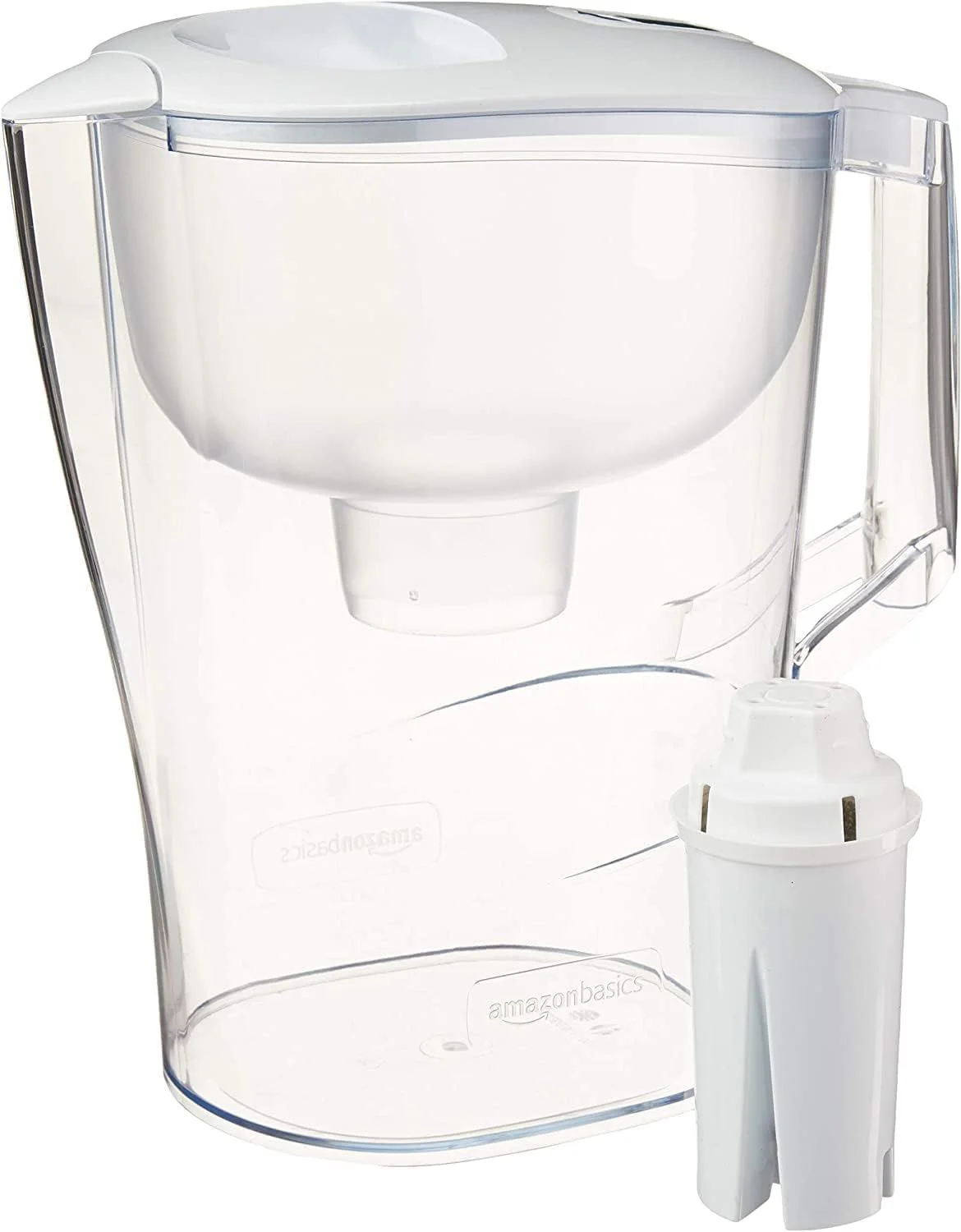
Amazon Basics 10-Cup Water Filter Pitcher
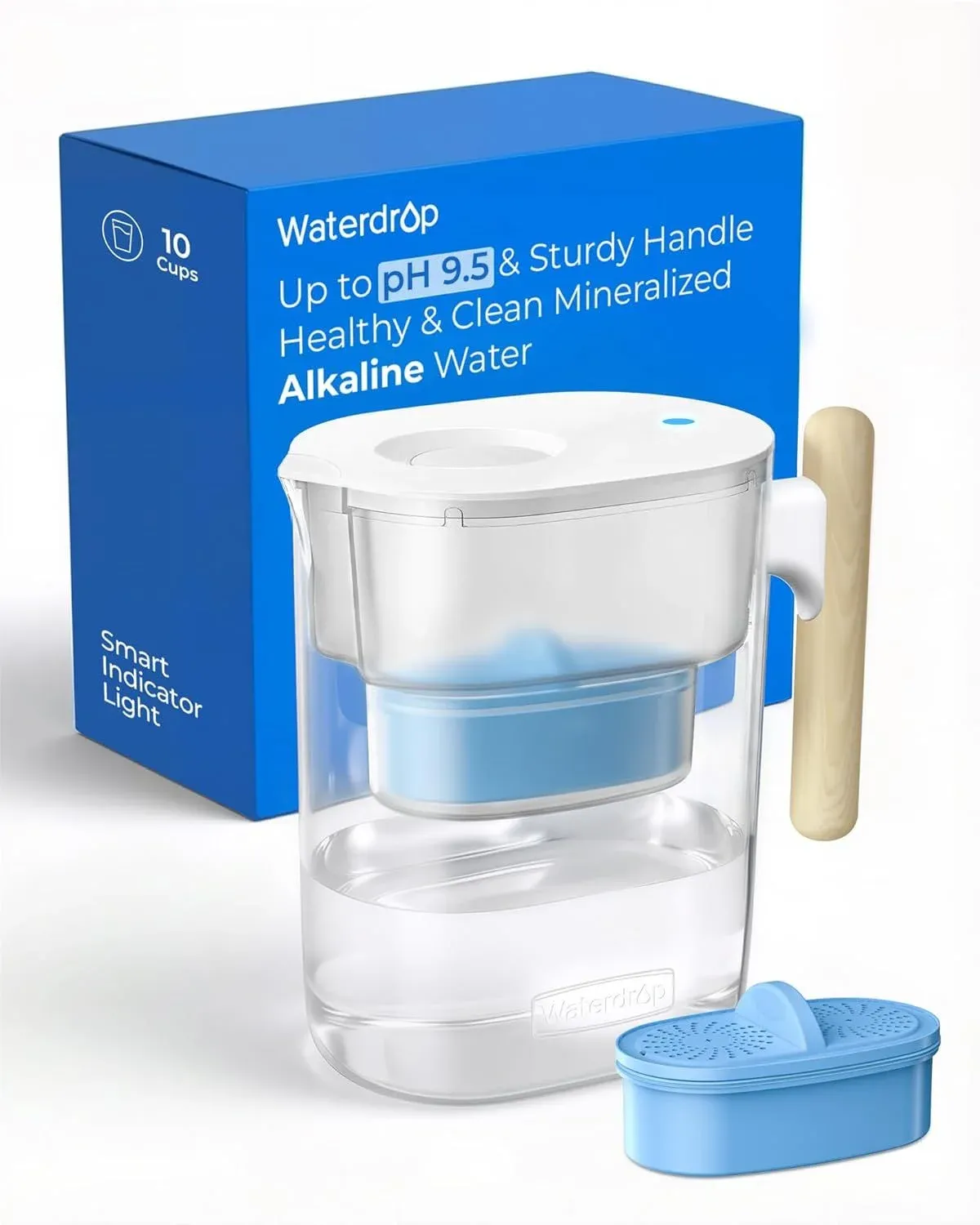
Waterdrop Alkaline Chubby 10-Cup Water Filter Pitcher
At a Glance
| Feature | Amazon Basics 10-Cup Water Filter Pitcher | Editor's Pick Waterdrop Alkaline Chubby 10-Cup Water Filter Pitcher |
|---|---|---|
| Price | Under $25 | $25–$50 |
| Capacity | 10 cups (2.4 liters) | 10 cups |
| Filtration | Activated Carbon + Ion Exchange | 7-stage alkaline (silver-loaded ACF + activated carbon + mineral stage) |
| Certifications | NSF 42/53 | NSF 42/372 |
| Filter Life | 40 gallons (~2 months) | 100 gallons |
| Contaminants Removed | Chlorine taste/odor, mercury, copper, cadmium, zinc | Chlorine (97.4%), PFOA/PFOS, lead, fluoride, arsenic, mercury, sediment, odor |
| Check Price | Check Price |
Two 10-cup pitchers at very different ends of the filtration spectrum. The Amazon Basics is stripped-down and budget-first — the cheapest NSF-certified pitcher you can buy. The Waterdrop Alkaline Chubby packs 7 filtration stages and alkaline mineralization into the same pitcher form factor for a modest premium. This comparison comes down to whether you want the cheapest clean water possible or whether alkaline enhancement and filtration depth are worth paying slightly more for.
Category-by-Category Breakdown
Price & Budget Value
The Amazon Basics pitcher is the undisputed budget champion of the pitcher category at Under $25. At roughly eight dollars less than the Waterdrop, it delivers NSF 42/53 certified filtration — including independently verified lead reduction — at a price point that no competitor matches. If your household budget is tight and you need a functional water filter that demonstrably works, this is the floor price for certified performance.
The Waterdrop Alkaline Chubby at $25–$50 is not expensive in absolute terms, but the price difference relative to the Amazon Basics is meaningful on a percentage basis. You are paying roughly 35% more for the Waterdrop. What you get for that premium is 7-stage filtration versus 2-stage, alkaline mineral infusion, a smart LED filter indicator, a longer-lasting filter (100 gallons vs 40 gallons), and more than double the flow rate. Whether those features justify the premium depends on your priorities, but the Amazon Basics remains the better pure-value play for buyers whose only goal is "make my tap water clean and safe at the lowest cost."
On ongoing filter costs, the math shifts. The Amazon Basics filter at 40 gallons needs replacing roughly every two months. The Waterdrop filter at 100 gallons lasts closer to three months. Over a full year, the Amazon Basics requires five to six filter packs versus four for the Waterdrop. The annual replacement cost gap is narrower than the upfront cost gap suggests, making the Waterdrop's total cost of ownership more competitive than the sticker price implies.
💡 ProTip: When calculating the true annual cost of either pitcher, factor in both filter replacement frequency and your household's daily water consumption. A single person filling the pitcher once a day will stretch filter life considerably longer than a family of four refilling it three or four times daily. Higher-volume households will find the Waterdrop's 100-gallon filter life even more valuable relative to the Amazon Basics' 40-gallon cartridge, since they will be buying replacement filters far more often with the Amazon Basics.
Filtration Technology & Stages
The Amazon Basics uses a 2-stage filtration system — activated carbon and ion exchange resin — targeting chlorine taste, odor, mercury, copper, cadmium, and zinc. It is effective for its intended purpose: making municipal tap water taste better and reducing specific health contaminants that are NSF 53 certified. This is the same fundamental technology used by Brita Standard filters, and it works reliably.
The Waterdrop Alkaline Chubby uses a 7-stage system — silver-loaded activated carbon fiber, standard activated carbon, and a mineral stage that introduces calcium, magnesium, potassium, and zinc. The silver loading provides antimicrobial properties within the filter media itself, reducing bacterial growth inside the cartridge. The mineral stage is what transforms this from a standard filter into an alkaline pitcher, raising pH up to 9.5 and adding minerals that many premium bottled water brands charge a significant premium for.
The practical difference between 2 and 7 stages is real but needs context. More stages do not automatically mean better filtration — what matters is what each stage targets and whether the claims are independently verified. The Amazon Basics has NSF 53 verification for its health contaminant claims. The Waterdrop's broader contaminant claims (PFOA/PFOS, fluoride, arsenic) are not NSF 53 verified. On sheer filtration complexity, the Waterdrop is more sophisticated. On independently verified claims, the Amazon Basics has stronger documentation. Both approaches have merit depending on what matters more to you — verified basics or claimed breadth.
It is also worth noting that the activated carbon fiber used in the Waterdrop's first stage has a higher surface area per gram than standard granular activated carbon, which is what budget pitchers typically use. Greater surface area means more contact points between water and filter media, which can translate to more effective adsorption of organic compounds and chloramines — a common disinfectant byproduct in municipal water systems that standard carbon sometimes struggles with. This is a genuine technical advantage that does not show up on the certification label but matters in real-world performance.
Flow Rate & Speed
The Waterdrop Alkaline Chubby filters at 3.52 gallons per hour — fast enough that a full 10-cup pitcher completes filtration in under four minutes. This is among the fastest flow rates in the pitcher category and means you rarely find yourself waiting for filtered water. Pour, wait briefly, and it is ready.
The Amazon Basics pitcher takes 8 to 10 minutes for a full 10-cup load, which works out to approximately 1.5 gallons per hour. This is noticeably slower than the Waterdrop — more than twice as slow. For a single fill, the difference is manageable. But if you are refilling multiple times per day (common in a two-person household), those extra minutes per cycle add up. The slower filtration speed is the most frequently cited complaint in Amazon Basics pitcher reviews.
The speed difference is a consequence of filter density and design. The Waterdrop's multi-stage system is engineered for both filtration depth and throughput. The Amazon Basics uses a denser carbon block that catches more per square inch but restricts flow. Neither approach is wrong, but if speed is important to your daily routine, the Waterdrop has a definitive advantage that is immediately noticeable in everyday use.
Certifications & Independent Verification
The Amazon Basics carries NSF 42 and NSF 53 — the two most important pitcher filter certifications. NSF 42 covers chlorine taste and odor reduction. NSF 53 covers health-related contaminants, specifically lead, mercury, and other heavy metals. These certifications mean a third-party lab has independently tested the filter and confirmed it performs as claimed. For a pitcher at this price point, NSF 53 is remarkable and genuinely differentiating.
The Waterdrop Alkaline Chubby carries NSF 42 and NSF 372. NSF 42 covers the same chlorine reduction. NSF 372 certifies that the pitcher materials are lead-free — a construction quality standard rather than a filtration performance standard. Notably absent is NSF 53, which means the Waterdrop's claims about lead, fluoride, and arsenic reduction have not been independently verified by NSF to the same standard that the Amazon Basics has achieved.
This is the Amazon Basics' strongest single advantage in this comparison. Independently verified performance at the lowest price in the category is a powerful value proposition. The Waterdrop makes broader filtration claims, and those claims may well be accurate, but the lack of NSF 53 certification is a gap that matters for buyers who want third-party proof rather than manufacturer claims. If you are filtering water specifically because you are concerned about lead or heavy metals, the Amazon Basics has the documentation to back up its promises.
💡 ProTip: Before choosing either pitcher, consider requesting a free water quality report from your municipal water supplier — these are published annually and legally required to be available to residents. If your report shows elevated lead or copper levels, prioritize NSF 53 certification above all other features. If your water is already within safe parameters and your main concern is taste and mineral content, the Waterdrop's broader feature set becomes more justifiable without the NSF 53 requirement being a dealbreaker.
Design, Features & User Experience
The Waterdrop Alkaline Chubby has a more polished design with a wooden handle accent, hands-free refill spout lid, and a smart LED filter indicator that displays blue when the filter is fresh and red when replacement is needed. The hands-free refill is a genuine convenience — you can add water from the tap without removing or lifting the lid. The overall aesthetic is modern and feels like a step up from typical pitcher design.
The Amazon Basics pitcher is functional but utilitarian. It has an electronic filter change indicator — practical but not as visually refined as the Waterdrop's LED system. The lid design is standard and requires removal for refilling. Some users report the lid can feel loose and may drip during pouring, which is a minor but recurring annoyance in the review data. The overall build feels like what it is — a budget product that prioritizes function over form.
Both pitchers hold 10 cups and have similar footprints, fitting in most refrigerator door shelves. The Waterdrop has a slight edge in build quality perception, with the wooden handle and LED indicator contributing to a more premium feel. For buyers who care about kitchen aesthetics and daily user experience, the Waterdrop is the more pleasant product to live with. For buyers who just want a filter that works and do not care what it looks like, the Amazon Basics is perfectly adequate and saves money for things that matter more.
One additional practical consideration: the Waterdrop Chubby's hands-free refill design is particularly useful if you keep your pitcher in a tight refrigerator shelf and frequently top it off directly under a faucet without fully removing the pitcher. The Amazon Basics lid, by contrast, needs to be lifted or removed to add water to the upper reservoir — a small friction point that becomes noticeable when you are filling the pitcher multiple times per day. These ergonomic differences seem minor on paper but have a real cumulative impact on daily satisfaction with the product.
Who Should Get Which?
Get the Amazon Basics 10-Cup Water Filter Pitcher if...
- Budget is your top priority — this is the cheapest NSF-certified pitcher available
- You want independently verified lead reduction (NSF 53) at the lowest cost
- You already own Brita Standard filters and want a compatible second pitcher
- Alkaline water does not interest you — you just want clean, safe water
- You prefer the flexibility of cross-compatible filters (works with Brita)
Get the Waterdrop Alkaline Chubby 10-Cup Water Filter Pitcher if...
- You want alkaline water with mineral infusion — calcium, magnesium, potassium, zinc
- Fast filtration speed matters — 3.52 GPH is over 2x faster than the Amazon Basics
- You want 7-stage filtration targeting a broader range of contaminants
- Longer filter life appeals to you — 100 gallons vs 40 gallons per filter
- Design and daily user experience matter — smart LED, wooden handle, hands-free refill
Who Should Skip Both of These Pitchers
As strong as both products are within their respective niches, there are buyer profiles where neither pitcher is the right answer. If your household consumes a very high volume of filtered water daily — think a family of five or six, or someone who drinks a gallon or more of water per day — a pitcher-based system of any kind will feel limiting. Under-sink filters or countertop dispensers that hold multiple gallons and filter continuously will serve high-volume households far better than any 10-cup pitcher, regardless of brand.
If your water supply has known contamination issues beyond typical municipal water concerns — such as well water with high sediment, agricultural runoff, or verified PFAS contamination — neither of these pitchers is the appropriate solution. The Amazon Basics' NSF 53 certification covers a defined set of contaminants that does not include the full PFAS compound family, and the Waterdrop's PFOA/PFOS claims, while plausible, lack independent verification. For genuinely compromised water sources, a reverse osmosis system with independently verified multi-contaminant coverage is the appropriate tier of protection.
Finally, buyers who want the absolute best NSF-certified pitcher performance regardless of price should look at the Brita Longlast filter or the PUR PLUS pitcher, both of which carry NSF 53 certification with broader heavy metal coverage and longer filter life than the Amazon Basics — though at a higher price point than either product compared in this article.
Frequently Asked Questions
Is the Amazon Basics pitcher worth the cheaper price or should I spend more on the Waterdrop?
Does the Waterdrop Chubby filter faster than the Amazon Basics pitcher?
Which pitcher removes more contaminants?
Can I use Brita filters in the Amazon Basics pitcher?
How long do the replacement filters last for each pitcher?
Are alkaline water pitchers just a gimmick?
How do these pitchers compare to a Brita Standard or Brita Longlast pitcher?
Is the Waterdrop Alkaline Chubby good for households with hard water?
What is the best way to maintain either pitcher to avoid mold or bacteria buildup?
Our Final Recommendation
The Amazon Basics 10-Cup and Waterdrop Alkaline Chubby 10-Cup represent two distinct philosophies about what a water filter pitcher should prioritize. The Amazon Basics says: remove contaminants effectively and affordably. The Waterdrop says: remove contaminants, add beneficial minerals back, and make the daily experience better. Both succeed at their respective missions.
For pure value — the most certified filtration performance per dollar — the Amazon Basics is the winner. NSF 42/53 at the lowest price in the pitcher category is a compelling argument that is difficult to counter. If you are cost-sensitive and do not care about alkaline water, this is the pitcher to buy. It does what it claims, it is independently verified to do so, and it costs less than anything else in the category.
For buyers who want more from their pitcher than basic filtration, the Waterdrop Alkaline Chubby earns its modest premium. The 7-stage filtration with alkaline mineralization, the 3.52 GPH flow rate, the 100-gallon filter life, and the smart LED indicator add up to a genuinely better daily experience. The lack of NSF 53 certification is a real gap, but the breadth of filtration and the alkaline mineral infusion offer something no budget pitcher can match. At roughly eight dollars more than the Amazon Basics, the Waterdrop asks a reasonable price for a meaningfully different product.
Our recommendation: if alkaline water matters to you at all, the Waterdrop is the clear choice and the price premium is justified. If it does not — and for many households, it genuinely does not — the Amazon Basics delivers certified clean water at a price that cannot be beaten. Both are solid purchases in their respective lanes.
Track Both Products
We'll email you if either price drops or availability changes.
Only when something changes. Unsubscribe anytime.