Water Filter Maintenance Guide: Keep Your Filter Performing
A water filter is only as good as its maintenance. A neglected filter does not just stop working — it can become a breeding ground for bacteria and actually make your water worse. This guide covers replacement schedules, warning signs of filter failure, cleaning techniques, and maintenance best practices for every filter type we review.
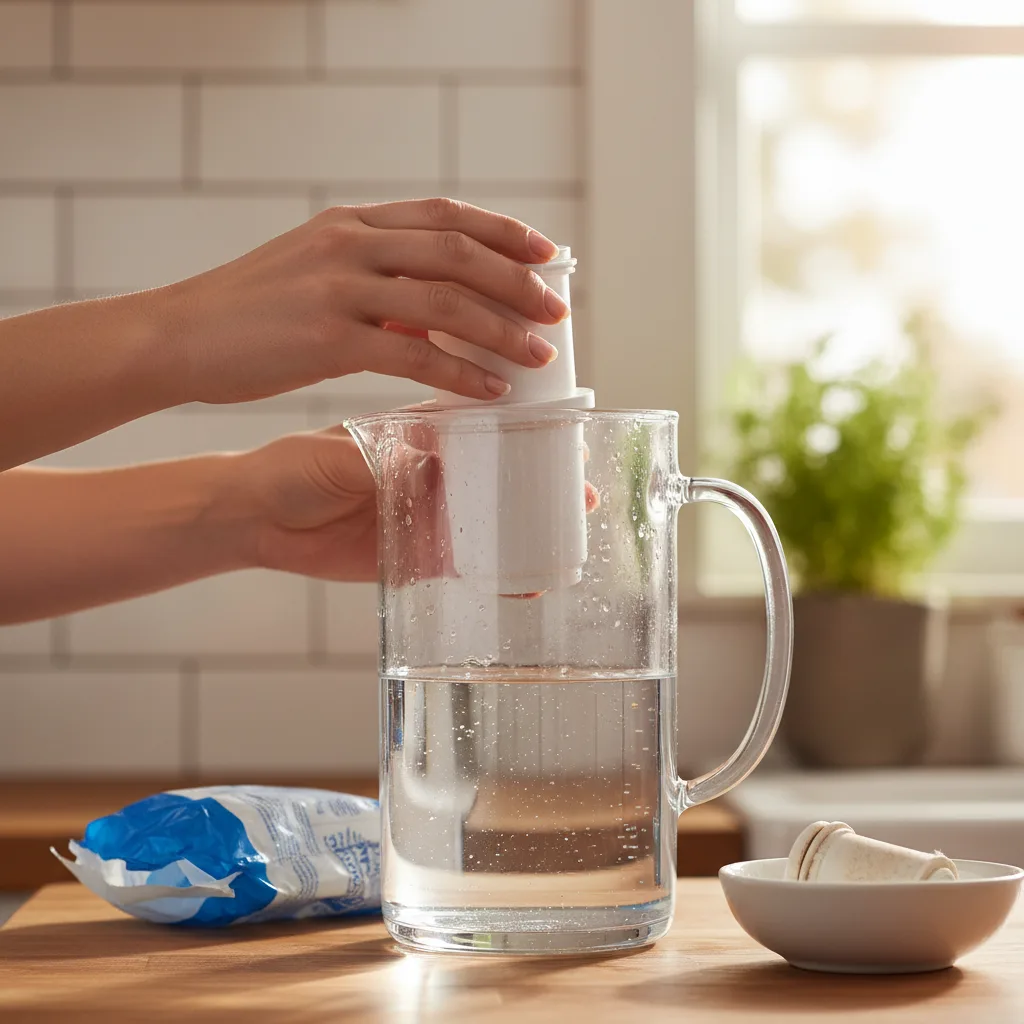
Why Maintenance Matters More Than You Think
Water filters work by trapping contaminants in a filter medium — typically activated carbon, a membrane, or ion exchange resin. Over time, that medium becomes saturated. Once it reaches capacity, three things happen:
- Filtration effectiveness drops. A saturated carbon filter cannot absorb any more chlorine, lead, or VOCs. Your water passes through essentially unfiltered.
- Flow rate decreases. As pores clog with trapped sediment and particulates, water flow slows dramatically — sometimes to a trickle.
- Bacterial growth increases. The moist, carbon-rich environment inside an exhausted filter is ideal for bacterial colonization. Studies have shown that overused filters can have higher bacterial counts than unfiltered tap water.
The solution is straightforward: follow the replacement schedule and watch for warning signs.
It is also worth understanding that not all filter media age at the same rate. Activated carbon blocks — the dense, compressed type used in under-sink and refrigerator filters — tend to signal exhaustion through taste changes before they become a bacterial concern. Granular activated carbon (GAC) in pitchers, by contrast, can develop bacterial hotspots more quickly because of the looser media structure and the open, humid reservoir environment. Knowing your filter's specific media type helps you prioritize which warning signs to watch for most closely.
Replacement Schedules by Filter Type
Pitcher and Dispenser Filters
Pitcher filters have the shortest lifespans because they rely on small, inexpensive cartridges with limited carbon capacity.
- Brita Standard: Every 40 gallons or approximately 2 months. At budget-tier pricing for a 3-pack, that is just a few dollars per change.
- Brita Elite: Every 120 gallons or approximately 6 months. The longer lifespan actually makes it cheaper per gallon than Standard despite the higher per-filter price.
- ZeroWater 5-Stage: Every 15-25 gallons — much shorter than competitors because the 5-stage ion exchange system works harder. In high-TDS areas, you may replace every 2-3 weeks.
- PUR Standard: Every 40 gallons or 2 months, similar to Brita Standard.
Refrigerator Filters
Refrigerator filters generally last 6 months, but capacity varies by model:
- GE XWFE: 300 gallons or 6 months — the most generous capacity among fridge filters.
- everydrop Filter 1: 200 gallons or 6 months. Heavy-use families may exhaust 200 gallons before the 6-month mark.
- Samsung HAF-QIN: 6 months (Samsung does not prominently advertise gallon capacity).
Most modern refrigerators track filter life and display a warning light. Do not ignore it — the indicator is typically based on water flow volume, making it a reasonably accurate gauge.
Under-Sink and RO Systems
Under-sink systems have multiple filters on different replacement cycles. For the iSpring RCC7AK:
- Sediment pre-filter (Stage 1): Every 6 months
- GAC carbon filter (Stage 2): Every 6 months
- CTO carbon block (Stage 3): Every 6 months
- RO membrane (Stage 4): Every 2-3 years
- Post-carbon filter (Stage 5): Every 12 months
- Alkaline remineralization (Stage 6): Every 12 months
The Waterdrop G3P600 simplifies this with its smart TDS faucet that tells you exactly when each filter stage needs replacement — a major convenience advantage over traditional RO systems.
Whole-House Sediment Filters
Sediment filter replacement frequency depends heavily on your source water quality. The Membrane Solutions 5-Micron String Wound filters typically last 2-3 months for well water with moderate sediment, and up to 6 months for relatively clean municipal water. A visible color change from white to brown/orange indicates it is time for a replacement.
Cost of Ownership: What Filter Maintenance Actually Costs You
Many buyers focus on the upfront price of a filtration system without factoring in the ongoing cost of replacement cartridges — which, over a 3-5 year period, almost always exceeds the original purchase price. Understanding filter cost at the category level helps you plan your budget accurately and avoid sticker shock down the road.
Pitcher filter systems sit at the budget-friendly end of the cost-of-ownership spectrum. Because cartridges are inexpensive and widely available, annual maintenance costs are modest — especially if you buy multi-packs. The trade-off is frequency: you will be replacing cartridges several times a year, which adds up in time and recurring purchases. The Brita Elite format offers a meaningful cost-per-gallon advantage over standard Brita cartridges, making it the smarter long-term buy for high-volume households even though each individual Elite filter carries a slightly higher price tag.
Refrigerator filters fall into the mid-range cost tier. OEM filters from brands like GE and Whirlpool (everydrop) are priced at a premium, but compatible aftermarket alternatives — available for most major fridge platforms — can cut the annual cartridge cost roughly in half. Just verify that any aftermarket filter carries NSF/ANSI 42 and 53 certification before purchasing, since not all third-party options are independently tested.
RO systems carry the highest per-service-event cost, but the math works out favorably over time because most replacement events are inexpensive pre-filter swaps, with the costly membrane replacement only occurring every two to three years. When you spread that membrane cost across 24-36 months of filtered water, the per-gallon cost of a system like the iSpring RCC7AK or Waterdrop G3P600 is typically lower than buying bottled water — often dramatically so. Factor in the annual tank sanitization and O-ring maintenance, and your total yearly maintenance spend for a premium RO system is still well within a predictable, manageable range.
Warning Signs Your Filter Needs Replacing
Do not wait for a scheduled date if you notice any of these indicators:
- Slower flow rate: The most common and reliable sign. If your pitcher takes twice as long to fill or your faucet flow has dropped noticeably, the filter is clogged.
- Taste or odor changes: A return of chlorine taste, metallic flavors, or musty odor means the carbon is saturated.
- TDS creep (RO systems): If your output TDS is rising — for example, from 10 ppm to 30 ppm — the RO membrane is losing effectiveness.
- Visible discoloration: Sediment filters that have turned dark brown, or pitcher filters with visible algae or mold growth.
- Filter indicator light: Modern refrigerators and smart systems track usage. Trust the indicator.
- Unusual sounds: Gurgling, hissing, or air-burst sounds from under-sink systems may indicate air locks caused by deteriorating filter seals.
Cleaning Your Filter System
While the filter cartridge itself is usually disposable, the housing, pitcher, or system components need regular cleaning to prevent mold and bacteria buildup.
Pitcher and Dispenser Cleaning
- Remove the filter cartridge and set it aside.
- Disassemble all removable parts (lid, reservoir, spigot).
- Wash all parts with warm water and mild dish soap. Use a bottle brush for hard-to-reach areas.
- For stubborn buildup, soak parts in a mixture of one tablespoon white vinegar per cup of warm water for 15 minutes.
- Rinse thoroughly and air dry completely before reassembling.
- Clean every 2-4 weeks, or whenever you notice discoloration or sliminess.
Refrigerator Filter Housing
When replacing a fridge filter, wipe the filter housing cavity with a damp cloth. Check for any mold or mineral buildup around the O-ring seal. Run 2 gallons of water through the new filter before using it for drinking — this flushes carbon fines and air pockets.
Under-Sink System Maintenance
During filter changes on systems like the iSpring RCC7AK:
- Turn off the water supply and release pressure by opening the dedicated faucet.
- Use the included filter wrench to open each housing.
- Inspect O-rings for cracks, dryness, or deformation. Apply food-grade silicone grease to O-rings every 6-12 months.
- Wipe the inside of each filter housing with a clean, damp cloth.
- Check tubing connections for any signs of leaking or mineral deposits.
- After installing new filters, flush the system for 5-10 minutes before drinking.
Survival Filter Maintenance
Hollow fiber membrane straws benefit from backflushing after each use. The NatureNova straw kit includes a backwash syringe specifically for this purpose. Force clean water backward through the filter to dislodge trapped particles. This extends filter life significantly — from hundreds of liters to the full rated capacity.
Who Should Prioritize Low-Maintenance Filter Systems
Not every household has the time or inclination to stay on top of multi-stage replacement schedules, and that is a legitimate factor when choosing a filtration system. If you tend to forget routine tasks or want a truly hands-off experience, systems with smart filter-life indicators — like the Waterdrop G3P600 — are worth the premium price simply because they remove the guesswork entirely. Renters who move frequently may also prefer a simple pitcher or countertop option with a single-cartridge design, since there are no under-sink connections to install or reinstall.
Conversely, detail-oriented homeowners who do not mind a structured maintenance routine will get the best value from a traditional multi-stage RO system like the iSpring RCC7AK. The lower system cost and widely available replacement cartridges make the ongoing investment very manageable — as long as you commit to tracking replacement intervals. Households with well water or unusually high sediment loads should prioritize systems with accessible, inexpensive pre-filters, since those stages will exhaust much faster than the rated schedule assumes for average municipal water.
Common Maintenance Mistakes
- Running the filter past its rated capacity. "It still works" is not the same as "it is still filtering effectively." Carbon saturation is invisible until taste changes.
- Not flushing new filters. All carbon-based filters release fine carbon particles when new. Run water through them before drinking.
- Ignoring the O-rings. Dried or cracked O-rings cause leaks and allow unfiltered water to bypass the filter. An inexpensive tube of silicone grease prevents hundreds of dollars in water damage.
- Storing filters improperly. Unused replacement filters should be stored in their sealed packaging in a cool, dry location. Opened or damp filters grow mold.
- Using hot water through carbon filters. Hot water damages activated carbon and can cause it to release trapped contaminants. Always filter cold water.
Product-Specific Maintenance Quick Reference
Here is a quick lookup for the products we review:
- Bluevua RO100ROPOT-UV: Replace RO membrane every 12 months, other filters every 6 months. Drain and clean glass carafe weekly. Wipe UV chamber during filter changes.
- iSpring RCC7AK: 3 pre-filters every 6 months, RO membrane every 2-3 years, post-filters every 12 months. Sanitize tank annually.
- Waterdrop G3P600: CF filter every 6 months, MRO filter every 12 months, CB filter every 24 months. Smart faucet alerts when replacement is due.
- Pentair Everpure H-1200: Replace twin cartridge set every 12 months or 1,000 gallons. Quarter-turn removal makes changes fast.
- Elkay 51300C: Replace every 3,000 gallons (6-12 months in commercial use). Reset the filter counter on the filling station after replacement.
Frequently Asked Questions
How often should I replace my pitcher water filter?
What happens if I do not replace my water filter on time?
Can I clean and reuse a water filter cartridge?
How do I know when my RO membrane needs replacing?
Why does my filtered water taste bad even with a new filter?
Do refrigerator water filters need special maintenance?
Is it safe to drink water from a filter that has not been changed in over a year?
Do I need to sanitize my RO storage tank, and how often?
How does water hardness affect how often I need to replace filters?
Keep Your Filter Working for You
Consistent maintenance is the difference between a water filter that protects your health and an expensive paperweight. Set reminders, buy replacement filters in advance, and pay attention to the warning signs. For help choosing the right replacement filters, see our Best Replacement Filters roundup or use our Complete Buying Guide to find a system that fits your maintenance preferences.
Get Filter Picks Delivered
One email per week. Honest reviews, no spam.
No spam. Unsubscribe anytime.